
Warm, Clean Heat for Lakewood's Front Range Winters.
Instant, smoke-free heat for a Jefferson County suburb where inversion days and altitude both shape what actually works. Find the right gas unit and connect with a trusted local dealer.
Every Project Starts From One of These Five Situations
Gas is the practical answer for a fast-growing Front Range suburb.
Lakewood sits at 5,656 feet against the foothills west of Denver, in a Jefferson County climate with winters comparable to a long, cold Rocky Mountain season and winter lows near 21°F. The same topography that gives the metro its views also traps air in winter temperature inversions—Denver's long-standing non-attainment status for ozone and particulates means the region regularly issues high pollution advisory days that restrict open wood burning. That's a big part of why new wood and pellet installations are essentially off the table here, while gas has become the default upgrade for homeowners replacing an old masonry fireplace or adding heat to a remodel.
Public Service Company of Colorado (Xcel Energy) provides natural gas across nearly all of Lakewood, so most homes already have a gas line to the furnace or water heater—extending it to a fireplace is usually straightforward. A direct-vent gas fireplace or insert delivers real heat at the flip of a switch, produces none of the smoke that triggers inversion-day complaints, and—with the right ignition system—keeps working through the wind-driven power outages that periodically hit the Front Range in winter.
Three steps. No salesperson until you're ready.
Tell us about your project
Your zip code, your situation, and the fuel you're leaning toward—or let the answers point you to one.
See what's actually available
The brands dealers within 100 miles genuinely carry—real options, never a catalog mirage.
Get your dealer & Project Guide
A trusted local dealer, plus the free Project Guide & Parts List that names every component of the job.
Frequently Asked Questions
How much does a gas fireplace installation cost in Lakewood?
Most gas fireplace and insert installations in the Denver metro run roughly $4,000 to $10,000, with the spread driven by the unit itself, whether an existing gas line reaches the hearth, and how much venting or framing work is involved. A gas insert dropped into an existing masonry fireplace with gas already run to that wall sits at the lower end. A new direct-vent fireplace in a remodel—with fresh gas line, framing, and through-wall venting—lands in the middle to upper range. Because Lakewood sits at 5,656 feet, installers also have to account for altitude derating on the appliance's BTU output, which a qualified local dealer will factor into the quote rather than leaving you to guess.
Can I convert my existing wood fireplace to gas?
Yes, and it's a common project in Lakewood's older neighborhoods, many of which were built with traditional masonry fireplaces before gas conversions became routine. A gas insert typically slides into the existing firebox and vents through a stainless liner run up the original chimney, so you keep the look of the fireplace while gaining real heat output. Given that new wood-burning installs are discouraged in the metro due to winter air quality rules, converting an existing wood fireplace to gas is often the cleanest path for homeowners who want to keep the hearth but lose the smoke and the burn-ban headaches.
Do I need natural gas, or is propane the option in Lakewood?
Nearly all of Lakewood proper is served by natural gas through Public Service Company of Colorado (Xcel Energy), so most homes already have the infrastructure in place. Propane mainly comes into play for homes further up into unincorporated Jefferson County foothills where natural gas mains don't reach. Most gas fireplace models can be configured for either fuel with the correct orifice, so the choice usually comes down to what's already run to your house rather than the fireplace itself.
Will my gas fireplace work during a power outage?
Most modern gas fireplaces will, provided they use intermittent pilot ignition (IPI) with a battery backup—the fireplace lights on demand off AA batteries when the power drops, the same as it would normally. That matters along the Front Range, where downslope wind events out of the foothills periodically knock out power in Jefferson County during winter storms. Valor fireplaces take a different approach: their pilot assembly generates its own electricity through a thermocouple, so there's no battery to remember to replace. Ask your local dealer about the ignition system on any unit you're considering if outage reliability matters to you.
What's the difference between a gas fireplace, gas insert, and gas stove?
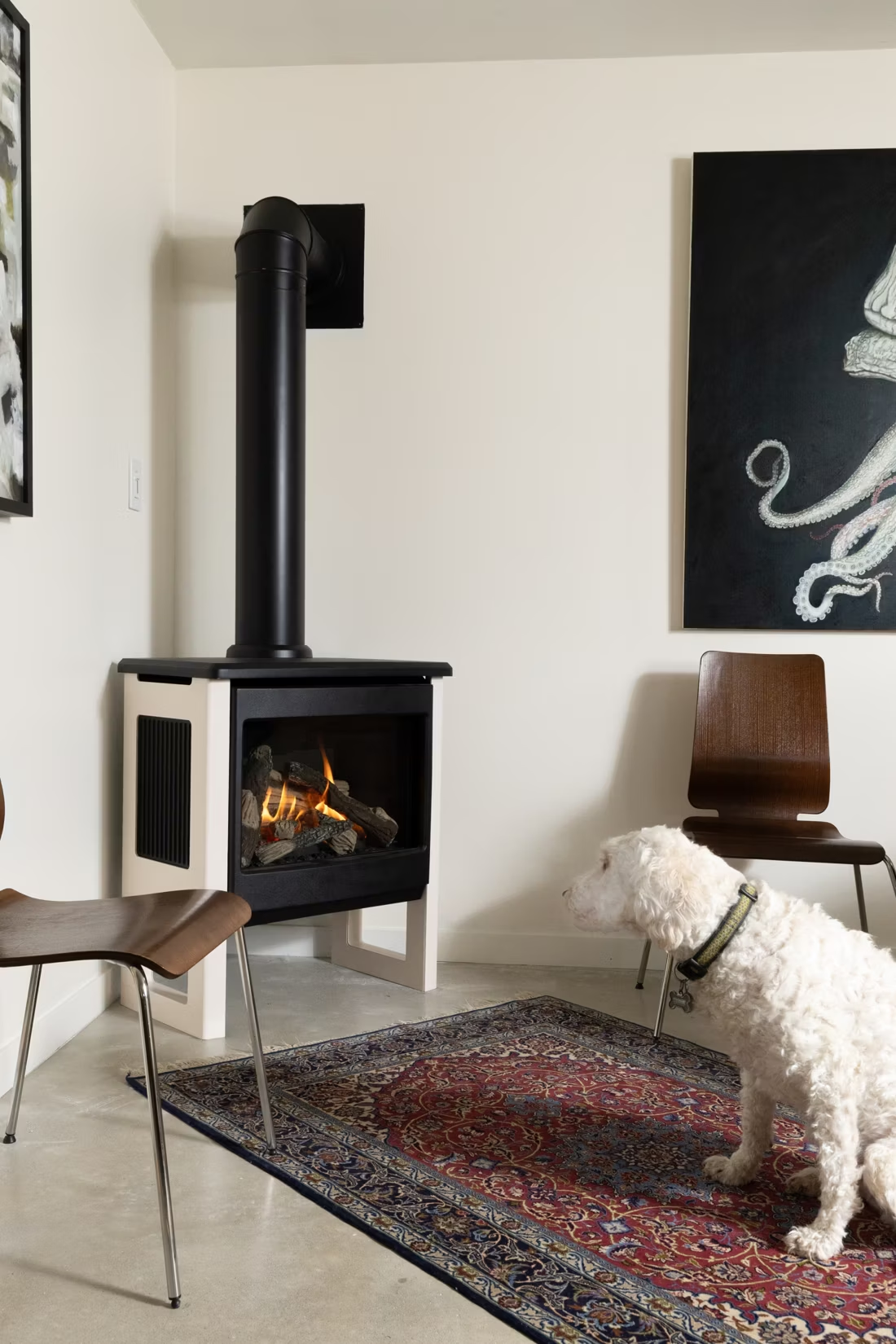
A gas fireplace is a fully built-in unit framed into a wall—the standard choice for new construction or a major remodel. A gas insert is built to slide into an existing masonry firebox, turning an old wood-burning fireplace into a sealed, efficient gas unit that vents through the existing chimney. A gas stove is freestanding, sitting on the floor like a wood stove but running on gas—a good option when there's no existing fireplace and you don't want to frame one in. For Lakewood's stock of older homes with existing masonry fireplaces, an insert is usually the simplest and most cost-effective upgrade.
Do I need a permit to install a gas fireplace in Lakewood?
Yes—the City of Lakewood Building Division requires a building permit for the fireplace installation and a separate permit for any new gas line work, which must be done by a licensed gas fitter. Homes in unincorporated pockets of Jefferson County go through the county building department instead. Most local hearth retailers handle the permitting and inspections as part of the install, coordinating the gas line, venting, and framing work so you're not managing multiple trades yourself.
What's the difference between vented and vent-free gas fireplaces, and does Lakewood's elevation matter?
Vented (direct-vent) gas fireplaces pull combustion air from outside and exhaust it back outside through a sealed pipe—they're the standard, code-compliant choice everywhere, including Colorado. Vent-free units burn gas directly into the room and are legal in Colorado with strict room-size and oxygen-sensor requirements, but at Lakewood's 5,656-foot elevation, gas appliances also need altitude derating per manufacturer specs, which typically reduces vent-free output further since these units already can't be oversized the way a vented fireplace can. For most Lakewood homes, a direct-vent unit sized correctly for altitude is the more reliable choice, and it's what most local retailers will steer you toward.
How often should my gas fireplace be serviced?
Plan on an annual inspection, ideally by a technician familiar with altitude-adjusted gas appliances—at 5,656 feet, burner orifices and regulators are set differently than they would be at sea level, and a service visit is a good time to confirm those settings haven't drifted. A standard inspection covers the burner, pilot or ignition system, venting, and gas connections, plus a cleaning of the glass and interior. Local gas appliance service providers typically charge in the $150 to $250 range for this work.
Why isn't wood or pellet heat more common in Lakewood?
Wood and pellet stoves aren't the default here the way they are in more rural parts of Colorado. Lakewood sits inside the Denver metro's winter inversion zone, where trapped air and non-attainment status for ozone and particulates lead to regular high pollution advisory days restricting open burning—conditions that make new wood or pellet installs impractical for most homeowners, even though ponderosa pine, aspen, and pinyon are common species just up in the foothills, and Bear Mountain and Lignetics pellets are still sold locally. Gas and electric fireplaces sidestep those restrictions entirely, which is why they're the fuels most local dealers recommend for new installations in Lakewood proper.
Why is a fireplace insert so efficient?
An insert does two things: it seals the chimney completely, so you stop losing air you already paid to heat, and it radiates warmth into the room through the firebox and glass. Most add a heat-exchange fan that pulls cool room air underneath, wraps it around the hot firebox, and pushes it back out warm. Your home is more efficient before you've even lit the first fire.
What's the difference between an insert and a zero-clearance fireplace?
An insert is a fireplace that slides into a pre-existing wood-burning fireplace—if you don't have one, there's nothing to insert it into. A zero-clearance fireplace is built into a framed wall, which makes it the answer for remodels and new construction. Simple test: existing masonry fireplace means insert; blank or framed wall means zero-clearance.
What is an in-home preview and do I need one?
It's a visit where a hearth professional measures your space, confirms the model you picked actually works in your home, and walks the specs—framing, gas line, venting, finish work—before anything is ordered. Some details you just can't know until you see the house. Never make a down payment without one; it's the single most-skipped step that burns buyers.
Does a fireplace add value to my home?
On average, a fireplace adds back to the home about the same amount you spent installing it. Add the monthly savings from heating the rooms you actually use instead of the whole house—often hundreds of dollars a year—and the value case is strong before you even count what a fire does for how your family uses the room.
Nearby Dealers
Hearth shops serving Lakewood and the surrounding area. Every listing shows whether it is a WhyFire partner, a dealer we have verified as authorized for the brands we recommend, or a local business carrying hearth products. No manufacturer pays for placement. How we verify dealers →
Spa Brokers
Outdoor Kitchen Dist. Inc
Aria Custom Design
Distinctive Mantel Designs
Proud Souls Barbecue & Provisions
Spa Brokers
Spa Brokers
Rio Grande Co.
Spa Brokers V
Spa Brokers Iii
Fireplace And Grill Experts - Service Only
Spa Brokers (Corporate)
Thoshini LLC
Find your gas fireplace in Lakewood.
Tell us about your home and we'll put together a free Project Guide & Parts List—the right gas fireplace or insert, the exact parts including your vent kit, and a trusted local Lakewood dealer to install it.
Find Your Fireplace →