
Steady heat for life above 10,000 feet in Lake County.
Leadville sits at 10,152 feet—the highest incorporated city in the country—with winters that rival International Falls, Minnesota for sheer duration. A properly sized, altitude-rated gas fireplace gives Lake County homes instant, reliable heat without the daily wood-hauling that thin mountain air and long winters demand.
Every Project Starts From One of These Five Situations
Instant heat for Colorado's harshest winters.
Lake County logs roughly 11,061 heating degree days a year and an average winter low around 5°F—numbers that put Leadville and Twin Lakes in the same company as International Falls, Minnesota rather than the rest of Colorado's Front Range. Climate zone 7 conditions mean the burner has to work hard for eight or nine months of the year, and the 10,152-foot elevation of the county seat adds a wrinkle most flatland installers never deal with: gas appliances lose roughly 4 percent of their rated BTU output for every 1,000 feet of elevation gain, so a fireplace spec'd for Denver or Colorado Springs will underperform badly once it's installed in Leadville.
Because natural gas mains generally don't run into small high-elevation mountain communities like this one, propane is the standard fuel for gas fireplaces across most of Lake County—supplied from a local or regional bulk tank rather than a utility line. That's a straightforward setup once it's designed correctly, and it comes with a real upside: wildfire smoke is a recurring air quality concern in this part of the Rockies during dry summers, and a sealed, direct-vent gas unit produces none of the particulate that a wood stove does, which matters on the days smoke is already thick outside. For Leadville's older mining-era cottages and Victorians, a gas insert into an existing masonry fireplace is one of the most common upgrades local dealers handle.
Three steps. No salesperson until you're ready.
Tell us about your project
Your zip code, your situation, and the fuel you're leaning toward—or let the answers point you to one.
See what's actually available
The brands dealers within 100 miles genuinely carry—real options, never a catalog mirage.
Get your dealer & Project Guide
A trusted local dealer, plus the free Project Guide & Parts List that names every component of the job.
Frequently Asked Questions
How much does a gas fireplace installation cost in Lake County?
Most gas fireplace installations in Lake County run in the $4,000 to $10,000 range, with the spread driven mainly by whether a propane tank and line already exist, how much venting work is needed, and whether the unit requires an altitude-rated burner orifice kit. A direct-vent insert going into an existing Leadville masonry fireplace with propane already on site tends to land on the lower end. New construction or a fireplace going into a home with no existing propane service—including a new tank set and line run—pushes toward the higher end. A local dealer familiar with 10,000-foot installs will factor the altitude derating into the quote up front rather than discovering it during commissioning.
Does elevation actually affect how a gas fireplace performs in Leadville?
Yes, and it's one of the most overlooked details in a mountain-town gas install. Gas appliances are rated at sea level, and combustion air gets thinner as elevation increases—roughly a 4 percent loss of BTU output per 1,000 feet above sea level. At Leadville's 10,152 feet, that's a meaningful derating, and manufacturers publish specific high-altitude orifice kits or factory settings to compensate. A unit installed straight out of the box without that adjustment will run rich, sooty, and underpowered. This is exactly the kind of detail a trusted local dealer catches that a big-box return counter never will—they know which models have a published high-altitude kit for Lake County's elevation and which don't.
Is my gas fireplace going to run on natural gas or propane?
For nearly all of Lake County, the answer is propane. Natural gas pipeline service doesn't reach up into Leadville, Twin Lakes, or the rest of the county at this elevation, so propane—delivered and stored in a bulk tank on the property—is the standard setup for gas fireplaces, inserts, and stoves here. That's not a downgrade; propane units burn just as cleanly and most manufacturers offer the same models in either fuel configuration. Your local dealer will size the tank, run the line, and set the regulator as part of the install.
Can I convert an old wood-burning fireplace in a Leadville cottage to gas?
Yes, and it's a common project in Lake County's older mining-era homes. A gas insert fits into the existing masonry opening and uses a stainless liner run through the original chimney as its vent path, so you keep the historic look of the fireplace while gaining instant, thermostat-controlled heat. Because most of these homes run on propane rather than piped gas, the conversion also typically includes tying into or extending the existing propane line. Local dealers who work in Leadville's older housing stock are used to fitting inserts into non-standard, decades-old masonry openings.
Do I need a permit to install a gas fireplace in Lake County?
Yes—a building permit is required for new gas fireplace installations through the Lake County building department, and propane line work needs to be done by a licensed gas-fitter. Most local hearth dealers handle the permit paperwork and inspection scheduling as part of the install, so you're not coordinating separate trades yourself. Given how much colder and higher this county sits compared to the rest of the state, inspectors here also pay close attention to venting termination clearances relative to snow load and roof pitch—another reason to use an installer who works Lake County regularly rather than a crew passing through.
Will my gas fireplace still work if the power goes out?
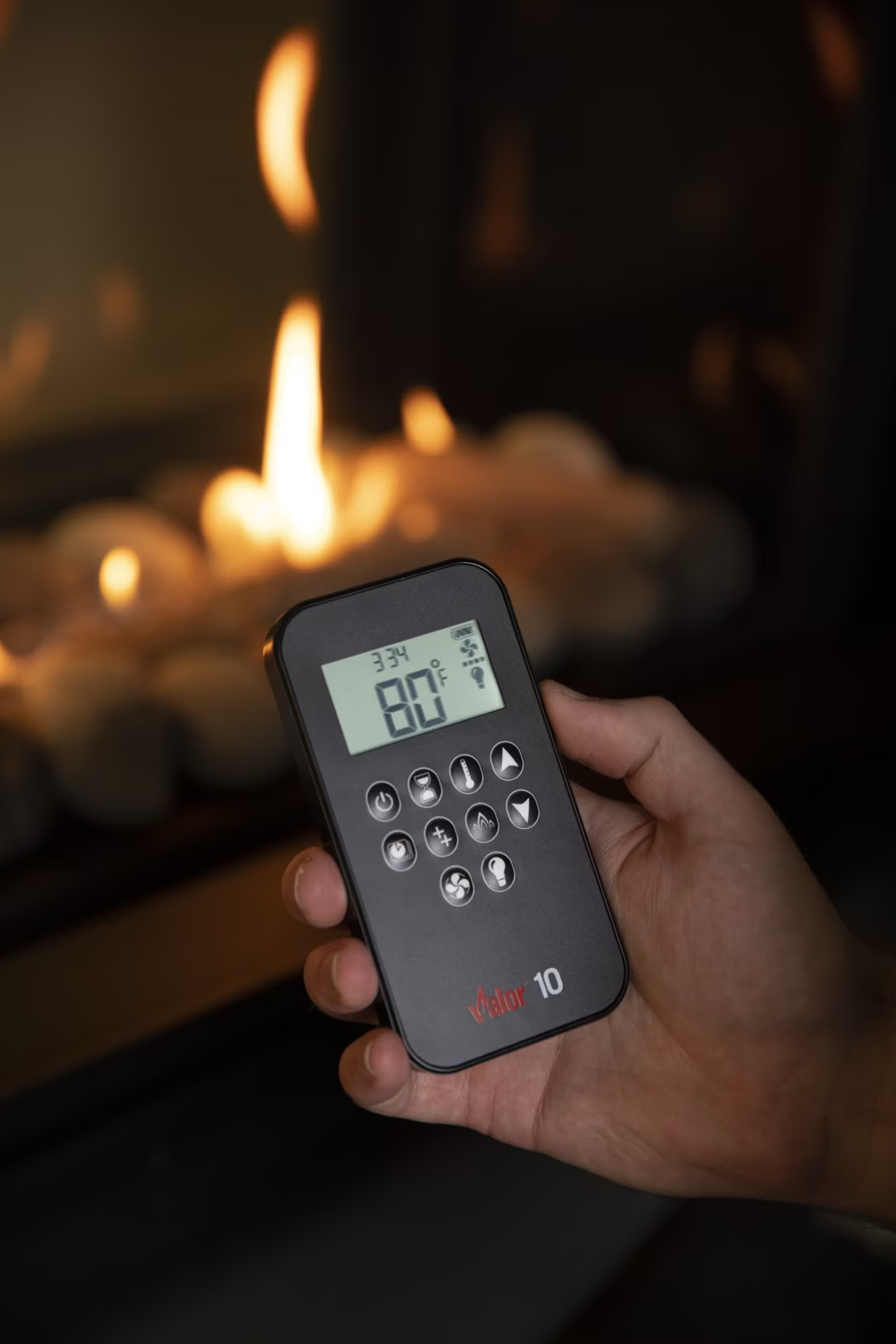
Most direct-vent gas fireplaces with intermittent pilot ignition (IPI) include a battery backup that keeps the unit operable during an outage—worth confirming fresh batteries are in place before winter. Some manufacturers, like Valor, build units that generate their own electricity off the pilot flame's thermocouple, so there's no battery to maintain at all. With winters this long and storms that can knock out power in the high country for extended stretches, that self-powering feature is worth asking your local dealer about specifically.
Should I get a vented or vent-free gas fireplace in Lake County?
Vented (direct-vent) units draw combustion air from outside and exhaust it back outside through a sealed pipe—they're the standard, code-compliant choice almost everywhere, including Lake County. Vent-free units burn without external venting and release some combustion byproducts into the room; they're legal in Colorado within specific room-sizing and ventilation rules, but they're a poor match for a tightly sealed, well-insulated mountain home built to hold heat against 11,000+ heating degree days a year. For Lake County's climate, direct-vent is the practical and most commonly installed option.
How often does a gas fireplace need to be serviced in Leadville?
An annual inspection is recommended for any gas appliance, and it matters more in a county that runs the burner for eight-plus months a year. A technician checks the burner, pilot assembly, venting, and gas connections, and confirms the unit is still performing correctly at altitude. Plan on $150 to $250 for a standard annual visit from a local service provider—cheap insurance given how much load Lake County's long heating season puts on the appliance.
Gas or wood—which makes more sense for a Lake County home?
Wood—burning locally available ponderosa pine, aspen, pinyon, or juniper, with cutting permits available through the White River National Forest for $5 to $20 per cord during the May-through-October season—remains a strong choice for backup heat that doesn't depend on electricity or a propane delivery truck making it up the pass. Gas wins on convenience and on air quality days: summer wildfire smoke is a recurring concern in this part of the Rockies, and a sealed gas unit adds zero indoor or outdoor particulate. Many Lake County homes end up running both—gas for daily use in the main living area, a wood stove as a genuine off-grid backup for when a winter storm takes out power for days.
Can I put a TV above my fireplace?
Yes—with an asterisk. Fireplaces are hot and TVs don't like heat. Either put a mantel between them to deflect rising warmth, or choose a fireplace with heat-management technology that creates a cool zone on the wall above—the wall stays around 125 degrees, barely warm, while the room still gets full heat. If you like clean lines and don't want a mantel, heat management is the answer.
Why is my open fireplace making my house colder?
Open fireplaces suck—literally. As the fire burns, it consumes air your furnace already paid to heat and pulls it out through the chimney, so the house is actually colder after the fire goes out than before you lit it. An insert fixes this: it seals the chimney, puts fixed glass across the front, and turns that hole in your house into a real heat source.
Can I install a fireplace myself?
If you're putting a fire in your house on purpose, it's best to work with an expert. Unless you're genuinely experienced in framing, gas line, vent pipe, and the national code on clearances to combustibles, have a professional do it—and ideally the same company that sells you the fireplace, so warranty, service, and liability all live under one roof.
How much should I budget for a fireplace?
For an average home—covering the fireplace, the vent pipe, and basic installation—a budget between $3,900 and $5,500 gives you a lot of options across wood, gas, and pellet. By the time you add finish work, gas line, and electrical, the average complete installation lands between $5,000 and $12,000 all-in. In a remodel or new build, a good rule is to put about 2.5% of the total project cost toward the fireplace.
Stove and Fireplace Dealers in Lake County
Find your gas fireplace in Lake County.
Tell us about your home in Leadville, Twin Lakes, or elsewhere in Lake County, and we'll match you with a trusted local dealer who knows how to account for the altitude—plus a free Project Guide & Parts List with the exact parts, including the vent kit, for your project.
Find Your Fireplace →