
Gas Heat Built for Ken Caryl's Foothill Winters.
Instant, HOA-friendly warmth for homes along the hogback—no smoke, no cutting permits, no wood stacked in the driveway. Find the right unit and connect with a trusted local dealer.
Every Project Starts From One of These Five Situations
The clear-air choice for a foothills community.
Ken Caryl sits at 5,790 feet in the Jefferson County foothills west of Denver, where winter lows average 19°F and the area sees a winter heating season noticeably milder than Bozeman, Montana, but still cold enough that overnight temperatures along the hogback regularly drop into the teens. Homes here need real heat, not just ambiance.
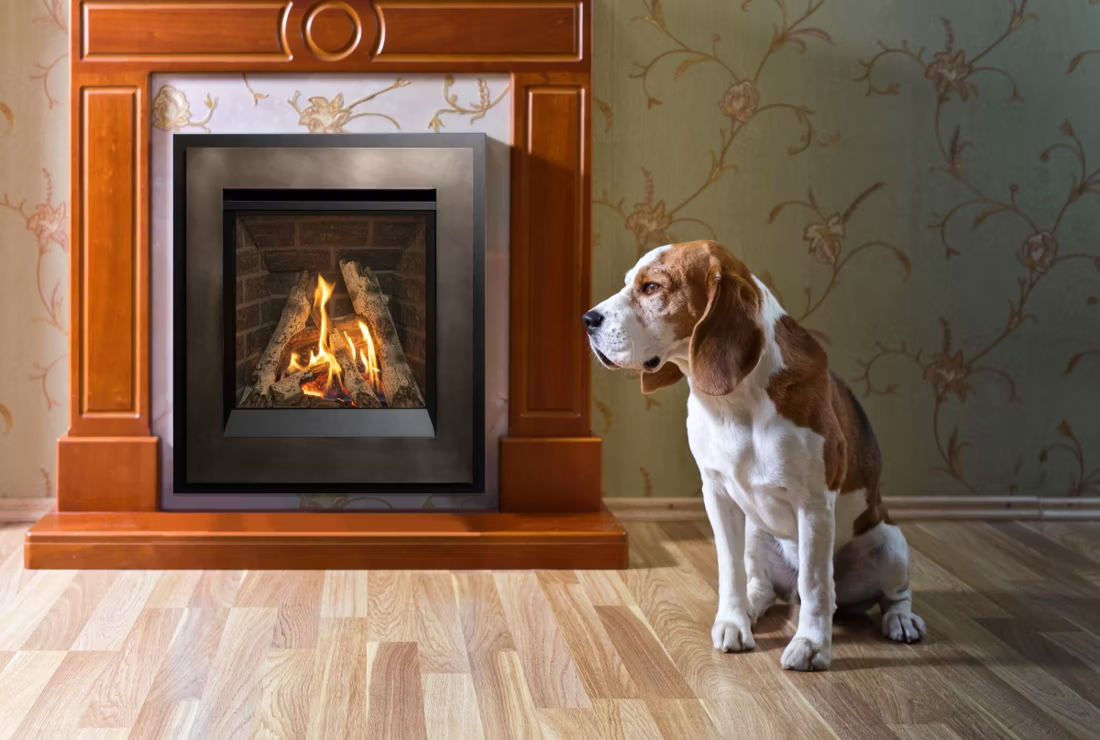
Wood-burning appliances are unusual in Ken Caryl. Winter inversions and wildfire smoke already strain Denver metro air quality, the area is subject to periodic burn restrictions during high-pollution days, and the Ken Caryl Ranch Master Association's design covenants make exterior chimney and venting changes a review process most homeowners would rather skip. Gas sidesteps all of it: Public Service Company of Colorado (Xcel Energy) runs natural gas throughout most of the community, and a direct-vent gas fireplace or insert delivers real heat at the flip of a switch, with a small, code-compliant sidewall vent instead of a masonry chimney.
Three steps. No salesperson until you're ready.
Tell us about your project
Your zip code, your situation, and the fuel you're leaning toward—or let the answers point you to one.
See what's actually available
The brands dealers within 100 miles genuinely carry—real options, never a catalog mirage.
Get your dealer & Project Guide
A trusted local dealer, plus the free Project Guide & Parts List that names every component of the job.
Frequently Asked Questions
How much does a gas fireplace installation cost in Ken Caryl?
Most gas fireplace and insert installations in Ken Caryl run roughly $4,000 to $10,000, depending on the unit, the venting path, and whether new gas line work is needed. A direct-vent insert going into an existing masonry firebox with a nearby gas line sits on the lower end; a new built-in gas fireplace in a remodel, with fresh gas line and wall venting, runs toward the middle and higher end. One local wrinkle worth knowing: at 5,790 feet, many gas fireplace models require a high-altitude orifice kit to burn correctly, since manufacturers rate appliances for elevations below about 4,500 feet. Local installers already account for this—it's exactly the kind of detail a big-box purchase can miss.
Can I convert an existing wood fireplace to gas?
Yes, and it's a common project even in a gas-dominant area like Ken Caryl, since older homes built before the Ken Caryl Ranch covenants tightened up sometimes still have a wood-burning masonry fireplace. A gas insert typically drops into that existing firebox, using a stainless liner run through your current chimney for venting. Expect roughly $4,000 to $8,500 depending on the insert and whether new gas piping has to be run to the hearth. The result keeps your existing masonry look but eliminates the smoke, ash, and Denver-metro burn-day restrictions that come with the wood option.
Do I need natural gas, or can I use propane?
Either works, but most Ken Caryl homes are on natural gas already through Public Service Company of Colorado (Xcel Energy), so adding a fireplace usually just means tapping an existing line. Propane is the fallback for the handful of larger-lot properties near the open space perimeter that fall outside the natural gas footprint. Nearly every gas fireplace on the market can be configured for either fuel—your installer sets the correct orifice and regulator for whichever you have.
Will my gas fireplace work during a power outage?
Most modern gas fireplaces will, which matters here—upslope snowstorms along the foothills can knock out power for hours at a time. Units with IPI (intermittent pilot ignition) run on a small battery backup that kicks in automatically when the power drops, so the fireplace lights on demand just like normal. Valor's gas fireplaces go a step further: their pilot generates its own electricity through the thermocouple, so there's no battery to remember at all. Ask your local dealer which ignition system is on any model you're considering.
What's the difference between a gas fireplace, insert, and stove?
A gas fireplace is a fully built-in unit framed into a wall—the right call for new construction or a remodel. A gas insert is sized to slide into an existing masonry firebox, sealing it and venting through the existing chimney with a liner. A gas stove is a freestanding cabinet-style unit that sits on the floor, similar in footprint to a wood stove but running on gas. For the older Ken Caryl homes that still have a masonry fireplace, an insert is usually the simplest upgrade; newer construction without an existing firebox is better suited to a built-in unit.
Do I need a permit to install a gas fireplace in Ken Caryl?
Yes. Ken Caryl is unincorporated, so building and gas line permits go through Jefferson County, and the gas line work itself has to be done by a licensed gas-fitter. On top of that, homes within Ken Caryl Ranch typically need sign-off from the Master Association's design review process for anything visible from the exterior, including a new sidewall vent termination. A certified local hearth dealer who's done installs in the neighborhood before will usually already know the association's requirements, which saves you a round of back-and-forth.
What's the difference between vented and vent-free gas fireplaces?
Vented (direct-vent) fireplaces draw combustion air from outside and exhaust it back outside through a sealed pipe—they're the standard, code-compliant choice everywhere, including Colorado. Vent-free units burn directly into the room without external venting; they're legal in Colorado under strict room-sizing and oxygen-sensor rules, but given that the Denver metro area already deals with winter inversions and periodic air quality advisories, most Ken Caryl homeowners and installers lean toward direct-vent units, which don't add any combustion byproducts to indoor air. Ask your local dealer to walk through both if you want to weigh it yourself.
How often should my gas fireplace be serviced?
Plan on an annual inspection, ideally in early fall before the first cold snap along the hogback. A certified technician checks the burner, pilot or ignition system, venting, and gas connections, and cleans the glass and interior. Expect to pay somewhere in the $150 to $250 range for a standard annual visit—modest compared to the cost of a service call in the middle of a January cold spell if something's been quietly going wrong.
Why is gas so much more common than wood in Ken Caryl?
It comes down to air quality and neighborhood rules more than heat output. The Denver metro area, including Jefferson County, deals with winter inversions and wildfire smoke that trigger periodic burn restrictions, and the Ken Caryl Ranch Master Association's covenants make new wood-burning installations impractical for most homeowners. Gas sidesteps both issues—no smoke, no burn-day restrictions, no exterior chimney changes to get approved. A handful of legacy wood fireplaces still exist in older homes, but for new installations in Ken Caryl, gas is effectively the default, not just a convenience play.
What's the difference between an insert and a zero-clearance fireplace?
An insert is a fireplace that slides into a pre-existing wood-burning fireplace—if you don't have one, there's nothing to insert it into. A zero-clearance fireplace is built into a framed wall, which makes it the answer for remodels and new construction. Simple test: existing masonry fireplace means insert; blank or framed wall means zero-clearance.
Is my gas fireplace wasting gas?
If it was installed more than 15 years ago, probably. Older gas fireplaces keep a standing pilot light burning all the time, and that little flame can cost a couple hundred dollars a year. Newer models use pilot-on-demand ignition—the pilot lights only when you use the fireplace and goes out when you turn it off.
Can I install a fireplace myself?
If you're putting a fire in your house on purpose, it's best to work with an expert. Unless you're genuinely experienced in framing, gas line, vent pipe, and the national code on clearances to combustibles, have a professional do it—and ideally the same company that sells you the fireplace, so warranty, service, and liability all live under one roof.
What is an in-home preview and do I need one?
It's a visit where a hearth professional measures your space, confirms the model you picked actually works in your home, and walks the specs—framing, gas line, venting, finish work—before anything is ordered. Some details you just can't know until you see the house. Never make a down payment without one; it's the single most-skipped step that burns buyers.
Nearby Dealers
Hearth shops serving Ken Caryl and the surrounding area. Every listing shows whether it is a WhyFire partner, a dealer we have verified as authorized for the brands we recommend, or a local business carrying hearth products. No manufacturer pays for placement. How we verify dealers →
Proud Souls Barbecue & Provisions
Outdoor Kitchen Dist. Inc
Spa Brokers
Aria Custom Design
Spa Brokers
Distinctive Mantel Designs
Spa Brokers Iii
Thoshini LLC
Spa Brokers V
Western Fireplace Supply
Rio Grande Co.
Fireplace And Grill Experts - Service Only
Spa Brokers
Spa Brokers
Spa Brokers (Corporate)
Find your gas fireplace in Ken Caryl.
Tell us a bit about your home and we'll match you with a trusted local dealer and send over a free Project Guide & Parts List—the exact fireplace, vent kit, and parts recommended for your Ken Caryl project.
Find Your Fireplace →