
Dependable heat for Gunnison County's brutal winters.
With one of the heaviest winter heating loads in the country and average lows near -6°F, Gunnison County asks more of a heating system than most of the country. Find the right gas fireplace or insert for your elevation and home, and get matched with a trusted local dealer.
Every Project Starts From One of These Five Situations
Heat that keeps up with a brutal, months-long heating season.
Gunnison County sits in a high mountain valley at roughly 7,700 feet, and the town of Gunnison itself is routinely ranked among the coldest inhabited places in the lower 48. With an average winter low of -6°F and a heating season as demanding as International Falls, Minnesota, this is a place where a heating system has to work every single night, not just on the occasional cold snap. That reality touches roughly 9,300 residents spread across Gunnison, Crested Butte, Mt. Crested Butte, Almont, and Pitkin, plus the ranches and cabins scattered up the Ohio Creek and Taylor Canyon drainages.
Inside the town of Gunnison, many homes connect to natural gas through Black Hills Energy. Outside those town limits—Crested Butte, Almont, Ohio Creek Valley, and the more remote reaches of the county—propane is the standard fuel, delivered and stored in a tank on the property. Either way, gas appliances installed at this elevation need to be altitude-rated: burner orifices and regulators sized for 7,000+ feet perform differently than the same unit at sea level, which is one of the first things a local installer will check before setting a unit in your home. For county residents who also burn wood—a long-standing supplement given the ponderosa pine, aspen, pinyon, and juniper available through Forest Service permits—gas offers a way to keep the house warm through a Highway 135 closure or a multi-day power outage without hauling and stacking cordwood.
Three steps. No salesperson until you're ready.
Tell us about your project
Your zip code, your situation, and the fuel you're leaning toward—or let the answers point you to one.
See what's actually available
The brands dealers within 100 miles genuinely carry—real options, never a catalog mirage.
Get your dealer & Project Guide
A trusted local dealer, plus the free Project Guide & Parts List that names every component of the job.
Frequently Asked Questions
How much does a gas fireplace installation cost in Gunnison County?
Most gas fireplace and insert installations in Gunnison County run somewhere between $5,000 and $12,000, with the spread driven by whether you need a propane tank set and line run, whether the unit requires altitude-adjusted orifices and regulators, and how much venting work is involved. A direct-vent insert going into an existing masonry fireplace with propane already on site tends to land on the lower end. New construction or a remodel that needs a fresh propane tank, buried line, and framed chase for venting—common in newer builds around Crested Butte and Mt. Crested Butte—runs toward the higher end. Because the county sits above 7,000 feet almost everywhere, factor in the cost of an altitude-rated unit rather than a standard sea-level model.
Can I convert my existing wood fireplace to gas in Gunnison County?
Yes, and it's a common project in the county's older ranch homes and Gunnison and Crested Butte cabins that were originally built around a masonry wood fireplace. A gas insert typically slides into the existing firebox and vents through a stainless liner run up the existing chimney, so you keep the look of the fireplace while gaining instant, thermostatically controlled heat. Because most of the county runs on propane rather than piped natural gas, the conversion usually includes running a line from an existing or new propane tank, which a licensed installer will size to the insert's BTU output and your home's elevation.
Do I need natural gas, or is propane the standard here?
It depends on where in the county you are. Within the town of Gunnison, natural gas service through Black Hills Energy is common, and if your home already has a gas water heater or furnace, adding a fireplace on that line is usually the simpler path. Outside town—Crested Butte, Almont, Ohio Creek, and most of the outlying ranch and cabin properties—propane is the standard, stored in an above-ground or buried tank and refilled by a regional propane supplier. Most gas fireplace models can be configured for either fuel with the correct orifice kit, so the choice usually comes down to what's already run to your house rather than the fireplace itself.
Will my gas fireplace still work if the power goes out?
Most modern gas fireplaces will, which matters in a county where winter storms can knock out power along remote stretches of Highway 135 or Kebler Pass for hours at a time. Units with intermittent pilot ignition (IPI) run on a battery backup that kicks in automatically when line power drops, so the fireplace lights on demand just as it would normally. Valor units take a slightly different approach—they generate their own electricity from the pilot's thermocouple, so there's no battery to maintain at all. For a second home or cabin that sits empty for stretches at a time, that self-powering design is worth asking about specifically.
What's the difference between a gas fireplace, gas insert, and gas stove?
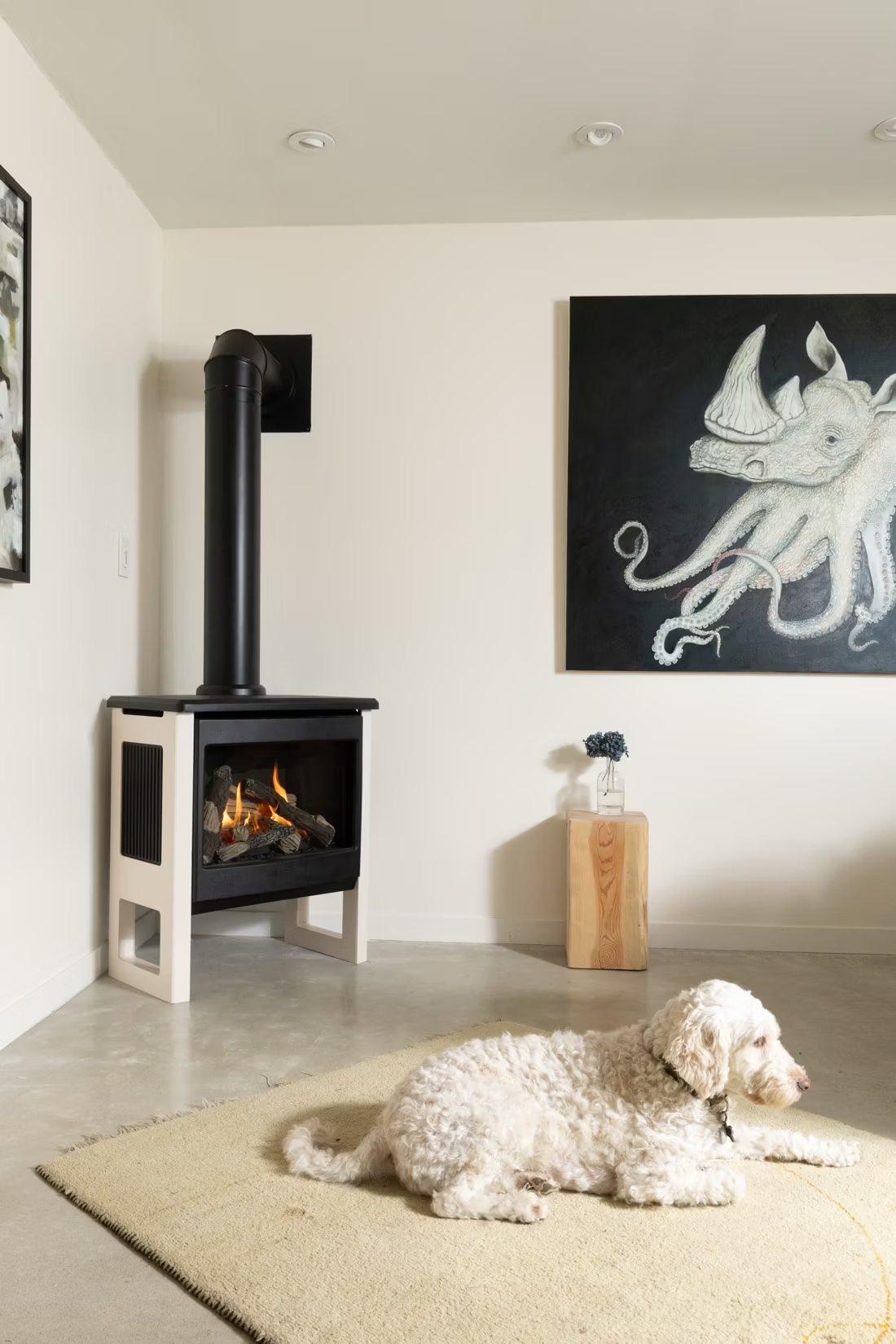
A gas fireplace is a fully framed-in, built-in unit—the typical choice for new construction or a remodel where you're building the wall around it. A gas insert is built to slide into an existing masonry firebox, converting an old wood-burning fireplace into a sealed, high-efficiency heat source using the existing chimney as the vent path. A gas stove is freestanding, sitting on its own hearth pad rather than inside a wall opening, which makes it a good fit for cabins or additions without an existing fireplace. For the many older homes around Gunnison and Crested Butte with an existing masonry fireplace, an insert is usually the most direct upgrade.
Do I need a permit to install a gas fireplace in Gunnison County?
Yes—a new gas fireplace or insert typically requires both a building permit through the Gunnison County building department (or the town of Gunnison, if you're inside city limits) and a gas line permit, which has to be pulled by a licensed gas-fitter. Most established local hearth dealers handle the permitting and inspection scheduling as part of the install, which is worth confirming up front—coordinating a propane tank set, gas line, venting, and inspection yourself across three trades is a lot to manage for a single fireplace project.
Can I install a vent-free gas fireplace in Gunnison County?
Be careful here—Colorado is one of a handful of states that restricts vent-free (ventless) gas appliances, and elevation makes it more complicated in Gunnison County specifically. Vent-free units rely on an oxygen depletion sensor calibrated for lower elevations; many manufacturers explicitly limit or void that calibration above roughly 4,500 to 8,300 feet, and most of Gunnison County—including the town of Gunnison at 7,703 feet—falls inside or above that band. Direct-vent gas fireplaces and inserts, which draw combustion air from outside and exhaust it back outside through sealed venting, don't have that altitude limitation and are the standard recommendation locally. A local dealer will know exactly which models are rated for your specific address.
How often should a gas fireplace be serviced in Gunnison County?
An annual inspection before the start of the heating season is the standard recommendation, and it matters more here than in milder climates because these units run for months at a stretch rather than occasionally. A technician will check the burner, pilot assembly, venting, and gas connections, confirm the orifice sizing is still correct for your elevation, and clean the glass and interior. Given how long the burning season runs in Gunnison County—often September through May—scheduling service in late summer, before installers get booked up around Crested Butte's ski-season rush, is the practical move.
Gas vs. wood—which makes more sense for a Gunnison County home?
Wood has deep roots here—ponderosa pine, aspen, pinyon, and juniper are all cut locally under low-cost permits ($5 to $20 per cord) through the Grand Mesa-Uncompahgre-Gunnison and White River National Forests, and a wood stove keeps producing heat with zero electricity during a storm-driven outage. Gas offers instant, thermostat-controlled heat with none of the hauling, stacking, or ash cleanup, and it's the easier choice for a second home or cabin that sits unattended for stretches. Wildfire smoke is the county's main air quality concern rather than winter wood-smoke inversions, so burning restrictions here are more of a summer issue than a winter one. Many county homes end up running both: gas for daily convenience in the main living space, wood as backup heat for the nights when the power doesn't come back quickly.
Why is my open fireplace making my house colder?
Open fireplaces suck—literally. As the fire burns, it consumes air your furnace already paid to heat and pulls it out through the chimney, so the house is actually colder after the fire goes out than before you lit it. An insert fixes this: it seals the chimney, puts fixed glass across the front, and turns that hole in your house into a real heat source.
Is my gas fireplace wasting gas?
If it was installed more than 15 years ago, probably. Older gas fireplaces keep a standing pilot light burning all the time, and that little flame can cost a couple hundred dollars a year. Newer models use pilot-on-demand ignition—the pilot lights only when you use the fireplace and goes out when you turn it off.
How much should I budget for a fireplace?
For an average home—covering the fireplace, the vent pipe, and basic installation—a budget between $3,900 and $5,500 gives you a lot of options across wood, gas, and pellet. By the time you add finish work, gas line, and electrical, the average complete installation lands between $5,000 and $12,000 all-in. In a remodel or new build, a good rule is to put about 2.5% of the total project cost toward the fireplace.
What is an in-home preview and do I need one?
It's a visit where a hearth professional measures your space, confirms the model you picked actually works in your home, and walks the specs—framing, gas line, venting, finish work—before anything is ordered. Some details you just can't know until you see the house. Never make a down payment without one; it's the single most-skipped step that burns buyers.
Stove and Fireplace Dealers in Gunnison County
Find your gas fireplace in Gunnison County.
Tell us about your home, your elevation, and your fuel situation, and we'll put together a free Project Guide & Parts List—the exact equipment, including the vent kit, and a trusted local Gunnison County dealer who can install it correctly.
Find Your Fireplace →