
Heat that holds through a Gunnison County winter.
Wood, gas, pellet, and electric fireplace resources for every town in the valley—from Gunnison and Crested Butte to Pitkin and Ohio City. Find the right unit for high-altitude cold and connect with a trusted local hearth retailer.
Every Project Starts From One of These Five Situations
High-altitude heating in one of the coldest valleys in the Lower 48.
Gunnison sits at roughly 7,700 feet in a broad mountain valley that traps cold air overnight, which is why the town regularly posts some of the lowest temperatures in the continental United States. The average winter low here runs around -6°F, and the county racks up nearly 9,935 heating degree days a year—a load in the same range as International Falls, Minnesota, one of the coldest towns in the country. Heating season stretches from September into May. Locals burn ponderosa pine, aspen, pinyon, and juniper cut under Forest Service permits from the Grand Mesa-Uncompahgre-Gunnison and White River National Forests, and a high-efficiency EPA-certified stove or insert isn't a lifestyle choice out here—it's how ranch houses and mountain cabins alike get through a night at ten below.
What you'll find on this hub: hearth retailers, service technicians, and fuel suppliers covering the whole county—from Gunnison down the valley to Crested Butte and Mt. Crested Butte, west toward Pitkin and Ohio City, and out to the smaller ranching communities along Highway 50 and the Taylor River corridor. Pick your fuel below to see local dealers, real installation costs, recommended units, and the specifics that matter at this elevation and this cold. Whether you're outfitting a full-time home in Gunnison or a ski-season place near Crested Butte, this is the starting point.
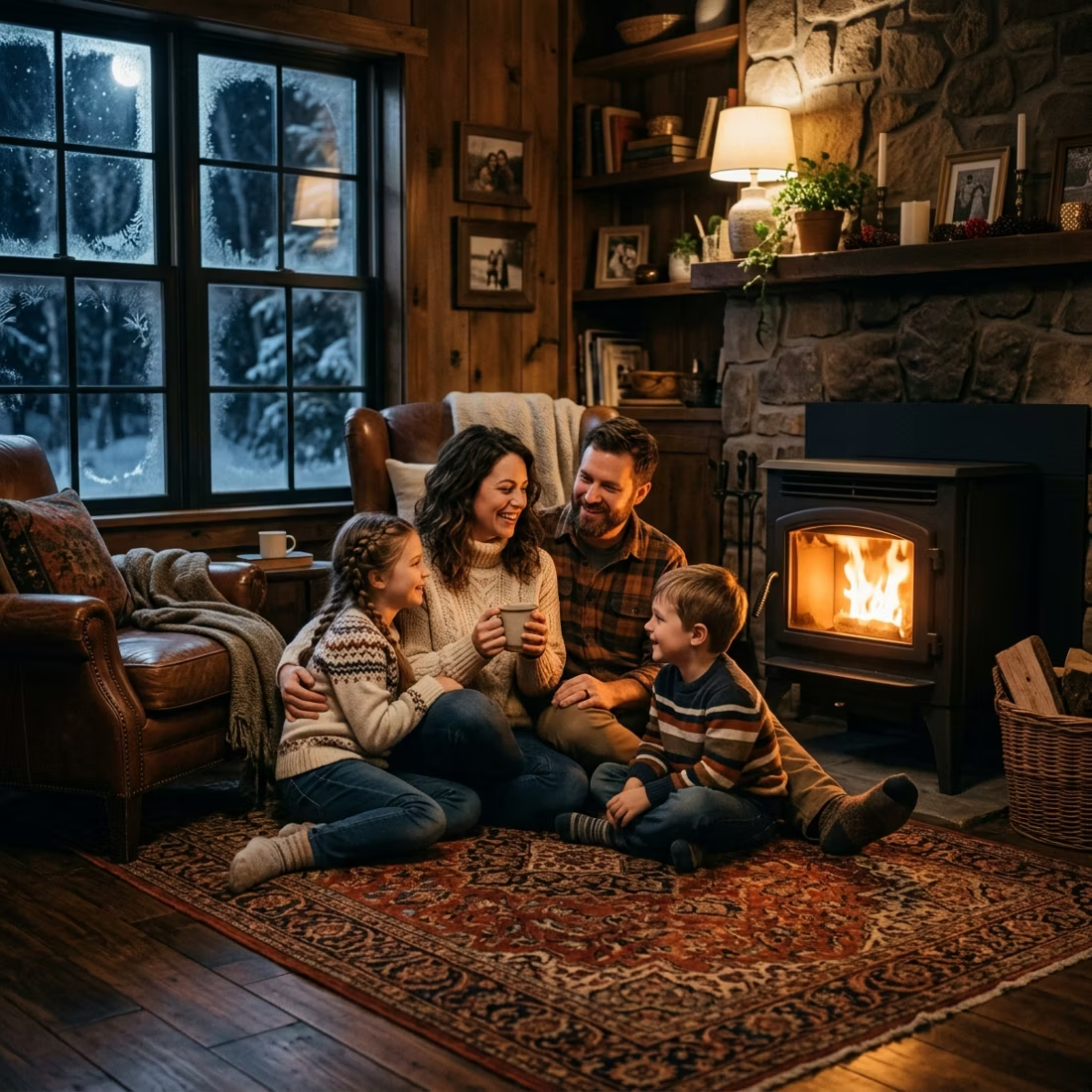
Four fuels. One honest answer for Gunnison County.
Three steps. No salesperson until you're ready.
Tell us about your project
Your zip code, your situation, and the fuel you're leaning toward—or let the answers point you to one.
See what's actually available
The brands dealers within 100 miles genuinely carry—real options, never a catalog mirage.
Get your dealer & Project Guide
A trusted local dealer, plus the free Project Guide & Parts List that names every component of the job.
Frequently Asked Questions
Which fuel works best in Gunnison County?
It depends on the home and how remote it is. Wood remains the backbone fuel for full-time residents—Forest Service cutting permits through the GMUG and White River National Forests keep ponderosa pine, aspen, pinyon, and juniper affordable, and a catalytic or non-cat EPA-certified stove can hold a fire through a -6°F night without a power supply, which matters when mountain lines go down. Gas, mostly propane out here since municipal natural gas doesn't reach most of the county, gives instant heat with none of the wood handling—a strong fit for second homes near Crested Butte that sit empty for stretches. Pellet is a solid middle ground; Bear Mountain, Lignetics, and Forest Energy all distribute into this part of Colorado, so fuel isn't hard to find even at altitude. Electric works for supplemental heat in a bedroom or den, but at nearly 9,935 heating degree days it's rarely anyone's only heat source, and it goes dark in an outage exactly when you need it most. Most full-time Gunnison County households end up running wood or propane as primary with a pellet or electric unit in a secondary room.
Do I need a permit to install a fireplace in Gunnison County?
In almost every case, yes. New wood stoves, wood inserts, gas fireplaces, gas inserts, gas stoves, and pellet appliances typically require a building permit, and gas installations need a separate permit plus a licensed gas fitter for the line and connection work. Wood-burning units need to meet current EPA emissions standards to be permitted for new installation. Where you file depends on where you live: unincorporated parts of the county go through the Gunnison County building department, while homes inside the Town of Crested Butte or Mt. Crested Butte go through the town's own permitting office. Most hearth retailers who install regularly in this county already know which office to file with and handle that paperwork as part of the job.
Are there air quality restrictions on wood burning in Gunnison County?
The county doesn't have the winter inversion problems some Western basins deal with, but wildfire smoke is a real seasonal concern—summer and early fall smoke from regional fires can settle into the valley for days at a time, and that's the air quality issue most Gunnison County residents actually notice. It doesn't trigger burning curtailments the way inversion-prone basins sometimes do, but it's a good reason to make sure any wood stove or insert you install meets current EPA certification standards, since a clean-burning unit puts far less particulate into a valley that already deals with smoke exposure some summers. If you're doing a new wood install, ask your retailer whether the unit is on the current EPA-certified list before you commit to it.
Can one local hearth retailer handle all four fuel types?
Gunnison County's population is small and spread across a big, high-altitude area, so the retailer pool here is thinner than in a metro county—some dealers carry two or three fuel types rather than all four, and a few specialize almost entirely in wood given how central it is to full-time heating out here. The county + fuel pages above list which retailers carry which fuel and note their service radius, since a shop based in Gunnison may or may not run installs out to Pitkin or Ohio City. If you're cross-shopping fuels, it's worth checking those pages first rather than assuming any single storefront stocks everything.
How does service work in rural areas of Gunnison County?
Most technicians are based near Gunnison or Crested Butte and drive out to the rest of the county, including smaller communities like Pitkin, Ohio City, and Marble. Winter road conditions over the passes can slow scheduling, and a seasonal-only home near Crested Butte may sit unattended for months, so pre-season service—ideally August or September, well before the county's heating degree days start piling up in earnest—is far easier to book than a mid-January emergency call. Expect a travel charge for the more remote addresses, and if you're in a place that loses power during storms, plan your fuel choice with that in mind: a wood stove that doesn't need electricity to run is a meaningful backup even if propane or pellet is your everyday heat.
What's the typical cost range for fireplace installation across all fuel types in Gunnison County?
Costs run a bit higher here than in lower-elevation, higher-population counties, partly due to travel distance and partly due to the more demanding venting and chimney work that -6°F winters and heavy snow loads require. Wood stove or insert installation: roughly $5,000–$10,000 for typical installs, more for new-construction chimney work at altitude. Gas fireplace, insert, or stove (propane in most of the county): roughly $5,000–$12,000 depending on line work and venting. Pellet stove or insert: roughly $5,000–$8,000. Electric fireplace: $200–$3,000 for the unit itself, plus $400–$1,200 in labor for anything beyond a simple plug-in install. See the county + fuel pages above for cost detail tied to specific local retailers.
What is an in-home preview and do I need one?
It's a visit where a hearth professional measures your space, confirms the model you picked actually works in your home, and walks the specs—framing, gas line, venting, finish work—before anything is ordered. Some details you just can't know until you see the house. Never make a down payment without one; it's the single most-skipped step that burns buyers.
How much should I budget for a fireplace?
For an average home—covering the fireplace, the vent pipe, and basic installation—a budget between $3,900 and $5,500 gives you a lot of options across wood, gas, and pellet. By the time you add finish work, gas line, and electrical, the average complete installation lands between $5,000 and $12,000 all-in. In a remodel or new build, a good rule is to put about 2.5% of the total project cost toward the fireplace.
Wood, gas, pellet, or electric—how do I choose?
Match the fuel to your life, not the other way around. Wood: lowest fuel cost and total power-outage independence, but you're hauling and stacking. Gas: press a button, set a thermostat, no maintenance to speak of. Pellet: wood economics with automatic feeding, in exchange for weekly cleaning and a need for electricity. Electric: plugs in anywhere with honest supplemental heat. Nobody regrets the fuel that fits how they actually live.
Can I install a fireplace myself?
If you're putting a fire in your house on purpose, it's best to work with an expert. Unless you're genuinely experienced in framing, gas line, vent pipe, and the national code on clearances to combustibles, have a professional do it—and ideally the same company that sells you the fireplace, so warranty, service, and liability all live under one roof.
Stove and Fireplace Dealers in Gunnison County
Listings include WhyFire partner dealers, dealers we have verified as authorized for the brands we recommend, and established local businesses that carry hearth products. Every listing shows which one it is. The ones marked Preferred run on WhyFire's software, so they can show you real pricing and book your appointment right here. No manufacturer pays for placement. How we verify dealers →
Fullmer's Ace Hardware
Ute City Fireplaces, LLC
Safe & Warm / Soot Busters
Black Diamond Fireplace
Salida Stove & Spa
Alpine Stove & Fireplace
Colorado Fireside - Glenwood
Find your fireplace in Gunnison County.
Pick your fuel below, and we'll match you with a trusted local dealer and send a free Project Guide & Parts List—the exact parts, including the vent kit, sized for a Gunnison County winter.
Find Your Fireplace →