
Reliable Heat for Life at 7,700 Feet.
Genesee's mountain winters call for sealed, propane-fueled heat that keeps running through wind-driven outages. Find the right unit and connect with a trusted local dealer who knows high-altitude installs.
Every Project Starts From One of These Five Situations
Propane-fueled comfort built for the foothills.
Genesee sits at 7,733 feet in the ponderosa pine and aspen forest west of Denver, an unincorporated pocket of Jefferson County tucked into the original Genesee Mountain Park development along I-70. Winters here run long and cold—with a heating season about as demanding as Bozeman, MT's, and average winter lows near 12°F, Genesee feels closer in character to Bozeman than to the Front Range cities eight miles downhill. Natural gas mains don't reach most of Genesee's mountain roads, so nearly every home here runs on propane for its furnace, water heater, and fireplace.
Genesee's setting deep in forested terrain also places it in a mapped Wildland-Urban Interface zone, and Jefferson County's fire and building codes reflect that reality—new open-hearth wood-burning installs face real restrictions here, and wildfire smoke and winter inversion events already strain local air quality on their own. That combination is a big part of why sealed, direct-vent propane fireplaces and inserts have become the default choice for Genesee homeowners: no spark risk, no chimney to maintain, and dependable heat through the kind of prolonged winter storms that knock out power along Genesee Trail Road and Lookout Mountain.
Three steps. No salesperson until you're ready.
Tell us about your project
Your zip code, your situation, and the fuel you're leaning toward—or let the answers point you to one.
See what's actually available
The brands dealers within 100 miles genuinely carry—real options, never a catalog mirage.
Get your dealer & Project Guide
A trusted local dealer, plus the free Project Guide & Parts List that names every component of the job.
Frequently Asked Questions
How much does a gas or propane fireplace installation cost in Genesee?
Most Genesee installs run $5,500 to $13,000. Because almost no homes here have natural gas service, the job usually includes running or extending a buried line from an existing propane tank to the fireplace location—mountain terrain, rock, and tree roots can add real labor time compared to a flat-lot install. Homes without a tank yet need one sized and sited by a licensed propane supplier before the fireplace work even starts. On top of that, many appliances need a high-altitude orifice kit or factory derating above 7,000 feet, which a local installer will spec correctly the first time rather than troubleshoot after the fact.
Why is Genesee a propane market instead of natural gas?
Public Service Co of Colorado (Xcel Energy) serves Genesee's electric needs, but natural gas distribution mains never extended into most of this mountain neighborhood—the terrain and low housing density made it impractical. As a result, propane delivered by tank truck and stored in an above- or below-ground tank on the property is the standard fuel for furnaces, ranges, and fireplaces alike. Any gas fireplace or insert you install in Genesee should be ordered and set up for propane specifically, not natural gas, and your installer will confirm your regulator and orifice sizing match.
Why is wood heat not a realistic option in Genesee, but gas is?
Genesee sits inside a mapped Wildland-Urban Interface zone surrounded by ponderosa pine, pinyon, and juniper forest, and Jefferson County's wildfire mitigation rules make new open-hearth wood-burning installs difficult to permit in much of the neighborhood—sparks and stovepipe embers are a real concern this close to dry forest fuel. Wildfire smoke and winter inversion already show up as air quality issues locally without adding more combustion sources. A sealed, direct-vent propane fireplace solves the heat problem without the ember risk, which is why gas has become the default here even though cordwood species like aspen and ponderosa are abundant just up the road through the Arapaho-Roosevelt National Forest.
Will my gas fireplace still work if the power goes out?
Yes, if you choose the right ignition system—and in Genesee, that matters. High-wind events along the foothills corridor regularly knock out Xcel Energy service for hours at a time in winter. Fireplaces with IPI (intermittent pilot ignition) run on a battery backup that kicks in automatically when grid power drops, so the unit still lights on demand. Valor's propane fireplaces go a step further: the pilot's thermocouple generates its own electricity, so there's no battery to remember or replace. Given how often Genesee loses power during winter storms, ask your local dealer specifically about the ignition system on any unit you're considering.
Do I need a permit to install a gas fireplace in Genesee?
Yes. Genesee is unincorporated, so building permits go through the Jefferson County Building Safety Division, and any new or relocated propane tank also has to meet county and NFPA 58 setback requirements from the house, property lines, and ignition sources. The propane line itself needs to be run by a licensed LP-gas fitter. Most established hearth dealers serving the Genesee area coordinate the building permit, the gas-fitter, and the tank supplier together, which saves you from chasing three separate trades on a mountain property.
What's the difference between a gas fireplace, insert, and stove for a Genesee home?
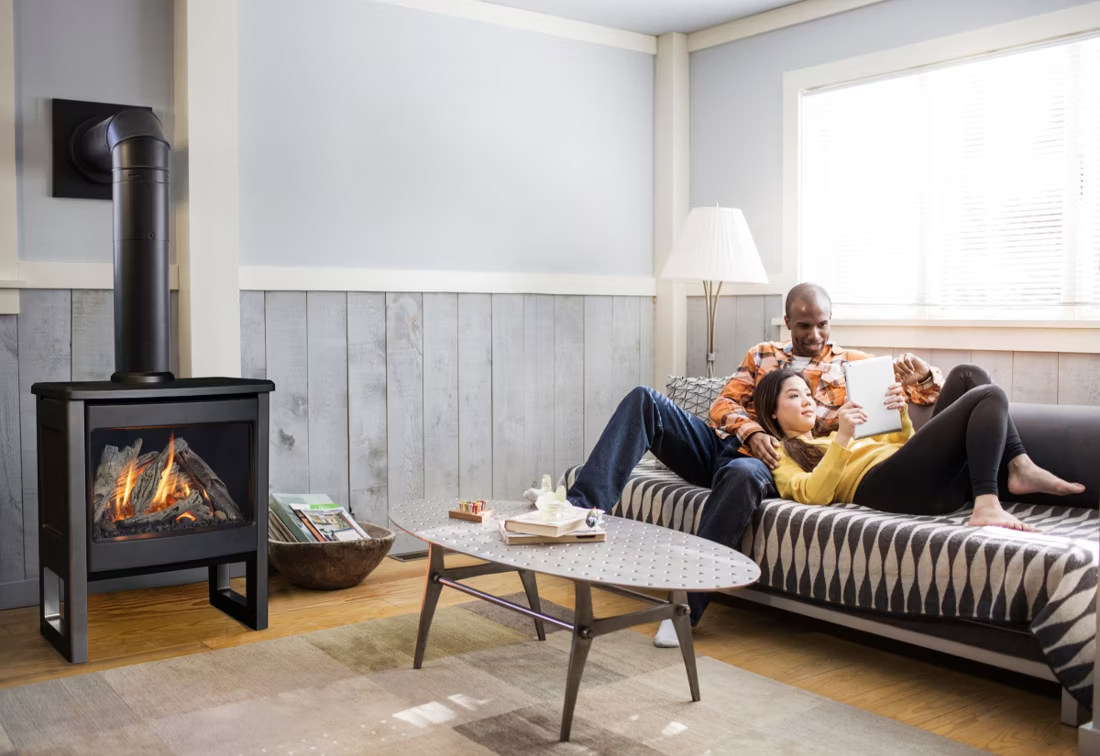
A built-in gas fireplace is framed into a wall—common in newer construction or a remodel. A gas insert drops into an existing masonry or zero-clearance wood fireplace opening, which describes a lot of Genesee's original 1970s and 80s mountain homes; it reuses your existing chimney chase as the vent path and instantly resolves the wildfire-ember concern that comes with an open wood hearth. A freestanding gas stove sits on the floor like a wood stove but burns propane, which works well in cabins or additions without an existing fireplace. For most Genesee homeowners converting an old wood-burning fireplace, an insert is the straightforward answer.
Should I consider a vent-free propane fireplace at this elevation?
I'd steer away from it in Genesee. Vent-free units rely on an oxygen depletion sensor calibrated for sea-level combustion, and that calibration gets unreliable above roughly 6,000-7,000 feet—Genesee sits at 7,733. Several manufacturers explicitly limit or void vent-free warranties at this altitude. Direct-vent sealed-combustion units, by contrast, draw outside air and exhaust outside regardless of elevation, and they're the type almost every local propane hearth dealer will recommend and install here. It's worth confirming vented versus vent-free before you fall in love with a specific model online.
How often does a propane fireplace need servicing in Genesee?
Plan on an annual inspection before heating season starts, typically in September. A qualified technician checks the burner, pilot assembly, venting, and the propane line connections, and confirms the regulator is still performing correctly at altitude. This runs $150 to $250 in most cases. Because service techs are covering a lot of mountain ground between properties, scheduling early in fall—rather than waiting for the first hard freeze—usually gets you on the calendar faster.
Since wood and pellet aren't realistic here, is propane really my best option?
For most Genesee properties, yes. Wood-burning appliances face real permitting friction under Jefferson County's wildfire mitigation code given Genesee's Wildland-Urban Interface designation, and pellet stoves—while cleaner-burning—still involve a hopper, auger, and combustion byproduct concerns that most local building officials treat the same way. Propane fireplaces sidestep both issues: sealed combustion, no ember exposure, and battery or self-generating backup ignition that keeps working through the wind-related outages common on Genesee's ridgelines. If you already have a legacy wood fireplace and want to keep the option to occasionally cut your own fuel, cutting permits are available through the Arapaho-Roosevelt National Forest for $5 to $20 per cord between May and October—but for daily reliable heat, propane is the practical choice up here.
What's the difference between an insert and a zero-clearance fireplace?
An insert is a fireplace that slides into a pre-existing wood-burning fireplace—if you don't have one, there's nothing to insert it into. A zero-clearance fireplace is built into a framed wall, which makes it the answer for remodels and new construction. Simple test: existing masonry fireplace means insert; blank or framed wall means zero-clearance.
Can I put a TV above my fireplace?
Yes—with an asterisk. Fireplaces are hot and TVs don't like heat. Either put a mantel between them to deflect rising warmth, or choose a fireplace with heat-management technology that creates a cool zone on the wall above—the wall stays around 125 degrees, barely warm, while the room still gets full heat. If you like clean lines and don't want a mantel, heat management is the answer.
How much should I budget for a fireplace?
For an average home—covering the fireplace, the vent pipe, and basic installation—a budget between $3,900 and $5,500 gives you a lot of options across wood, gas, and pellet. By the time you add finish work, gas line, and electrical, the average complete installation lands between $5,000 and $12,000 all-in. In a remodel or new build, a good rule is to put about 2.5% of the total project cost toward the fireplace.
Does a fireplace add value to my home?
On average, a fireplace adds back to the home about the same amount you spent installing it. Add the monthly savings from heating the rooms you actually use instead of the whole house—often hundreds of dollars a year—and the value case is strong before you even count what a fire does for how your family uses the room.
Nearby Dealers
Hearth shops serving Genesee and the surrounding area. Every listing shows whether it is a WhyFire partner, a dealer we have verified as authorized for the brands we recommend, or a local business carrying hearth products. No manufacturer pays for placement. How we verify dealers →
Outdoor Kitchen Dist. Inc
Spa Brokers
Aria Custom Design
Distinctive Mantel Designs
Proud Souls Barbecue & Provisions
Spa Brokers
Spa Brokers
Chimney Doctors
Spa Brokers Iii
Rio Grande Co.
Find your gas fireplace in Genesee.
Tell us about your home at 7,733 feet and we'll match you with a local propane hearth dealer and send over your free Project Guide & Parts List—the exact parts, including the vent kit, for your Genesee installation.
Find Your Fireplace →