
Steady Pellet Heat for Cheyenne County's High Plains Winters.
Cheyenne Wells and the rest of Cheyenne County sit exposed on Colorado's eastern plains, where wind and cold cut through drafty farmhouses fast. A pellet stove or insert delivers steady, thermostat-controlled heat—find the right unit and get matched with a dealer who actually services this corner of the state.
Every Project Starts From One of These Five Situations
Reliable Heat Without the Wood Pile, Built for Rural Cheyenne County.
With just over 1,100 residents spread across roughly 1,800 square miles, Cheyenne County is about as rural as Colorado gets. Cheyenne Wells sits at around 4,265 feet on open plains with almost no windbreak, and climate zone 5B winters here bring the kind of sustained cold and gusting wind that drives heat straight out of an older farmhouse. Wood has long been a fallback in this part of the state—ponderosa pine, aspen, pinyon, and juniper are all workable species locally—but hauling and splitting cordwood is one more chore for households already running a ranch.
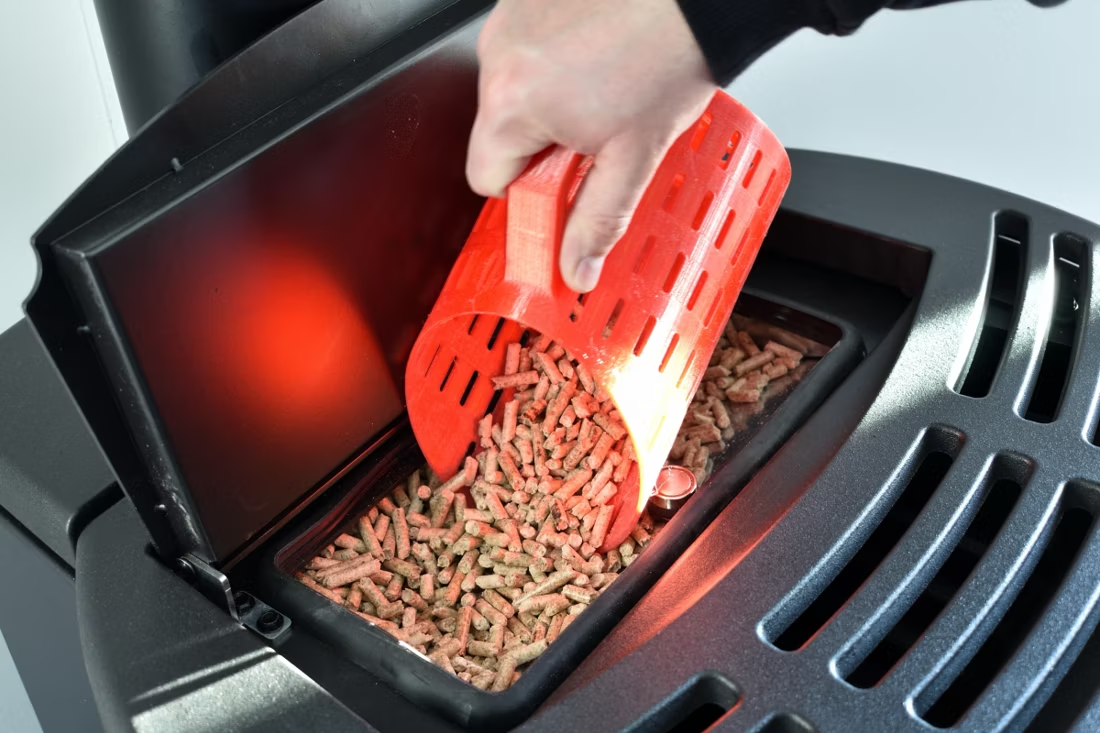
A pellet stove or insert trades the wood pile for 40-pound bags of compressed fuel—regional brands like Bear Mountain, Lignetics, and Forest Energy are common across eastern Colorado—and gives you a thermostat instead of a damper. Because Cheyenne County has no big-box hearth retailer within its own borders, most homeowners end up working with a dealer based in Burlington, Limon, or across the state line in Goodland, Kansas. The tradeoff is real: pellet stoves need electricity to run the auger and blower, and K.C. Electric Association's rural lines can go down during high-wind or ice events on the plains. For most Cheyenne County households, though, the convenience and cleaner burn outweigh that limitation, especially paired with a small backup power plan.
Three steps. No salesperson until you're ready.
Tell us about your project
Your zip code, your situation, and the fuel you're leaning toward—or let the answers point you to one.
See what's actually available
The brands dealers within 100 miles genuinely carry—real options, never a catalog mirage.
Get your dealer & Project Guide
A trusted local dealer, plus the free Project Guide & Parts List that names every component of the job.
Frequently Asked Questions
How much does a pellet stove or insert cost to install in Cheyenne County?
Expect a total installed cost of roughly $3,800 to $7,200 in Cheyenne County, depending on the unit and whether it's a freestanding stove or an insert going into an existing masonry fireplace. Pellet venting is simpler and cheaper than wood-stove chimney work—most installs use PL vent pipe run straight through an exterior wall rather than a full Class A chimney. Because there's no hearth retailer physically located in the county, installers traveling from Burlington, Limon, or Goodland, Kansas typically build a modest travel charge into the quote. Get a firm number from an in-home or photo-based consultation before budgeting.
What size pellet stove do I need for a Cheyenne County home?
Sizing here has to account for wind, not just square footage. Older farmhouses on the open plains around Cheyenne Wells and Kit Carson lose heat faster than a comparably sized home in a sheltered location, so it's common to size up one step from what a standard BTU chart would suggest. A stove rated for 1,200-1,800 square feet often ends up heating closer to 1,000-1,400 square feet once wind infiltration is factored in on an uninsulated older structure. Homes with newer insulation and tighter construction can size closer to the manufacturer's stated range. A dealer who's actually worked on plains homes in this region will size it correctly rather than going off a generic chart.
Do I need a permit to install a pellet stove in Cheyenne County?
Yes—new solid-fuel appliance installations, including pellet stoves and inserts, require a permit through the Cheyenne County building department. Because the county has a small staff covering a large rural area, permit turnaround can take longer than in a metro county, so it's worth applying as early in the fall as possible rather than waiting until the first cold snap. Most established installers coordinate the permit and final inspection as part of the job, which is one more reason to work with a dealer familiar with the county's process rather than a handyman install.
Where do I even find a pellet stove dealer near Cheyenne County?
There's no hearth showroom inside Cheyenne County itself—with a population under 1,200, it doesn't support one. Homeowners typically end up working with a dealer based in Burlington (Kit Carson County), Limon, or Goodland, Kansas, all within an hour or so of Cheyenne Wells. The trick is finding one that will actually travel for the install and stand behind warranty service afterward, rather than a big-box outlet that ships a unit with no local support. That's the matching problem Find My Fireplace solves—we connect you with a trusted dealer who genuinely services this part of the plains, not just whoever shows up first in a search.
Where do I buy pellets, and how much should I stock up on?
Wood pellets aren't sold on every corner out here the way they might be in a bigger market, so most Cheyenne County households buy a season's supply at once rather than restocking bag by bag. Regional brands like Bear Mountain, Lignetics, and Forest Energy are typically available through farm and ranch supply stores in Cheyenne Wells or Burlington, running roughly $280 to $400 per ton depending on brand and delivery distance. A stove used as primary heat through a full plains winter can burn 2 to 3 tons; supplemental use runs closer to 1 ton. Store bags off the ground in a dry barn, garage, or shed—humidity swings on the open plains can degrade pellets that sit exposed.
Will my pellet stove still work if the power goes out?
Not without backup power. Pellet stoves rely on an electric auger to feed fuel and a blower to distribute heat, so a power outage shuts the unit down completely. That matters in Cheyenne County, where K.C. Electric Association's rural distribution lines can be knocked out for hours or longer during the high-wind and ice events that hit the plains most winters. Many households here pair a pellet stove for everyday convenience with either a small backup generator (a 1,000-2,000 watt unit is usually enough to keep the stove running) or a secondary wood stove that needs no electricity at all. Ask your dealer about battery-backup options built into some newer pellet stove models as well.
How does a pellet stove compare to wood heat for a Cheyenne County ranch home?
Wood costs less if you're already cutting or hauling it yourself, requires no electricity, and is the more resilient choice during the extended outages that can follow a bad plains ice storm. Pellet stoves trade that self-sufficiency for consistency and lower daily effort—load the hopper, set the thermostat, and walk away, with far less ash and no chimney creosote buildup to manage. For households already running cattle or equipment maintenance, the reduced daily labor of a pellet stove is often the deciding factor. Many Cheyenne County homes end up with both: a pellet stove for day-to-day comfort and a wood stove as the outage-proof backup.
Does wildfire and grassland smoke affect pellet stove use out here?
Cheyenne County isn't forested, but rangeland and grass fires on the eastern plains can trigger regional air quality advisories, particularly in dry, windy summer and fall stretches. EPA-certified pellet stoves burn considerably cleaner than open wood fires or older uncertified wood stoves, producing far less particulate output—a real advantage on days when the Colorado Department of Public Health and Environment issues a smoke advisory for the region. It's one more reason some households moving away from an old wood stove choose to replace it with a pellet unit rather than a like-for-like wood stove.
How much maintenance does a pellet stove need?
Plan on emptying the ash pan and wiping down the burn pot every few days during heavy winter use, plus a deeper hopper and auger cleaning every few weeks. A full annual service—checking the igniter, gaskets, blower motor, and venting—should happen every year, ideally in late summer before the first cold snap. Because certified pellet stove technicians aren't based in Cheyenne County itself, it's worth scheduling that annual service early; techs traveling from Burlington, Limon, or Goodland book up fast once plains temperatures start dropping in October and November.
Why is my open fireplace making my house colder?
Open fireplaces suck—literally. As the fire burns, it consumes air your furnace already paid to heat and pulls it out through the chimney, so the house is actually colder after the fire goes out than before you lit it. An insert fixes this: it seals the chimney, puts fixed glass across the front, and turns that hole in your house into a real heat source.
What's the difference between an insert and a zero-clearance fireplace?
An insert is a fireplace that slides into a pre-existing wood-burning fireplace—if you don't have one, there's nothing to insert it into. A zero-clearance fireplace is built into a framed wall, which makes it the answer for remodels and new construction. Simple test: existing masonry fireplace means insert; blank or framed wall means zero-clearance.
Does a fireplace add value to my home?
On average, a fireplace adds back to the home about the same amount you spent installing it. Add the monthly savings from heating the rooms you actually use instead of the whole house—often hundreds of dollars a year—and the value case is strong before you even count what a fire does for how your family uses the room.
How much should I budget for a fireplace?
For an average home—covering the fireplace, the vent pipe, and basic installation—a budget between $3,900 and $5,500 gives you a lot of options across wood, gas, and pellet. By the time you add finish work, gas line, and electrical, the average complete installation lands between $5,000 and $12,000 all-in. In a remodel or new build, a good rule is to put about 2.5% of the total project cost toward the fireplace.
Pellet Brands Stocked Around Cheyenne County
Manufacturers will point you to the nearest stocking dealer.
Find your pellet stove in Cheyenne County.
Tell us about your home on the plains and we'll match you with a real local dealer—plus a free Project Guide & Parts List with the exact venting and parts your pellet stove or insert install needs.
Find Your Fireplace →