
Warm, clean heat for Bent County's high plains winters.
Automated, low-maintenance heat for the wind-scoured plains around Las Animas and Fort Lyon. We'll match you with a real local dealer who can size, permit, and install it right.
Every Project Starts From One of These Five Situations
Consistent warmth without the wood-cutting work.
Bent County sits along the Arkansas River in southeastern Colorado's high plains, with Las Animas as the county seat and roughly 2,600 residents spread across a wide, rural, agricultural landscape near John Martin Reservoir. At around 3,900 feet elevation, the county sees average winter lows near 16°F and about 5,125 heating degree days a year—a real cold-climate 5B rating, though nowhere near the deep-freeze totals of places like Fargo, ND or Bismarck, ND. What Bent County does get is wind: long, exposed stretches of plains that push heat loss and make homes want a heat source that keeps running steadily through multi-day cold snaps without constant tending.
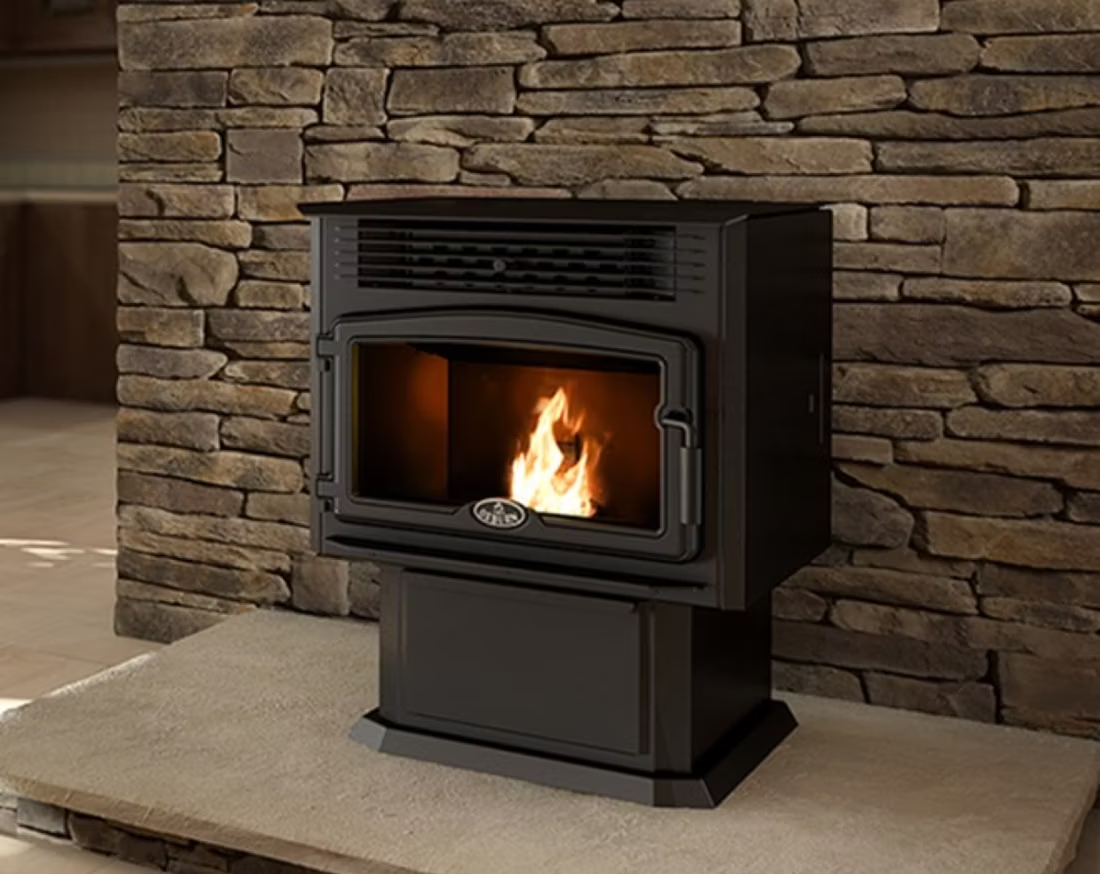
Pellet stoves fit that need well. There's no woodlot to maintain, no chainsaw work, and no cutting permit to track down—you load a hopper with bagged pellets (Bear Mountain, Lignetics, and Forest Energy are the brands most commonly stocked regionally) and let the auger and thermostat handle the rest. Because Bent County is so thinly populated, most certified installers are based out of larger service hubs like La Junta or Pueblo rather than in-county, and a pellet unit's simpler venting—a through-wall pellet vent kit instead of a full masonry chimney—makes it realistic for a traveling technician to complete the job in a single visit. Pellets also burn cleaner than cordwood, which matters here given how often wildfire smoke settles over the Arkansas Valley in dry summer and fall stretches—you're not adding to the haze every time you run the stove.
Three steps. No salesperson until you're ready.
Tell us about your project
Your zip code, your situation, and the fuel you're leaning toward—or let the answers point you to one.
See what's actually available
The brands dealers within 100 miles genuinely carry—real options, never a catalog mirage.
Get your dealer & Project Guide
A trusted local dealer, plus the free Project Guide & Parts List that names every component of the job.
Frequently Asked Questions
How much does a pellet stove installation cost in Bent County?
Most pellet stove installations run somewhere in the $3,000 to $6,000 range once you include the unit, a through-wall vent kit, and hookup labor—well below what a comparable wood stove and chimney system would cost. Because Bent County has very few installers based in-county, expect a modest travel charge added to quotes for jobs out toward Fort Lyon or the more remote reaches of the county, since most certified crews are coming from La Junta or Pueblo. A building permit through Bent County is required for permanent installations, but pellet stoves typically involve far less structural work than a wood-burning system, which keeps both the permit process and the install itself simpler.
What size pellet stove do I need for a Bent County home?
Sizing depends on square footage, insulation quality, and how exposed the home is to plains wind—a factor that matters more here than in sheltered mountain towns. As a rough guide: smaller units (under 1,000 sq ft) suit a single living area or a modest ranch-style home, while medium units (1,000–2,000 sq ft) cover most Bent County houses used as a primary or near-primary heat source. Older farmhouses and homes with less insulation along the exposed river valley often do better sized up a notch, since constant wind pulls heat out of a structure faster than still-air conditions would. A local dealer can size this correctly during an in-home visit—it's worth getting right, since an undersized unit will struggle to keep pace on the coldest, windiest nights near 16°F.
Where can I buy pellets in Bent County?
Given the county's small population, pellet retail isn't as dense here as it would be in a larger market—most homeowners buy from regional ag and ranch supply stores or hardware retailers stocking Bear Mountain, Lignetics, or Forest Energy pellets, often sourced through larger suppliers based in Pueblo or along the Highway 50 corridor. Because local stock can run out during a hard cold stretch, it's smart to buy a season's worth (typically 2-3 tons for a primary-heat home) early in the fall rather than restocking bag by bag through winter. Pellets need to stay dry, so plan for indoor or covered storage—Bent County's dry plains air helps, but wind-driven precipitation can still get at an uncovered stack.
Pellet stove vs. wood stove—which makes more sense in Bent County?
Wood stoves burn cordwood—often ponderosa pine, aspen, pinyon, or juniper sourced regionally—and keep working with zero electricity, which matters during the ice and wind events that occasionally knock out power on the plains. Pellet stoves need electricity to run the auger and blower, so they go dark in an outage unless paired with a battery backup, but they're far easier to operate day to day: load the hopper, set the thermostat, and the stove self-regulates. For a rural Bent County property where you want low-maintenance, hands-off heat and don't mind keeping a battery backup on hand for the rare outage, pellet is usually the better fit. For a property where wood is cheap or self-sourced and storm-related outages are a real concern, wood stays competitive.
Do I need a permit to install a pellet stove in Bent County?
Yes—a building permit through Bent County is required for a permanent pellet stove installation, covering the appliance placement, clearances, and venting. Compared to a wood stove and masonry chimney, the inspection is generally more straightforward since pellet units vent through a smaller through-wall pipe rather than a full chimney system. Most installers coming out of La Junta or Pueblo will handle the permit paperwork as part of the job, so homeowners typically don't need to navigate the county process themselves.
What's the best pellet stove for Bent County's climate?
Look for a unit with a large hopper capacity and a reliable auto-ignition system—useful when winds pick up overnight and you don't want to be feeding the stove by hand at 2 a.m. in 16°F weather. Models with a good thermostat-modulated burn rate handle Bent County's swing between mild fall afternoons and sharp overnight drops better than a fixed-rate unit. Since most homes here are on the plains with real wind exposure, a slightly larger BTU output than a sheltered-valley home of the same square footage would need is often the right call. A local dealer can walk through specific models once they know your home's insulation and layout.
How often does a pellet stove need to be serviced?
Plan on emptying the ash pan every few days during regular use and doing a full cleaning of the burn pot, auger, and exhaust venting at least once a season—typically before burning season starts in the fall. An annual professional inspection is a good idea too, checking the blower, gaskets, and vent termination for any buildup or wear. Because service techs covering Bent County are usually traveling in from La Junta or Pueblo, it's worth scheduling that annual visit early rather than waiting until a cold snap exposes a problem.
How much pellet fuel will I need to get through a Bent County winter?
A home using a pellet stove as primary heat through a full Bent County winter typically burns through 2 to 3 tons of pellets, given the roughly 5,125 heating degree days the area sees each year. Homes using pellet heat as a supplement to another system—common in town homes near Las Animas with existing propane or electric heat—often use closer to 1 to 1.5 tons. Because local retail stock is limited, buying your season's supply in the fall from a regional supplier carrying Bear Mountain, Lignetics, or Forest Energy pellets is the more reliable approach than trying to restock mid-winter.
Pellet stove vs. propane fireplace—which is right for my Bent County home?
With no widespread natural gas infrastructure across most of rural Bent County, the real comparison for many homeowners is pellet versus propane. Propane fireplaces offer instant on-off convenience and don't require handling fuel bags, but they depend on a tank refill schedule and propane pricing that can swing with regional demand. Pellet stoves require more hands-on loading and periodic ash cleanup, but bagged pellets are easy to stockpile ahead of winter and pellet stoves generally deliver stronger, more consistent heat output for whole-room or whole-home use rather than just ambiance. For a primary heat source in an exposed, windy plains home, pellet tends to win on heat output per dollar; for a lower-maintenance secondary heat source, propane holds its own.
What's the difference between an insert and a zero-clearance fireplace?
An insert is a fireplace that slides into a pre-existing wood-burning fireplace—if you don't have one, there's nothing to insert it into. A zero-clearance fireplace is built into a framed wall, which makes it the answer for remodels and new construction. Simple test: existing masonry fireplace means insert; blank or framed wall means zero-clearance.
How often does a pellet stove need cleaning?
A clean pellet stove is a happy pellet stove. Plan on cleaning the burn pot about once a week when you're burning regularly—ash and clinkers gum up the air holes just like a pellet barbecue. Most pellet stove problems trace back to skipped cleaning that nobody explained up front. Some designs make it easy with a trapdoor burn pot: pull a lever and the gunk drops into the ash pan.
What is an in-home preview and do I need one?
It's a visit where a hearth professional measures your space, confirms the model you picked actually works in your home, and walks the specs—framing, gas line, venting, finish work—before anything is ordered. Some details you just can't know until you see the house. Never make a down payment without one; it's the single most-skipped step that burns buyers.
Can a fireplace actually lower my heating bill?
Yes—by creating a comfort zone. A furnace heats every square foot of the house just to warm the one room you're in; a gas fireplace on low burns roughly a sixth of the gas a typical furnace does. Set the furnace around 55–60 degrees as a baseline, then heat the rooms your family actually uses. Families who heat this way commonly save $20–$60 a month.
Pellet Brands Stocked Around Bent County
Manufacturers will point you to the nearest stocking dealer.
Find your pellet stove in Bent County.
Tell us about your home and heating goals, and we'll match you with a trusted local dealer serving Bent County—plus a free Project Guide & Parts List with the exact vent kit and parts your installer will need.
Find Your Fireplace →