
Keep Your Family Warm and Safe—No Matter What
With a very light winter heating season and winter lows averaging 49°F, Yorba Linda homes rarely need wood heat to survive winter. A small number of homeowners still want the look and feel of a real wood fire—here's what's realistic given local air rules and climate.
Every Project Starts From One of These Five Situations
Mild winters make wood heat optional here.
Yorba Linda sits at about 554 feet in Orange County's inland foothills, in climate zone 3B, where the average winter low is a mild 49°F and the city has a very light heating season overall. Compare that to a place like Duluth MN, which has a winter heating load many times greater over the year, and it's clear why wood-burning stoves and inserts are not a common sight in Yorba Linda homes. For nearly all residents, a furnace or heat pump handles the handful of genuinely cold nights each winter without any need for supplemental wood heat.
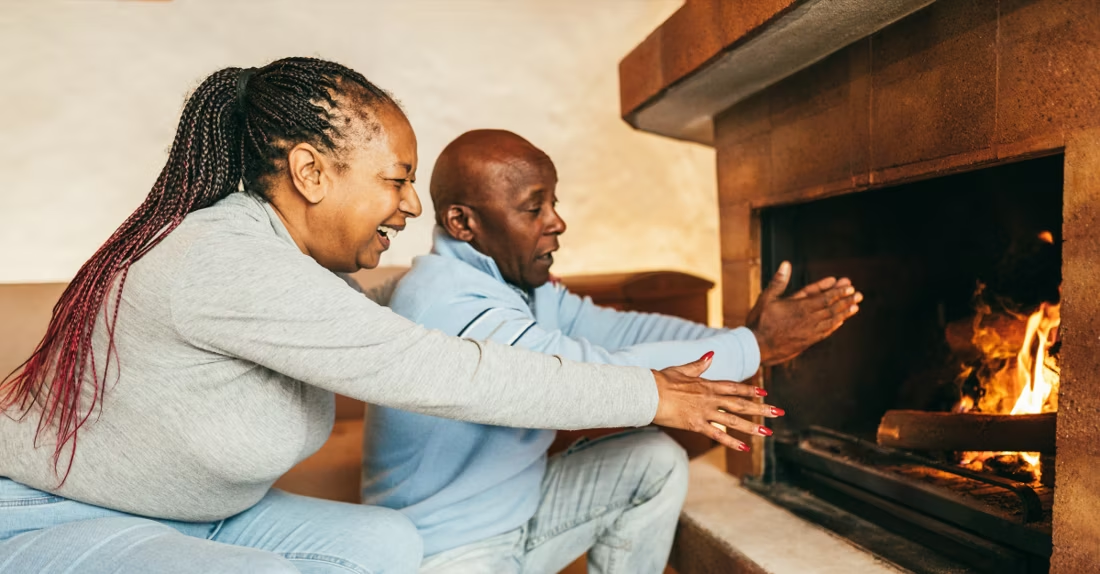
There's also a regulatory reason wood is rare here. Orange County sits within the South Coast Air Quality Management District's jurisdiction, a federally designated non-attainment area for particulate matter, and SCAQMD Rule 445 has prohibited new wood-burning fireplaces in new home construction since 2008. Existing masonry fireplaces are grandfathered in, but SCAQMD's Check Before You Burn program issues no-burn advisories on many winter days when air quality dips—common in a basin that already deals with wildfire smoke each fall. The homeowners who do pursue a wood-burning fireplace in Yorba Linda are typically restoring an older home's existing masonry hearth or want an occasional-use fire for atmosphere, not daily heat.
Firewood Cutting Permits Near Yorba Linda
Three steps. No salesperson until you're ready.
Tell us about your project
Your zip code, your situation, and the fuel you're leaning toward—or let the answers point you to one.
See what's actually available
The brands dealers within 100 miles genuinely carry—real options, never a catalog mirage.
Get your dealer & Project Guide
A trusted local dealer, plus the free Project Guide & Parts List that names every component of the job.
Frequently Asked Questions
How much does it cost to install a wood-burning fireplace or insert in Yorba Linda?
Because wood heat is uncommon in this climate, fewer local dealers stock a deep wood-burning lineup compared to gas or electric. For homeowners restoring or upgrading an existing masonry fireplace with an EPA-certified wood insert, expect a project in roughly the $4,000-$9,000 range depending on liner work and hearth clearances—but get a firm quote from a trusted local installer, since pricing varies more here than in markets where wood is the default heat source. New standalone wood stove installs are rarer still and priced case by case.
Is it even legal to install a wood-burning fireplace in Yorba Linda?
New construction in Orange County has been barred from including wood-burning fireplaces since 2008 under SCAQMD Rule 445—new builds must use gas or electric. If you own an older Yorba Linda home with an existing masonry wood fireplace, it's grandfathered in, but you'll want to check current SCAQMD rules before doing major remodel work, since some renovations trigger a requirement to upgrade to an EPA-certified unit. You'll also need to follow Check Before You Burn no-burn advisories, which restrict wood burning on days when regional particulate levels are elevated—common in this non-attainment area.
Why don't more homes in Yorba Linda have wood stoves?
It comes down to need. With such a mild winter heating load and a winter low averaging 49°F, Yorba Linda simply doesn't get cold enough, often enough, to justify a wood-burning appliance as a heat source. Cities that rely heavily on wood heat—think Bozeman MT or Burlington VT—see winter lows well below freezing for months and a winter heating load eight to ten times higher than Yorba Linda's. Here, a fireplace is far more likely to be a design feature or occasional-use amenity than a functional heating strategy.
Does wildfire smoke season affect whether I should burn wood at home?
It's worth factoring in. Orange County already deals with periodic wildfire smoke events, particularly in late summer and fall, and the South Coast air basin is a federal non-attainment area for fine particulate matter. Adding routine wood smoke to that mix—even from an EPA-certified appliance—isn't something SCAQMD encourages, which is part of why Check Before You Burn advisories are issued so often locally. If you do install a wood-burning unit, plan to use it selectively and check advisory status before lighting a fire, especially during peak wildfire season.
Can I get a permit to cut my own firewood near Yorba Linda?
Yes, though you'll need to drive to reach it. The Cleveland National Forest is the closest public land offering personal-use firewood cutting permits, with the San Bernardino and Angeles National Forests also within reach for Orange County residents. Permits typically run $5 to $20 per cord, with cutting seasons generally running May through October. Common species available include oak, madrone, and Douglas fir. Given the drive and the limited local demand, most Yorba Linda homeowners who do burn wood buy split, seasoned cordwood from a supplier rather than cutting their own.
What's a more practical alternative to a wood-burning fireplace here?
For most Yorba Linda homes, a direct-vent gas fireplace or insert is the more practical choice—natural gas service is standard in the area, there's no Check Before You Burn restriction to work around, and you get instant on-off heat without hauling or storing cordwood. Electric fireplaces are another option worth considering, though Southern California Edison's residential rate (currently around $0.28/kWh) makes electric units better suited to occasional ambiance use than daily heating. A local dealer can walk you through both if you're open to something other than wood.
I already have an old masonry wood fireplace—should I upgrade it?
If you're going to use it at all, upgrading an old open masonry fireplace to an EPA-certified wood insert is worth considering. Certified inserts burn dramatically cleaner and more efficiently than an open hearth, which matters in a non-attainment area where every no-burn advisory restricts old, uncertified fireplaces first. It also means less smoke and creosote for the occasional fire you do light. A trusted local installer can assess your existing chimney and let you know whether it's a straightforward liner-and-insert job or needs more extensive work.
What firewood species work best for occasional fires in Yorba Linda?
Oak is the standout choice—it's dense, burns hot and long, and is widely available from Southern California firewood suppliers. Douglas fir works well as a fast-lighting kindling wood but burns quicker and leaves more resin buildup, so it's better mixed in than used alone. Madrone is a dense hardwood similar to oak but is more commonly sourced from Northern California and Pacific Northwest suppliers, so it's less consistently available locally—ask a supplier before assuming it's in stock.
Wood vs. gas fireplace—which actually makes sense for my Yorba Linda home?
Given the climate here, gas wins for most homeowners: it's unaffected by Check Before You Burn advisories, doesn't add particulate matter in an already non-attainment air basin, and delivers instant heat without cordwood storage or ash cleanup. Wood makes sense mainly if you're restoring a character feature in an older home, want the specific look and smell of a real wood fire for occasional use, or already have a masonry fireplace you don't want to lose. If daily use or backup heat during outages matters to you, gas or electric is the more realistic fit for this climate.
Why won't my new wood stove get going like my old one?
New wood stoves are 70%+ efficient, so far less heat goes up the flue—which also means less draft to get a fire established. The rule: build a genuinely hot fire for about 45 minutes before you choke it down. Skip that and you get smoke in the room, creosote in the chimney, and a fire that never takes off. Most performance complaints trace straight back to this.
Why is my open fireplace making my house colder?
Open fireplaces suck—literally. As the fire burns, it consumes air your furnace already paid to heat and pulls it out through the chimney, so the house is actually colder after the fire goes out than before you lit it. An insert fixes this: it seals the chimney, puts fixed glass across the front, and turns that hole in your house into a real heat source.
Can I install a fireplace myself?
If you're putting a fire in your house on purpose, it's best to work with an expert. Unless you're genuinely experienced in framing, gas line, vent pipe, and the national code on clearances to combustibles, have a professional do it—and ideally the same company that sells you the fireplace, so warranty, service, and liability all live under one roof.
Does a fireplace add value to my home?
On average, a fireplace adds back to the home about the same amount you spent installing it. Add the monthly savings from heating the rooms you actually use instead of the whole house—often hundreds of dollars a year—and the value case is strong before you even count what a fire does for how your family uses the room.
Nearby Dealers
Hearth shops serving Yorba Linda and the surrounding area.
See what's realistic for a wood fireplace in Yorba Linda.
Tell us about your home and whether you're restoring an existing fireplace or considering something new. We'll match you with a trusted local dealer and send a free Project Guide & Parts List—including the vent kit and exact parts needed for your specific project in Yorba Linda.
Find Your Fireplace →