
Keep Your Family Warm and Safe—No Matter What
From Woodland to Davis to Winters, Yolo County winters are mild but wood heat still matters—for ambiance, for backup power, and for the coldest valley nights. Find the right stove or insert, and connect with a local dealer who knows the Check Before You Burn rules.
Every Project Starts From One of These Five Situations
Ambiance and backup heat, tuned to valley winters.
Yolo County sits in the flat Sacramento Valley, from Woodland and the UC Davis area down through West Sacramento and out to Winters near the Coast Range foothills. Winters here are mild by wood-heat standards—average lows around 38°F and a winter heating load that's just a fraction of what a mountain town like Bozeman or Duluth logs in a single season. That means most Yolo County households running a wood stove are supplementing a gas furnace or heat pump rather than depending on wood to survive the winter, though a fire on a cold, foggy Tule-fog night in January is still a real draw for a lot of older farmhouses around Woodland and Winters.
The bigger factor shaping wood heat here is air quality. Yolo County sits in a non-attainment area, and the Yolo-Solano Air Quality Management District runs a Check Before You Burn program each winter—mandatory no-burn days when particulate levels spike, with an exemption for EPA-certified stoves and inserts registered as a home's sole source of heat. Wildfire smoke in late summer and fall adds another layer, though that's a separate seasonal concern from winter burn restrictions. Local species—valley and blue oak, madrone, and Douglas fir—burn well, though most of the public cutting permits (Eldorado National Forest, Tahoe National Forest, BLM California State Office) are up in the Sierra foothills rather than in the flat valley floor of Yolo County itself, so plenty of residents make the drive up Highway 50 or 80 for permit wood, or buy split cordwood locally instead.
Firewood Cutting Permits Near Yolo County
Three steps. No salesperson until you're ready.
Tell us about your project
Your zip code, your situation, and the fuel you're leaning toward—or let the answers point you to one.
See what's actually available
The brands dealers within 100 miles genuinely carry—real options, never a catalog mirage.
Get your dealer & Project Guide
A trusted local dealer, plus the free Project Guide & Parts List that names every component of the job.
Frequently Asked Questions
How much does a wood stove installation cost in Yolo County?
Most wood stove installations in Yolo County land somewhere between $4,000 and $8,500, depending on the stove, whether an existing masonry fireplace and chimney can be reused, and whether a hearth pad needs to be upgraded for clearance requirements. Homes without an existing chimney—common in newer Davis and West Sacramento subdivisions—run higher once Class A pipe and roof penetration are factored in. Because the unit also has to qualify as EPA-certified to burn legally on Check Before You Burn no-burn days, older uncertified stoves being replaced usually need full removal and disposal, which local installers typically build into the quote.
What size wood stove do I need for a Yolo County home?
Given the mild valley climate—average winter lows in the high 30s and a winter heating load that's only a fraction of colder regions—most Yolo County homes do fine with a small to medium stove sized for supplemental heat rather than a large, all-night unit built for sub-zero climates. A stove rated for up to 1,200–1,500 square feet handles a typical living area in Woodland or Davis; larger, open-concept homes or drafty older farmhouses around Winters may want a medium unit in the 1,500–2,000 square foot range. Oversizing is a common mistake here—a stove built for Sierra-foothill winters will smolder and run inefficiently in a Sacramento Valley living room most of the season. A local retailer can size your space correctly during an in-home visit.
Where can I find certified wood stove installers near me?
Look for installers with NFI (National Fireplace Institute) or CSIA (Chimney Safety Institute of America) certification—both indicate real training in wood-appliance clearances and venting, not just general contracting experience. Local hearth retailers serving Yolo County typically cover Woodland, Davis, West Sacramento, and Winters directly, with a modest travel charge for more rural addresses out toward the county's western edge. Because your stove also has to meet EPA-certified status to legally operate during Yolo-Solano AQMD no-burn advisories, working with a dealer who sells EPA-compliant models and documents that compliance matters more here than in most counties.
What's the difference between a wood stove and a wood insert?
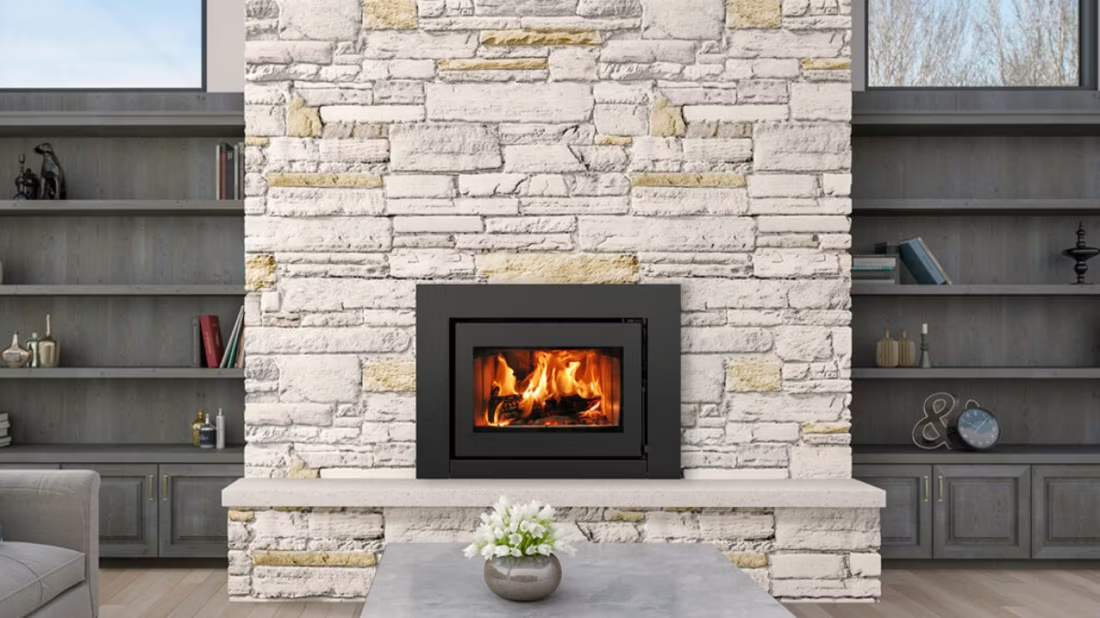
A wood stove is a freestanding unit on its own hearth pad, vented through a chimney, and can go almost anywhere in a room with the right clearances. A wood insert is built to slide into an existing masonry fireplace opening, turning a drafty, low-efficiency open hearth into a sealed, high-output heater. Older homes around downtown Woodland and parts of Davis with existing brick fireplaces are usually good insert candidates—you keep the chimney you already have and get a big jump in heat output and control. Newer construction without an existing fireplace opening is generally a better fit for a freestanding stove.
Do I need a permit to install a wood stove in Yolo County?
Yes—a building permit is required for new wood stove installations, whether you're inside city limits (Woodland, Davis, West Sacramento, Winters each handle their own permitting) or in unincorporated Yolo County, where the county building department issues the permit. The stove itself must meet current EPA emissions standards. Separately, burning is regulated day-to-day by the Yolo-Solano Air Quality Management District's Check Before You Burn program: on declared no-burn days each winter, only EPA-certified stoves and inserts registered as a home's sole source of heat may legally operate. Most local installers handle the building permit as part of the install and can walk you through the sole-source registration if it applies to your household.
What's the best wood stove for Yolo County's climate and air rules?
Because winters here are mild—nothing like the sub-zero nights a Fargo or Minneapolis stove has to handle—most Yolo County homeowners don't need a massive catalytic unit built for 20-hour burns. A mid-size, EPA-certified non-catalytic stove from a brand like Pacific Energy or Lopi covers most Woodland and Davis homes well and keeps emissions low enough to stay compliant on Check Before You Burn advisory days. If wood heat will genuinely be your primary source during cold spells—some rural properties around Winters run this way—a catalytic model like Blaze King is worth a look for longer, steadier burns. Either way, ask your local retailer to confirm the model qualifies for sole-source exemption under the air district's rules.
How often should my chimney be inspected and cleaned?
The CSIA recommends an annual inspection for any wood-burning appliance, and that holds even in a mild-winter county like Yolo, where a stove might only see regular use from December through February. Plan on a sweep and inspection in late summer or early fall, before burn season and before the year's first Check Before You Burn advisories start. Homes using wood more heavily as supplemental heat, or burning softer woods like Douglas fir that build creosote faster than oak, may want a mid-season check if they're getting frequent use.
Where can I get firewood in Yolo County?
Local firewood yards around Woodland and Davis sell split, seasoned cordwood—oak is the most common and burns hottest and longest, with madrone and Douglas fir also available regionally. Prices typically run $250–$400 per cord depending on species and delivery distance. For self-cutting, the nearest public cutting permits are up in the Sierra foothills through the Eldorado National Forest, Tahoe National Forest, or BLM California State Office—cutting season generally runs April through October and permits run roughly $5–$20 per cord (Eldorado, Tahoe) or about $10 per cord through BLM. It's a drive from the valley floor, but a popular option for Yolo County residents who want to stock up cheaply during the season.
Wood stove vs. pellet stove—which is right for a Yolo County home?
Wood stoves burn cordwood, work without electricity, and give you the authentic fire experience many homeowners want—a real plus if you lose power during a winter storm. Pellet stoves burn compressed wood pellets (regional brands like Bear Mountain, Lignetics, and Pacific Pellet are widely available), are easier to load and run, and burn cleaner, which matters directly here: pellet stoves are typically exempt from Yolo-Solano AQMD no-burn restrictions because of their low particulate output, so they can keep running on days a standard wood stove can't. The tradeoff is pellet stoves need electricity to run the auger and blower, so they're not a backup option during an outage. For most Yolo County homes using wood for ambiance and supplemental heat, pellet is worth serious consideration; for anyone prioritizing off-grid reliability, wood still wins.
Why is a fireplace insert so efficient?
An insert does two things: it seals the chimney completely, so you stop losing air you already paid to heat, and it radiates warmth into the room through the firebox and glass. Most add a heat-exchange fan that pulls cool room air underneath, wraps it around the hot firebox, and pushes it back out warm. Your home is more efficient before you've even lit the first fire.
Why is my open fireplace making my house colder?
Open fireplaces suck—literally. As the fire burns, it consumes air your furnace already paid to heat and pulls it out through the chimney, so the house is actually colder after the fire goes out than before you lit it. An insert fixes this: it seals the chimney, puts fixed glass across the front, and turns that hole in your house into a real heat source.
How much should I budget for a fireplace?
For an average home—covering the fireplace, the vent pipe, and basic installation—a budget between $3,900 and $5,500 gives you a lot of options across wood, gas, and pellet. By the time you add finish work, gas line, and electrical, the average complete installation lands between $5,000 and $12,000 all-in. In a remodel or new build, a good rule is to put about 2.5% of the total project cost toward the fireplace.
Can a fireplace actually lower my heating bill?
Yes—by creating a comfort zone. A furnace heats every square foot of the house just to warm the one room you're in; a gas fireplace on low burns roughly a sixth of the gas a typical furnace does. Set the furnace around 55–60 degrees as a baseline, then heat the rooms your family actually uses. Families who heat this way commonly save $20–$60 a month.
Find your wood stove in Yolo County.
Tell us a bit about your home and burning goals, and we'll match you with the right wood stove or insert—plus a free Project Guide & Parts List with the exact parts, vent kit, and a trusted local Yolo County dealer to install it.
Find Your Fireplace →