
Pellet Heat Is Rare Here—But Not Impossible.
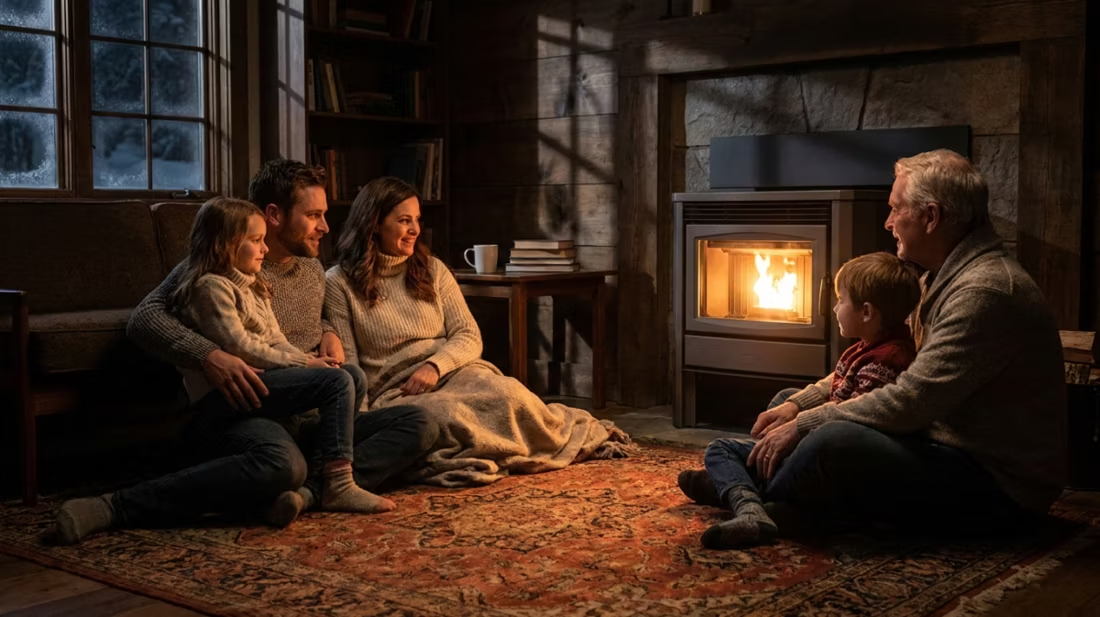
Walnut's San Gabriel Valley winters rarely call for solid fuel heat, but if you want the ambiance of a real flame, a pellet stove can still make sense. We'll connect you with a regional dealer who actually stocks and installs them.
Every Project Starts From One of These Five Situations
In Walnut, mild winters rarely call for solid fuel heat.
Walnut sits at 684 feet in the San Gabriel Valley, where the average winter low hovers around 43°F and the city logs only about 1,457 heating degree days a year. Compare that to a place like Minneapolis, MN, which racks up more than 7,500 HDD—Walnut's heating season is a fraction of that. Central gas furnaces and heat pumps handle nearly all of the winter heating load here, which is a big part of why pellet stoves never really caught on as a primary heat source in this part of Los Angeles County.
Walnut also sits within the South Coast Air Quality Management District's non-attainment area, and wildfire smoke is a recurring seasonal concern. SCAQMD's Rule 445 restricts wood-burning devices on declared no-burn days, but EPA-certified pellet stoves are generally exempt from that curtailment—which actually makes pellet the more compliance-friendly solid-fuel option here, even though very few Walnut homes end up needing one. The homeowners who do install a pellet unit are usually after the look and feel of a real fire, a bit of supplemental warmth on the occasional 40-degree night, or a unit for a second property in the mountains where the climate is genuinely cold.
Three steps. No salesperson until you're ready.
Tell us about your project
Your zip code, your situation, and the fuel you're leaning toward—or let the answers point you to one.
See what's actually available
The brands dealers within 100 miles genuinely carry—real options, never a catalog mirage.
Get your dealer & Project Guide
A trusted local dealer, plus the free Project Guide & Parts List that names every component of the job.
Frequently Asked Questions
Are pellet stoves even legal to install in Walnut given the air quality rules?
Yes. Walnut falls inside the South Coast Air Quality Management District's non-attainment area, and SCAQMD's Rule 445 (the Check Before You Burn program) restricts wood-burning fireplaces and stoves on declared no-burn days. EPA-certified pellet stoves are generally exempt from that mandatory curtailment because they burn cleaner and more consistently than open wood fires. In practice, that makes pellet the more permit-friendly solid-fuel appliance in this part of Los Angeles County—the barrier to installing one here isn't the regulation, it's simply that most homes don't need the heat.
Why don't more homes in Walnut have pellet stoves?
Walnut's climate just doesn't call for it. With an average winter low around 43°F and roughly 1,457 heating degree days a year, this is a mild coastal-influenced climate, not a place like Bozeman, MT or Duluth, MN where solid-fuel backup heat is a practical necessity. Central gas furnaces and electric heat pumps comfortably cover the handful of cool weeks each winter, so a pellet stove ends up being a lifestyle choice rather than a heating requirement for the overwhelming majority of homeowners here.
What does a pellet stove installation typically cost?
Installed pellet stoves generally run $3,000 to $6,500 nationally, depending on the unit, venting path, and whether it's a freestanding stove or an insert going into an existing fireplace. Because demand is low in the San Gabriel Valley, there are fewer local installers than you'd find in a colder region—expect to work with a dealer who covers the broader Los Angeles/Inland Empire area rather than one based in Walnut itself. Get a firm quote after an in-home visit, since venting length and hearth pad needs vary a lot house to house.
Where can I buy pellets near Walnut?
Regional brands like Bear Mountain, Lignetics, and Pacific Pellet are the ones most commonly carried by hearth retailers serving Southern California, though you'll likely need to look toward the Inland Empire or a broader Los Angeles-area supplier rather than a shop in Walnut proper, since local retail demand is thin. Pellets are sold in 40-pound bags, usually by the pallet (about a ton), and because turnover is slower here than in colder markets, it's worth confirming freshness and dry storage before buying in bulk.
Will a pellet stove work during a power outage?
No—pellet stoves rely on an electric auger to feed fuel and a blower to distribute heat, so they shut down in a power outage just like a furnace does. That matters in this part of Southern California, where Southern California Edison occasionally initiates wildfire-related Public Safety Power Shutoffs during high-wind, high-fire-danger periods. If backup heat during an outage is your priority, a pellet stove isn't the right tool for that job—a battery-backed gas unit is a better fit.
Is a pellet stove or an electric fireplace a better fit for a Walnut home?
For most Walnut homes, an electric fireplace or insert is the more practical choice. SCE's residential rate of about $0.2825 per kWh is on the higher side statewide, so running an electric heater constantly isn't cheap, but electric units need no venting, no chimney, and no solid-fuel storage—and given how few days a year actually call for supplemental heat here, the simplicity usually outweighs pellet's slightly lower fuel cost per BTU. Pellet makes more sense for someone specifically after the visual and radiant feel of a real flame.
Do I need a permit to install a pellet stove in Walnut?
Yes—a new solid-fuel appliance installation requires a building permit through the City of Walnut's Building and Safety Division, and the unit itself needs to be EPA-certified to meet current emissions standards. Your installer should also confirm the appliance qualifies for SCAQMD's Rule 445 exemption from no-burn day restrictions. Most dealers who serve this area handle the permit paperwork as part of the installation, since so few go through the process compared to installers working in colder parts of the state.
What's the difference between a pellet stove and a pellet insert?
A pellet stove is a freestanding unit that sits on its own hearth pad and vents through a wall or roof—it can go almost anywhere with the right clearances. A pellet insert is built to slide into an existing fireplace opening, which matters in Walnut because many of the city's tract homes from the 1960s through 1980s were built with a decorative wood-burning fireplace that rarely gets used. For those homeowners, a pellet insert can repurpose that existing opening into something that actually produces usable heat, rather than adding a new freestanding unit elsewhere in the room.
Pellet vs. gas—which is right for my Walnut home?
Gas is the practical mainstream choice in this climate—natural gas service is widely available throughout Walnut, installation is straightforward, and a gas fireplace or insert gives you instant, thermostat-controlled heat with none of the fuel storage or hopper-loading that comes with pellet. Pellet stoves are the better fit only for the smaller group of homeowners who specifically want the appearance and radiant quality of a real flame, or who want a solid-fuel option that still complies with SCAQMD's no-burn day rules. If your main goal is efficient, low-maintenance heat, gas is almost always the better match for a Walnut home.
Why is a fireplace insert so efficient?
An insert does two things: it seals the chimney completely, so you stop losing air you already paid to heat, and it radiates warmth into the room through the firebox and glass. Most add a heat-exchange fan that pulls cool room air underneath, wraps it around the hot firebox, and pushes it back out warm. Your home is more efficient before you've even lit the first fire.
What's the difference between an insert and a zero-clearance fireplace?
An insert is a fireplace that slides into a pre-existing wood-burning fireplace—if you don't have one, there's nothing to insert it into. A zero-clearance fireplace is built into a framed wall, which makes it the answer for remodels and new construction. Simple test: existing masonry fireplace means insert; blank or framed wall means zero-clearance.
Can I install a fireplace myself?
If you're putting a fire in your house on purpose, it's best to work with an expert. Unless you're genuinely experienced in framing, gas line, vent pipe, and the national code on clearances to combustibles, have a professional do it—and ideally the same company that sells you the fireplace, so warranty, service, and liability all live under one roof.
Can a fireplace actually lower my heating bill?
Yes—by creating a comfort zone. A furnace heats every square foot of the house just to warm the one room you're in; a gas fireplace on low burns roughly a sixth of the gas a typical furnace does. Set the furnace around 55–60 degrees as a baseline, then heat the rooms your family actually uses. Families who heat this way commonly save $20–$60 a month.
Nearby Dealers
Hearth shops serving Walnut and the surrounding area.
All Valley Distrib. Dba Marco Distrib
The Heat Source (Burrico) - Lancaster
Tropicana Outdoor Living
Pellet Brands Stocked Around Walnut
Manufacturers will point you to the nearest stocking dealer.
Find your pellet stove in Walnut.
Tell us about your home and we'll put together a free Project Guide & Parts List—the exact stove or insert, vent kit, and a trusted regional dealer who actually installs pellet appliances in the San Gabriel Valley.
Find Your Fireplace →