
Pellet Heat Isn't Common in Vineyard—But It Still Has a Place.
With average winter lows near 41°F and a fairly short, mild heating season, most Vineyard homes don't need a pellet stove to stay warm. For the ones that want one, we'll match you with a real local dealer who knows what's worth installing here.
Every Project Starts From One of These Five Situations
Sacramento Valley winters rarely call for a pellet stove.
Vineyard sits at just 69 feet of elevation in the Sacramento Valley, in climate zone 3B, where winter lows average around 41°F and the whole heating season is short and mild, adding up to a modest winter heating load. Compare that to a place like Bozeman, Montana, which racks up more than three times that heating load, and it's easy to see why central gas furnaces and heat pumps already handle the area's modest heating load without much strain. That's the honest reason pellet stoves show up far less often in the 95828, 95829, and 95830 zip codes than they do in the Sierra foothills or the Tahoe basin an hour or two east.
That said, a small number of Vineyard homeowners still install a pellet stove or insert—for the ambiance during the Valley's foggy tule nights, as a secondary heat source in an older Florin or Elk Grove-area home without ducted gas, or specifically because pellet appliances tend to fare better on bad air days. Sacramento is a federal non-attainment area with winter inversions and wildfire smoke that regularly trigger the Sac Metro Air Quality Management District's Check Before You Burn program; EPA-certified pellet stoves are typically exempt from the mandatory burn curtailments that apply to open wood-burning devices. If pellet heat makes sense for your household, we'll connect you with a dealer who actually stocks and installs it in this market rather than one who only sees it as a side item.
Three steps. No salesperson until you're ready.
Tell us about your project
Your zip code, your situation, and the fuel you're leaning toward—or let the answers point you to one.
See what's actually available
The brands dealers within 100 miles genuinely carry—real options, never a catalog mirage.
Get your dealer & Project Guide
A trusted local dealer, plus the free Project Guide & Parts List that names every component of the job.
Frequently Asked Questions
Does a pellet stove make sense in Vineyard's climate?
For most homes, no—not as a primary heat source. With average winter lows around 41°F and a fairly short, mild heating season, a gas furnace or heat pump already keeps a Vineyard home comfortable through the mild Sacramento Valley winter. Pellet stoves tend to make more sense here as a secondary or ambiance appliance: a supplemental heat source for an older home without central ductwork, or a low-smoke option for households that want a real flame on cool, foggy nights without contributing to wildfire-smoke-season air quality problems. If you're weighing pellet purely for cost savings on heating bills, the math rarely pencils out in this climate the way it does in the Sierra foothills or Tahoe.
Can I run a pellet stove on a Spare the Air or no-burn day?
Usually yes. Sacramento County falls under the Sac Metro Air Quality Management District's Check Before You Burn program, which restricts wood-burning devices during winter inversions and poor-air-quality days tied to the region's non-attainment status. EPA-certified pellet stoves are generally exempt from these mandatory curtailments because they burn substantially cleaner than open wood stoves or fireplaces. That exemption is one of the real reasons a homeowner in Vineyard might choose pellet over wood, even though neither is common here as a primary heat source—it's one of the few appliances that keeps working on the days local air quality rules shut other hearth products down.
How much does a pellet stove installation cost in Vineyard?
Because pellet is a niche appliance in this market rather than a primary heating product, pricing varies more than it does in colder regions with more competition among installers. As a general range, a freestanding pellet stove with basic venting typically runs $2,500 to $5,500 installed, while a pellet insert into an existing masonry fireplace—with a liner and hearth work—tends to land closer to $4,500 to $7,000. Because so few Vineyard households install pellet appliances, it's worth getting a firm, in-home quote from a dealer who actually carries and services them locally rather than assuming a big-box estimate applies.
What pellet brands can I actually get in the Vineyard area?
Regional hearth and feed retailers serving the greater Sacramento area commonly carry Bear Mountain, Lignetics, and Pacific Pellet—all Western-milled brands that source a good portion of their material from timberland in and around the Eldorado and Tahoe National Forests to the east. Because pellet isn't a high-volume category in Vineyard, not every hearth shop stocks fuel or appliances year-round, so it's worth confirming availability with a dealer before assuming a given brand is on the shelf locally.
Do I need a permit to install a pellet stove in Vineyard?
Yes—a new pellet stove or insert installation typically requires a building permit through Sacramento County's building department, covering the appliance's venting and clearance-to-combustibles requirements. Most established hearth dealers handle this paperwork as part of the installation rather than leaving it to the homeowner. Because pellet stoves vent through a smaller-diameter pipe than wood stoves and don't require a full masonry chimney, the permitting and inspection process is usually more straightforward than a wood-burning install.
Should I get a pellet stove or just rely on electric heat in Vineyard?
It depends on which utility serves your address and what you're trying to solve. Vineyard sits in territory split between Pacific Gas & Electric, where residential rates run around $0.317 per kWh, and Sacramento Municipal Utility District, where rates are closer to $0.179 per kWh—nearly half. For a home on PG&E service, a pellet stove's modest electricity draw (just enough to run the auger and blower) is far cheaper to operate than an electric space heater or baseboard unit. For SMUD customers, the electric-rate gap narrows and the decision often comes down to whether you want a real flame and supplemental radiant heat, which a pellet stove provides and an electric heater does not.
Wood or pellet—which is the better fit for a Vineyard home?
Both are uncommon here for the same reason: the mild Sacramento Valley climate doesn't generate enough heating demand to justify either as a primary system. Where local wood is available—oak, madrone, and Douglas fir are the common species harvested from nearby Eldorado and Tahoe National Forest permit areas—a wood stove offers real off-grid heat during outages. A pellet stove trades that off-grid capability for cleaner combustion and, importantly, a better chance of staying legal to burn during a Check Before You Burn advisory. For most Vineyard households who want a hearth appliance mainly for ambiance and occasional use, pellet's cleaner burn and easier operation tend to win out.
Where can I buy pellet fuel near Vineyard?
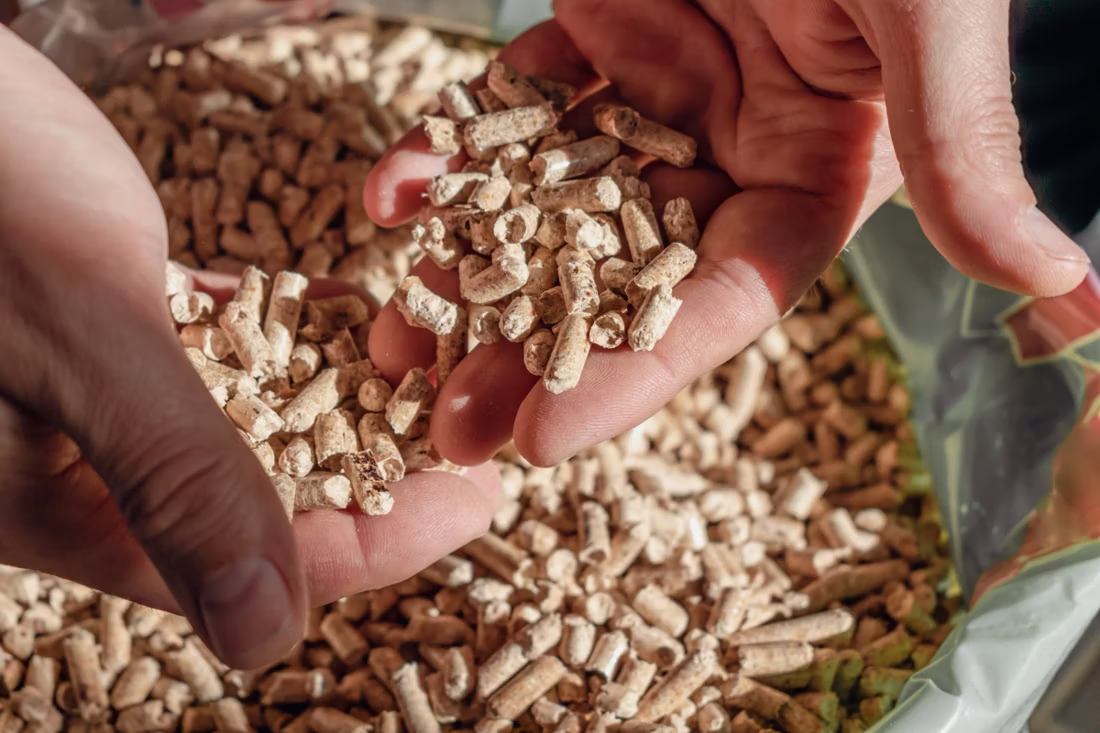
Bagged pellets from brands like Bear Mountain, Lignetics, and Pacific Pellet are typically available through Sacramento-area hearth shops, farm and feed stores, and some home improvement retailers, generally running in the $280 to $380 per ton range depending on the brand and season. Because pellet isn't a high-demand fuel in this part of the Valley, stock can be thinner in late fall when statewide demand from colder regions picks up—buying early in the season is worth doing if you already own a pellet appliance.
Is a pellet stove a good backup heat option during a power outage in Vineyard?
Not really, and it's worth knowing that up front. Pellet stoves need electricity to run the auger that feeds fuel and the blower that distributes heat, so a standard unit stops working the moment the power goes out—including during PG&E Public Safety Power Shutoffs, which affect PG&E-served areas near Vineyard more than SMUD territory closer to the city core. Some models offer a battery backup option that can bridge a short outage, but if reliable off-grid backup heat is your main goal, a wood-burning appliance or a propane unit is generally the more dependable choice.
How often does a pellet stove need cleaning?
A clean pellet stove is a happy pellet stove. Plan on cleaning the burn pot about once a week when you're burning regularly—ash and clinkers gum up the air holes just like a pellet barbecue. Most pellet stove problems trace back to skipped cleaning that nobody explained up front. Some designs make it easy with a trapdoor burn pot: pull a lever and the gunk drops into the ash pan.
Why is my open fireplace making my house colder?
Open fireplaces suck—literally. As the fire burns, it consumes air your furnace already paid to heat and pulls it out through the chimney, so the house is actually colder after the fire goes out than before you lit it. An insert fixes this: it seals the chimney, puts fixed glass across the front, and turns that hole in your house into a real heat source.
What is an in-home preview and do I need one?
It's a visit where a hearth professional measures your space, confirms the model you picked actually works in your home, and walks the specs—framing, gas line, venting, finish work—before anything is ordered. Some details you just can't know until you see the house. Never make a down payment without one; it's the single most-skipped step that burns buyers.
How much should I budget for a fireplace?
For an average home—covering the fireplace, the vent pipe, and basic installation—a budget between $3,900 and $5,500 gives you a lot of options across wood, gas, and pellet. By the time you add finish work, gas line, and electrical, the average complete installation lands between $5,000 and $12,000 all-in. In a remodel or new build, a good rule is to put about 2.5% of the total project cost toward the fireplace.
Nearby Dealers
Hearth shops serving Vineyard and the surrounding area.
Furnitalia / European Kitchen & Bath
Mike's Mobile Screen & Chimney Service
Pellet Brands Stocked Around Vineyard
Manufacturers will point you to the nearest stocking dealer.
Find your pellet stove in Vineyard.
Tell us about your home and how you plan to use a pellet stove—ambiance, backup, or supplemental heat—and we'll match you with a local dealer plus a free Project Guide & Parts List built for your specific setup.
Find Your Fireplace →