
Heat Your Home on the Days Wood Stoves Can't.
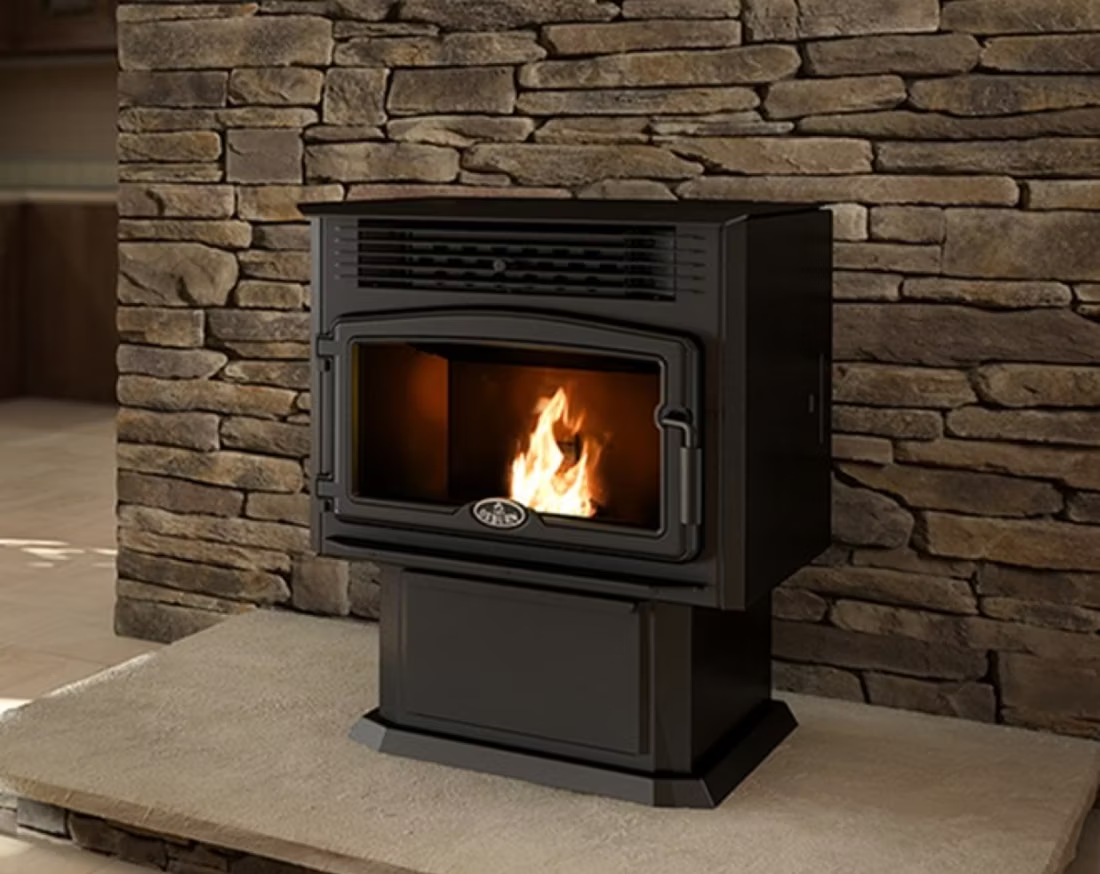
Tulare's winter inversions trigger mandatory Valley Air District burn bans—pellet stoves are usually exempt. Find the right pellet stove or insert, and connect with a trusted local dealer.
Every Project Starts From One of These Five Situations
Built for the San Joaquin Valley's toughest air days.
Tulare sits at 272 feet on the floor of the San Joaquin Valley, inside one of the most persistent particulate nonattainment zones in the country. Winter brings tule fog and temperature inversions that trap smoke and vehicle exhaust close to the ground for days at a time. The San Joaquin Valley Air Pollution Control District's Check Before You Burn program calls mandatory no-burn days throughout the winter, and on many of those days uncertified wood stoves and open fireplaces are simply off-limits.
Pellet stoves are usually exempt from those curtailment rules because they burn cleaner and more completely than cordwood, which is a big part of why they've caught on in Tulare. Winters here are mild by national standards—the average low sits around 38°F and the valley logs roughly 2,410 heating degree days a year, a fraction of what a place like Bismarck, North Dakota sees—so most local installs are sized as supplemental zone heat for a living room or main floor rather than a whole-house furnace replacement.
Three steps. No salesperson until you're ready.
Tell us about your project
Your zip code, your situation, and the fuel you're leaning toward—or let the answers point you to one.
See what's actually available
The brands dealers within 100 miles genuinely carry—real options, never a catalog mirage.
Get your dealer & Project Guide
A trusted local dealer, plus the free Project Guide & Parts List that names every component of the job.
Frequently Asked Questions
How much does a pellet stove installation cost in Tulare?
A typical pellet stove or insert installation in Tulare runs roughly $3,000 to $6,000 including the unit, venting, and labor—lower if you're installing an insert into an existing fireplace opening with a straightforward vent path, higher if you need a fresh through-wall vent kit or dedicated electrical circuit for the hopper and auger motor. Compared to a full wood-stove install with masonry chimney work, pellet installations tend to be quicker because venting only needs a smaller horizontal pipe run rather than a full Class A chimney system. A local dealer can give you a firm number after seeing the install location.
Are pellet stoves exempt from Tulare's wood-burning bans?
In most cases, yes. The San Joaquin Valley Air Pollution Control District's Check Before You Burn program issues mandatory no-burn days across Tulare County when fine particulate levels spike, which happens often during winter tule fog inversions. EPA-certified pellet stoves are generally exempt from these curtailment rules because they burn more completely and release far less particulate matter than an open fireplace or older wood stove. That exemption is one of the main reasons homeowners here choose pellet over wood—on the days a wood stove has to sit cold, a pellet stove usually keeps running. Confirm exemption status for your specific model with the Air District or your dealer, since rules can change.
What size pellet stove do I need for my Tulare home?
Tulare's winters are mild by national standards—the average low sits around 38°F and the valley logs about 2,410 heating degree days a year, roughly a third of what a place like Bismarck, North Dakota sees. That means most homes here don't need a unit built for extreme cold-climate output. A mid-size pellet stove or insert rated for 1,000 to 1,800 square feet typically handles a living room or open-concept main floor as supplemental heat, while a smaller unit suits a bedroom or bonus room. The largest pellet stoves on the market are built more for mountain or northern-climate primary heat and are usually overkill here. A local dealer can size it correctly during a home visit.
Pellet stove vs. wood stove—which makes more sense in Tulare?
Both are common locally, but they serve different needs. Wood stoves burning oak, madrone, or Douglas fir sourced from nearby Sequoia or Sierra National Forest cutting permits (typically $5 to $20 per cord during the May-to-October season) offer lower fuel cost and work without electricity. But wood stoves and open fireplaces are the units most often grounded on Valley Air District no-burn days. Pellet stoves trade off some of that grid independence—they need electricity to run the auger and blower—for near-universal exemption from curtailment and a cleaner, lower-maintenance burn. In a valley where winter air quality alerts are routine, that trade-off is a big reason pellet has caught on.
Do I need a permit to install a pellet stove in Tulare?
Yes—a new pellet stove or insert installation requires a building permit, typically through the City of Tulare Building Division if you're inside city limits, or the Tulare County Resource Management Agency's Building & Safety division for county areas outside city limits. Most local hearth dealers pull the permit as part of the installation and coordinate the inspection. Because pellet units vent through a smaller sidewall pipe rather than a full masonry chimney, the permitting and inspection process is generally quicker than a comparable wood-stove install.
Where can I buy pellets in Tulare?
Bear Mountain, Lignetics, and Pacific Pellet are the regional brands most commonly stocked by hearth retailers and farm-supply stores serving the Tulare area, sold by the ton pallet or by the 40-pound bag. Pricing generally falls somewhere in the $280 to $380 per ton range depending on brand and quantity. Buying a full ton ahead of burn season—before a Check Before You Burn spike sends everyone to the store at once—is usually the cheapest way to stock up for winter.
Is a pellet stove cheaper to run than electric heat in Tulare?
Southern California Edison serves Tulare, and residential electric rates here run around 28 cents per kWh—among the higher rates in the state. That makes electric space heaters and plug-in units expensive to run for anything beyond occasional supplemental warmth. A pellet stove typically costs a few hundred dollars a season in fuel to heat a main living area, which usually comes out cheaper than running electric resistance heat for the same square footage over a full winter. Pellet stoves still need electricity for the auger and blower motors, so they're not off-grid, but the draw is minor compared to electric baseboard or space heaters.
How much maintenance does a pellet stove need?
Pellet stoves need more frequent attention than a wood stove, though the tasks are simpler. Plan to empty and vacuum the ash pot every few days during regular use, clean the burn pot and glass weekly, and have the venting and auger system professionally serviced once a year—ideally in late summer before Tulare's Check Before You Burn season ramps up in the fall. Skipping the annual service is the most common cause of pellet stoves that jam, smoke, or shut down mid-winter.
What's the best pellet stove for Tulare's climate?
Because Tulare winters are mild and pellet stoves here often supplement central heat rather than replace it, mid-output non-catalytic pellet stoves and inserts tend to be the right fit rather than the largest, highest-BTU units built for mountain climates. Look for a model with a thermostat-controlled auger feed so it can idle down on the Valley's frequent 50-degree nights instead of overheating a room. Ask your local dealer specifically about units with confirmed Valley Air District exemption status, since that detail matters more here than in most parts of the country.
How often does a pellet stove need cleaning?
A clean pellet stove is a happy pellet stove. Plan on cleaning the burn pot about once a week when you're burning regularly—ash and clinkers gum up the air holes just like a pellet barbecue. Most pellet stove problems trace back to skipped cleaning that nobody explained up front. Some designs make it easy with a trapdoor burn pot: pull a lever and the gunk drops into the ash pan.
Why is a fireplace insert so efficient?
An insert does two things: it seals the chimney completely, so you stop losing air you already paid to heat, and it radiates warmth into the room through the firebox and glass. Most add a heat-exchange fan that pulls cool room air underneath, wraps it around the hot firebox, and pushes it back out warm. Your home is more efficient before you've even lit the first fire.
Does a fireplace add value to my home?
On average, a fireplace adds back to the home about the same amount you spent installing it. Add the monthly savings from heating the rooms you actually use instead of the whole house—often hundreds of dollars a year—and the value case is strong before you even count what a fire does for how your family uses the room.
Can a fireplace actually lower my heating bill?
Yes—by creating a comfort zone. A furnace heats every square foot of the house just to warm the one room you're in; a gas fireplace on low burns roughly a sixth of the gas a typical furnace does. Set the furnace around 55–60 degrees as a baseline, then heat the rooms your family actually uses. Families who heat this way commonly save $20–$60 a month.
Nearby Dealers
Hearth shops serving Tulare and the surrounding area.
Pellet Brands Stocked Around Tulare
Manufacturers will point you to the nearest stocking dealer.
Find your pellet stove in Tulare.
Tell us a bit about your home and we'll match you with the right pellet stove or insert—and connect you with a trusted local dealer who knows the Valley Air District's burn-day rules.
Find Your Fireplace →