
Heat that works on every Check Before You Burn day.
Mild valley winters, strict air quality rules, and no chimney required—electric fireplaces are a straightforward fit from Visalia and Tulare to the Sierra foothills near Three Rivers. Find the right unit and connect with a trusted local dealer.
Every Project Starts From One of These Five Situations
Mild winters, serious air quality rules.
Tulare County stretches from the San Joaquin Valley floor near Visalia, Tulare, and Porterville—around 300 feet elevation—up into the Sierra Nevada foothills and the peaks of Sequoia National Forest, where the county line brushes Mount Whitney, the highest point in the contiguous United States. Down on the valley floor, though, winters are genuinely mild: an average winter low of 38°F and a winter heating load less than a quarter of what a place like Duluth, MN sees. That's not a climate that demands a wood-burning primary heat source—it's one where a clean, no-venting electric fireplace can supply plenty of supplemental warmth and year-round ambiance.
The bigger driver in Tulare County is air quality, not cold. The San Joaquin Valley is a federal nonattainment area for both PM2.5 and ozone, and winter tule fog traps smoke and particulates close to the ground across Visalia, Tulare, and Porterville. The San Joaquin Valley Air Pollution Control District runs its Check Before You Burn program every winter, curtailing residential wood burning on high-pollution days—sometimes for stretches of a week or more. Electric fireplaces sidestep that entirely: zero emissions, no curtailment days, and no compliance headaches under Rule 4901. That's why so many local homeowners, especially those converting an old open masonry fireplace, are landing on electric inserts instead of wood or even gas.
Three steps. No salesperson until you're ready.
Tell us about your project
Your zip code, your situation, and the fuel you're leaning toward—or let the answers point you to one.
See what's actually available
The brands dealers within 100 miles genuinely carry—real options, never a catalog mirage.
Get your dealer & Project Guide
A trusted local dealer, plus the free Project Guide & Parts List that names every component of the job.
Frequently Asked Questions
How much does an electric fireplace installation cost in Tulare County?
Most electric fireplace projects in Tulare County run $500 to $4,500. A plug-in insert dropped into an existing masonry firebox sits at the low end since there's no venting or gas line to run—just an outlet or a simple electrical hookup. A built-in linear wall-mount unit with a custom surround, framing, and a dedicated 20-amp circuit sits at the higher end. Because there's no chimney or flue work involved, electric installs are consistently the fastest and least expensive of the four fuel types for local homeowners weighing options in Visalia, Tulare, or Porterville.
Does the Check Before You Burn program affect electric fireplaces?
No—and that's exactly why interest in electric is growing across the county. The San Joaquin Valley Air Pollution Control District's Check Before You Burn rules restrict wood-burning devices on days with poor air quality, which can happen frequently during winter tule fog events around Visalia and Tulare. Electric fireplaces produce no combustion emissions, so they aren't subject to curtailment and can run any night of the year. For households that want fireplace ambiance without watching for red or yellow alert days, electric removes the guesswork entirely.
Will an electric fireplace actually heat my house, or is it just for looks?
It depends on your goal. Most electric fireplaces put out 4,500-5,000 BTUs from a standard 1,500-watt heater—enough to comfortably warm a single room or supplement central heat, but not enough to serve as a whole-home primary heat source. Given Tulare County's mild valley climate (winter lows averaging 38°F, with a winter heating load only about a quarter of a place like Duluth, MN), that's usually plenty for the living room or bonus room where the fireplace lives, with central HVAC or a gas system covering the rest of the house. For colder nights up in the Three Rivers and Sequoia foothill communities, homeowners often pair electric ambiance in the main living space with a separate wood or gas unit for real cold-weather backup.
Do I need a permit to install an electric fireplace in Tulare County?
Often not—a simple plug-in electric insert or freestanding unit that uses an existing outlet typically doesn't trigger a permit. If the project involves adding a new dedicated circuit, running wire behind a wall, or building a mantel and surround that alters framing, Tulare County Resource Management Agency (RMA) will require an electrical or building permit, and the licensed electrician or installer usually pulls it as part of the job. It's worth confirming with your dealer up front, especially for built-in wall-mount installs.
Will my electric fireplace still work during a power outage?
No—unlike a wood stove, an electric fireplace goes dark the moment the power does, and that matters more than it might seem in parts of Tulare County. Foothill communities like Three Rivers can see Public Safety Power Shutoffs from Southern California Edison during high fire-danger periods, sometimes lasting a day or more. If backup heat during outages is a real concern for your household, plan on pairing an electric fireplace with a wood stove, propane heater, or standby generator rather than relying on electric as your only option in an emergency.
What type of electric fireplace works best for my home in Tulare County?
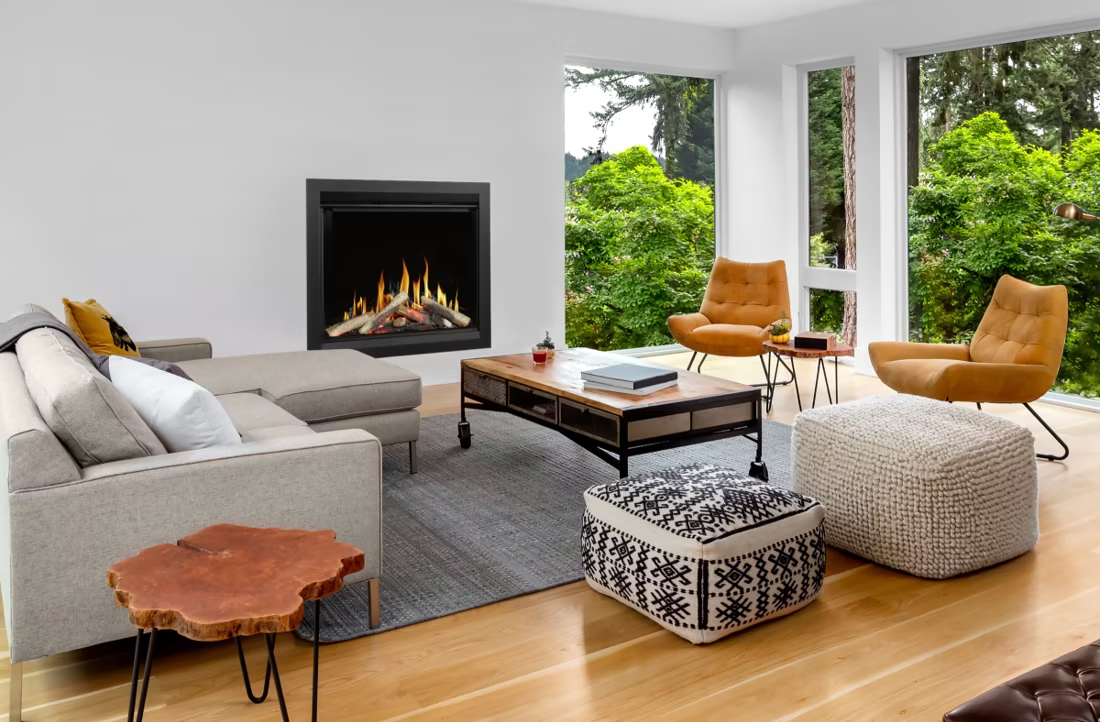
For newer construction in Visalia subdivisions or open-concept great rooms, a linear wall-mount unit set into a framed wall is the popular choice—wide, low-profile, and built around the room's sightlines. For older homes in Tulare or Porterville with an existing masonry fireplace, an electric insert that slides into the firebox is usually the better fit: it keeps the original mantel and hearth look while eliminating smoke, ash, and curtailment concerns entirely. A local dealer will walk through your existing opening dimensions and wall construction before recommending either path.
Are electric fireplaces a good fit for cabins near Sequoia National Forest?
For grid-connected homes and cabins around Three Rivers and the lower foothill communities near Sequoia National Forest, electric fireplaces work fine on standard Southern California Edison service. For true off-grid or seasonal cabins running on limited solar or a small generator, a 1,500-watt electric heater draw can be more than the system is sized for—those properties are usually better served by a wood stove using locally cut oak, madrone, or Douglas fir, especially with Forest Service cutting permits available through Sequoia and Sierra National Forest for $5 to $20 per cord.
How much does it cost to run an electric fireplace in Tulare County?
Most Tulare County homes are served by Southern California Edison, where tiered residential rates commonly run $0.30 to $0.45 per kWh depending on usage and time of day. A typical 1,500-watt electric fireplace run on high costs roughly $0.45 to $0.68 per hour to operate—noticeably more than the same appliance would cost on a lower-rate utility, but still far less than propane heating in areas without natural gas service. Most units let you run the flame effect alone, without the heater, for near-zero operating cost when you just want the ambiance.
Can I convert my old wood-burning fireplace to electric?
Yes, and it's one of the more common projects local dealers see in Tulare County, particularly for older homes in Tulare and Porterville with uncertified open masonry fireboxes. An electric insert drops into the existing opening, keeps the mantel and hearth intact, and eliminates the smoke, ash, and Check Before You Burn restrictions that come with wood. It's typically the least expensive conversion option since there's no chimney liner or venting work involved—just an electrical hookup and, in most cases, a simple surround adjustment to fit the new unit.
Do electric fireplaces actually produce heat?
Yes—most put out around 4,800–5,000 BTUs from a standard outlet, which comfortably warms a bedroom, office, or den as a comfort-zone heater. What they won't do is carry a whole house the way wood, gas, or pellet can. Think of electric as ambiance-first with honest supplemental heat: flames on with no heat in July, flames plus warmth in January.
Can I put a TV above my fireplace?
Yes—with an asterisk. Fireplaces are hot and TVs don't like heat. Either put a mantel between them to deflect rising warmth, or choose a fireplace with heat-management technology that creates a cool zone on the wall above—the wall stays around 125 degrees, barely warm, while the room still gets full heat. If you like clean lines and don't want a mantel, heat management is the answer.
Can I install a fireplace myself?
If you're putting a fire in your house on purpose, it's best to work with an expert. Unless you're genuinely experienced in framing, gas line, vent pipe, and the national code on clearances to combustibles, have a professional do it—and ideally the same company that sells you the fireplace, so warranty, service, and liability all live under one roof.
How much should I budget for a fireplace?
For an average home—covering the fireplace, the vent pipe, and basic installation—a budget between $3,900 and $5,500 gives you a lot of options across wood, gas, and pellet. By the time you add finish work, gas line, and electrical, the average complete installation lands between $5,000 and $12,000 all-in. In a remodel or new build, a good rule is to put about 2.5% of the total project cost toward the fireplace.
Stove and Fireplace Dealers in Tulare County
Find your electric fireplace in Tulare County.
Tell us a bit about your home and we'll match you with the right electric fireplace or insert, and send over a free Project Guide & Parts List with a trusted local dealer for your Tulare County project.<br><br>PLACEHOLDER_REMOVE_ME
Find Your Fireplace →