
Keep Your Family Warm and Safe—No Matter What
From Weaverville to Hayfork to the shores of Trinity Lake, wood remains the backbone of home heating here. Find the right stove or insert, and connect with a trusted local dealer who knows the terrain.
Every Project Starts From One of These Five Situations
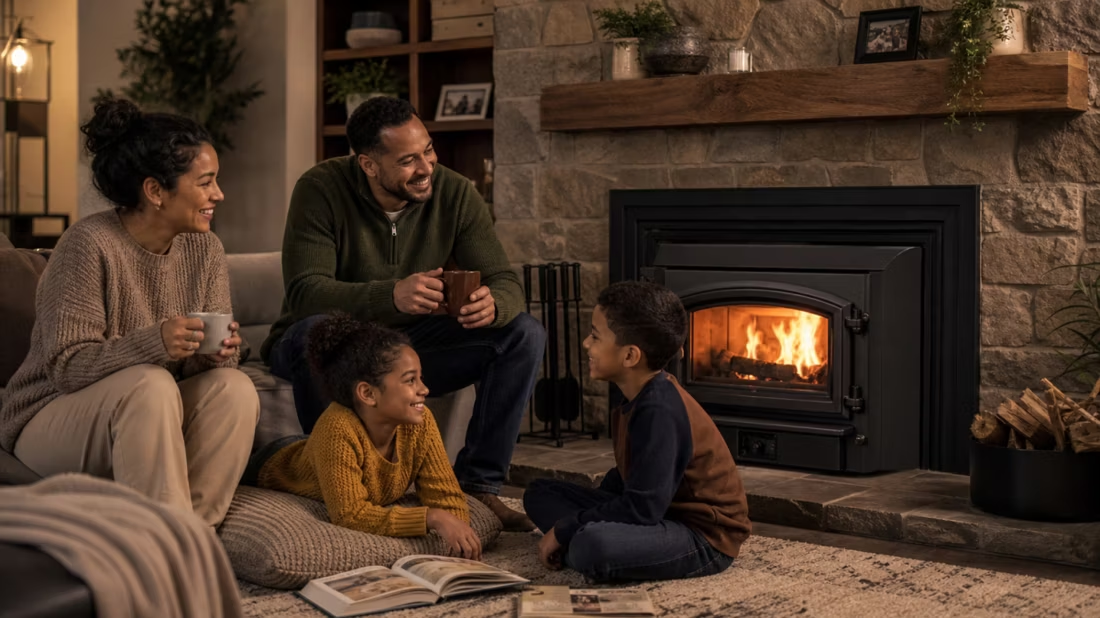
Wood heat is a way of life in the Trinity Alps.
Trinity County is one of the most sparsely populated counties in California—just over 14,000 residents spread across more than 3,000 square miles of mountains, forest, and river canyon, much of it federal land within the Shasta-Trinity, Six Rivers, and Klamath National Forests. Winters here aren't as brutal as a place like Bozeman, Montana, but a solid winter heating load and average lows around 31°F mean a real heating season runs from October through April, especially at elevation in communities like Trinity Center and Coffee Creek. Add the isolation—many properties are a long way from the nearest propane truck or utility line—and wood heat isn't a lifestyle choice so much as a practical necessity.
Trinity County sits almost entirely within national forest boundaries, so cutting permits through the Shasta-Trinity, Six Rivers, or Klamath National Forest offices are cheap and plentiful—typically $5 to $20 per cord during the May-to-October season. Oak, madrone, and Douglas fir are the local staples, with oak prized for its long, hot burn and madrone for its density. Summer and fall wildfire smoke is the county's real air quality concern rather than winter inversion, so most local burning restrictions track fire season rather than the kind of stagnant-air alerts you'd see in a basin community. A well-sized, EPA-certified stove or insert keeps a Trinity County home warm through the cold months and gives families a heat source that doesn't depend on the grid or a delivery truck making it up a mountain road in a storm.
Firewood Cutting Permits Near Trinity County
Three steps. No salesperson until you're ready.
Tell us about your project
Your zip code, your situation, and the fuel you're leaning toward—or let the answers point you to one.
See what's actually available
The brands dealers within 100 miles genuinely carry—real options, never a catalog mirage.
Get your dealer & Project Guide
A trusted local dealer, plus the free Project Guide & Parts List that names every component of the job.
Frequently Asked Questions
How much does a wood stove installation cost in Trinity County?
Wood stove installations in Trinity County typically run in a similar range to the rest of rural Northern California—most jobs fall between roughly $4,000 and $9,000 depending on the stove model, whether new Class A chimney pipe is needed, and hearth pad requirements for code clearance. Homes without an existing chimney, especially newer builds around Weaverville or Lewiston, run toward the higher end once full through-roof venting is factored in. Because the county is so spread out, expect installers to factor in travel time for jobs further from Weaverville—Hayfork, Trinity Center, and Coffee Creek in particular. Get a firm quote from a local retailer after an in-home look at your space.
What size wood stove do I need for my Trinity County home?
Sizing depends on square footage, insulation, ceiling height, and whether the stove is your primary heat or backup. As a general guide for a 4B climate with real but not extreme winters: small stoves suit cabins and single rooms up to about 1,000 square feet, medium stoves handle 1,000 to 2,000 square foot main living areas, and larger stoves are appropriate for bigger, well-insulated homes. Higher-elevation properties around Trinity Center, Coffee Creek, and along Highway 3 typically need a size up compared to lower-elevation homes near Douglas City or Junction City, since nighttime temperatures drop further at elevation. A local dealer can size your home correctly during a free consultation—oversizing leads to smoldering fires and creosote buildup, while undersizing leaves you cold on the hardest nights.
Where can I find certified wood stove installers in Trinity County?
Look for installers carrying NFI (National Fireplace Institute) or CSIA (Chimney Safety Institute of America) certification—these credentials confirm proper training in wood-burning appliance installation and venting. Given Trinity County's low population and rural spread, the pool of certified installers is smaller than in a metro area, and most cover the whole county from a Weaverville or Redding base, with a travel charge for outlying communities like Hayfork or Trinity Center. Avoid a general handyman for a wood stove install—improper clearances and venting are the leading cause of chimney fires, and in a county with long emergency response times, getting it right the first time matters more, not less.
What's the difference between a wood stove and a wood insert?
A wood stove is a freestanding unit set on a hearth pad, vented through a chimney, and installable almost anywhere clearances allow. A wood insert slides into an existing masonry fireplace, turning a drafty open hearth into a sealed, high-efficiency heater that still uses your existing chimney. Many older homes around Weaverville and Lewiston have original masonry fireplaces that make good insert candidates—you keep the look of the fireplace but gain real heating performance. Newer construction or homes without an existing fireplace are usually better matched to a freestanding stove or zero-clearance wood fireplace instead.
Do I need a permit to install a wood stove in Trinity County?
Yes—new wood stove installations require a building permit, and the unit itself needs to meet current EPA emissions standards. Most local installers handle the permit paperwork as part of the install so it's not something you have to chase down yourself. Burning itself isn't permitted day-to-day, but keep an eye on local air quality advisories during peak wildfire smoke season in late summer and fall—Trinity County's air quality concerns run to smoke from fire activity far more than the winter inversion issues seen in basin towns, so restrictions tend to follow fire conditions rather than a set winter curtailment schedule.
What's the best wood stove for Trinity County's climate?
For most Trinity County homes, a mid-size EPA-certified stove from a brand like Pacific Energy or Lopi handles the county's moderate-but-real winters well without being oversized for a 4B climate. Homes at higher elevation—Trinity Center, Coffee Creek, or up Highway 3—benefit from sizing up or considering a catalytic model from Blaze King for longer, steadier overnight burns when temperatures drop hardest. Because oak and madrone are the dominant local firewood species and both burn dense and hot, a stove with a firebox designed for hardwood loads will get the most out of what's actually available to cut locally. A local dealer can match the stove to your elevation, square footage, and the wood you'll actually be burning.
How often should my chimney be inspected and cleaned?
The CSIA recommends an annual inspection for any wood-burning appliance in regular use. For Trinity County homes burning through a full October-to-April season, plan on a sweep and inspection each late summer before the season starts—timing that also works well around the tail end of wildfire smoke season. Households burning wood as their primary heat source, especially with dense oak and madrone that can build creosote differently than softer woods, may want a mid-season check. Given how remote parts of the county are, don't skip this step—a chimney fire on a back road far from the nearest fire station is a far more serious situation than the same fire in town.
Where can I get firewood or cutting permits in Trinity County?
Trinity County is almost entirely surrounded by national forest, so self-cutting is the most common and affordable route. Permits through the Shasta-Trinity National Forest, Six Rivers National Forest, or Klamath National Forest offices run $5 to $20 per cord and are valid during the May-through-October cutting season. Oak, madrone, and Douglas fir are the common species you'll find on permit-eligible land, with oak the most sought-after for its burn time. For homeowners who'd rather not cut their own, local sellers and small delivery operations around Weaverville and Hayfork sell seasoned cordwood, though availability and pricing vary by season and demand—plan ahead rather than waiting until the first cold snap.
Wood stove vs. pellet stove—which is right for Trinity County?
Wood stoves run on cordwood, work without any electricity—a real advantage in a county where storms and remote lines mean power outages happen—and pair naturally with the cheap Forest Service cutting permits available almost everywhere in the county. Pellet stoves, using bagged pellets from regional brands like Bear Mountain or Lignetics, are more convenient to load and burn cleaner, but they need electricity to run the auger and blower, so they go dark in an outage. For most Trinity County households, especially those outside Weaverville proper or up in the more remote canyons, wood's independence from the grid is the deciding factor. For a secondary in-town home with reliable power, pellet is a reasonable alternative worth asking a local dealer about.
Why is my open fireplace making my house colder?
Open fireplaces suck—literally. As the fire burns, it consumes air your furnace already paid to heat and pulls it out through the chimney, so the house is actually colder after the fire goes out than before you lit it. An insert fixes this: it seals the chimney, puts fixed glass across the front, and turns that hole in your house into a real heat source.
Do I have to leave the stove door cracked open to start a fire?
On many stoves, yes—a new fire needs extra air, and cracking the door a couple inches is how most stoves get it. But some modern stoves offer an automatic startup air system: engage it when you light, and timed air jets feed the fire for the first 20 minutes with the door fully shut, then close automatically. It's mechanical—like an egg timer, no electricity—and it means you can load it, light it, and walk away.
Can I install a fireplace myself?
If you're putting a fire in your house on purpose, it's best to work with an expert. Unless you're genuinely experienced in framing, gas line, vent pipe, and the national code on clearances to combustibles, have a professional do it—and ideally the same company that sells you the fireplace, so warranty, service, and liability all live under one roof.
Does a fireplace add value to my home?
On average, a fireplace adds back to the home about the same amount you spent installing it. Add the monthly savings from heating the rooms you actually use instead of the whole house—often hundreds of dollars a year—and the value case is strong before you even count what a fire does for how your family uses the room.
Stove and Fireplace Dealers in Trinity County
Find your wood stove in Trinity County.
Tell us about your home and we'll match you with a trusted local dealer and put together a free Project Guide & Parts List—the exact parts, including the vent kit, for your wood heating project in Trinity County.','copy_cta_eyebrow':'Ready to Start?'}
Find Your Fireplace →