
Keep Your Family Warm and Safe—No Matter What
With winter lows averaging 47°F and strict South Coast air rules, wood heat plays a small, specific role here. We'll help you figure out if it's the right one—and connect you with a dealer who knows the local rules.
Every Project Starts From One of These Five Situations
Torrance's mild winters make wood heat optional, not essential.
Torrance sits at 83 feet of elevation on the coastal plain of the Los Angeles basin, where the winter heating need is very light and winter lows average a mild 47°F. Compare that to a genuinely cold-climate city like Bozeman, Montana, which has nearly five times the winter heating load a year—Torrance homes simply don't need a heat source capable of carrying a house through a hard winter. On top of that, the South Coast Air Quality Management District, which governs the LA basin as a persistent ozone and PM2.5 non-attainment area, enforces Rule 445: no new open-hearth wood-burning fireplaces may be installed in new construction or remodels, and wildfire smoke events during Santa Ana wind season add further pressure on regional air quality.
That doesn't mean wood heat is entirely off the table. Existing masonry fireplaces in Torrance's many 1950s and 1960s tract homes can often be retrofitted with an EPA-certified wood insert under Rule 445's exemption for existing hearths, and some homeowners want the genuine crackle-and-glow experience for occasional cool evenings or a mountain vacation property near Big Bear or Wrightwood. If you go that route, cutting permits for oak, madrone, and Douglas fir are available through the Angeles National Forest and San Bernardino National Forest for $5 to $20 per cord during the May-through-October season. For most Torrance homes, though, gas or electric fireplaces are the more practical, code-friendly fit—and we'll be upfront about that if it's the better answer for your house.
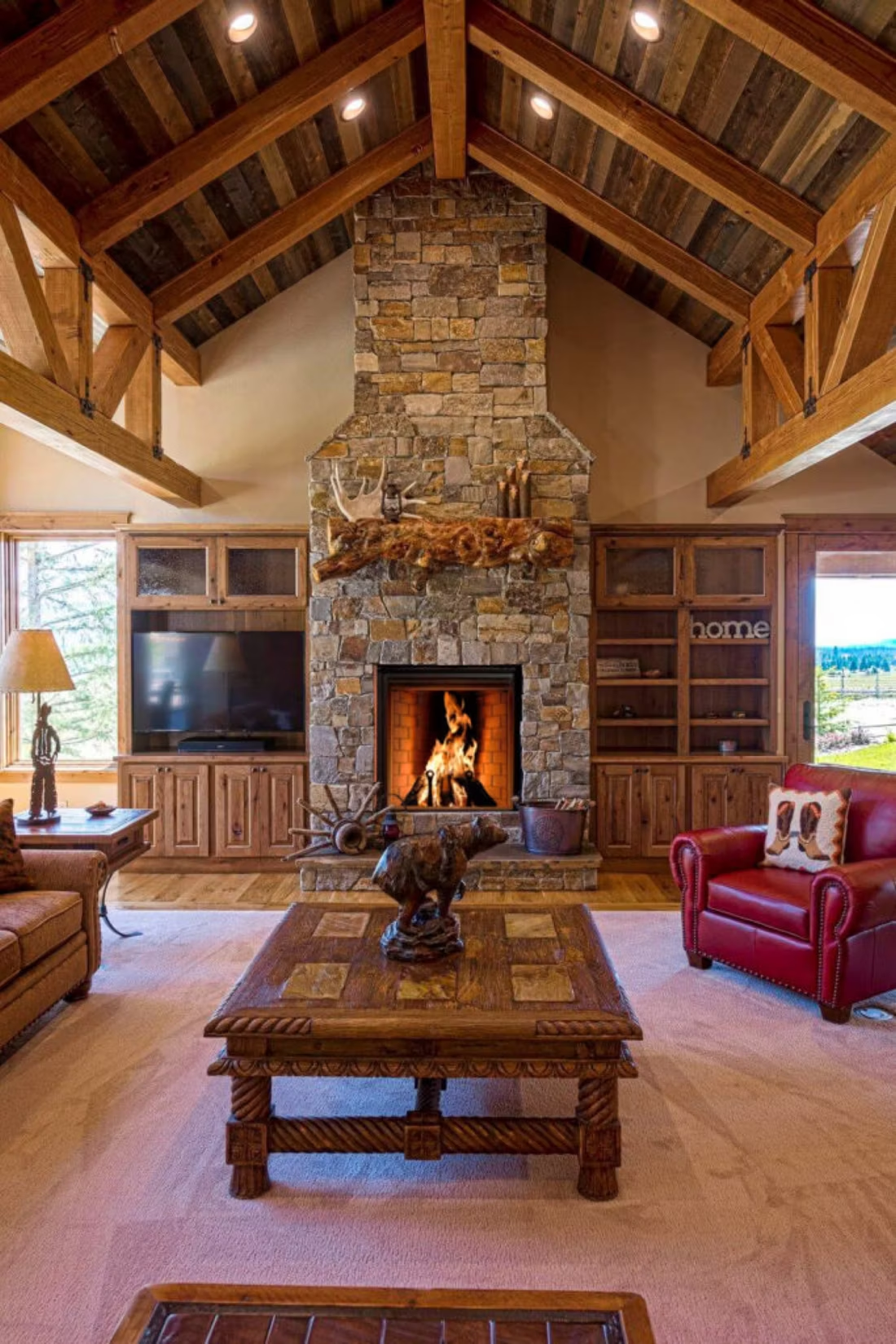
Firewood Cutting Permits Near Torrance
Three steps. No salesperson until you're ready.
Tell us about your project
Your zip code, your situation, and the fuel you're leaning toward—or let the answers point you to one.
See what's actually available
The brands dealers within 100 miles genuinely carry—real options, never a catalog mirage.
Get your dealer & Project Guide
A trusted local dealer, plus the free Project Guide & Parts List that names every component of the job.
Frequently Asked Questions
Is it even legal to install a wood-burning fireplace in Torrance?
It depends on whether you're building new or retrofitting. Under South Coast AQMD Rule 445, new open-hearth, non-EPA-certified wood fireplaces cannot be installed in new construction or major remodels anywhere in the district, including Torrance. If you have an existing masonry fireplace, you can typically retrofit it with an EPA 2020 NSPS-certified wood insert, which is treated differently under the rule than an open hearth. A local dealer familiar with SCAQMD compliance can tell you exactly which path applies to your address.
How much does a wood stove or insert installation cost in Torrance?
Costs vary more here than in wood-heavy markets, mainly because fewer installers specialize in wood appliances in the LA basin and every job involves working with an existing masonry chimney rather than building new venting. Expect line items for a stainless liner, hearth pad clearance work, and SCAQMD-compliant unit selection. Because wood is such a niche request in Torrance, getting a firm, itemized quote from a trusted local dealer—rather than a big-box estimate—is the best way to avoid surprises on liner length or clearance retrofits.
Can I actually burn wood on cold nights in Torrance?
You can, but South Coast AQMD's Check Before You Burn program issues mandatory no-burn alerts on high-particulate days, typically triggered by winter inversions trapping PM2.5 in the basin between November and February—the same months you'd most want a fire going. Homes with EPA-certified inserts are usually exempt from the strictest curtailment tiers that apply to older, uncertified fireplaces, which is one more reason a certified retrofit makes more sense than an old open hearth if you're set on wood.
What's a more practical alternative to wood heat for a Torrance home?
Given Torrance's very light winter heating need and 47°F average winter low, most homeowners here are better served by a direct-vent gas fireplace or an electric fireplace insert than a wood stove. Gas gives instant, controllable heat without SCAQMD's Rule 445 restrictions on new open hearths, and electric units need no venting or permit at all—a real advantage in a market where wood-specific installers are scarce. If ambiance matters more than heat output, either option delivers it without the smoke-day complications.
Where can I get firewood or cut my own near Torrance?
The Angeles National Forest and San Bernardino National Forest both issue personal-use cutting permits, generally $5 to $20 per cord, valid May through October. Oak, madrone, and Douglas fir are the species typically available on permit in those mountain districts—none of which grow naturally around Torrance's coastal neighborhoods, so this is a drive-up-and-haul-back proposition rather than a backyard one. Most Torrance wood-burning households buy split, seasoned cordwood delivered locally instead of cutting their own.
Do many homes in Torrance actually have wood-burning fireplaces?
Plenty of Torrance's older tract homes, especially those built before Rule 445 took effect in 2008, still have the original open masonry fireplace—but in practice most sit unused or purely decorative. Between the mild climate removing any real heating need and the South Coast AQMD's no-burn alert days clustering right when people would want a fire, many owners eventually convert that fireplace to gas logs or a certified insert rather than keep burning wood in it.
What size wood stove or insert makes sense for a Torrance house?
Because Torrance's heating load is so light, a full-size, high-output freestanding wood stove is overkill for nearly every home in the city. If you're retrofitting an existing hearth, a small to mid-size EPA-certified insert sized for supplemental or occasional use is the more sensible fit than a stove built to carry a house through a hard winter—that kind of capacity just isn't needed at a 47°F average low.
Does wildfire smoke affect the wood-burning conversation in Torrance?
Yes. Southern California's wildfire season regularly pushes particulate levels in the LA basin higher independent of any wood burning, and South Coast AQMD factors that regional air quality baseline into its Check Before You Burn alerts. In practice, that means Torrance households burning wood face restrictions from two directions—winter inversion smog and wildfire smoke loading—which is part of why EPA-certified inserts with cleaner combustion are the only wood option most local installers will recommend.
Wood vs. electric fireplace—which makes more sense in Torrance?
Wood means navigating SCAQMD Rule 445, checking daily burn status during winter alerts, and sourcing cordwood from Angeles or San Bernardino National Forest permits or a local delivery service. An electric fireplace, by contrast, plugs into existing household wiring, needs no venting or building permit, and runs on Southern California Edison power at roughly $0.2825 per kWh—a modest cost for occasional ambiance use. For most Torrance homes where wood heat isn't solving an actual heating problem, electric is the simpler, faster, and more code-friendly path; wood remains the right call only if you specifically want a real-wood-burning experience and are willing to work within the local air rules.
Why is a fireplace insert so efficient?
An insert does two things: it seals the chimney completely, so you stop losing air you already paid to heat, and it radiates warmth into the room through the firebox and glass. Most add a heat-exchange fan that pulls cool room air underneath, wraps it around the hot firebox, and pushes it back out warm. Your home is more efficient before you've even lit the first fire.
Why is my open fireplace making my house colder?
Open fireplaces suck—literally. As the fire burns, it consumes air your furnace already paid to heat and pulls it out through the chimney, so the house is actually colder after the fire goes out than before you lit it. An insert fixes this: it seals the chimney, puts fixed glass across the front, and turns that hole in your house into a real heat source.
Can a fireplace actually lower my heating bill?
Yes—by creating a comfort zone. A furnace heats every square foot of the house just to warm the one room you're in; a gas fireplace on low burns roughly a sixth of the gas a typical furnace does. Set the furnace around 55–60 degrees as a baseline, then heat the rooms your family actually uses. Families who heat this way commonly save $20–$60 a month.
Does a fireplace add value to my home?
On average, a fireplace adds back to the home about the same amount you spent installing it. Add the monthly savings from heating the rooms you actually use instead of the whole house—often hundreds of dollars a year—and the value case is strong before you even count what a fire does for how your family uses the room.
Nearby Dealers
Hearth shops serving Torrance and the surrounding area.
All Valley Distrib. Dba Marco Distrib
The Heat Source (Burrico) - Lancaster
Tropicana Outdoor Living
Find your wood fireplace option in Torrance.
Tell us about your home and whether you're working with an existing masonry fireplace, and we'll send your free Project Guide & Parts List—matched to a trusted local dealer who knows how to navigate SCAQMD Rule 445 and get it installed correctly.
Find Your Fireplace →