
Keep Your Family Warm and Safe—No Matter What
Temple City winters rarely demand wood heat, but plenty of San Gabriel Valley homeowners still want a real fire. We'll connect you with a local dealer who knows exactly what South Coast AQMD allows.
Every Project Starts From One of These Five Situations
Here, wood is chosen for ambiance—not because the furnace can't keep up.
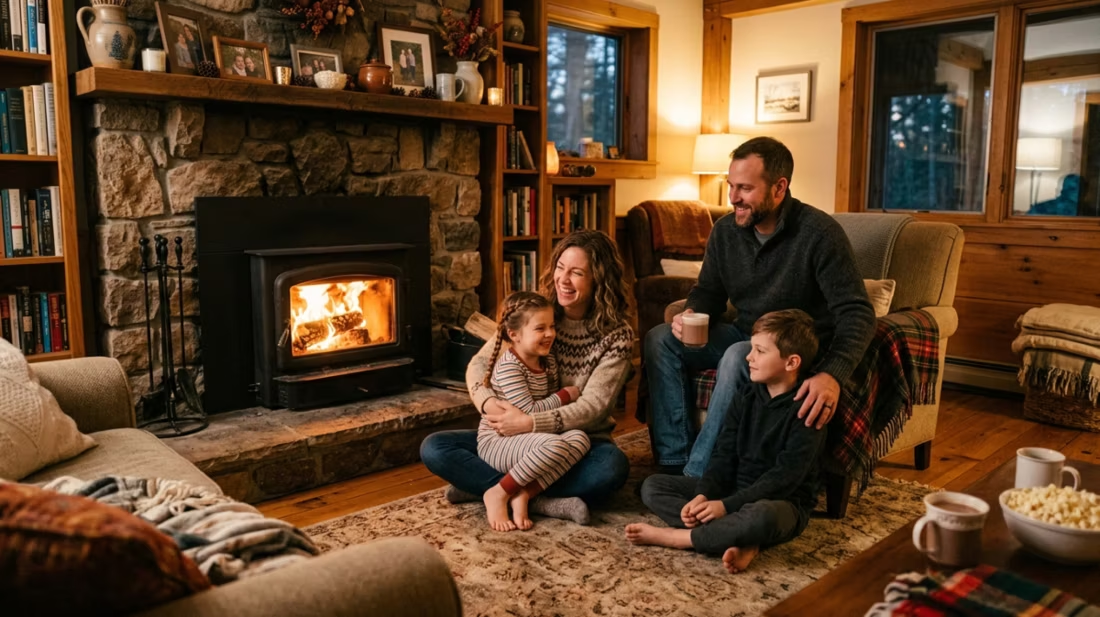
Temple City sits at 376 feet in the San Gabriel Valley, where the average winter low hovers around 46°F and the city sees a very light, short winter heating season—a fraction of what a place like Bozeman, Montana racks up in a single cold snap. Nobody in Temple City is burning oak to survive January. Wood heat here is almost always a lifestyle choice: a fireplace insert for a rainy December evening, a stove for the occasional cold front, or backup warmth during a Southern California Edison outage.
The bigger factor shaping wood heat in Temple City is air quality, not temperature. The South Coast Air Quality Management District regulates wood burning closely in the LA basin—Rule 445 prohibits installing new wood-burning fireplaces in new construction or major remodels, and the district calls mandatory no-burn days ("Check Before You Burn") during winter smog episodes and wildfire smoke events from fires in the nearby Angeles National Forest. Retrofit installs of EPA 2020 NSPS-certified wood stoves and inserts are still allowed into existing homes, and that's the path most local installers guide homeowners through.
Firewood Cutting Permits Near Temple City
Three steps. No salesperson until you're ready.
Tell us about your project
Your zip code, your situation, and the fuel you're leaning toward—or let the answers point you to one.
See what's actually available
The brands dealers within 100 miles genuinely carry—real options, never a catalog mirage.
Get your dealer & Project Guide
A trusted local dealer, plus the free Project Guide & Parts List that names every component of the job.
Frequently Asked Questions
How much does a wood stove or insert cost to install in Temple City?
Most Temple City installations run $4,500 to $8,500, and the majority are inserts going into an existing masonry fireplace rather than new freestanding stoves—since Rule 445 blocks new wood fireplaces in new construction, retrofits into older San Gabriel Valley homes are the common project. Cost depends on the insert model, whether the existing flue needs a stainless liner, and any masonry repair. A local installer can give you a firm number after seeing your existing chimney.
Am I even allowed to install a wood stove in Temple City?
Yes, with conditions. The South Coast Air Quality Management District's Rule 445 bans new wood-burning fireplace installations in new construction or major remodels anywhere in the basin, including Temple City. What it does allow is installing an EPA 2020 NSPS-certified wood stove or insert as a retrofit into an existing home. Building permits go through the City of Temple City Building & Safety Division, which is administered through Los Angeles County Public Works—they'll confirm the unit is on the certified list before signing off.
What are 'no-burn days' and how do they affect wood heat here?
South Coast AQMD issues mandatory no-burn alerts through its Check Before You Burn program on days when particulate pollution in the LA basin is forecast to be high, typically during winter temperature inversions. On those days, burning any wood-burning device—including EPA-certified stoves—is prohibited, with the narrow exception of homes where wood is the sole source of heat, which is uncommon in Temple City. Homeowners who install a wood stove here should plan around occasional restricted days rather than treating it as an always-available heat source.
What size wood stove makes sense for a Temple City home?
Given the mild climate—winter lows averaging 46°F and only a very light, short winter heating season—most Temple City homes do fine with a small to mid-size stove or insert rated for supplemental heat rather than whole-home output. A unit sized for a 1,500 sq ft space is often plenty even in a larger house, since it's supplementing central heat rather than replacing it. Oversizing is a real risk here: a stove sized for a Sierra cabin will run too hot and too smoky for occasional Temple City use, leading to more creosote buildup relative to how little the stove actually gets fired.
Where can I get firewood, and what species burn well locally?
Oak, madrone, and Douglas fir are the woods most commonly available and burned in the San Gabriel Valley area, and all three season well and produce solid heat output. If you want to cut your own, permits are available through the Angeles National Forest and San Bernardino National Forest, both within reach of Temple City, running $5 to $20 per cord with cutting allowed May through October. Most homeowners, though, buy seasoned cordwood from local suppliers rather than self-cutting, given the drive time to the forest boundary.
Does wildfire risk affect how I should store firewood?
It's worth thinking about even though Temple City itself isn't in a designated high fire hazard severity zone the way foothill communities closer to the Angeles National Forest are. Stack firewood away from the house and any wood fencing, keep it off bare soil to reduce pest issues in the humid coastal-influenced air, and cover the top of the stack while leaving the sides open for airflow. If you're near the northern edge of town closer to the foothills, check with Los Angeles County Fire for any defensible-space guidance that applies to your specific address.
Wood stove vs. gas fireplace—which fits a Temple City home better?
For most Temple City homeowners, gas wins on convenience: instant on-off operation, no ash or smoke, and no exposure to South Coast AQMD's no-burn day restrictions. Wood wins for homeowners who specifically want the experience of a real fire, or who want a heat source that works without electricity or gas service during an outage. Given the region's mild winters, neither fuel is doing heavy lifting for whole-home heat—this is really a preference call, and a local retailer can walk you through both given your existing fireplace and venting situation.
Will a wood stove affect my homeowners insurance?
Many California insurers now ask about wood-burning appliances during underwriting or renewal, particularly in the wake of increased wildfire scrutiny statewide. An EPA-certified stove installed to code with the proper clearances and a permit on file from Temple City Building & Safety typically satisfies insurer requirements without issue. Uninspected or owner-installed units are more likely to raise questions. Keep your permit, inspection sign-off, and installer's certification paperwork on hand in case your carrier asks.
How often does a wood stove need chimney service in Temple City?
Even with light seasonal use, an annual inspection is worth doing—the Chimney Safety Institute of America recommends yearly checks regardless of how often a stove actually gets fired, since creosote can form even from occasional burns, especially with less-than-fully-seasoned wood. Given how infrequently most Temple City stoves see real use compared to a mountain-climate home, a once-a-year sweep before the rainy season (typically October, ahead of the first cool fronts) is usually sufficient.
What's the difference between an insert and a zero-clearance fireplace?
An insert is a fireplace that slides into a pre-existing wood-burning fireplace—if you don't have one, there's nothing to insert it into. A zero-clearance fireplace is built into a framed wall, which makes it the answer for remodels and new construction. Simple test: existing masonry fireplace means insert; blank or framed wall means zero-clearance.
Why is my open fireplace making my house colder?
Open fireplaces suck—literally. As the fire burns, it consumes air your furnace already paid to heat and pulls it out through the chimney, so the house is actually colder after the fire goes out than before you lit it. An insert fixes this: it seals the chimney, puts fixed glass across the front, and turns that hole in your house into a real heat source.
What is an in-home preview and do I need one?
It's a visit where a hearth professional measures your space, confirms the model you picked actually works in your home, and walks the specs—framing, gas line, venting, finish work—before anything is ordered. Some details you just can't know until you see the house. Never make a down payment without one; it's the single most-skipped step that burns buyers.
Can a fireplace actually lower my heating bill?
Yes—by creating a comfort zone. A furnace heats every square foot of the house just to warm the one room you're in; a gas fireplace on low burns roughly a sixth of the gas a typical furnace does. Set the furnace around 55–60 degrees as a baseline, then heat the rooms your family actually uses. Families who heat this way commonly save $20–$60 a month.
Nearby Dealers
Hearth shops serving Temple City and the surrounding area.
All Valley Distrib. Dba Marco Distrib
The Heat Source (Burrico) - Lancaster
Tropicana Outdoor Living
Find your wood fireplace in Temple City.
Tell us about your home and we'll match you with a trusted local dealer and send over a free Project Guide & Parts List—the exact parts, vent kit, and installer recommendation for your Temple City wood project.
Find Your Fireplace →