
A pellet stove is an unusual choice in Temecula's mild climate.
With winter lows averaging 47°F and a heating season that stays short and mild all year, most Temecula homes never need sustained pellet heat—but for a few, it still makes sense. We'll help you find out, and connect you with a trusted local dealer if it does.
Every Project Starts From One of These Five Situations
Temecula's mild winters rarely need a pellet stove.
At 1,162 feet elevation in southwest Riverside County, Temecula sits in climate zone 3B—a Mediterranean climate where the average winter low is 47°F and the entire heating season is short and mild, adding up to a light overall heating load. Compare that to Duluth, MN, where the heating season is brutally long and a pellet hopper runs nonstop from October through April: the math that makes a pellet stove pencil out in a cold-climate home simply doesn't apply here. Most Temecula houses are built around central HVAC, and the local hearth market reflects it—gas and electric fireplaces are the standard installs, while pellet appliances are genuinely uncommon.
That doesn't mean nobody wants one. A handful of Temecula homeowners install pellet stoves for the ambiance of a real flame, as backup heat for the occasional 30-degree valley night, or in cooler outlying areas like De Luz, Anza, and Aguanga where elevation and distance from the coast push nighttime temperatures noticeably lower than in town. Because South Coast AQMD lists this area as a non-attainment zone with recurring wildfire-smoke concerns, EPA-certified pellet appliances also have an air-quality advantage over open wood burning, even if demand for either stays niche.
Three steps. No salesperson until you're ready.
Tell us about your project
Your zip code, your situation, and the fuel you're leaning toward—or let the answers point you to one.
See what's actually available
The brands dealers within 100 miles genuinely carry—real options, never a catalog mirage.
Get your dealer & Project Guide
A trusted local dealer, plus the free Project Guide & Parts List that names every component of the job.
Frequently Asked Questions
Do pellet stoves make sense for a home in Temecula?
For most Temecula homes, no—not as a primary heat source. With an average winter low of 47°F and a mild, short heating season overall, the heating season is short enough that central HVAC through Southern California Edison or natural gas covers nearly all of it. Where a pellet stove can still make sense is as a secondary, ambiance-driven appliance, or for households in the cooler foothill communities around De Luz, Anza, and Aguanga who see more real cold-weather nights than the valley floor. If that's you, it's worth talking to a dealer who can size a unit honestly rather than oversell one.
How much does a pellet stove installation cost in Temecula?
Because so few local dealers stock pellet stoves given the low demand, pricing here tracks broader national averages rather than a deep local market: expect roughly $3,000–$6,000 installed for a freestanding pellet stove, including venting through an exterior wall. That's noticeably less than the venting work a masonry retrofit sometimes requires, but it also means you may be working with a dealer serving the wider Inland Empire rather than one dedicated to pellet appliances in Temecula specifically.
Why aren't pellet stoves more common in Temecula homes?
The short answer is the climate. Temecula's mild, short heating season and 47°F average winter low mean most homes need a few weeks of supplemental heat at most, not months of it—the scenario pellet stoves are actually built for. Add in that gas and electric are the standard, well-supported fuel choices locally (natural gas service and Southern California Edison electric are both broadly available), and there's little economic pull toward installing and stocking an appliance that needs 40-pound bags delivered or hauled seasonally.
Where can I buy pellet fuel near Temecula?
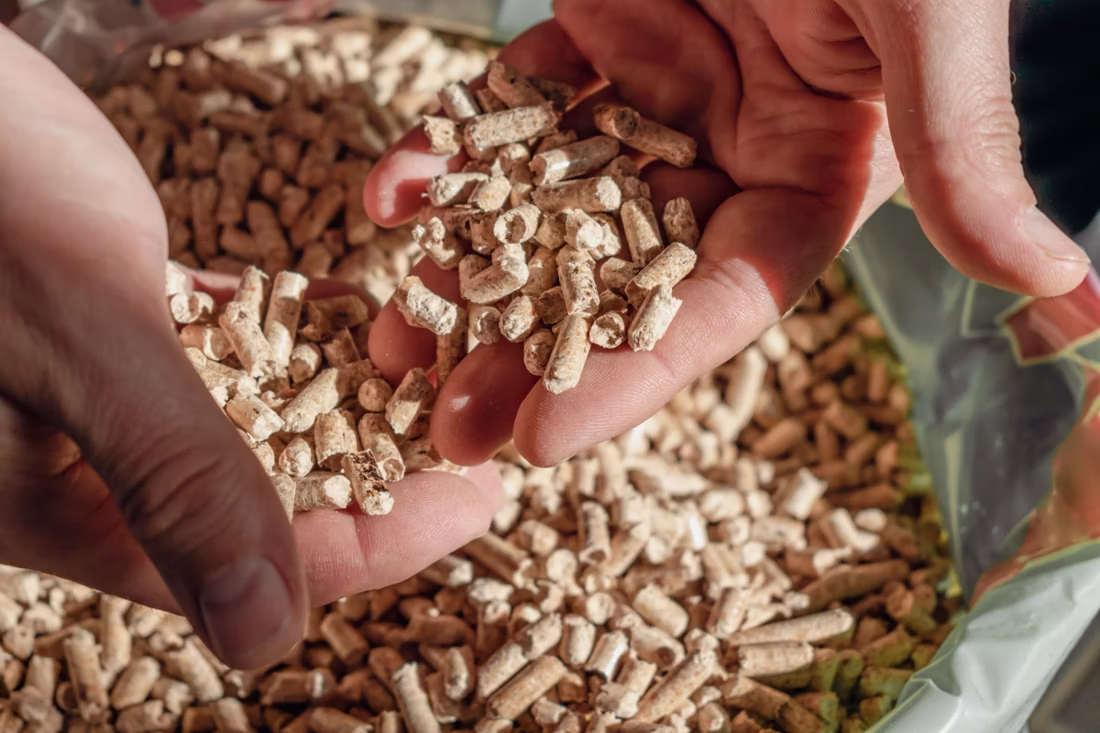
Regional brands like Bear Mountain, Lignetics, and Pacific Pellet—all made largely from Western softwood mill residue, including douglas fir—are the pellets you'll most likely find distributed through hearth shops and farm-supply retailers across Riverside and San Bernardino counties. Because local demand is thin, don't expect pallets sitting on a shelf in Temecula proper; most owners special-order a pallet (typically 50 forty-pound bags) ahead of the season rather than buying bag by bag.
Are pellet stoves affected by South Coast AQMD's wood-burning restrictions?
Temecula falls in a non-attainment area with recurring wildfire-smoke concerns, and South Coast AQMD does enforce no-burn advisories aimed primarily at open wood-burning fireplaces and uncertified wood stoves. EPA-certified pellet stoves generally burn clean enough to be treated differently under these kinds of programs—similar to how pellet appliances are exempted from curtailment days in other California air districts. Still, this is a narrow benefit for a fuel that's rarely installed here in the first place; confirm current rules with your installer before assuming exemption.
Does a pellet stove make more sense in the cooler areas around Temecula, like Anza or De Luz?
Somewhat. Higher-elevation, inland pockets like Anza and Aguanga, and the more rural De Luz area west of town, see colder nights and a longer cold season than downtown Temecula's valley floor. For a home in one of those areas without reliable central heat, a pellet stove can be a more reasonable supplemental option than it would be for a typical Temecula subdivision home on the valley floor. It's still a smaller pool of homes than you'd find in a genuinely cold-climate market, so expect fewer local dealers and more special ordering either way.
Pellet vs. gas vs. electric—which fireplace fits a Temecula home?
Gas and electric are the two fuels that actually fit Temecula's climate and infrastructure well, which is why both are rated standard here while pellet is not. Gas delivers instant, consistent heat with no fuel storage, which suits the area's short, mild heating season. Electric fireplaces are simple to install and widely supported, though worth noting that Southern California Edison's residential rate runs about $0.2825 per kWh—higher than the national average—so an electric unit used as more than occasional supplemental heat will show up on the bill. Pellet, by comparison, requires bagged fuel, an electric auger and blower, and a heating season long enough to justify the setup—a combination that rarely lines up with how Temecula homes are actually built and heated.
Will a pellet stove work during a Southern California Edison power shutoff?
No—and this matters in Riverside County, where SCE periodically initiates Public Safety Power Shutoffs during high-wind, high-fire-risk conditions. A pellet stove's auger and blower both run on electricity, so it goes dark in a PSPS just like an electric fireplace would. If backup heat during an outage is part of why you're considering a hearth appliance, a gas fireplace with a battery-backed or self-powered ignition system is generally the more reliable choice in this area.
If I still want a pellet stove, how do I find a dealer near Temecula?
Because pellet stoves are a genuine niche product here, the dealer you need may not be the closest hearth shop but one who's willing to special-order a unit from Bear Mountain, Lignetics, or Pacific Pellet's supply chain and vent it correctly for your home. That's exactly the matchmaking we do—tell us about your project and we'll connect you with a trusted local or regional dealer and put together a free Project Guide & Parts List so you know what the install actually requires before anyone shows up with a truck.
Why is my open fireplace making my house colder?
Open fireplaces suck—literally. As the fire burns, it consumes air your furnace already paid to heat and pulls it out through the chimney, so the house is actually colder after the fire goes out than before you lit it. An insert fixes this: it seals the chimney, puts fixed glass across the front, and turns that hole in your house into a real heat source.
Why is a fireplace insert so efficient?
An insert does two things: it seals the chimney completely, so you stop losing air you already paid to heat, and it radiates warmth into the room through the firebox and glass. Most add a heat-exchange fan that pulls cool room air underneath, wraps it around the hot firebox, and pushes it back out warm. Your home is more efficient before you've even lit the first fire.
Can a fireplace actually lower my heating bill?
Yes—by creating a comfort zone. A furnace heats every square foot of the house just to warm the one room you're in; a gas fireplace on low burns roughly a sixth of the gas a typical furnace does. Set the furnace around 55–60 degrees as a baseline, then heat the rooms your family actually uses. Families who heat this way commonly save $20–$60 a month.
How much should I budget for a fireplace?
For an average home—covering the fireplace, the vent pipe, and basic installation—a budget between $3,900 and $5,500 gives you a lot of options across wood, gas, and pellet. By the time you add finish work, gas line, and electrical, the average complete installation lands between $5,000 and $12,000 all-in. In a remodel or new build, a good rule is to put about 2.5% of the total project cost toward the fireplace.
Nearby Dealers
Hearth shops serving Temecula and the surrounding area.
Palm Springs True Value Hardware & Patio
Pellet Brands Stocked Around Temecula
Manufacturers will point you to the nearest stocking dealer.
See if a pellet stove makes sense for your Temecula home.
Tell us about your home and heating goals, and we'll match you with a trusted local dealer plus a free Project Guide & Parts List—the exact components, including the vent kit, for a pellet project in Temecula, or an honest recommendation toward gas or electric if that's the better fit.
Find Your Fireplace →