
Keep Your Family Warm and Safe—No Matter What
With mild winters and strict South Coast air rules, wood-burning isn't the default here. For the homeowners who still want it, we'll connect you with a local dealer who knows exactly what's allowed.
Every Project Starts From One of These Five Situations
South Pasadena's climate—and its air district—steer most homes toward other fuels.
South Pasadena sits at 652 feet in the San Gabriel Valley, where winter lows average a mild 46°F and the city logs only about 1,236 heating degree days a year—a fraction of what a cold-climate city like Bozeman, MT sees in a single winter. Supplemental heat is a nice-to-have here, not a necessity, and that alone puts wood stoves outside the mainstream. Layer on the fact that South Pasadena falls within a SCAQMD non-attainment area, and wood-burning appliances face real restrictions: Rule 445 prohibits burning on forecast "no-burn" days when particulate levels spike, and wildfire smoke from nearby foothill fires already strains local air quality several weeks a year.
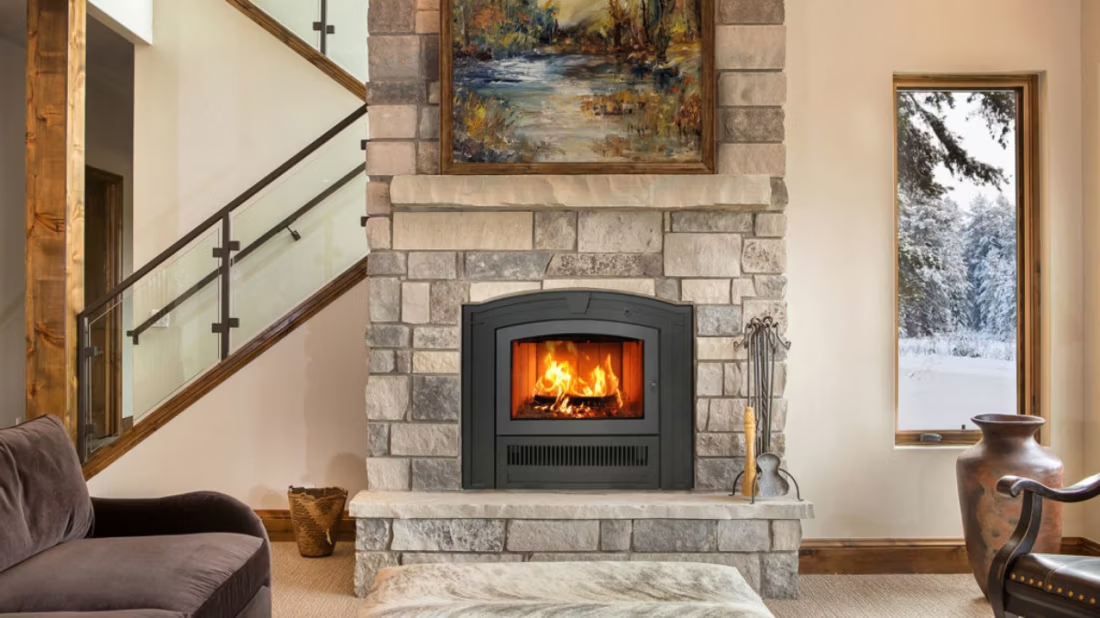
That doesn't mean wood is off the table entirely. Some of South Pasadena's older Craftsman and Spanish Revival homes have original masonry fireplaces, and a small number of owners install EPA-certified inserts for occasional ambiance or backup heat during a power outage. If you're one of them, a local dealer can walk you through Rule 445 compliance, proper venting, and whether an insert or a cleaner-burning alternative like gas or electric actually fits your goals better.
Firewood Cutting Permits Near South Pasadena
Three steps. No salesperson until you're ready.
Tell us about your project
Your zip code, your situation, and the fuel you're leaning toward—or let the answers point you to one.
See what's actually available
The brands dealers within 100 miles genuinely carry—real options, never a catalog mirage.
Get your dealer & Project Guide
A trusted local dealer, plus the free Project Guide & Parts List that names every component of the job.
Frequently Asked Questions
Is it even legal to install a wood stove in South Pasadena?
Yes, but with real restrictions. South Pasadena falls under the South Coast Air Quality Management District, and Rule 445 bans wood-burning on forecast no-burn days—typically declared during winter inversions when particulate pollution climbs. Only EPA-certified stoves and inserts installed after 2009 are exempt from mandatory shutdown on those days; older uncertified units must stay cold. Any new installation also needs a building permit through the City of South Pasadena Building Division, which will confirm the unit meets current EPA 2020 NSPS standards before sign-off.
How much does a wood stove or insert installation cost in South Pasadena?
Because wood installs are infrequent here, pricing runs on the higher end of the Southern California range—typically $4,000 to $8,500 for a certified insert into an existing masonry fireplace, including a stainless liner and code-required clearances. Freestanding stoves in homes without an existing chimney cost more once Class A pipe and roof penetration are added. Given how few installers in the San Gabriel Valley regularly do this work, get quotes from at least two dealers who can show recent EPA-certified installs, not just gas or electric work.
I have an old fireplace that's never been used for wood—can I still add an insert?
Often yes, if the existing masonry chimney passes inspection. Many of South Pasadena's older homes near Mission Street and the Arroyo Seco have original brick fireplaces that were built for occasional wood use decades before air-quality rules tightened. A local installer will run a camera inspection to check the flue for cracks or deterioration before lining it and setting a certified insert. If the chimney can't be safely relined, a direct-vent gas insert is usually the more practical fallback—it uses the same opening without the Rule 445 no-burn day restrictions.
What wood species are actually available locally if I do install a stove?
Oak, madrone, and Douglas fir are the species most commonly sold or self-cut in the region, though supply in the immediate South Pasadena flatlands is limited—most owners source seasoned oak from suppliers serving the broader San Gabriel Valley or haul it down from foothill communities. For self-cutting, permits are available through Angeles National Forest and San Bernardino National Forest, both running $5 to $20 per cord during the May-to-October season, but the drive and the limited local demand mean most South Pasadena owners with a stove buy delivered, seasoned cordwood rather than cutting their own.
Would gas or electric make more sense than wood for my home?
For most South Pasadena homeowners, yes. Gas fireplaces sidestep Rule 445 no-burn day restrictions entirely and deliver instant heat without smoke, which matters in a non-attainment area already dealing with periodic wildfire haze. Electric fireplaces are another clean option, though Southern California Edison's residential rate of roughly 28.25 cents per kWh makes them better suited to occasional ambiance than daily heating given the mild 46°F average winter low here. Wood remains the right call mainly for owners who specifically want the ritual of a real fire or a non-electric backup—not for households chasing lower utility bills.
Do I need a permit to cut my own firewood near South Pasadena?
If you're willing to drive out to public land, yes—a permit, not a purchase. Angeles National Forest, the closest national forest to South Pasadena, and San Bernardino National Forest both sell personal-use cutting permits for $5 to $20 per cord, valid during the May-through-October season. In practice, few South Pasadena residents cut their own wood given the drive; most buy seasoned oak from delivery services that serve the greater Los Angeles basin.
How often should a wood-burning fireplace or insert be inspected here?
Annually, same as anywhere else—the CSIA recommends a yearly Level 1 inspection and sweep for any wood-burning appliance that sees use, even occasional use. Because South Pasadena fireplaces tend to burn far fewer hours per winter than in a colder climate, creosote buildup is usually lighter, but southern California's older masonry chimneys can develop cracks over decades of disuse, so the inspection matters more for structural safety than for creosote here. Schedule it before the rare cold snap, typically October, so you're not caught needing service during a no-burn advisory window.
Can I still use my wood stove during a power outage if the air quality is bad?
It depends on the day. SCAQMD Rule 445 no-burn declarations apply regardless of power status, though local officials can and sometimes do relax restrictions during declared emergencies. If backup heat during outages is your main reason for wanting a wood stove, know that you may be burning on a technically restricted day if a no-burn advisory happens to overlap with the outage. Many South Pasadena owners who prioritize outage-proof heat choose a stove anyway and accept the rare compliance risk; others opt for a battery-backed gas unit instead, which sidesteps the issue entirely.
Wood vs. gas—which actually fits a South Pasadena home?
Gas wins for most households here: no Rule 445 no-burn day restrictions, no smoke contribution on days when wildfire haze already fills the basin, and instant heat that matches the mild, short heating season. Wood wins only for the specific homeowner who wants a genuine wood fire experience, has (or is adding) a sound masonry chimney, and is willing to track daily air-quality advisories before lighting up. Given South Pasadena's 1,236 heating degree days—a small fraction of a cold-climate city like Duluth, MN—this is fundamentally a lifestyle choice rather than a heating necessity, and it's worth being honest about that before committing to the install.
Why is my open fireplace making my house colder?
Open fireplaces suck—literally. As the fire burns, it consumes air your furnace already paid to heat and pulls it out through the chimney, so the house is actually colder after the fire goes out than before you lit it. An insert fixes this: it seals the chimney, puts fixed glass across the front, and turns that hole in your house into a real heat source.
Why is a fireplace insert so efficient?
An insert does two things: it seals the chimney completely, so you stop losing air you already paid to heat, and it radiates warmth into the room through the firebox and glass. Most add a heat-exchange fan that pulls cool room air underneath, wraps it around the hot firebox, and pushes it back out warm. Your home is more efficient before you've even lit the first fire.
Does a fireplace add value to my home?
On average, a fireplace adds back to the home about the same amount you spent installing it. Add the monthly savings from heating the rooms you actually use instead of the whole house—often hundreds of dollars a year—and the value case is strong before you even count what a fire does for how your family uses the room.
How much should I budget for a fireplace?
For an average home—covering the fireplace, the vent pipe, and basic installation—a budget between $3,900 and $5,500 gives you a lot of options across wood, gas, and pellet. By the time you add finish work, gas line, and electrical, the average complete installation lands between $5,000 and $12,000 all-in. In a remodel or new build, a good rule is to put about 2.5% of the total project cost toward the fireplace.
Nearby Dealers
Hearth shops serving South Pasadena and the surrounding area.
All Valley Distrib. Dba Marco Distrib
The Heat Source (Burrico) - Lancaster
Tropicana Outdoor Living
See if a wood fireplace actually makes sense for your South Pasadena home.
Tell us about your home and how you'd use it, and we'll match you with a local dealer who understands SCAQMD rules—plus a free Project Guide & Parts List covering the exact parts, venting, and permitting your project needs.
Find Your Fireplace →