
Clean, flip-a-switch heat for Siskiyou County homes.
No chimney, no gas line, no wood to split—just zone heat and ambiance for a bedroom addition, a manufactured home, or a fireplace-less living room in Yreka, Mount Shasta City, or Weed. Find the right unit and connect with a trusted local dealer.
Every Project Starts From One of These Five Situations
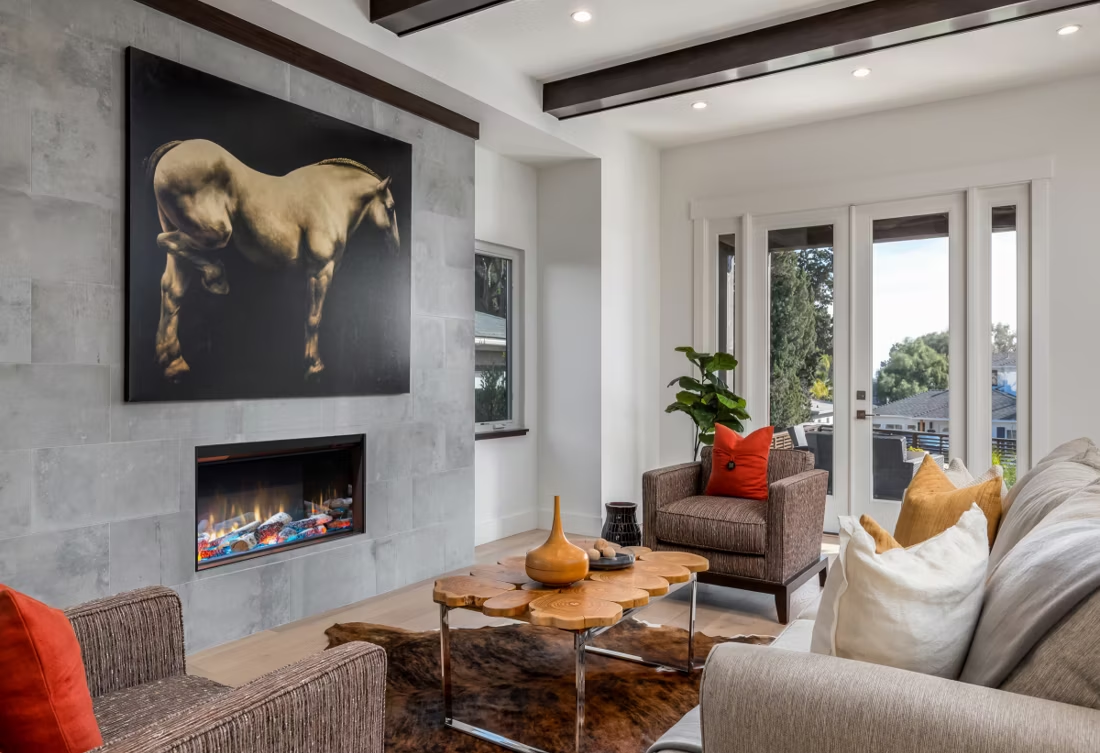
Clean heat that requires no chimney, no venting.
Siskiyou County spans more than 6,300 square miles of far northern California, anchored by the Mount Shasta massif at 14,179 feet and stretched from the Klamath River canyon to the Shasta and Scott Valleys. Winter lows average 27°F at valley elevations around Yreka and Mount Shasta City, with roughly 4,951 heating degree days a year—a moderate cold-climate load compared to a place like Duluth, MN, but still enough that most homes here run some form of supplemental heat for six-plus months. Add regular late-summer and fall wildfire smoke events across the county, and there's a real appeal to heat that doesn't add another combustion source or another chimney to sweep.
Wood remains the backbone of home heating culture in Siskiyou County—oak, madrone, and Douglas fir cut under permits from the Klamath National Forest, Rogue River-Siskiyou National Forest, or BLM Medford District are common in woodsheds from Etna to Dunsmuir. But electric fireplaces and inserts have carved out a real niche alongside that: a plug-in unit in a bonus room, a built-in in a newer home in Weed or Mount Shasta City where no flue exists, or a zone heater for a detached office or ADU. One honest caveat worth stating up front—during a Public Safety Power Shutoff, which does happen in this part of Northern California during high fire-risk periods, an electric fireplace goes dark along with everything else on the grid. Homes that need heat regardless of grid status typically pair an electric unit for daily convenience with a wood stove for true backup.
Three steps. No salesperson until you're ready.
Tell us about your project
Your zip code, your situation, and the fuel you're leaning toward—or let the answers point you to one.
See what's actually available
The brands dealers within 100 miles genuinely carry—real options, never a catalog mirage.
Get your dealer & Project Guide
A trusted local dealer, plus the free Project Guide & Parts List that names every component of the job.
Frequently Asked Questions
How much does an electric fireplace installation cost in Siskiyou County?
Most electric fireplace projects in Siskiyou County run $400 to $1,500. A plug-in freestanding or wall-mount unit on an existing 120V outlet sits at the low end and can often be handled without an electrician. A built-in electric insert or a unit requiring a dedicated 120V or 240V circuit—common when retrofitting into an existing masonry fireplace opening in an older Yreka or Fort Jones home—runs higher once an electrician pulls new wire. There's no chimney, venting, or gas line to budget for, which is the main reason electric installs cost a fraction of a wood or gas project in this county.
Do electric fireplaces need a chimney or venting?
No. Electric fireplaces and inserts produce heat and a flame effect using resistance heating elements and LED or mirror-based flame technology—there's no combustion, so there's no exhaust to vent and no chimney required. That makes them a practical option in Siskiyou County homes without an existing flue, in additions and garage conversions around Mount Shasta City and Weed, and in manufactured homes where adding a chimney isn't realistic.
Will my electric fireplace still work during a power outage?
No—and this matters more in Siskiyou County than in a lot of places, because Public Safety Power Shutoffs during high fire-danger periods can cut power for hours to days across parts of the county's service territory. An electric fireplace runs entirely on grid power (or a home battery/generator, if you have one); it won't produce heat or flame if the circuit is dead. If backup heat during an outage is a real concern for your household—especially in outlying areas around Etna, McCloud, or the Klamath River canyon—most local dealers will recommend pairing an electric unit for everyday convenience with a wood stove or propane unit that can run independent of the grid.
Do I need a permit to install an electric fireplace in Siskiyou County?
In most cases, no—a plug-in electric fireplace on an existing outlet doesn't trigger a permit. If your installer needs to add a new dedicated circuit, run wiring for a built-in unit, or do any work behind a wall or into an existing fireplace opening, that electrical work typically requires a permit through the Siskiyou County Building Division (or the applicable city building department if you're inside Yreka, Mount Shasta City, or Weed city limits). A licensed electrician handling the wiring will usually pull that permit as part of the job.
Electric vs. wood—which makes more sense for my Siskiyou County home?
Wood remains the more self-sufficient choice here—oak, madrone, and Douglas fir are all locally available, cutting permits through the Klamath National Forest and Rogue River-Siskiyou National Forest run as low as $5 to $20 per cord in season (May through October), and a wood stove keeps producing heat with zero electricity during an outage. Electric wins on convenience: no ash, no chimney sweep, no hauling cordwood, and instant on-off operation with a remote or app. Many households in the county end up with both—wood as the primary or backup heat source, electric for a room or space where running a flue isn't practical, like a converted garage or a room addition without an existing chimney.
Can I put an electric insert into my existing masonry fireplace?
Yes, and it's a common project for older homes in Yreka, Dunsmuir, and Fort Jones with a fireplace that's rarely used or drafty. An electric insert slides into the existing firebox opening, seals off the old flue (or leaves it capped), and gives you supplemental heat and a flame effect without burning anything. It's one of the lowest-cost fireplace upgrades available—often under $1,500 installed—since there's no venting work and usually no masonry modification required.
How much heat does an electric fireplace actually produce?
Most electric fireplaces top out around 5,000 to 5,200 BTU, which is enough to noticeably warm a single room (roughly 400 to 1,000 square feet depending on insulation and ceiling height) but not enough to serve as whole-home heat in a Siskiyou County winter. They're best understood as zone heaters—supplemental warmth for a specific room—rather than a replacement for central heat or a wood stove. If you're trying to heat an entire living area at elevation near Mount Shasta or in an older, less-insulated farmhouse in the Scott Valley, talk to a local dealer about whether electric alone will keep up or whether it should supplement another heat source.
What's the best electric fireplace for a Siskiyou County home?
For most households here, a built-in electric insert or linear unit from a mainstream manufacturer with a good heater core and realistic flame technology is the right call—the differences between budget and mid-tier units show up mostly in flame realism and heater durability, not in raw heat output, since the physics of resistance heating are the same across brands. For a room addition or detached space where you want real supplemental warmth, prioritize a model with a 5,000+ BTU heater and a thermostat rather than one marketed mainly on flame appearance. A local dealer can walk you through options that fit your room size and whether you want a recessed, wall-mount, or freestanding style.
Electric vs. pellet—which is right for my home?
Pellet stoves burn compressed wood pellets (regional brands like Bear Mountain, Lignetics, and Pacific Pellet are available around the county) and put out real heat—often enough to serve as a home's primary heat source—but they need electricity to run the auger and blower, plus a chimney or vent kit, plus a fuel supply you have to store and load. Electric fireplaces need only a wall outlet or circuit and produce far less heat, but they involve zero maintenance, zero venting, and zero smoke—a real consideration given how often wildfire smoke settles into Siskiyou County valleys in late summer and fall. If you want a genuine heat source with the trade-off of maintenance and fuel handling, pellet is the stronger option; if you want simple supplemental warmth and ambiance with the least hassle, electric wins.
Can I put a TV above my fireplace?
Yes—with an asterisk. Fireplaces are hot and TVs don't like heat. Either put a mantel between them to deflect rising warmth, or choose a fireplace with heat-management technology that creates a cool zone on the wall above—the wall stays around 125 degrees, barely warm, while the room still gets full heat. If you like clean lines and don't want a mantel, heat management is the answer.
Does an electric fireplace need a vent or chimney?
No—that's its superpower. An electric fireplace needs a wall and an outlet, period. No vent pipe, no gas line, no clearances to design around, which is why it works in bedrooms, offices, apartments, and walls where venting a gas or wood unit would be impractical or impossible. Installation is typically the simplest and least expensive of any fireplace type.
How much should I budget for a fireplace?
For an average home—covering the fireplace, the vent pipe, and basic installation—a budget between $3,900 and $5,500 gives you a lot of options across wood, gas, and pellet. By the time you add finish work, gas line, and electrical, the average complete installation lands between $5,000 and $12,000 all-in. In a remodel or new build, a good rule is to put about 2.5% of the total project cost toward the fireplace.
Does a fireplace add value to my home?
On average, a fireplace adds back to the home about the same amount you spent installing it. Add the monthly savings from heating the rooms you actually use instead of the whole house—often hundreds of dollars a year—and the value case is strong before you even count what a fire does for how your family uses the room.
Stove and Fireplace Dealers in Siskiyou County
Find your electric fireplace in Siskiyou County.
Tell us about your room, your circuit situation, and what you're trying to heat, and we'll match you with a trusted local dealer and send over a free Project Guide & Parts List—the exact unit, mounting or insert kit, and electrical requirements for your Siskiyou County project.
Find Your Fireplace →