
Steady Warmth the Valley's Burn Bans Can't Touch.
Selma sits in one of the strictest air districts in the country for winter wood smoke. Pellet heat gives you a real fire on the nights an open hearth isn't allowed to burn. We'll match you with a local dealer who can size and install it right.
Every Project Starts From One of These Five Situations
Solid fuel heat that survives a no-burn day.
Selma's winters are mild by national standards—an average low near 38°F and only a light overall heating load, a fraction of what a place like Fargo, ND or Duluth, MN sees in a single cold snap. But the San Joaquin Valley has a different problem: it's a federally designated non-attainment area for particulate matter, and winter tule fog traps smoke low over Fresno County for days at a time. The San Joaquin Valley Air Pollution Control District's Check Before You Burn program issues mandatory no-burn days through the winter months, and on those days, uncertified wood stoves and open fireplaces legally cannot be used.
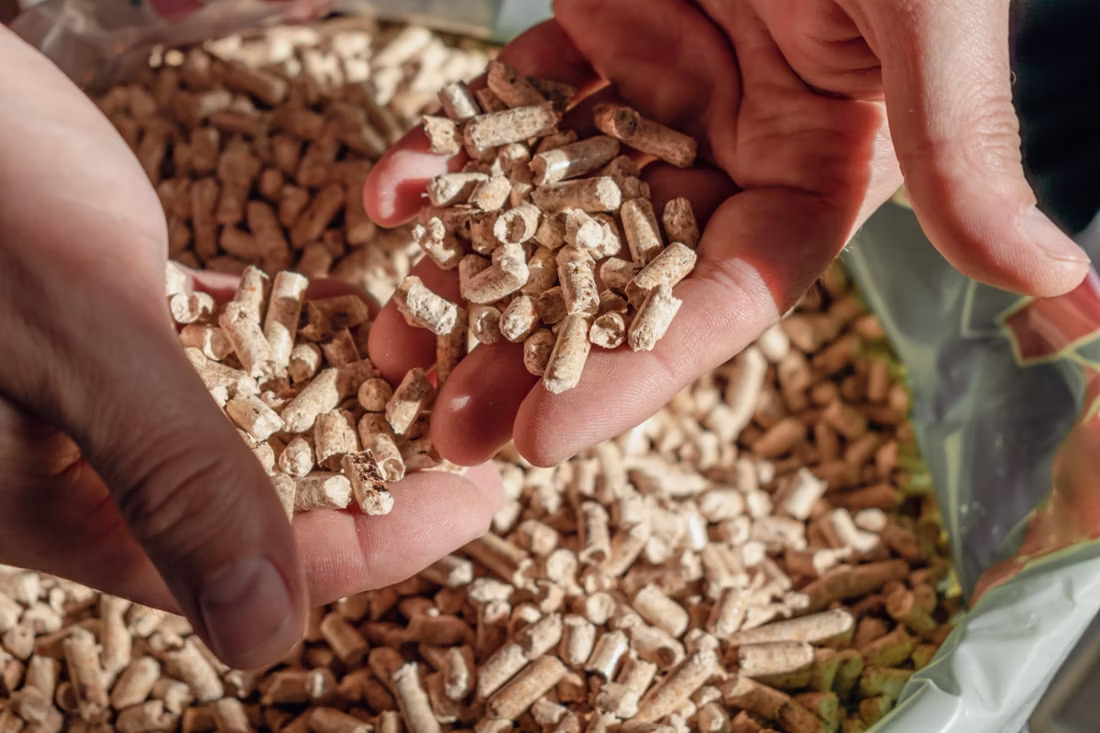
EPA-certified pellet stoves are typically exempt from those curtailment restrictions, which is why they've become a practical answer for Selma homeowners who want real heat and a visible flame without gambling on whether tonight is a green, yellow, or red day. It also helps that PG&E's residential rate here runs about $0.317 per kWh—among the highest in the country—so a pellet insert running on a bag of Bear Mountain or Pacific Pellet fuel can meaningfully undercut electric resistance heat during the handful of genuinely cold weeks the Valley gets each year.
Three steps. No salesperson until you're ready.
Tell us about your project
Your zip code, your situation, and the fuel you're leaning toward—or let the answers point you to one.
See what's actually available
The brands dealers within 100 miles genuinely carry—real options, never a catalog mirage.
Get your dealer & Project Guide
A trusted local dealer, plus the free Project Guide & Parts List that names every component of the job.
Frequently Asked Questions
How much does a pellet stove installation cost in Selma?
Most pellet stove and insert installations in the Valley run somewhere between $3,500 and $7,000, with the spread coming down to whether you're installing a freestanding stove with a simple through-wall vent kit or converting an existing masonry fireplace into a pellet insert with a liner. Because pellet stoves vent horizontally rather than needing a full Class A chimney, Selma homes without an existing fireplace are often on the more affordable end compared to a wood stove install. A local dealer will give you a firm number after seeing your hearth or wall setup.
Can I run a pellet stove on a Check Before You Burn no-burn day?
In most cases, yes. The San Joaquin Valley Air Pollution Control District's curtailment program targets uncertified wood-burning devices and open-hearth fireplaces first, and EPA-certified pellet stoves are generally allowed to operate even during mandatory curtailment periods, since they burn cleaner and produce far less particulate matter. This is the single biggest reason pellet heat has caught on around Fresno County—it's the one solid-fuel option that isn't at the mercy of a daily air quality call. Always confirm current-year rules on the district's site before burning, since exemption details can shift season to season.
What size pellet stove do I actually need in Selma's climate?
With only a light overall heating load and winter lows that rarely dip below the high 30s, most Selma homes don't need a pellet stove sized to carry the whole house through months of subzero cold the way a home in Bismarck, ND or Helena, MT would. A small to mid-size unit rated for 1,000 to 1,800 square feet is plenty for supplemental heat in a main living area, and many households run it as their primary heat source only during the coldest fog-bound weeks of December and January. A local retailer can walk your floor plan and tell you whether you need a bigger unit or if a smaller hopper will do the job.
Pellet vs. wood—which makes more sense here?
Wood is available locally—oak, madrone, and Douglas fir are common species, and Sierra National Forest and Sequoia National Forest both issue cutting permits for $5 to $20 per cord during the May-to-October season. But wood burning in an uncertified fireplace is exactly what gets restricted first on a Valley no-burn day, and wildfire smoke in late summer and fall already fills the air here without adding more. Pellet stoves sidestep that entirely, burn cleaner, and don't require splitting or seasoning cordwood. For a primary heat source in Selma, pellet is generally the more dependable year-round choice; wood still has appeal for weekend ambiance or a backup source if you're set up to cut your own.
Is pellet heat actually cheaper than running electric heat here?
Often, yes, for the coldest stretch of the year. PG&E's residential rate in the Selma area runs about $0.317 per kWh, which is high enough that electric resistance heat (baseboard or older wall units) gets expensive fast during a cold snap. A pellet stove running on 40-lb bags of Bear Mountain, Lignetics, or Pacific Pellet fuel—all regionally distributed brands—typically costs less per hour of comparable heat output, especially if you're zone-heating one main room rather than running central heat. It won't replace your whole electric bill, but as supplemental heat for a living room or family room, it can take real pressure off it.
Where can I buy pellets in the Selma area?
Bear Mountain, Lignetics, and Pacific Pellet are all regionally distributed brands that Fresno County hearth and farm supply retailers commonly stock, especially heading into fall. Pricing in the Valley generally tracks statewide California averages, and buying a season's worth in September or October—before the first no-burn advisories hit—usually beats scrambling for bags in January when demand spikes. Your local dealer can also tell you which pellet brands burn cleanest in the specific stove model you buy, since ash content varies by brand and affects how often you're cleaning the burn pot.
Do I need a permit to install a pellet stove in Selma?
Most pellet stove and insert installations require a building permit, typically pulled through the City of Selma Building Department if you're inside city limits, or Fresno County Building and Planning if you're in the surrounding unincorporated area. The permit process mainly confirms clearances, venting, and hearth pad compliance rather than anything unusual to pellet units specifically. A certified local installer will typically handle the permit paperwork as part of the job, so it's rarely something you have to manage yourself.
Do I need an existing chimney to install a pellet stove?
No—this is one of the practical advantages of pellet heat for Selma's housing stock. Pellet stoves vent through a small-diameter pipe that can run horizontally through an exterior wall, so homes without a masonry chimney or an existing fireplace can still install one without adding a full vertical chimney system. If you do have an existing fireplace, a pellet insert can also be fitted into it using the existing opening. Either path is generally simpler and less expensive than the venting work a wood stove installation requires.
How much maintenance does a pellet stove need?
Pellet stoves need more routine attention than a gas unit but less than cleaning a wood-burning chimney. Expect to empty the ash pan every few days during regular use, clean the burn pot and glass weekly, and vacuum the hopper and exhaust passages periodically through the season. Most manufacturers recommend a full professional service once a year—checking the auger motor, igniter, and venting—which local dealers or hearth service techs typically handle for a flat fee. Staying on top of it matters more in the Valley than elsewhere, since a poorly maintained stove burns less cleanly, which matters on days close to a curtailment threshold.
How often does a pellet stove need cleaning?
A clean pellet stove is a happy pellet stove. Plan on cleaning the burn pot about once a week when you're burning regularly—ash and clinkers gum up the air holes just like a pellet barbecue. Most pellet stove problems trace back to skipped cleaning that nobody explained up front. Some designs make it easy with a trapdoor burn pot: pull a lever and the gunk drops into the ash pan.
Why is my open fireplace making my house colder?
Open fireplaces suck—literally. As the fire burns, it consumes air your furnace already paid to heat and pulls it out through the chimney, so the house is actually colder after the fire goes out than before you lit it. An insert fixes this: it seals the chimney, puts fixed glass across the front, and turns that hole in your house into a real heat source.
What is an in-home preview and do I need one?
It's a visit where a hearth professional measures your space, confirms the model you picked actually works in your home, and walks the specs—framing, gas line, venting, finish work—before anything is ordered. Some details you just can't know until you see the house. Never make a down payment without one; it's the single most-skipped step that burns buyers.
How much should I budget for a fireplace?
For an average home—covering the fireplace, the vent pipe, and basic installation—a budget between $3,900 and $5,500 gives you a lot of options across wood, gas, and pellet. By the time you add finish work, gas line, and electrical, the average complete installation lands between $5,000 and $12,000 all-in. In a remodel or new build, a good rule is to put about 2.5% of the total project cost toward the fireplace.
Nearby Dealers
Hearth shops serving Selma and the surrounding area.
Pellet Brands Stocked Around Selma
Manufacturers will point you to the nearest stocking dealer.
Find your pellet stove in Selma.
Tell us about your home and heating goals, and we'll match you with a trusted local dealer and send over your free Project Guide & Parts List—the exact parts, vent kit, and recommended installer for your pellet project in Selma.
Find Your Fireplace →