
A mild coastal climate that rarely calls for pellet heat.
With winter lows averaging 41°F and just 2,484 heating degree days a year, Santa Maria doesn't need the kind of sustained combustion heat pellet stoves are built for. If you still want one—for ambiance, a hillside property, or backup during a PG&E outage—I'll match you with a trusted local dealer who can tell you straight whether it makes sense.
Every Project Starts From One of These Five Situations
In the Santa Maria Valley, pellet stoves are the exception, not the rule.
Santa Maria sits in climate zone 3C, a mild marine band that runs up and down California's Central Coast, and the numbers show why supplemental combustion heat isn't a big part of local life: 2,484 heating degree days a year and an average winter low of 41°F put this valley in a different world from places like Duluth or Bismarck, where a stove has to hold a fire through single-digit nights for months at a stretch. Central heat—usually a gas furnace or heat pump—covers the handful of genuinely cold mornings most Santa Maria homes see each winter, which is a big part of why both wood and pellet appliances carry a not-applicable relevance rating for this market. Oak, madrone, and Douglas fir grow in the hills around town and up through Los Padres National Forest, but they're not fueling many hearths here the way they would in a harder winter climate.
There's also a practical wrinkle specific to this area: pellet stoves depend on electricity to run the auger and blower, and Santa Maria is served by Pacific Gas & Electric, a utility known for Public Safety Power Shutoffs during high fire-risk periods—often the same stretches when smoke from wildfires already has people thinking about air quality and indoor combustion. That combination means a pellet stove doesn't offer the outage resilience some homeowners are hoping for when they consider one. Most who move forward anyway are looking for ambiance, a secondary heat source for a drafty older home in Orcutt or the outskirts of Nipomo, or a unit for a second property in a colder inland area, and they typically source pellets from regional brands like Bear Mountain, Lignetics, or Pacific Pellet through a local hearth dealer.
Three steps. No salesperson until you're ready.
Tell us about your project
Your zip code, your situation, and the fuel you're leaning toward—or let the answers point you to one.
See what's actually available
The brands dealers within 100 miles genuinely carry—real options, never a catalog mirage.
Get your dealer & Project Guide
A trusted local dealer, plus the free Project Guide & Parts List that names every component of the job.
Frequently Asked Questions
Are pellet stoves actually common in Santa Maria?
Not really, and it's worth being upfront about that. Pellet fuel carries a not-applicable relevance rating for this area because the climate simply doesn't demand it—2,484 heating degree days a year is a fraction of what colder inland or mountain climates see. A small number of Santa Maria homeowners still install pellet stoves or inserts, usually for the ambiance of a real flame, a supplemental heat source in an older, drafty house, or a unit meant for a cabin or second home elsewhere. If that's your situation, a local dealer can absolutely help—it's just not the default heating choice here the way it is in colder parts of the state.
Why isn't wood or pellet heat more popular in Santa Maria if the wood is available locally?
Oak, madrone, and Douglas fir are all present in the hills feeding into Los Padres National Forest, and cutting permits there run just $5 to $20 per cord in the May-through-October season—so availability isn't the limiting factor. The limiting factor is need: with winter lows averaging 41°F, most Santa Maria homes are comfortable on their existing gas or electric central heat and never reach for a backup heat source. Both wood and pellet appliances are rated not-applicable here for the same reason—it's a demand issue, not a supply issue.
Will a pellet stove keep working during a PG&E power shutoff?
Not without help. Pellet stoves rely on an electric auger to feed fuel and a blower to circulate heat, so a standard unit goes dark the moment the power does—which matters in a PG&E service area where Public Safety Power Shutoffs happen during high fire-risk conditions, often in the fall when Santa Maria is also dealing with wildfire smoke. Some models accept a battery backup or small generator to bridge an outage, but if outage resilience is your main goal, a wood stove or a dual-fuel gas unit is the more reliable choice for this area. A local dealer can walk through the tradeoffs based on what you're actually trying to solve for.
What does a pellet stove installation cost in Santa Maria?
Because pellet installs are infrequent here compared to gas or electric fireplace work, pricing varies more by project than by any typical local range—the big variables are whether you're venting through an existing masonry chimney with a liner, cutting a new wall penetration for direct-vent pipe, and whether the hearth pad and nearby outlet for the auger already exist. Rather than guess, I'll match you with a trusted local dealer who can walk your specific space and hand you an itemized quote as part of your free Project Guide & Parts List.
Do I need a permit to install a pellet stove in Santa Maria?
Yes. Whether you fall under the City of Santa Maria's Building Division or Santa Barbara County's, if you're in an unincorporated pocket near Orcutt, a new solid-fuel appliance installation needs a building permit and inspection, and the unit itself needs to be listed and installed to manufacturer clearances. Most hearth dealers who take on pellet projects in this area handle the permit paperwork as part of the job, which is helpful given how much less routine this particular install is here compared to gas fireplace work.
What size pellet stove makes sense for a Santa Maria home?
Smaller than you'd need almost anywhere else. Given the mild winter lows around 41°F, most Santa Maria installs are sized as supplemental or occasional-use heat rather than a primary source meant to carry a house through months of hard cold—a compact unit rated for a single room or open living area is usually plenty. Sizing a pellet stove here the way you would in a place with 6,000+ heating degree days would mean an oversized unit that short-cycles constantly, which is hard on the igniter and auger motor over time.
Should I get a pellet stove, gas insert, or nothing at all in Santa Maria?
For most homes here, gas is the more natural fit—it's rated standard for this climate, fires up instantly on the rare cold morning, and doesn't depend on a fuel bag supply chain the way pellets do. Pellet stoves make sense in narrower cases: a homeowner who specifically wants the visual and feel of a fire, a house with a masonry chimney already in place, or a property with limited or no gas access. Wood is also rated not-applicable here for the same climate reasons as pellet, so if you're choosing purely on practicality for year-round comfort, gas or an electric fireplace typically wins out.
Where do I buy pellet fuel in Santa Maria, and does it keep well?
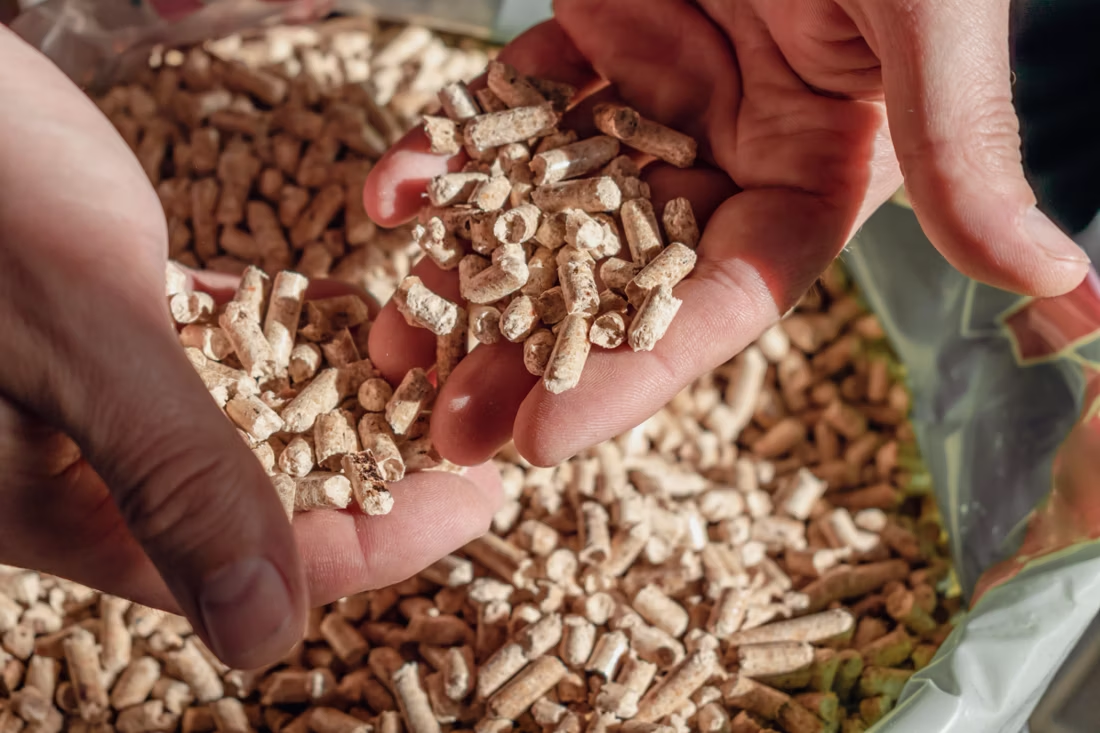
Bear Mountain, Lignetics, and Pacific Pellet are the regional brands most commonly stocked at hearth dealers and farm supply stores serving the Central Coast, though because demand is lower here than in colder inland markets, availability can be spottier in mid-winter—it's worth buying a season's supply early rather than counting on restocks. Pellets need dry, sealed storage; Santa Maria's coastal humidity is milder than the Central Valley's fog belt but still enough that bags left in a damp garage or shed can swell and clump before they ever reach the hopper.
How much maintenance does a pellet stove need if I barely use it?
Less than a unit running daily through a long cold season, but it's not zero. Even light seasonal use leaves ash and fine soot in the burn pot and exhaust vent, and an auger that sits idle for months benefits from a pre-season check before the handful of cool nights Santa Maria does get each winter. Plan on an annual cleaning and inspection—ideally before wildfire season ramps up in late summer, since that's also when many homeowners are thinking about combustion appliances and indoor air quality together. A local dealer familiar with lightly-used units can usually do this as a quick seasonal service rather than a full teardown.
What's the difference between an insert and a zero-clearance fireplace?
An insert is a fireplace that slides into a pre-existing wood-burning fireplace—if you don't have one, there's nothing to insert it into. A zero-clearance fireplace is built into a framed wall, which makes it the answer for remodels and new construction. Simple test: existing masonry fireplace means insert; blank or framed wall means zero-clearance.
Why is a fireplace insert so efficient?
An insert does two things: it seals the chimney completely, so you stop losing air you already paid to heat, and it radiates warmth into the room through the firebox and glass. Most add a heat-exchange fan that pulls cool room air underneath, wraps it around the hot firebox, and pushes it back out warm. Your home is more efficient before you've even lit the first fire.
Can a fireplace actually lower my heating bill?
Yes—by creating a comfort zone. A furnace heats every square foot of the house just to warm the one room you're in; a gas fireplace on low burns roughly a sixth of the gas a typical furnace does. Set the furnace around 55–60 degrees as a baseline, then heat the rooms your family actually uses. Families who heat this way commonly save $20–$60 a month.
What is an in-home preview and do I need one?
It's a visit where a hearth professional measures your space, confirms the model you picked actually works in your home, and walks the specs—framing, gas line, venting, finish work—before anything is ordered. Some details you just can't know until you see the house. Never make a down payment without one; it's the single most-skipped step that burns buyers.
Nearby Dealers
Hearth shops serving Santa Maria and the surrounding area.
Pellet Brands Stocked Around Santa Maria
Manufacturers will point you to the nearest stocking dealer.
Get your free Project Guide & Parts List for a Santa Maria pellet stove.
Tell me about your home, what you're hoping the stove will do—ambiance, backup heat, or something else—and whether PG&E outages are a concern, and I'll match you with a trusted local dealer and send a free Project Guide & Parts List with the exact vent kit and parts your project needs.
Find Your Fireplace →