
Pellet heat is rare in San Leandro's mild winters—but not impossible.
With average winter lows near 42°F and one of the lightest winter heating loads around, most San Leandro homes never need a dedicated heat appliance like a pellet stove. For the households that do want one, we'll connect you with a local dealer who actually stocks and installs them.
Every Project Starts From One of These Five Situations
San Leandro's climate doesn't call for it.
San Leandro sits at 29 feet above sea level on the mild, marine-influenced Bay Area shoreline, in climate zone 3C. Winters here rarely get cold enough to require serious supplemental heat—the average winter low is 42°F, and the city has one of the lightest winter heating loads around. Compare that to Fargo, North Dakota, which has nearly triple the winter heating load in a typical winter, and it's easy to see why solid-fuel heating appliances, pellet stoves included, never became part of daily life here the way they did in colder, forested regions.
The Bay Area Air Quality Management District (BAAQMD) also designates the region a non-attainment area, and Spare the Air alerts periodically restrict wood-burning devices during winter inversions and wildfire smoke events. Pellet appliances are usually EPA-certified and often exempt from those curtailment rules, which is one of the few practical reasons a San Leandro homeowner reaches for one—but the underlying heating need just isn't there for most houses. Regional pellet brands like Bear Mountain, Lignetics, and Pacific Pellet do move through Northern California distribution, so fuel is available if you go this route; it's the local installer network and heating demand that's thin, not the supply chain.
Three steps. No salesperson until you're ready.
Tell us about your project
Your zip code, your situation, and the fuel you're leaning toward—or let the answers point you to one.
See what's actually available
The brands dealers within 100 miles genuinely carry—real options, never a catalog mirage.
Get your dealer & Project Guide
A trusted local dealer, plus the free Project Guide & Parts List that names every component of the job.
Frequently Asked Questions
Are pellet stoves common in San Leandro?
No—pellet stoves are uncommon here, and it's worth being upfront about that. San Leandro's winter lows average 42°F and the city has one of the mildest heating climates in California. A city like Fargo, North Dakota routinely has nearly triple the winter heating load over the same period. Most San Leandro homes rely on a furnace or heat pump for the handful of genuinely cold nights each winter, and there's little of the cordwood or pellet-heating culture you'd find in the Sierra foothills or Northern California's mountain towns.
Why would anyone install a pellet stove in a place with such mild winters?
The homeowners who do it in San Leandro usually have a specific reason, not a general heating need. Common cases: an older pre-1960s bungalow with poor insulation and cold spots in one room, a detached garage or ADU that's disconnected from central heat, a desire for the ambiance of a real flame without the smoke management of a wood stove, or a second property in a colder region (Tahoe, the Sierra foothills) where the same brand and dealer relationship carries over. It's a niche installation here, not a mainstream one, and a good local dealer will tell you honestly whether your situation actually calls for it.
How much does a pellet stove installation cost in San Leandro?
Because pellet installations are infrequent in this market, pricing isn't as standardized locally as it is in colder regions, but expect a similar range to what you'd see elsewhere in Northern California—roughly $3,500 to $6,500 installed, depending on whether it's a freestanding stove or an insert into an existing fireplace, and whether new venting or an electrical circuit needs to be run. With fewer dealers actively stocking pellet units in the East Bay, you may also see a wider spread in bids than you would for gas or electric work. The free Project Guide & Parts List we provide will spell out the specific parts and vent kit for your home before you commit.
Do I need a permit to install a pellet stove in San Leandro?
Yes. New pellet stove installations require a building permit through the City of San Leandro Building and Safety Division (or Alameda County if you're in an unincorporated pocket near the 94577/94578 zips). Because San Leandro falls under BAAQMD jurisdiction, you'll also want to confirm your unit's certification status—most modern pellet stoves are EPA-certified and typically exempt from Spare the Air burn curtailments, but your installer should verify this against current BAAQMD Regulation 6 rules before you buy.
Will a pellet stove keep working during a PG&E power outage or Public Safety Power Shutoff?
Not on its own. Pellet stoves rely on an electric auger to feed fuel and a blower to distribute heat, so a standard unit shuts down the moment power drops—which matters in a PG&E service area where Public Safety Power Shutoffs happen during high fire-risk periods. Some manufacturers offer battery-backup kits that can run the stove for several hours, but that's an add-on, not a standard feature. If outage-proof heat is your priority, an electric fireplace with a home battery, or a generator-backed setup, is usually a more realistic solution for a San Leandro home than pellet.
Where can I buy pellets in San Leandro?
Because pellet appliances are uncommon locally, San Leandro doesn't have the dense network of pellet retailers you'd find in a place like the Sierra foothills. Regional brands including Bear Mountain, Lignetics, and Pacific Pellet do circulate through Northern California distribution and show up at hardware stores and hearth shops in the wider East Bay (Hayward, Oakland, Concord). Most San Leandro pellet stove owners either stock up during seasonal sales or arrange a bulk delivery a few tons at a time rather than buying bag by bag as needed.
What's the difference between a pellet stove and a wood stove for a San Leandro home?
Both are considered niche appliances here—San Leandro's mild climate means neither is a mainstream heating choice the way it would be in a colder, forested region. That said, wood stoves need a hard fuel source (oak, madrone, and Douglas fir are the regional species, though there's little local cutting culture—the nearest permits run through the BLM California State Office at $10 per cord, April through October) and no electricity to run, while pellet stoves need power for the auger and blower but produce more consistent, lower-maintenance heat. For most San Leandro applications where either is being considered at all, it comes down to whether you want a hands-off appliance (pellet) or you're specifically drawn to tending a wood fire (wood)—talk to a local dealer about which actually fits your space.
Are there air quality restrictions on pellet stoves in San Leandro?
San Leandro falls under the Bay Area Air Quality Management District, which designates the region a non-attainment area and issues Spare the Air alerts during winter inversions and periods of heavy wildfire smoke. Those alerts primarily target uncertified wood-burning devices; EPA-certified pellet stoves are typically exempt from mandatory curtailment, similar to how many other California air districts treat them. Still, any installer pulling your permit should confirm your specific unit's certification and exemption status with the city before installation.
Pellet stove vs. electric fireplace—which makes more sense for a San Leandro home?
For most San Leandro households, electric is the more practical fit. Electric fireplaces and inserts need no venting, no fuel storage, and no permit for the appliance itself, and they plug into existing household wiring—even with PG&E's residential rate near $0.317 per kWh, the very light winter heating load here keeps operating costs manageable for occasional use. Pellet makes sense only in specific cases: a detached space without central heat, a strong preference for a real flame, or year-round ambiance use. If you're unsure which fits your home, a local dealer can walk through both options during a free consultation.
Why is my open fireplace making my house colder?
Open fireplaces suck—literally. As the fire burns, it consumes air your furnace already paid to heat and pulls it out through the chimney, so the house is actually colder after the fire goes out than before you lit it. An insert fixes this: it seals the chimney, puts fixed glass across the front, and turns that hole in your house into a real heat source.
How often does a pellet stove need cleaning?
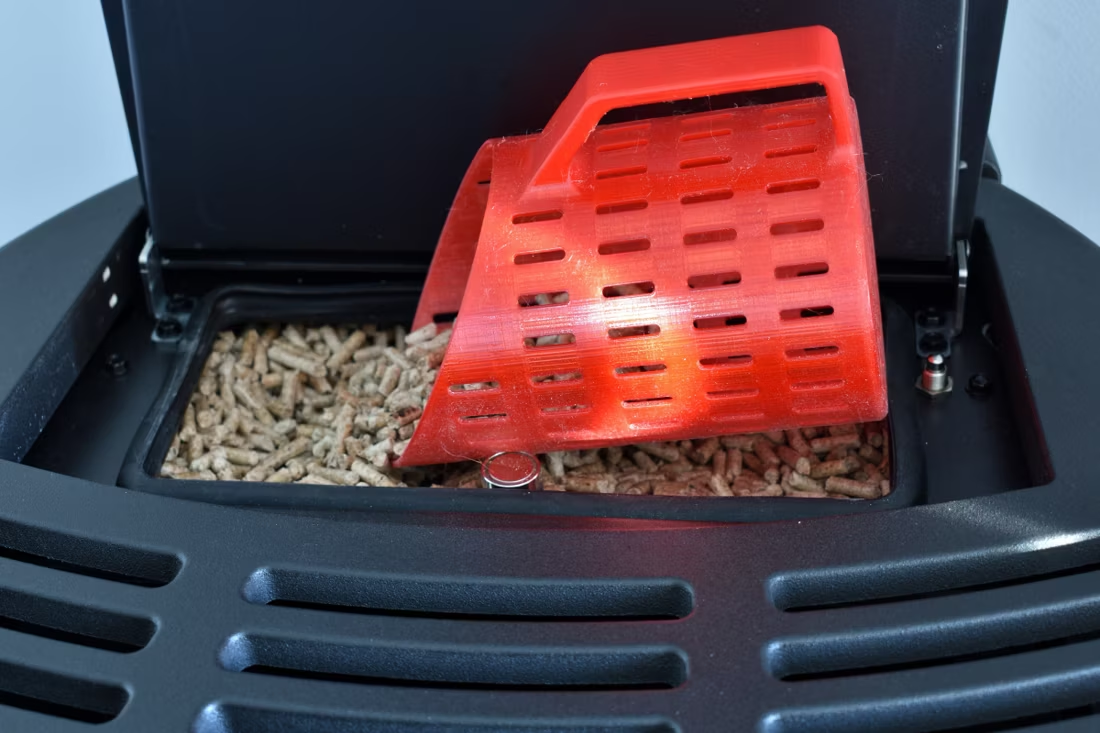
A clean pellet stove is a happy pellet stove. Plan on cleaning the burn pot about once a week when you're burning regularly—ash and clinkers gum up the air holes just like a pellet barbecue. Most pellet stove problems trace back to skipped cleaning that nobody explained up front. Some designs make it easy with a trapdoor burn pot: pull a lever and the gunk drops into the ash pan.
Does a fireplace add value to my home?
On average, a fireplace adds back to the home about the same amount you spent installing it. Add the monthly savings from heating the rooms you actually use instead of the whole house—often hundreds of dollars a year—and the value case is strong before you even count what a fire does for how your family uses the room.
What is an in-home preview and do I need one?
It's a visit where a hearth professional measures your space, confirms the model you picked actually works in your home, and walks the specs—framing, gas line, venting, finish work—before anything is ordered. Some details you just can't know until you see the house. Never make a down payment without one; it's the single most-skipped step that burns buyers.
Nearby Dealers
Hearth shops serving San Leandro and the surrounding area.
Pellet Brands Stocked Around San Leandro
Manufacturers will point you to the nearest stocking dealer.
Find your pellet stove in San Leandro.
Tell us about your home and your reason for wanting pellet heat, and we'll match you with a trusted local dealer and send over a free Project Guide & Parts List—the exact parts, vent kit, and recommended installer for your San Leandro project.
Find Your Fireplace →