
Pellet heat is rare in San Juan Capistrano—here's where it still fits.
With winter lows averaging 44°F and a very light winter heating load overall, most San Juan Capistrano homes never need a dedicated heat source like a pellet stove. A small number of homeowners still install one—and we'll help you figure out if that's you.
Every Project Starts From One of These Five Situations
A mild climate where pellet heat is the exception, not the rule.
San Juan Capistrano sits at just 104 feet in elevation near San Juan Creek, in a climate zone (3B) defined by mild, marine-influenced winters. Average winter lows hover around 44°F, and the city has a very light winter heating load—a fraction of what a place like Bozeman, Montana sees in a single January. Most homes here get by on occasional furnace use or nothing at all, which is exactly why pellet fuel is flagged as not applicable for this market: there simply isn't enough sustained cold to justify a dedicated pellet-burning appliance as a primary or even meaningful supplemental heat source.
That said, a handful of San Juan Capistrano homeowners do install pellet stoves or inserts—usually for the look and ritual of a solid-fuel fire rather than for warmth. Because the South Coast Air Quality Management District (SCAQMD) regulates the region as a non-attainment area and restricts new open-hearth wood fireplaces under Rule 445, pellet inserts are sometimes the only EPA Phase 2-certified, code-compliant solid-fuel option available for new construction or remodels in this part of Orange County. Others want the ambiance in a historic mission-district home, or split their time between here and a colder second home where pellet fuel actually earns its keep.
Three steps. No salesperson until you're ready.
Tell us about your project
Your zip code, your situation, and the fuel you're leaning toward—or let the answers point you to one.
See what's actually available
The brands dealers within 100 miles genuinely carry—real options, never a catalog mirage.
Get your dealer & Project Guide
A trusted local dealer, plus the free Project Guide & Parts List that names every component of the job.
Frequently Asked Questions
How much does a pellet stove installation cost in San Juan Capistrano?
Nationally, pellet stove and insert installations typically run $3,000 to $6,500 depending on the unit and venting path, and San Juan Capistrano installs tend to land in that range or slightly above it. Because pellet appliances are uncommon here—the fuel is flagged not applicable for this climate—fewer local dealers stock and install them regularly, which can mean sourcing the unit from a regional supplier and a somewhat longer lead time. A local dealer can give you a firm number after seeing your home and venting situation.
Is a pellet stove even worth installing given how mild the winters are here?
For most San Juan Capistrano homes, no—not as a heating investment. With winter lows averaging 44°F and a very light winter heating load overall, the payback math that makes pellet stoves attractive in colder climates (like the Sierra foothills or the Pacific Northwest) doesn't really apply here. Where a pellet stove still makes sense is for homeowners who want a real, visible flame with less mess than wood, or who specifically want a solid-fuel appliance that satisfies SCAQMD's new-construction rules. If you're heating-motivated rather than aesthetics-motivated, a gas fireplace or electric unit will almost always make more financial sense in this climate.
Why would anyone install a pellet stove in San Juan Capistrano if it's not needed for heat?
A few real reasons come up locally. First, SCAQMD's Rule 445 restricts new open-hearth wood-burning fireplaces in this non-attainment area, and pellet inserts—being EPA-certified, low-emission appliances—are often the cleanest solid-fuel option that still clears that bar for new builds and remodels. Second, some homeowners in the historic mission district or the older ranch-style neighborhoods just want the look and feel of a real fire without stacking firewood, and a pellet insert delivers that with a hopper and a thermostat instead of cordwood. Third, a number of San Juan Capistrano residents split time with a mountain or high-desert property where a pellet stove does real heating work, and they simply prefer the same appliance style at both homes.
Are there air quality restrictions on burning here, and do they affect pellet stoves?
Orange County falls under SCAQMD jurisdiction, which is a non-attainment area for ozone and particulate matter, and the region also deals with periodic wildfire smoke advisories in fall and early winter. SCAQMD issues no-burn advisories on high-pollution days that restrict traditional open-hearth wood fireplaces, but EPA-certified pellet stoves and inserts are generally exempt from those curtailment days because they burn far cleaner. That exemption is actually one of the more practical reasons a San Juan Capistrano homeowner might choose a pellet unit over an open wood fireplace if they want a solid-fuel appliance at all.
Do I need a permit to install a pellet stove in San Juan Capistrano?
Yes—a building permit is typically required for a new pellet stove or insert installation, covering the appliance hookup and the wall or roof venting penetration. Compared to a full masonry chimney project, pellet venting is usually a simpler side-wall or roof-cap installation, and most local hearth dealers who handle these installs will pull the permit and coordinate inspection as part of the job. Given how few pellet installs happen locally, it's worth confirming your installer has actually pulled a pellet-specific permit before, rather than a wood or gas one.
Will my pellet stove work during a power outage or a PSPS event?
No—not without a battery backup add-on. Pellet stoves rely on an electric auger to feed fuel and a blower to distribute heat and exhaust, so they shut down the moment power drops, whether from a routine outage or a San Diego Gas & Electric public safety power shutoff during fire-weather conditions. If backup heat during an outage is part of why you're considering a solid-fuel appliance, a wood-burning unit or a battery-backed gas fireplace will serve you better than pellet in San Juan Capistrano.
How does a pellet stove compare to a gas fireplace for a home like mine?
Given San Juan Capistrano's mild climate, gas is the far more common choice, and for good reason—it lights instantly, requires no fuel storage or hopper refilling, and many models keep working during outages thanks to battery-backed ignition. A pellet stove requires buying and storing bags of fuel, emptying an ash pan, and running the auger and blower on electricity that costs $0.3247 per kWh through San Diego Gas & Electric, one of the higher residential rates in the state. Pellet still wins on flame authenticity and the tactile, load-it-yourself experience; gas wins on convenience for a climate that rarely demands real heat output.
Where do the wood pellets actually come from, since there's no local timber industry here?
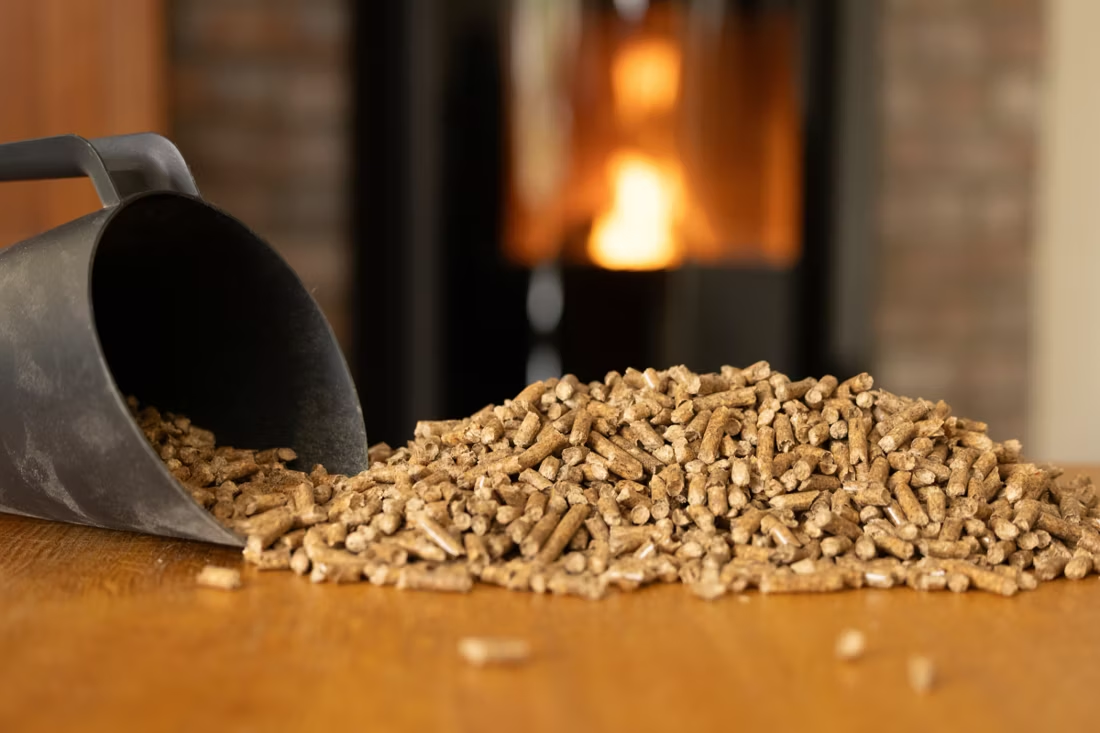
Unlike firewood, which in Southern California might come from Forest Service cutting permits through the Cleveland, Angeles, or San Bernardino National Forests, wood pellets are manufactured products, not something you cut yourself. San Juan Capistrano-area dealers and big-box retailers typically stock regional brands like Bear Mountain, Lignetics, and Pacific Pellet, which are milled from compressed sawdust and wood waste and trucked in from processing facilities in the Pacific Northwest and Central Valley. Availability can be tighter here than in colder-climate markets simply because local demand is so low.
Pellet vs. electric heat—which fits better in San Juan Capistrano?
Electric is the more practical fit for most homes here. Electric fuel is flagged standard for this market precisely because the low heating demand (a very light winter heating load, 44°F average winter lows) matches well with a simple electric fireplace or space heater—no venting, no fuel storage, no ash. Pellet remains flagged not applicable because the appliance and fuel logistics only make sense if you specifically want a solid-fuel flame. The tradeoff is cost per BTU: with SDG&E's residential rate at $0.3247/kWh, electric heat runs more expensive to operate hour for hour, but in a climate this mild, most homeowners simply aren't running either one very often.
Why is my open fireplace making my house colder?
Open fireplaces suck—literally. As the fire burns, it consumes air your furnace already paid to heat and pulls it out through the chimney, so the house is actually colder after the fire goes out than before you lit it. An insert fixes this: it seals the chimney, puts fixed glass across the front, and turns that hole in your house into a real heat source.
What's the difference between an insert and a zero-clearance fireplace?
An insert is a fireplace that slides into a pre-existing wood-burning fireplace—if you don't have one, there's nothing to insert it into. A zero-clearance fireplace is built into a framed wall, which makes it the answer for remodels and new construction. Simple test: existing masonry fireplace means insert; blank or framed wall means zero-clearance.
What is an in-home preview and do I need one?
It's a visit where a hearth professional measures your space, confirms the model you picked actually works in your home, and walks the specs—framing, gas line, venting, finish work—before anything is ordered. Some details you just can't know until you see the house. Never make a down payment without one; it's the single most-skipped step that burns buyers.
Can a fireplace actually lower my heating bill?
Yes—by creating a comfort zone. A furnace heats every square foot of the house just to warm the one room you're in; a gas fireplace on low burns roughly a sixth of the gas a typical furnace does. Set the furnace around 55–60 degrees as a baseline, then heat the rooms your family actually uses. Families who heat this way commonly save $20–$60 a month.
Nearby Dealers
Hearth shops serving San Juan Capistrano and the surrounding area.
Pellet Brands Stocked Around San Juan Capistrano
Manufacturers will point you to the nearest stocking dealer.
Find your pellet fireplace fit in San Juan Capistrano.
Pellet heat is uncommon in this climate, but if it's right for your home, we'll match you with a trusted local dealer and send you a free Project Guide & Parts List—the exact parts, including the vent kit, and a straight answer on whether pellet is really your best option here.
Find Your Fireplace →