
Heat that keeps burning when wood can't.
A clean-burning option for San Fernando Valley homes that stays legal on South Coast AQMD no-burn days. Find the right unit and connect with a trusted local dealer.
Every Project Starts From One of These Five Situations
The cleanest option in a smoke-conscious valley.
San Fernando sits inside the San Fernando Valley, in a South Coast Air Basin that the EPA classifies as a non-attainment area for particulate matter. That designation isn't abstract here—the South Coast AQMD issues winter Check Before You Burn advisories that prohibit most wood-burning devices on high-pollution days, and wildfire smoke drifting down from the surrounding foothills adds to the pressure on local air quality most years. EPA-certified pellet stoves are typically exempt from those no-burn restrictions, which is a big part of why pellet appliances have a real foothold here even though this isn't a classic cold-climate wood-heat market.
With only about 1,463 heating degree days and winter lows averaging in the low 40s, San Fernando's climate is nothing like Duluth or Bozeman—most homes here use a pellet stove for zone heat, ambiance, or backup rather than as the sole source of winter warmth. Electric heat is also expensive locally: Southern California Edison and LADWP residential rates run 24 to 28 cents per kWh, which makes a pellet stove's fuel cost look attractive by comparison for the rooms people actually live in. Regional bagged pellets from Bear Mountain, Lignetics, and Pacific Pellet are readily available through hearth dealers serving the Valley.
Three steps. No salesperson until you're ready.
Tell us about your project
Your zip code, your situation, and the fuel you're leaning toward—or let the answers point you to one.
See what's actually available
The brands dealers within 100 miles genuinely carry—real options, never a catalog mirage.
Get your dealer & Project Guide
A trusted local dealer, plus the free Project Guide & Parts List that names every component of the job.
Frequently Asked Questions
How much does a pellet stove installation cost in San Fernando?
Most pellet stove installs in San Fernando run $3,800 to $7,000. Freestanding units venting straight through an exterior wall—common in Valley homes that don't have an existing masonry fireplace—tend to land on the lower end since there's no chimney work involved. Pellet inserts that drop into an existing fireplace opening, with a liner run up the flue, sit toward the higher end. Either way you'll also need a dedicated 120V outlet near the unit to power the hopper motor and igniter, which a licensed electrician or your installer can add if one isn't already in place.
Do I need a permit to install a pellet stove in San Fernando?
Yes. The City of San Fernando Building and Safety Division requires a permit for the appliance installation and for the venting penetration through the wall or roof, and an electrical permit if a new outlet or circuit is added for the unit. Most hearth dealers who sell and install pellet stoves in the area pull these permits as part of the job, so you generally don't have to navigate City Hall yourself—just confirm it's included in your quote.
Can I still run a pellet stove on a South Coast AQMD no-burn day?
In most cases, yes. The South Coast AQMD's Check Before You Burn program restricts open wood-burning fireplaces and older, uncertified wood stoves during winter episodes of poor air quality, but EPA-certified pellet stoves are generally exempt from that curtailment because they burn far more cleanly than cordwood. That exemption is one of the main reasons pellet appliances have grown in popularity across the San Fernando Valley even in a mild climate—you get supplemental heat on the coldest nights of the year without worrying about a no-burn advisory shutting it down.
Where can I buy pellets locally, and what do they cost?
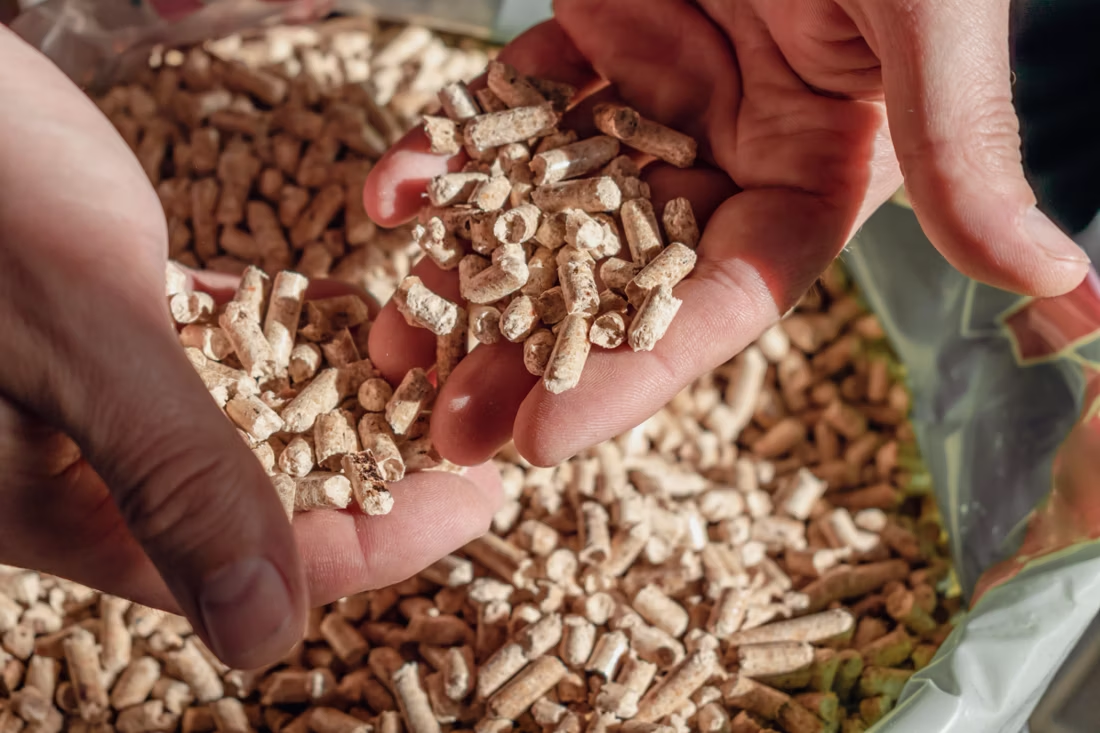
Bagged pellets from Bear Mountain, Lignetics, and Pacific Pellet are the most common regional brands stocked by hearth shops and home improvement retailers serving the San Fernando Valley, typically running in the $280 to $380 per ton range depending on the brand and whether you buy by the bag or by the pallet (roughly fifty 40-pound bags). Buying a season's supply in late summer, before the fall rush, is the easiest way to avoid the price bump and stock shortages that can hit in November and December.
What size pellet stove do I actually need in a mild climate like this?
With San Fernando averaging only about 1,463 heating degree days a year and winter lows rarely dropping below the low 40s, most homes here don't need a stove sized for whole-house heating the way a home in a place like Minneapolis or Fargo would. A small to mid-size pellet stove (rated for 1,000–1,800 sq ft) is usually plenty to heat a main living area or open-concept floor plan, with central HVAC or a heat pump handling the rest of the house. A local dealer can size the unit based on your actual room layout during an in-home visit—oversizing is a common and easily avoided mistake in mild climates.
Will my pellet stove work during a power outage or Public Safety Power Shutoff?
No—pellet stoves rely on electricity to run the auger that feeds fuel, the igniter, and the combustion blower, so they shut down when the power does. That's worth planning around in the San Fernando Valley, where Southern California Edison and LADWP both conduct Public Safety Power Shutoffs during high fire-risk wind events. If backup heat during outages matters to you, ask a local dealer about a small battery/inverter backup sized for a pellet stove's draw, or consider pairing your pellet stove with a wood-burning unit elsewhere in the home for outage coverage.
Pellet vs. wood—which makes more sense for a San Fernando home?
Wood offers a lower fuel cost if you're willing to cut your own—oak, madrone, and Douglas fir are all available through Angeles National Forest and San Bernardino National Forest cutting permits, typically $5 to $20 per cord during the May-to-October season—plus it works without electricity. But wood-burning devices are the ones subject to South Coast AQMD no-burn day restrictions, and hauling, splitting, and storing cordwood in a Valley home without much yard space is its own hassle. Pellet stoves trade some of that fuel-cost advantage for cleaner burning, easier loading from stackable bags, and exemption from most no-burn advisories. For most San Fernando homeowners without a wood supply chain already in place, pellet is the lower-friction choice.
How much maintenance does a pellet stove need?
Pellet stoves need the burn pot and ash pan emptied every few days of regular use, a full interior cleaning of the hopper, auger, and heat exchanger tubes every few weeks during heating season, and an annual professional service visit to inspect the venting, gaskets, and blower motor. Compared to a wood stove and chimney, it's a much lighter maintenance load—no annual chimney sweep is required since pellet venting is typically PL (pellet vent) pipe rather than a masonry flue. Most hearth dealers who sell pellet stoves in the area also offer an annual service plan.
Do I need to disclose or upgrade my pellet stove when I sell my home?
California doesn't have a statewide mandate forcing removal of older wood or pellet appliances at resale the way Oregon does, but any pellet stove installed in San Fernando should be EPA-certified and installed to code with the proper permits on file, since that documentation matters for both insurance underwriting and disclosure during a sale. If you inherited an older, uncertified unit with the house, a local dealer can tell you whether it's worth upgrading to a newer EPA-certified model—newer units also tend to burn more efficiently and qualify for any current utility or air-district incentive programs.
Why is my open fireplace making my house colder?
Open fireplaces suck—literally. As the fire burns, it consumes air your furnace already paid to heat and pulls it out through the chimney, so the house is actually colder after the fire goes out than before you lit it. An insert fixes this: it seals the chimney, puts fixed glass across the front, and turns that hole in your house into a real heat source.
Why is a fireplace insert so efficient?
An insert does two things: it seals the chimney completely, so you stop losing air you already paid to heat, and it radiates warmth into the room through the firebox and glass. Most add a heat-exchange fan that pulls cool room air underneath, wraps it around the hot firebox, and pushes it back out warm. Your home is more efficient before you've even lit the first fire.
Does a fireplace add value to my home?
On average, a fireplace adds back to the home about the same amount you spent installing it. Add the monthly savings from heating the rooms you actually use instead of the whole house—often hundreds of dollars a year—and the value case is strong before you even count what a fire does for how your family uses the room.
Can a fireplace actually lower my heating bill?
Yes—by creating a comfort zone. A furnace heats every square foot of the house just to warm the one room you're in; a gas fireplace on low burns roughly a sixth of the gas a typical furnace does. Set the furnace around 55–60 degrees as a baseline, then heat the rooms your family actually uses. Families who heat this way commonly save $20–$60 a month.
Nearby Dealers
Hearth shops serving San Fernando and the surrounding area.
All Valley Distrib. Dba Marco Distrib
The Heat Source (Burrico) - Lancaster
Tropicana Outdoor Living
Pellet Brands Stocked Around San Fernando
Manufacturers will point you to the nearest stocking dealer.
Find your pellet stove in San Fernando.
Tell us a bit about your home and we'll match you with the right pellet stove or insert, plus a free Project Guide & Parts List—the exact parts, including the vent kit, and our recommended local dealer for your San Fernando install.
Find Your Fireplace →