
Find the right electric fireplace for your San Benito County home.
Mild Central Coast winters mean electric heat carries real weight here—no gas line, no chimney, no wood to split. Get matched with a trusted local dealer who'll size the right unit for your Hollister or San Juan Valley home.
Every Project Starts From One of These Five Situations
Mild winters make electric a genuinely practical choice here.
San Benito County sits in climate zone 3C, with an average winter low around 39 degrees and just 2,739 heating degree days a year—a fraction of what a place like Bozeman, Montana logs in a single winter. That's a mild enough climate that a supplemental electric fireplace or insert can comfortably carry the shoulder-season chill in Hollister, San Juan Bautista, and the ranch country stretching toward the Gabilan Range, without the homeowner needing to justify a full combustion appliance for a handful of cool nights.
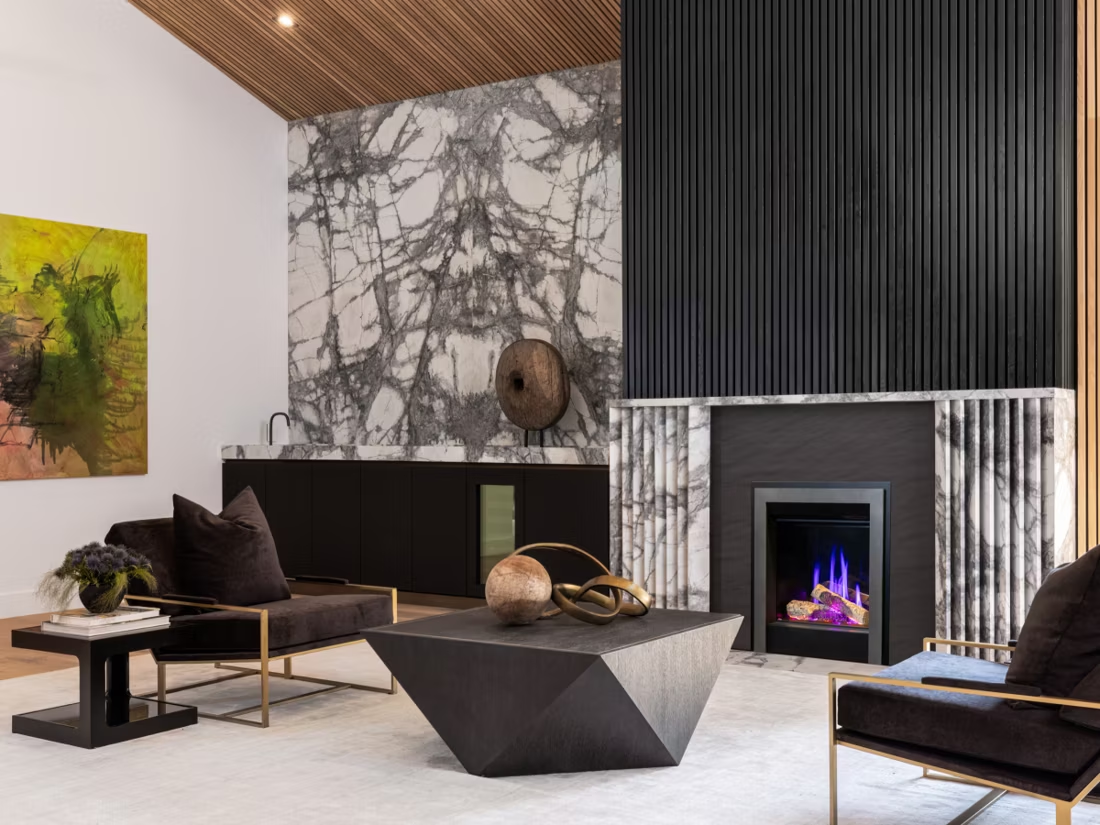
Wood is still part of the local heating culture—oak, madrone, and douglas fir are common in the county's cutting areas—but wildfire smoke concerns have made a lot of San Benito County homeowners think twice about adding another combustion source. Electric units sidestep that entirely: no venting, no permit hassle tied to emissions rules, and no smoke output during the dry, fire-prone months when air quality is already a local concern. For a second living space, a bedroom, or a home where a gas line simply isn't practical, electric delivers real ambiance and real supplemental warmth with a straightforward plug-in or hardwired install.
Three steps. No salesperson until you're ready.
Tell us about your project
Your zip code, your situation, and the fuel you're leaning toward—or let the answers point you to one.
See what's actually available
The brands dealers within 100 miles genuinely carry—real options, never a catalog mirage.
Get your dealer & Project Guide
A trusted local dealer, plus the free Project Guide & Parts List that names every component of the job.
Frequently Asked Questions
How much does an electric fireplace installation cost in San Benito County?
Electric fireplace installs in San Benito County typically run $400 to $1,200, which is a fraction of what a wood or gas project costs—there's no chimney, no gas line, and no venting to engineer. A plug-in insert or wall-mount unit on the low end just needs a standard outlet nearby. Hardwired built-ins, or units installed inside an existing masonry fireplace opening in an older Hollister home, run toward the higher end once an electrician is involved to run a dedicated circuit. A local dealer can tell you within minutes which category your project falls into.
Do I need an electrician to install an electric fireplace?
It depends on the unit. Many electric inserts and freestanding units are designed to plug into a standard 120V outlet—no electrician required, and no permit either. Larger built-in units, or installations where you want a dedicated circuit to avoid tripping breakers alongside other household loads, do need a licensed electrician to run new wiring. Local dealers serving San Benito County will tell you upfront which category your chosen unit falls into, and most maintain electrician relationships for the installs that need one.
Is an electric fireplace a good primary heat source for a San Benito County home?
For most homes here, no—electric fireplaces are built for supplemental warmth and ambiance, not whole-house heating, and they're not efficient as a primary source compared to a heat pump or central system. That said, San Benito County's mild climate (2,739 heating degree days, winter lows averaging 39 degrees) means the gap between supplemental and primary matters less here than in a colder region. A well-placed electric insert can comfortably handle a bedroom, den, or converted garage space through the county's cool months without the home ever needing a furnace boost in that room.
Can I put an electric insert into my existing wood-burning fireplace?
Yes—this is one of the most common projects for older homes in Hollister and San Juan Bautista with an existing masonry fireplace that's rarely or never used. An electric insert slides into the existing opening, requires no venting or chimney work, and can often run off a nearby outlet or a simple dedicated circuit. It's a popular option for homeowners who want the visual of a fireplace back without dealing with wood, ash, or the smoke concerns that come with wildfire season in this part of the Central Coast.
How much does it cost to run an electric fireplace with PG&E rates?
Most electric fireplaces draw around 1,500 watts on the heat setting, which at typical PG&E residential rates works out to roughly 20 to 30 cents per hour of heated use—noticeably more per BTU than natural gas, but with none of the installation overhead of a gas line or venting system. For occasional supplemental use in a den or bedroom rather than round-the-clock heating, most San Benito County homeowners find the operating cost reasonable given how little else the installation requires.
Do I need a permit to install an electric fireplace in San Benito County?
Plug-in electric fireplaces generally don't require a permit since there's no gas line, venting, or structural work involved. If your installation involves new electrical wiring—a dedicated circuit for a built-in unit, for example—that electrical work typically does require a permit through the San Benito County Building Department, and a licensed electrician handling the job will usually pull it as part of the work. Ask your local dealer whether your specific unit and installation plan triggers that requirement.
What's the difference between an electric fireplace, insert, and wall-mount unit?
An electric insert is built to slide into an existing fireplace opening, using the space you already have. A wall-mount unit hangs on a wall like a large flat-screen and doesn't require an existing fireplace at all—a popular choice for newer San Benito County homes without a masonry hearth. A freestanding electric stove or fireplace sits on the floor and can be placed almost anywhere near an outlet. Which one fits depends on whether you're retrofitting an old fireplace or adding heat and ambiance to a room that's never had one.
Are electric fireplaces a good idea given wildfire smoke concerns in San Benito County?
Yes—this is actually one of the stronger local arguments for electric. San Benito County deals with wildfire smoke during dry months, and adding a combustion appliance (wood or gas) means adding another emissions source on top of already compromised air quality during fire season. Electric units produce zero indoor or outdoor emissions, which matters for households with respiratory sensitivities or anyone who's noticed how thick the air gets during a bad August or September here.
Electric vs. gas—which is right for my San Benito County home?
Gas delivers more heat output and can serve as a legitimate secondary heat source during a power outage if you have a battery-backed ignition system, but it requires a gas line, venting in most cases, and a bigger installation budget. Electric is simpler, cheaper to install, produces no emissions, and works well in a climate as mild as San Benito County's—but it depends entirely on the grid staying up, and it costs more per BTU to run. For a home that already has central heat and just wants ambiance and supplemental warmth in one room, electric is usually the simpler, lower-cost answer. For a primary living space where you want serious heat output, gas is worth the extra investment.
Does an electric fireplace need a vent or chimney?
No—that's its superpower. An electric fireplace needs a wall and an outlet, period. No vent pipe, no gas line, no clearances to design around, which is why it works in bedrooms, offices, apartments, and walls where venting a gas or wood unit would be impractical or impossible. Installation is typically the simplest and least expensive of any fireplace type.
Can I put a TV above my fireplace?
Yes—with an asterisk. Fireplaces are hot and TVs don't like heat. Either put a mantel between them to deflect rising warmth, or choose a fireplace with heat-management technology that creates a cool zone on the wall above—the wall stays around 125 degrees, barely warm, while the room still gets full heat. If you like clean lines and don't want a mantel, heat management is the answer.
Does a fireplace add value to my home?
On average, a fireplace adds back to the home about the same amount you spent installing it. Add the monthly savings from heating the rooms you actually use instead of the whole house—often hundreds of dollars a year—and the value case is strong before you even count what a fire does for how your family uses the room.
Can I install a fireplace myself?
If you're putting a fire in your house on purpose, it's best to work with an expert. Unless you're genuinely experienced in framing, gas line, vent pipe, and the national code on clearances to combustibles, have a professional do it—and ideally the same company that sells you the fireplace, so warranty, service, and liability all live under one roof.
Get your San Benito County electric fireplace Project Guide & Parts List.
Tell us a bit about your home and we'll match you with a trusted local dealer, plus a free Project Guide & Parts List for your electric fireplace project—the exact parts and the right installer, no big-box guesswork.
Find Your Fireplace →