
Warmth on demand, without the wildfire smoke.
Hollister's mild San Benito Valley winters don't call for a furnace on the wall—they call for clean, flip-a-switch heat you can run any night of the year. Find the right electric fireplace and get matched with a trusted local dealer.
Every Project Starts From One of These Five Situations
A mild climate that doesn't need a furnace-sized fire.
Hollister sits at 282 feet in the San Benito Valley, in climate zone 3C—one of the mildest heating climates in the country. With average winter lows around 39°F and a heating season that's light on demand for the whole year, most homes here need a fraction of the heat load of places like Bozeman or Duluth. That makes electric fireplaces a genuinely practical fit rather than a token gesture: a well-placed insert or linear unit can comfortably zone-heat a living room or bedroom on the handful of truly cold nights San Benito County gets, without running central heat for the whole house.
San Benito County also deals with real wildfire smoke seasons, and the Monterey Bay Air Resources District issues air quality advisories when smoke settles into the valley. Electric fireplaces produce no combustion byproducts and no smoke, so they keep running regardless of burn restrictions that can sideline wood stoves during those stretches. Electricity here comes through Pacific Gas & Electric's wires, with Central Coast Community Energy supplying generation for most Hollister accounts under the local community choice program—which is why you'll see two very different per-kWh numbers on a bill and why it's worth understanding both before picking a unit to run daily.
Three steps. No salesperson until you're ready.
Tell us about your project
Your zip code, your situation, and the fuel you're leaning toward—or let the answers point you to one.
See what's actually available
The brands dealers within 100 miles genuinely carry—real options, never a catalog mirage.
Get your dealer & Project Guide
A trusted local dealer, plus the free Project Guide & Parts List that names every component of the job.
Frequently Asked Questions
How much does an electric fireplace installation cost in Hollister?
Costs vary a lot by unit type. A freestanding, plug-in electric fireplace or stove runs $200 to $800 and needs no installation beyond finding an outlet. A wall-mounted or built-in electric insert—the kind that replaces the guts of an old masonry fireplace or fills a custom cabinet—typically runs $600 to $2,500 installed, and a large linear electric fireplace with a custom surround or mantel can reach $3,000 to $5,000 with finish carpentry included. Because there's no venting or gas line, electric installs are almost always cheaper and faster than wood or gas conversions in Hollister.
Do I need a permit to install an electric fireplace in Hollister?
If you're plugging in a freestanding unit, no permit is required. If your installer is adding a new dedicated circuit or doing any hardwiring—common with built-in inserts and larger linear units—that electrical work typically needs a permit through the City of Hollister Building Division, or San Benito County's Building Department if you're outside city limits. A licensed electrician or your hearth installer usually pulls this permit as part of the job, and the inspection itself is quick since there's no chimney or gas line to evaluate.
How much does an electric fireplace cost to run in Hollister?
It depends heavily on which electric rate applies to your bill. Most Hollister homes get generation service from Central Coast Community Energy at roughly $0.13/kWh, with PG&E handling delivery—but PG&E's own bundled residential rate runs closer to $0.317/kWh for customers who haven't opted into CCCE or who are on higher tiers. A typical 1,500-watt electric fireplace run four hours an evening uses about 6 kWh, which lands anywhere from roughly $0.78 to $1.90 a night depending on your actual blended rate. Either way, it's cheap compared to running central heat, which is exactly the appeal for supplemental use in Hollister's mild winters.
What's the difference between an electric insert, a wall-mount, and a freestanding electric fireplace?
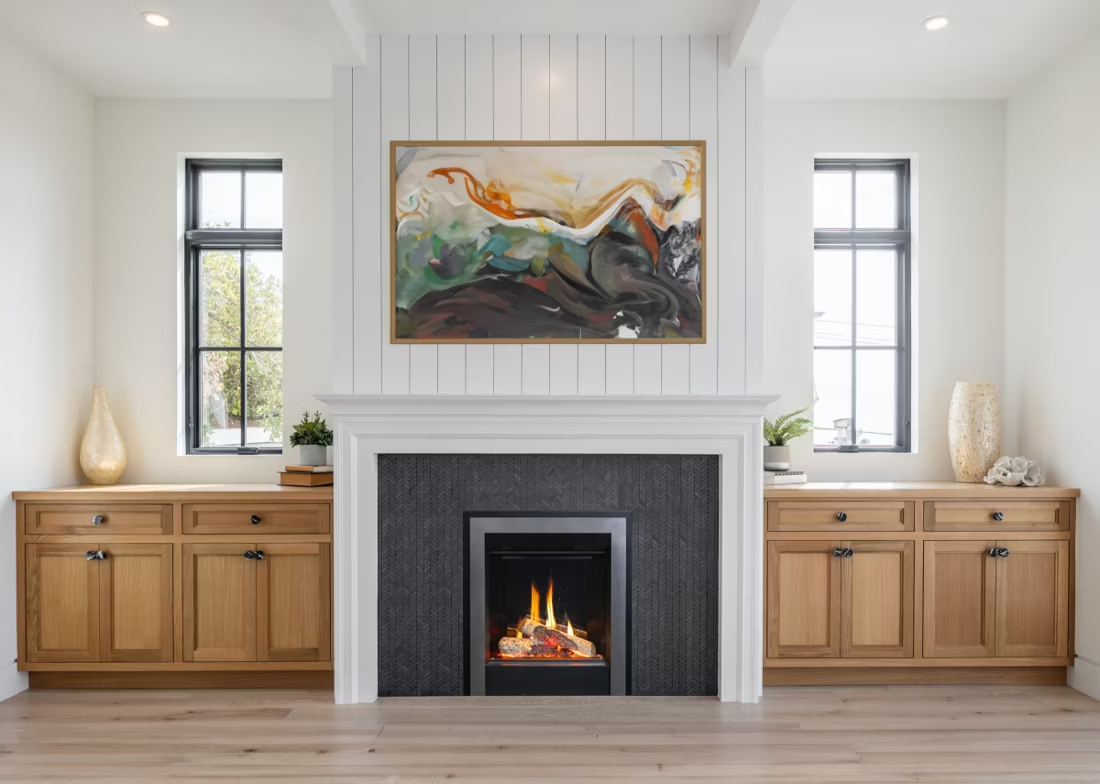
An electric insert is built to slide into an existing fireplace opening—common in Hollister's older downtown homes that still have a brick or masonry firebox from mid-century construction, letting you keep the mantel and surround while retiring the wood-burning function entirely. A wall-mount is a slim linear unit that hangs like a piece of art, popular in newer subdivisions around Hollister with open living spaces and less traditional hearth framing. A freestanding electric stove or fireplace sits on the floor and plugs in anywhere, which works well in a bedroom, home office, or mobile home where running new wiring isn't practical.
Is an electric fireplace enough to actually heat a room in Hollister?
Most electric fireplaces top out around 1,500 watts, or roughly 5,000 BTU, which is plenty to noticeably warm a bedroom, den, or living room but isn't designed to replace central heating in a larger home. Given Hollister's mild heating load—average winter lows in the high 30s and a fairly short heating season—that's usually enough. Homeowners here typically use an electric fireplace to zone-heat the room they're actually sitting in on cool evenings, while leaving the central system off or set low, rather than trying to heat the whole house with it.
Can I run an electric fireplace during a wildfire smoke advisory?
Yes, and it's one of the clearer advantages of electric heat in San Benito County. When the Monterey Bay Air Resources District issues a smoke or air quality advisory, wood-burning appliances are often the first thing homeowners are asked to avoid using. An electric fireplace has no combustion and adds nothing to outdoor or indoor air quality concerns, so it keeps working exactly the same whether the valley air is clear or hazy from a nearby fire season.
What electric fireplace brands are worth looking at?
Dimplex and Napoleon are the two most widely installed brands in linear and insert formats and are carried by most Northern California hearth dealers, with realistic flame technology that's a step up from older models. Amantii is a common choice for larger, architectural linear installations in newer Hollister-area homes. For simple freestanding units, Duraflame and ClassicFlame cover the budget end well. A local dealer can walk you through flame realism, heater wattage, and control options (remote, app, thermostat) in person, which matters more with electric units than it might seem.
Can I convert my existing wood fireplace to electric in Hollister?
Yes—this is a common project in Hollister's older neighborhoods with existing masonry fireplaces. An electric insert slides into the existing firebox opening, and since there's no venting or gas line required, the conversion is usually the simplest and least expensive fireplace conversion available: mainly the cost of the insert itself plus any minor electrical work for power access. It also removes the wood-burning restrictions that come up during regional smoke advisories, while keeping the mantel and surround you already have.
Electric fireplace vs. a portable space heater—what's actually different?
A portable space heater and a built-in electric fireplace can use similar wattage, but a purpose-built fireplace insert or wall-mount is designed for permanent placement, safer continuous operation, and a realistic flame display that a space heater doesn't offer. Electric fireplaces also tend to have better safety features like cool-touch glass and tip-over/overheat protection engineered for the unit, and they typically add more to a home's look and resale appeal than a heater box in the corner. For Hollister homeowners weighing ambiance alongside heat, that difference is usually the deciding factor.
Can I put a TV above my fireplace?
Yes—with an asterisk. Fireplaces are hot and TVs don't like heat. Either put a mantel between them to deflect rising warmth, or choose a fireplace with heat-management technology that creates a cool zone on the wall above—the wall stays around 125 degrees, barely warm, while the room still gets full heat. If you like clean lines and don't want a mantel, heat management is the answer.
Do electric fireplaces actually produce heat?
Yes—most put out around 4,800–5,000 BTUs from a standard outlet, which comfortably warms a bedroom, office, or den as a comfort-zone heater. What they won't do is carry a whole house the way wood, gas, or pellet can. Think of electric as ambiance-first with honest supplemental heat: flames on with no heat in July, flames plus warmth in January.
Can a fireplace actually lower my heating bill?
Yes—by creating a comfort zone. A furnace heats every square foot of the house just to warm the one room you're in; a gas fireplace on low burns roughly a sixth of the gas a typical furnace does. Set the furnace around 55–60 degrees as a baseline, then heat the rooms your family actually uses. Families who heat this way commonly save $20–$60 a month.
Does a fireplace add value to my home?
On average, a fireplace adds back to the home about the same amount you spent installing it. Add the monthly savings from heating the rooms you actually use instead of the whole house—often hundreds of dollars a year—and the value case is strong before you even count what a fire does for how your family uses the room.
Electric Service in Hollister
An electric fireplace's heater draws about 1,500 watts—pennies per hour at local rates.
Pacific Gas & Electric Co.
Central Coast Community Energy
Find your electric fireplace in Hollister.
Tell us a bit about your home and we'll put together a free Project Guide & Parts List for your electric fireplace project in Hollister—matched with a trusted local dealer who can size the unit and handle any electrical work correctly.
Find Your Fireplace →