
Gas heat built for Marin's mild, wet winters.
Clean, on-demand heat for San Anselmo homes, with backup options for wildfire-season power shutoffs. Find the right unit and connect with a trusted local dealer.
Every Project Starts From One of These Five Situations
Why gas fits San Anselmo better than wood.
San Anselmo sits in a mild coastal climate zone, with an average winter low around 43°F and a light winter heating load—just a fraction of what a place like Duluth, Minnesota sees. Homes here rarely need whole-house heat from a hearth appliance; what they need is fast, controllable zone heat for foggy mornings and damp evenings in the redwoods and eucalyptus canyons around town. Gas fireplaces and inserts are built for exactly that.
Marin County falls under the Bay Area Air Quality Management District, a designated non-attainment area where wildfire smoke and winter Spare the Air alerts routinely restrict wood-burning devices—sometimes for days at a stretch. Gas appliances aren't subject to those burn bans, which is a major reason gas has become the default choice for new hearth installations in San Anselmo, even in homes with existing wood fireplaces. Pacific Gas & Electric serves natural gas throughout most of the flatlands and lower hillside neighborhoods here; homes higher up in the hills without gas mains typically run on propane instead.
Three steps. No salesperson until you're ready.
Tell us about your project
Your zip code, your situation, and the fuel you're leaning toward—or let the answers point you to one.
See what's actually available
The brands dealers within 100 miles genuinely carry—real options, never a catalog mirage.
Get your dealer & Project Guide
A trusted local dealer, plus the free Project Guide & Parts List that names every component of the job.
Frequently Asked Questions
How much does a gas fireplace installation cost in San Anselmo?
Gas fireplace installations in San Anselmo generally run $4,500 to $12,000, with the wide range driven by venting complexity and gas line work rather than the unit itself. A direct-vent insert dropped into an existing masonry fireplace with a gas line already stubbed in sits toward the lower end. A new built-in unit in a remodel—with framing, a fresh gas line run from the meter, and finish work—lands toward the higher end, especially on Marin's older hillside homes where access can be tighter. A local dealer will give you a firm number after walking the site.
Can I convert my existing wood fireplace to gas?
Yes, and it's one of the most common projects for older San Anselmo homes built with a traditional masonry fireplace. A gas insert typically installs using a stainless liner run through your existing chimney, and the job usually runs $4,500 to $9,500 depending on whether new gas line work is needed. Beyond convenience, the conversion sidesteps BAAQMD's winter Spare the Air rules, which can bar wood-burning devices—including certified stoves and inserts—on high-pollution days. A gas insert keeps working on those days without restriction.
Do I need natural gas service, or should I plan for propane?
It depends on where in San Anselmo you are. PG&E's natural gas mains reach most of the flatter, more established neighborhoods near downtown and along Sir Francis Drake Boulevard. Homes further up in the hills, or on some of the winding roads toward Fairfax and San Rafael's ridgelines, often sit outside the gas main service area and run on propane with a tank on the property instead. Nearly every gas fireplace and insert on the market can be configured for either fuel—your installer sets the correct orifice and regulator for whichever you have.
Will my gas fireplace still work if the power goes out?
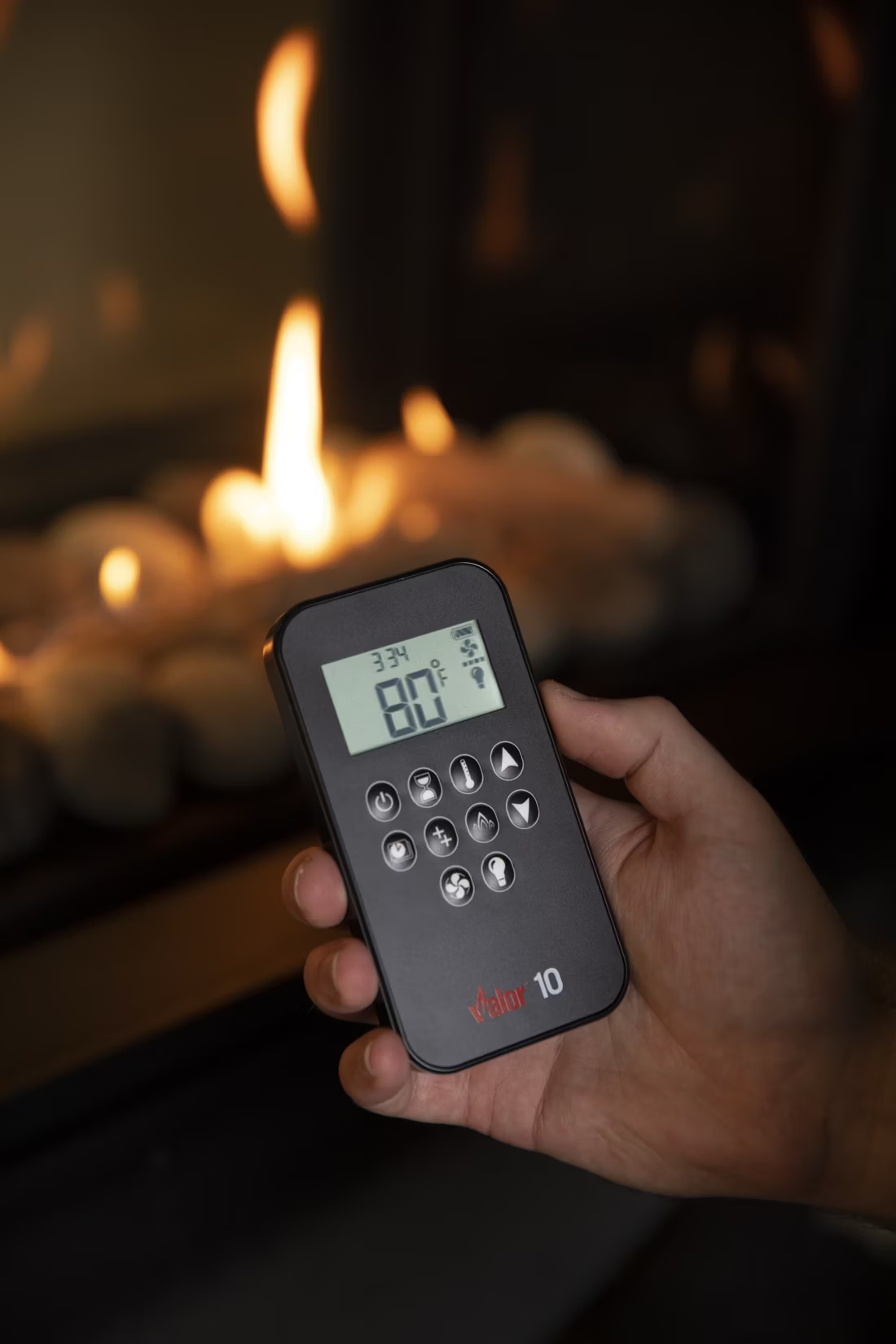
Most modern gas fireplaces with intermittent pilot ignition include a battery backup that keeps the unit firing when the power drops, which matters in Marin during PG&E's Public Safety Power Shutoffs—the multi-day outages PG&E calls during high fire-risk conditions in dry season. Valor's lineup takes it a step further: the pilot's thermocouple generates its own electricity, so the fireplace never depends on batteries at all. If PSPS events are a concern for your property, ask your local dealer specifically about self-powered ignition when comparing models.
What's the difference between a gas fireplace, gas insert, and gas stove?
A gas fireplace is a fully built-in unit set into a wall or framed enclosure, typically chosen for new construction or a full remodel. A gas insert is sized to slide into an existing masonry firebox, sealing it up and venting through the existing chimney with a liner. A gas stove is a freestanding cast-iron or steel unit that sits on the floor, similar in form to a wood stove but running on gas. For San Anselmo's stock of older homes with an existing wood-burning fireplace, an insert is usually the straightforward upgrade; new builds or additions without an existing firebox are better suited to a built-in unit.
Do I need a permit to install a gas fireplace in San Anselmo?
Yes. The Town of San Anselmo Building Division requires a building permit for the installation, and any new or modified gas line requires a licensed gas fitter and its own permit sign-off. Most established hearth dealers coordinate both the building permit and the gas line work as part of the install, so you're not managing separate trades and inspections yourself. Given how many older homes in town have knob-and-tube wiring or aging gas lines, a permitted install also flags anything upstream that needs attention before the new unit goes in.
Can I install a vent-free gas fireplace in San Anselmo?
California is one of a handful of states—along with Colorado and Washington—that restricts unvented gas fireplaces under its building code, so vent-free units are largely off the table for San Anselmo homes. Direct-vent gas fireplaces and inserts, which draw combustion air from outside and exhaust it back outside through a sealed vent, are the standard here and what nearly every local dealer will spec. They're also simply a better fit for a mild, well-sealed coastal home where indoor air quality is worth protecting.
How often does a gas fireplace need servicing?
Plan on an annual inspection, ideally before the damp season sets in each fall. A technician checks the burner, pilot assembly, venting, and gas connections, and cleans the glass and firebox interior. It's a lighter lift than sweeping a wood chimney, but skipping it lets soot build up on the glass and can mask a venting issue. Local gas appliance service providers typically charge $150 to $250 for a standard annual visit.
Why is gas so much more common than wood in San Anselmo?
San Anselmo's mild winters—a light winter heating load and lows rarely below the low 40s—mean most homes never need wood's higher BTU output to stay comfortable. More significantly, Marin County sits inside the Bay Area Air Quality Management District's non-attainment zone, and winter Spare the Air alerts routinely prohibit burning in wood stoves and fireplaces, certified or not, on high-pollution days. Add in wildfire smoke concerns most of the year, and wood heat has become the exception here rather than the rule; the local oak, madrone, and Douglas fir that do get cut are more often used for backyard fire pits or camping than for daily home heating. Gas sidesteps all of that, which is why it's the default recommendation for nearly every hearth project in town.
Is my gas fireplace wasting gas?
If it was installed more than 15 years ago, probably. Older gas fireplaces keep a standing pilot light burning all the time, and that little flame can cost a couple hundred dollars a year. Newer models use pilot-on-demand ignition—the pilot lights only when you use the fireplace and goes out when you turn it off.
What's the difference between an insert and a zero-clearance fireplace?
An insert is a fireplace that slides into a pre-existing wood-burning fireplace—if you don't have one, there's nothing to insert it into. A zero-clearance fireplace is built into a framed wall, which makes it the answer for remodels and new construction. Simple test: existing masonry fireplace means insert; blank or framed wall means zero-clearance.
Can I install a fireplace myself?
If you're putting a fire in your house on purpose, it's best to work with an expert. Unless you're genuinely experienced in framing, gas line, vent pipe, and the national code on clearances to combustibles, have a professional do it—and ideally the same company that sells you the fireplace, so warranty, service, and liability all live under one roof.
Does a fireplace add value to my home?
On average, a fireplace adds back to the home about the same amount you spent installing it. Add the monthly savings from heating the rooms you actually use instead of the whole house—often hundreds of dollars a year—and the value case is strong before you even count what a fire does for how your family uses the room.
Nearby Dealers
Hearth shops serving San Anselmo and the surrounding area. Every listing shows whether it is a WhyFire partner, a dealer we have verified as authorized for the brands we recommend, or a local business carrying hearth products. No manufacturer pays for placement. How we verify dealers →
We’ve paused dealer listings for this connection today. Enter your zip or postal code above to find dealers near you, or come back tomorrow.
Popular Gas Brands
Where each brand came from, what's inside it today, and every current model. No brand pays to be here. Not every dealer carries every brand, so enter your zip code to see what's sold near San Anselmo.
Kozy Heat
Kozy Heat was founded in 1976 by Dudley Hussong in Lakefield, Minnesota, and incorporated as Hussong Manufacturing Co., Inc. in 1978.
28 gas models →Fireplace Xtrordinair
Fireplace Xtrordinair, now often called FireplaceX, is the fireplace brand of Travis Industries, Inc., of Mukilteo, Washington.
25 gas models →Town & Country
Town & Country Fireplaces is the luxury gas fireplace brand of Pacific Energy Fireplace Products Ltd., of Duncan, British Columbia.
14 gas models →Lopi
Lopi is a wood, pellet, and gas stove brand founded by Kurt Rumens in Bellevue, Washington, in 1979.
7 gas models →Forge & Flame
Forge & Flame is the stove brand Hearth & Home Technologies introduced in August 2023 to bring Vermont Castings, Harman, and Quadra-Fire under one name.
6 gas models →Vermont Castings
Vermont Castings was founded in 1975 by Duncan Syme, the designer, and his brother-in-law Murray Howell, the business partner, in Randolph, Vermont.
6 gas models →Find your gas fireplace in San Anselmo.
Tell us about your home and your gas access, and we'll put together a free Project Guide & Parts List—the right unit, the vent kit, and a trusted local dealer to install it.
Find Your Fireplace →