
Real fire that never gets shut off by a burn ban.
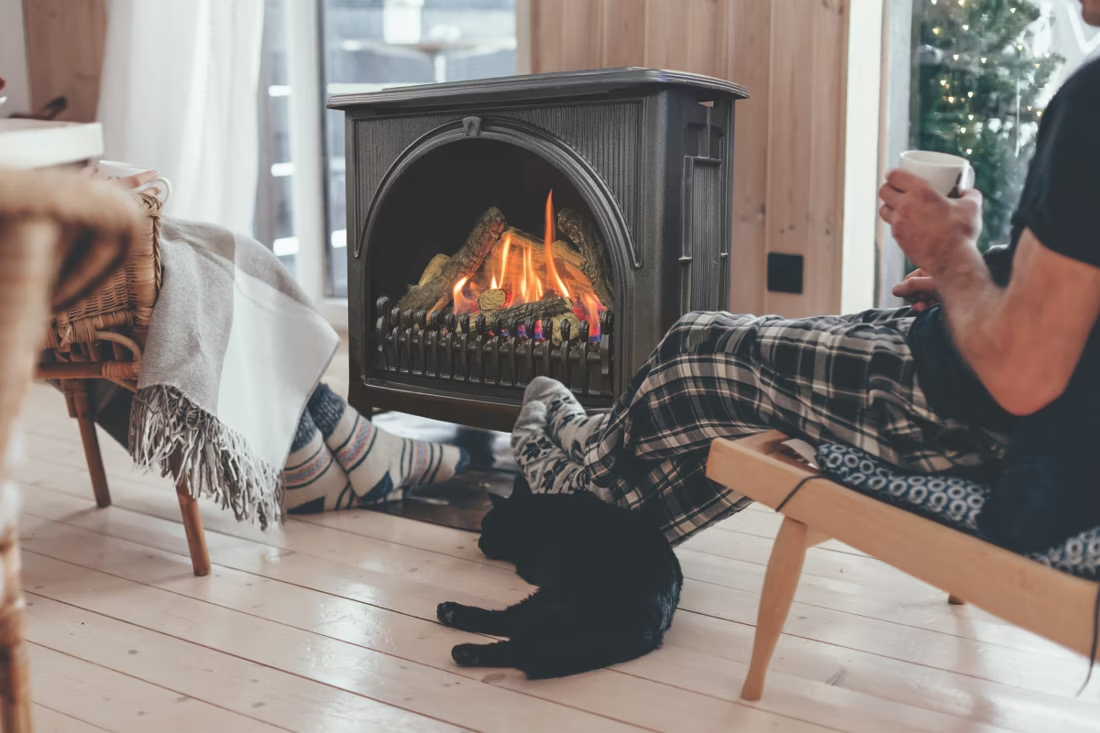
Sacramento County's mild Central Valley winters don't demand much heat, but a gas fireplace delivers instant ambiance and zone warmth that keeps running even on a Check Before You Burn no-burn day. Find the right unit and connect with a trusted local dealer.
Every Project Starts From One of These Five Situations
The fuel that doesn't get shut down by Spare the Air.
Sacramento County sits in Climate Zone 3B, with a winter low averaging 41°F and only a light winter heating load—mild enough that a fireplace here is mostly about ambiance and supplemental warmth, not survival heat like a place such as Duluth, MN or Bismarck, ND. But the Central Valley basin traps its own problems: winter tule fog and temperature inversions hold pollution close to the ground, and the region is a federal non-attainment area for particulate matter. Add periodic wildfire smoke from Sierra foothill fires each fall, and Sacramento Metropolitan Air Quality Management District runs one of the strictest Check Before You Burn programs in the state, calling mandatory no-burn days for wood devices when PM2.5 spikes.
That's a big part of why gas fireplaces are the standard choice across Sacramento County—in the City of Sacramento itself and in Elk Grove, Folsom, Citrus Heights, Rancho Cordova, Galt, and the unincorporated county. PG&E provides natural gas service to nearly every neighborhood in the county, while SMUD supplies electricity (SMUD doesn't sell gas, so PG&E remains the gas provider even inside SMUD's electric territory). Unlike a wood stove, a gas fireplace keeps working on a Sac Metro no-burn day, doesn't add to winter inversion smoke, and gives you real flame at the flip of a switch—a fit for a county where the appeal is convenience and clean air, not fighting off sub-zero nights.
Three steps. No salesperson until you're ready.
Tell us about your project
Your zip code, your situation, and the fuel you're leaning toward—or let the answers point you to one.
See what's actually available
The brands dealers within 100 miles genuinely carry—real options, never a catalog mirage.
Get your dealer & Project Guide
A trusted local dealer, plus the free Project Guide & Parts List that names every component of the job.
Frequently Asked Questions
How much does a gas fireplace installation cost in Sacramento County?
Most gas fireplace and insert installations in Sacramento County run in the $3,500 to $9,000 range. A direct-vent gas insert dropped into an existing masonry fireplace that already has a gas line nearby sits toward the lower end. A new built-in direct-vent fireplace for a remodel or new construction in Elk Grove or Folsom—with framing, venting, and a fresh gas line run from the meter—lands in the middle to upper end. Jobs that need a longer gas line extension or work in an older Sacramento or Oak Park home with limited attic access can push higher. A local retailer will give you a firm number after an in-home look at your venting path.
Can I still use a fireplace on a Check Before You Burn no-burn day?
Yes, if it's gas. Sacramento Metropolitan Air Quality Management District's Check Before You Burn program restricts wood-burning fireplaces and older wood stoves on mandatory no-burn days when PM2.5 levels spike during the county's winter inversions—typically November through February. Gas fireplaces, inserts, and log sets are not covered by those restrictions and can run any day, regardless of the air quality forecast. It's one of the main reasons homeowners across Sacramento County—from Rancho Cordova to Galt—switch from an old open-hearth wood fireplace to a gas insert: you get the visual of a real fire without worrying about a red no-burn flag.
Do I need natural gas, or can I use propane?
Nearly every neighborhood in Sacramento County has natural gas service through PG&E, so most homes here run gas fireplaces on the same line that feeds the furnace and water heater. Propane is the exception rather than the rule locally—it shows up mainly on some of the rural Delta islands near Isleton and in a handful of unincorporated pockets outside PG&E's distribution footprint. If you're already a PG&E gas customer, adding a fireplace is a straightforward tap into your existing service; if not, your installer can spec the unit for propane and coordinate a tank with a local supplier.
Will my gas fireplace work during a power outage?
Most modern gas fireplaces with IPI (intermittent pilot ignition) include a battery backup that keeps the unit firing when the power drops—worth knowing in a county where PG&E occasionally calls Public Safety Power Shutoffs on high fire-risk red flag days in the foothill-adjacent parts of the county. Valor fireplaces take a different approach: their pilot generates its own electricity through a thermocouple, so there's no battery to keep charged. Either way, a gas fireplace can keep a room warm and lit during a PSPS or a standard outage—something a purely electric unit tied to SMUD's grid can't do without a battery of its own.
What's the difference between a gas fireplace, gas insert, and gas stove?
A gas fireplace is a fully built-in unit framed into a wall—the right call for new construction or a remodel in a newer Elk Grove or Folsom subdivision without an existing hearth. A gas insert is built to drop into an existing masonry fireplace opening, using the existing chimney as a chase for a sealed liner—common in older Sacramento neighborhoods like Land Park or East Sacramento that still have a working masonry fireplace. A gas stove is a freestanding cast-iron or steel unit that sits on the floor like a wood stove but burns gas—a good option when you want a stove look without an existing fireplace opening. Most Sacramento County retrofits are inserts, since so many county homes already have a masonry fireplace to convert.
Do I need a permit to install a gas fireplace in Sacramento County?
Yes. In unincorporated parts of the county, permits go through the Sacramento County Building Permits and Inspection Division, and the work needs both a building permit and a gas permit for the line connection. If your home is inside the City of Sacramento, Elk Grove, Folsom, Citrus Heights, Rancho Cordova, or Galt, that city's own building department handles it instead of the county. Most hearth retailers pull these permits as part of the installation, and the gas line hookup itself needs to be done by a licensed gas-fitter—one more reason to go through a certified dealer rather than a handyman.
What's the difference between vented and vent-free gas fireplaces?
Vented (direct-vent) units draw combustion air from outside and exhaust it back outside through a sealed pipe—they're the clean, code-friendly standard almost everywhere, including Sacramento County. Vent-free units burn gas directly into the room with no outside venting; California is one of the states that restricts them heavily under the state mechanical code, and several Sacramento County jurisdictions limit or effectively disallow vent-free installs, especially in bedrooms. Combine that with a county that already runs a strict Check Before You Burn program for air quality, and direct-vent is almost always the unit local installers recommend and the one that clears inspection without a fight.
How often should my gas fireplace be serviced?
Plan on an annual inspection, ideally before winter's inversion season sets in and the fireplace starts getting regular use. A technician checks the burner, pilot assembly, venting, and gas connections, and cleans the glass and interior—a lighter job than sweeping a wood chimney but still important, especially if the unit sat mostly idle through Sacramento's long, mild spring and summer. Local gas appliance servicers typically charge $150 to $250 for a standard annual visit, and it's worth scheduling before, not during, the county's first cold snap of the season.
Why is gas the standard choice here instead of wood?
Sacramento County's mild winters—a 41°F average low and only a light winter heating load—mean most homes don't need a wood stove's heavy BTU output the way a colder climate does. Layer on the fact that the county is a federal non-attainment area, subject to winter inversions that trap smoke over the valley floor, and wood-burning devices get restricted on Check Before You Burn no-burn days most winters. Wood stoves and pellet stoves are genuinely uncommon here as a result—a small number of rural or Sierra-foothill-adjacent homeowners still burn oak or Douglas fir for backup heat, but for the vast majority of Sacramento County homes, a gas fireplace or insert covers the ambiance and zone-heat need without the smoke restrictions.
Why is my open fireplace making my house colder?
Open fireplaces suck—literally. As the fire burns, it consumes air your furnace already paid to heat and pulls it out through the chimney, so the house is actually colder after the fire goes out than before you lit it. An insert fixes this: it seals the chimney, puts fixed glass across the front, and turns that hole in your house into a real heat source.
Can I put a TV above my fireplace?
Yes—with an asterisk. Fireplaces are hot and TVs don't like heat. Either put a mantel between them to deflect rising warmth, or choose a fireplace with heat-management technology that creates a cool zone on the wall above—the wall stays around 125 degrees, barely warm, while the room still gets full heat. If you like clean lines and don't want a mantel, heat management is the answer.
How much should I budget for a fireplace?
For an average home—covering the fireplace, the vent pipe, and basic installation—a budget between $3,900 and $5,500 gives you a lot of options across wood, gas, and pellet. By the time you add finish work, gas line, and electrical, the average complete installation lands between $5,000 and $12,000 all-in. In a remodel or new build, a good rule is to put about 2.5% of the total project cost toward the fireplace.
What is an in-home preview and do I need one?
It's a visit where a hearth professional measures your space, confirms the model you picked actually works in your home, and walks the specs—framing, gas line, venting, finish work—before anything is ordered. Some details you just can't know until you see the house. Never make a down payment without one; it's the single most-skipped step that burns buyers.
Stove and Fireplace Dealers in Sacramento County
Furnitalia / European Kitchen & Bath
Mike's Mobile Screen & Chimney Service
Find your gas fireplace in Sacramento County.
Tell us a bit about your home and we'll put together a free Project Guide & Parts List—the exact parts for your gas fireplace or insert, including the vent kit, plus a match with a trusted local Sacramento County dealer to handle the install.
Find Your Fireplace →