
Reliable gas warmth for Galt's mild Central Valley winters.
Galt doesn't need a furnace running six months a year, but a gas fireplace still earns its place—instant ambiance on cool Delta-fog mornings and zone heat that skips the wood-smoke restrictions altogether.
Every Project Starts From One of These Five Situations
Convenient heat for a mild valley climate.
Galt sits at just 51 feet in the Sacramento Valley, with winter lows averaging around 40 degrees and a winter heating load that's only a fraction of what a place like Bozeman, Montana sees. That mild profile is exactly why wood stoves and pellet stoves see so little use here: there simply isn't enough cold to justify the equipment, and the Sacramento region's air quality status makes wood burning a harder sell besides. Gas, on the other hand, fits the way Galt actually lives—occasional cool mornings along the Cosumnes River bottomlands, foggy Delta winters, and a strong preference for heat you can turn on and off without hauling fuel.
Pacific Gas & Electric serves natural gas throughout most of Galt, and a gas fireplace or insert plugs into that existing infrastructure without much fuss. Beyond convenience, gas has a real regulatory advantage locally: the Sacramento Metropolitan Air Quality Management District's Check Before You Burn program restricts wood-burning devices on high-pollution winter days, but gas appliances are exempt. For Galt homeowners who want reliable, code-compliant heat without watching the air quality forecast every December, that matters.
Three steps. No salesperson until you're ready.
Tell us about your project
Your zip code, your situation, and the fuel you're leaning toward—or let the answers point you to one.
See what's actually available
The brands dealers within 100 miles genuinely carry—real options, never a catalog mirage.
Get your dealer & Project Guide
A trusted local dealer, plus the free Project Guide & Parts List that names every component of the job.
Frequently Asked Questions
How much does a gas fireplace installation cost in Galt?
Most gas fireplace and insert installations in Galt run somewhere between $3,500 and $9,000, with the low end covering a direct-vent insert into an existing masonry fireplace where a gas line is already nearby, and the high end covering a new built-in unit that requires framing, a longer gas line run, and full venting. Because Galt's older housing stock in the historic downtown grid often has existing wood-burning fireplaces, insert conversions tend to land in the middle of that range. A local installer will give you a firm number after seeing your chimney or wall cavity in person.
Can I convert my existing wood fireplace to gas in Galt?
Yes, and it's a common project here. Many homes in Galt's older neighborhoods were built with open masonry wood-burning fireplaces that see little actual use—partly because of the mild climate, and partly because Sacramento Metro AQMD's Check Before You Burn program can restrict wood burning on inversion days. Converting to a direct-vent gas insert uses your existing chimney as the venting path (with a liner) and typically runs $4,000 to $8,500 depending on the insert and whether new gas line work is needed. You keep the look of the fireplace and lose the smoke restrictions entirely.
Do I need natural gas, or is propane an option in Galt?
Most of Galt proper is served by PG&E natural gas, so if your home already has gas appliances—a water heater or range—adding a fireplace is usually a straightforward tap into that existing service. On the outskirts of town and in the surrounding Sacramento County ag land, some properties run on propane with a tank on-site. Nearly every gas fireplace and insert on the market can be configured for either fuel; your installer sets the correct orifice and regulator for whichever you have.
Will my gas fireplace still work if the power goes out?
Most modern gas fireplaces with intermittent pilot ignition (IPI) run on a small battery backup and will light and operate normally during an outage—worth knowing in a PG&E service area where Public Safety Power Shutoffs have become a fact of life in Northern California during high-wind events. Valor fireplaces take a different approach: their pilot assembly generates its own electricity through a thermocouple, so there's no battery to remember to replace. Either system will keep a room warm and lit when the grid is down, which is a genuine advantage over an electric fireplace that goes dark the moment power drops.
What's the difference between a gas fireplace, gas insert, and gas stove?
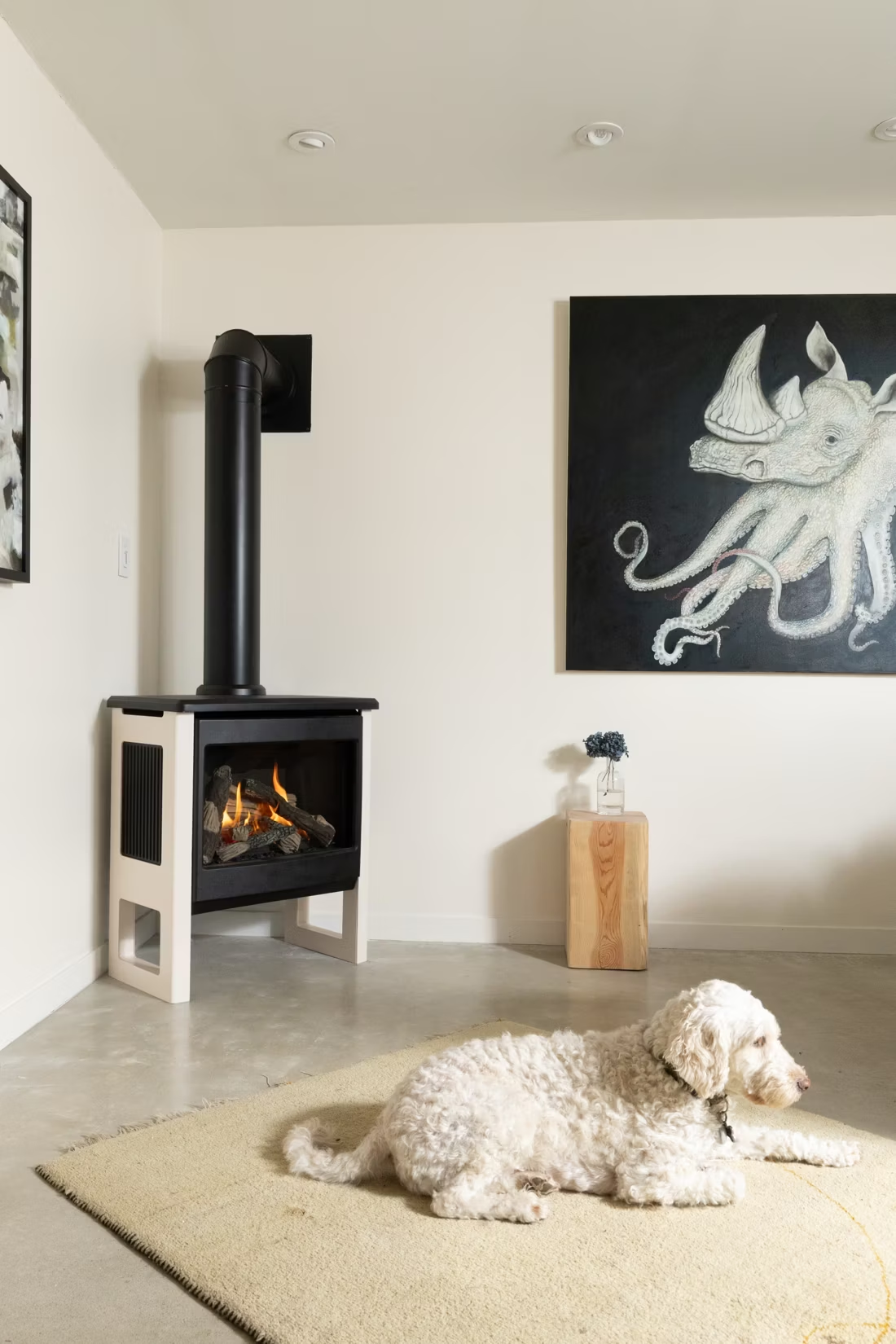
A gas fireplace is a fully built-in unit framed into a wall—the right call for new construction or a remodel. A gas insert slides into an existing masonry fireplace opening and uses the chimney as its vent, which is the more common project in Galt's older housing. A gas stove is a freestanding unit that sits on a hearth pad like a wood stove but burns gas—a good option for a room with no existing fireplace and no interest in framing one. Most Galt homeowners with an existing wood-burning fireplace they no longer use land on the insert.
Do I need a permit to install a gas fireplace in Galt?
Yes—the City of Galt Building Department requires a building permit and a gas line permit for new gas fireplace or insert installations, and the gas line work itself has to be done by a licensed gas-fitter. Most established hearth retailers and installers pull these permits as part of the job, so you're not coordinating multiple trades yourself. It's worth confirming with your installer up front that the quote includes permitting rather than treating it as a separate line item later.
Should I get a vented or vent-free gas fireplace?
Vented, direct-vent units draw combustion air from outside and exhaust it back outside through sealed venting—they're the standard recommendation almost everywhere, including Galt. Vent-free units burn fuel directly into the room and are legal in California under strict room-sizing and ventilation rules, but they also release some water vapor and combustion byproducts indoors. Given that the Sacramento Valley is already a non-attainment area for air quality and prone to winter inversion, most local installers steer homeowners toward direct-vent models—they deliver real heat without adding anything to the indoor air.
How often does a gas fireplace need to be serviced?
Plan on an annual inspection, ideally in early fall before you start using it regularly through the cooler Delta-fog months. A technician checks the burner, pilot assembly, venting, and gas connections, and cleans the glass and interior—a much lighter lift than a wood chimney sweep. Local gas appliance service providers typically charge $150 to $250 for this visit, and it's the single easiest way to catch a failing thermocouple or ignition component before it strands you without heat.
Gas vs. electric fireplace—which makes more sense in Galt?
Given Galt's mild winters, either can work, but the economics differ. Electric fireplaces install for as little as a few hundred dollars and plug into a standard outlet, but running one regularly costs more per hour, and the math depends heavily on which utility serves your address—PG&E's residential rate runs around $0.32 per kWh, while SMUD customers on the Sacramento side of the service boundary pay closer to $0.18. Gas costs more to install but is cheaper to run for real heat output, and it keeps working during a power outage, which an electric unit can't do. For a room you'll actually heat regularly rather than just light for ambiance, gas is usually the better long-term value in Galt.
Is my gas fireplace wasting gas?
If it was installed more than 15 years ago, probably. Older gas fireplaces keep a standing pilot light burning all the time, and that little flame can cost a couple hundred dollars a year. Newer models use pilot-on-demand ignition—the pilot lights only when you use the fireplace and goes out when you turn it off.
Can I put a TV above my fireplace?
Yes—with an asterisk. Fireplaces are hot and TVs don't like heat. Either put a mantel between them to deflect rising warmth, or choose a fireplace with heat-management technology that creates a cool zone on the wall above—the wall stays around 125 degrees, barely warm, while the room still gets full heat. If you like clean lines and don't want a mantel, heat management is the answer.
Can I install a fireplace myself?
If you're putting a fire in your house on purpose, it's best to work with an expert. Unless you're genuinely experienced in framing, gas line, vent pipe, and the national code on clearances to combustibles, have a professional do it—and ideally the same company that sells you the fireplace, so warranty, service, and liability all live under one roof.
How much should I budget for a fireplace?
For an average home—covering the fireplace, the vent pipe, and basic installation—a budget between $3,900 and $5,500 gives you a lot of options across wood, gas, and pellet. By the time you add finish work, gas line, and electrical, the average complete installation lands between $5,000 and $12,000 all-in. In a remodel or new build, a good rule is to put about 2.5% of the total project cost toward the fireplace.
Nearby Dealers
Hearth shops serving Galt and the surrounding area.
Furnitalia / European Kitchen & Bath
Mike's Mobile Screen & Chimney Service
Find your gas fireplace in Galt.
Tell us about your home and your existing fireplace, if you have one, and we'll match you with a trusted local dealer and send over a free Project Guide & Parts List—the exact parts, vent kit included, for your Galt gas fireplace project.px
Find Your Fireplace →