
Instant heat, zero smoke, for Redlands evenings.
From the craftsman bungalows near Smiley Park to newer builds in South Redlands, gas delivers reliable warmth on cool nights without adding to wildfire-season smoke. Find the right unit and get matched with a trusted local dealer.
Every Project Starts From One of These Five Situations
Mild winters, strict air rules—gas makes sense here.
Redlands sits at 1,446 feet at the base of the San Bernardino Mountains, in climate zone 3B where winter lows average a mild 41°F and the city has a notably light winter heating load—a fraction of what a place like Duluth, MN racks up in a single winter. Nobody in Redlands is heating a home through a subzero night. But cool desert-adjacent evenings, especially from December through February, are exactly the kind of conditions where a gas fireplace shines: turn a switch, get instant heat and ambiance in the family room, no wood to split or store.
San Bernardino County is a designated non-attainment area for air quality, and the South Coast Air Quality Management District enforces "Check Before You Burn" restrictions that limit or ban wood-burning appliances on high-pollution days—common during the region's long wildfire smoke season. Gas fireplaces are exempt from those curtailments, which is a real practical advantage here beyond convenience. Most homes inside city limits already have natural gas service; homes in unincorporated foothill pockets of San Bernardino County more often run on propane.
Three steps. No salesperson until you're ready.
Tell us about your project
Your zip code, your situation, and the fuel you're leaning toward—or let the answers point you to one.
See what's actually available
The brands dealers within 100 miles genuinely carry—real options, never a catalog mirage.
Get your dealer & Project Guide
A trusted local dealer, plus the free Project Guide & Parts List that names every component of the job.
Frequently Asked Questions
How much does a gas fireplace installation cost in Redlands?
Most gas fireplace and insert installations in Redlands run somewhere between $4,500 and $10,000, with the final number driven by the unit itself, the venting path, and whether a new gas line has to be run. A direct-vent insert going into an existing masonry fireplace where gas is already nearby sits toward the lower end. A new built-in fireplace in a remodel—with framing, venting through an exterior wall, and a fresh gas line—lands in the middle to upper end. Homes on propane in the foothill areas outside city limits sometimes add tank installation costs on top. A local retailer will size this precisely after seeing your home.
Can I convert my existing wood fireplace to gas?
Yes, and it's a common project in Redlands' older neighborhoods, where many homes near downtown and the historic districts still have their original masonry fireplaces built for oak or douglas fir cordwood. A gas insert typically drops into that existing firebox, using the chimney as the vent path with a stainless liner. Conversions usually run $4,500 to $9,000 depending on whether the home is on natural gas already or needs propane service, and whether any gas line work is required to reach the fireplace. The upside beyond convenience: a converted fireplace can still be used on days when SCAQMD issues a wood-burning curtailment, since gas isn't restricted the way wood is.
Do I need natural gas, or does propane work too?
Both work, and which one you use mostly comes down to where in Redlands you live. Homes inside city limits are generally on natural gas already, so adding a fireplace is usually a straightforward tie-in if you have a water heater or range on gas. Homes in unincorporated San Bernardino County areas near the foothills more commonly run on propane, either with an existing tank or a new tank installed by a local propane supplier. Nearly every gas fireplace model on the market can be configured for either fuel—your installer sets the correct orifice and regulator for whichever you have.
Will my gas fireplace still work if the power goes out?
Most direct-vent gas fireplaces will, which matters in Redlands during the occasional Santa Ana wind event when Southern California Edison cuts power for fire-safety reasons. Units with standard intermittent pilot ignition (IPI) run on a set of AA batteries tucked inside the unit, kicking in automatically when grid power drops. Valor fireplaces go a step further—their pilot generates its own electricity through the thermocouple, so there are no batteries to remember at all. If you're picking a unit specifically for outage resilience during fire-weather season, ask your local dealer which ignition system it uses.
What's the difference between a gas fireplace, gas insert, and gas stove?
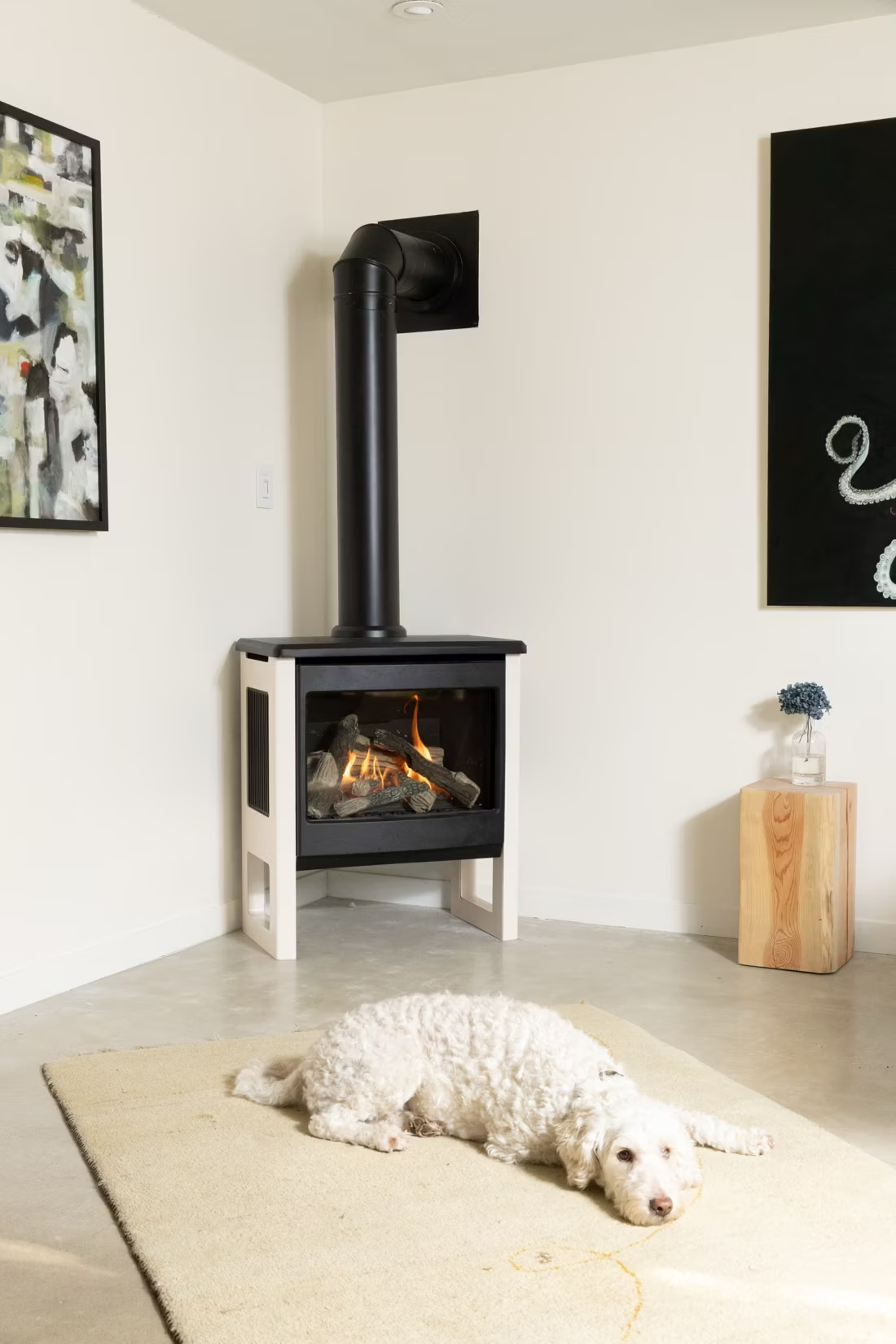
A gas fireplace is a fully built-in unit framed into a wall—the right choice for new construction or a full remodel. A gas insert is built to slide into an existing masonry firebox, which is common in Redlands' older housing stock, converting a drafty wood-burning fireplace into a sealed, efficient gas unit that still vents through the original chimney. A gas stove is freestanding, sitting on the floor like a wood stove but running on gas—a good option for a room with no existing fireplace and no interest in framing one in. For most Redlands homeowners with an inherited masonry fireplace, an insert is the simplest upgrade.
Do I need a permit to install a gas fireplace in Redlands?
Yes. New gas fireplace installations require a building permit, and any new gas line work requires sign-off from a licensed gas-fitter—coordinated through the City of Redlands Building and Safety Division for homes inside city limits, or San Bernardino County Land Use Services for unincorporated areas nearby. A local hearth retailer handling the full install typically pulls these permits as part of the job, which is one of the main reasons to avoid a big-box or DIY gas line install: the inspection and the venting sizing get handled together instead of left to you to coordinate.
Are vent-free gas fireplaces legal in Redlands?
California building code effectively restricts vent-free (ventless) gas fireplaces in most residential settings, and they're not something local retailers typically install or recommend here. Direct-vent gas fireplaces and inserts—which draw combustion air from outside and exhaust it back outside through a sealed vent—are the standard for Redlands installations. They're cleaner, safer, and don't raise the indoor air quality concerns that come with burning fuel directly into a living space, which matters in a region that's already dealing with a non-attainment air quality designation.
How often does a gas fireplace need to be serviced?
Plan on an annual inspection, ideally before the cooler months set in around November. A technician checks the burner, pilot assembly, venting, and gas connections, and cleans the glass and interior—a much lighter job than sweeping a wood chimney, but still important for safety and for keeping the flame pattern looking right. Local gas appliance service providers in the area typically charge $150 to $250 for this annual visit.
Gas vs. wood—which makes more sense for a Redlands home?
Wood has real appeal here if you want the authentic fire experience or plan to self-cut—Forest Service permits through the San Bernardino or Angeles National Forest run just $5 to $20 per cord for local oak, madrone, and douglas fir during the May-to-October season. But wood burning in San Bernardino County is subject to SCAQMD "Check Before You Burn" restrictions on high-pollution days, and with wildfire smoke season stretching longer each year, those no-burn days are becoming more frequent. Gas sidesteps that entirely—it's not curtailed, it's instant, and given how mild Redlands winters actually run (a notably light winter heating load), most homeowners here are burning for ambiance and occasional warmth rather than survival heat, which plays to gas's strengths.
Is my gas fireplace wasting gas?
If it was installed more than 15 years ago, probably. Older gas fireplaces keep a standing pilot light burning all the time, and that little flame can cost a couple hundred dollars a year. Newer models use pilot-on-demand ignition—the pilot lights only when you use the fireplace and goes out when you turn it off.
Why is my open fireplace making my house colder?
Open fireplaces suck—literally. As the fire burns, it consumes air your furnace already paid to heat and pulls it out through the chimney, so the house is actually colder after the fire goes out than before you lit it. An insert fixes this: it seals the chimney, puts fixed glass across the front, and turns that hole in your house into a real heat source.
Does a fireplace add value to my home?
On average, a fireplace adds back to the home about the same amount you spent installing it. Add the monthly savings from heating the rooms you actually use instead of the whole house—often hundreds of dollars a year—and the value case is strong before you even count what a fire does for how your family uses the room.
Can I install a fireplace myself?
If you're putting a fire in your house on purpose, it's best to work with an expert. Unless you're genuinely experienced in framing, gas line, vent pipe, and the national code on clearances to combustibles, have a professional do it—and ideally the same company that sells you the fireplace, so warranty, service, and liability all live under one roof.
Nearby Dealers
Hearth shops serving Redlands and the surrounding area.
Find your gas fireplace in Redlands.
Tell us about your home and we'll match you with a trusted local Redlands dealer and send over a free Project Guide & Parts List—the exact parts, vent kit, and recommended installer for your gas project.
Find Your Fireplace →