
Electric heat that works with Rancho Cucamonga's air quality rules, not against them.
No smoke, no chimney, no wood permit paperwork—just clean ambiance and supplemental warmth for the Inland Empire's mild winters. Find the right unit and connect with a trusted local dealer.
Every Project Starts From One of These Five Situations
Why electric makes sense in the Inland Empire's mild, smoke-conscious climate.
At 1,359 feet at the base of the San Gabriel Mountains, Rancho Cucamonga sees an average winter low around 45°F and logs only about 1,293 heating degree days a year—a fraction of the roughly 9,000 a place like Duluth, Minnesota racks up each winter. That means almost nobody here is trying to heat a whole house through a hard freeze. An electric fireplace's job in this climate is usually ambiance plus supplemental warmth on the handful of damp, cold nights in December and January, not carrying a heating load.
San Bernardino County sits in the South Coast Air Basin, a federal non-attainment area, and wildfire smoke is a recurring seasonal concern here. That combination makes wood and pellet appliances a hard sell locally—they're flagged not applicable on this site for Rancho Cucamonga—while a zero-emission electric fireplace sidesteps SCAQMD wood-burning restrictions entirely. It also skips the chimney, venting, and combustion-air requirements that complicate installs in the newer condos and attached homes common across the 91730, 91701, and 91739 zip codes.
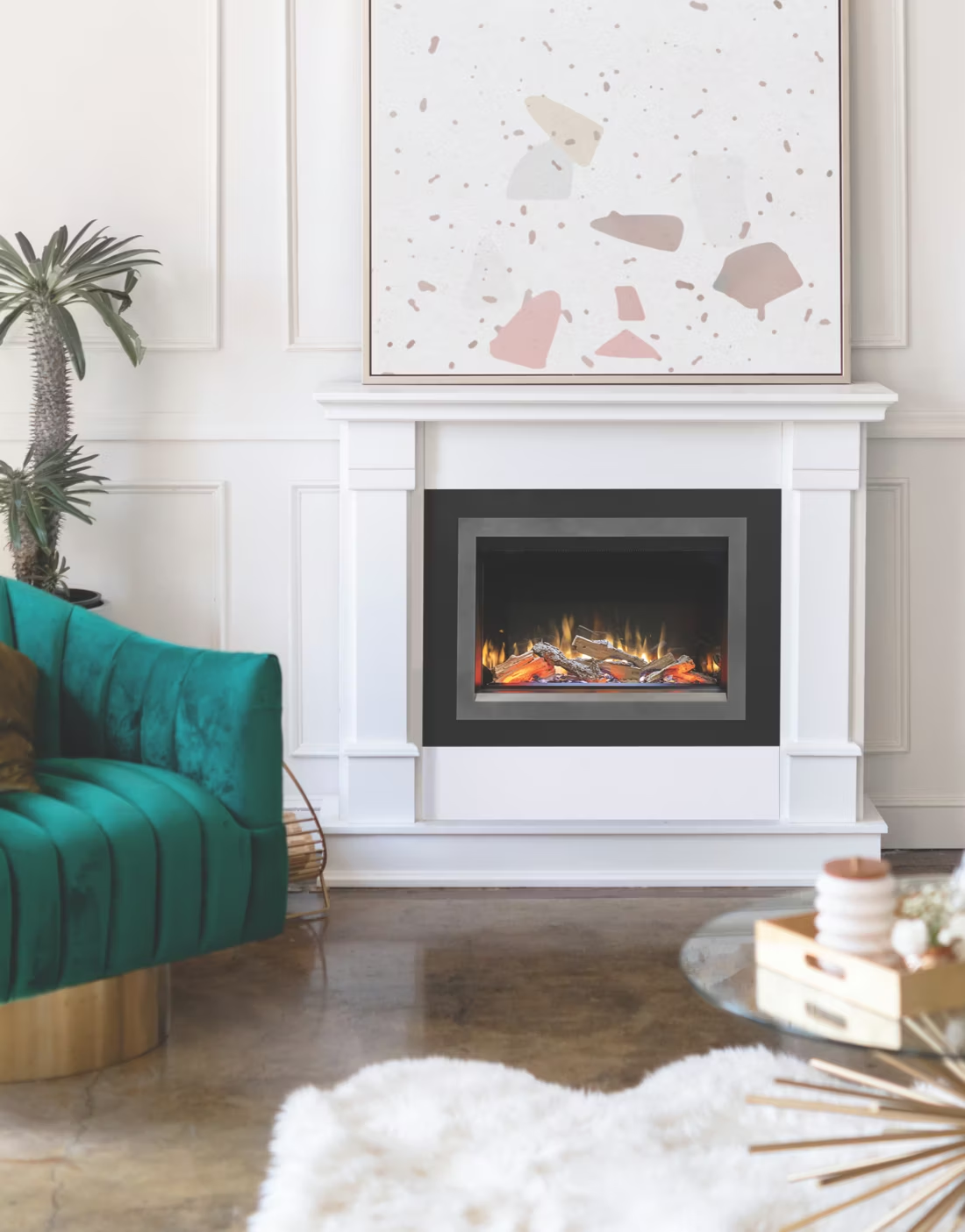
Three steps. No salesperson until you're ready.
Tell us about your project
Your zip code, your situation, and the fuel you're leaning toward—or let the answers point you to one.
See what's actually available
The brands dealers within 100 miles genuinely carry—real options, never a catalog mirage.
Get your dealer & Project Guide
A trusted local dealer, plus the free Project Guide & Parts List that names every component of the job.
Frequently Asked Questions
How much does it cost to install an electric fireplace in Rancho Cucamonga?
Plug-in freestanding or wall-mounted electric fireplaces typically run $300 to $1,500 installed, since most just need a standard outlet and a mounting bracket. Built-in linear units recessed into a wall, or inserts fitted into an existing masonry firebox, run $1,500 to $4,500 once you factor in a licensed electrician running a dedicated 120V or 240V circuit and any drywall or trim carpentry. Because Rancho Cucamonga has a lot of newer stucco-and-drywall construction, framing an electric unit into a wall is usually a cleaner job here than it would be retrofitting an older masonry chimney.
Do I need a permit to install an electric fireplace in Rancho Cucamonga?
A plug-in unit that draws off an existing outlet doesn't require a permit. If your installer is running a new dedicated circuit or cutting into a wall for a built-in linear fireplace, that electrical work needs to go through the City of Rancho Cucamonga Building & Safety Services Department, and it should be pulled by a licensed electrician. Most local dealers who sell built-in electric units include the permit and inspection as part of the installed price, so you're not coordinating it separately.
What size electric fireplace do I need for my room?
Given Rancho Cucamonga's mild winters—average lows near 45°F and only about 1,293 heating degree days a year—most homeowners here are sizing for a room, not a house. A 1,500-watt unit, the standard output for most electric fireplaces, will comfortably supplement heat in a room up to roughly 400 square feet. Larger linear units or multiple zones make sense for open-concept great rooms, but few Rancho Cucamonga homes need electric heat to do more than take the edge off a room on a cool evening.
How much does it cost to run an electric fireplace with Southern California Edison rates?
Southern California Edison's residential rate in this area runs about $0.2825 per kWh, which is on the higher end nationally. A typical 1,500-watt heater setting costs roughly $0.42 an hour to run, so a few hours a night adds up faster here than it would in a lower-rate state. Most Rancho Cucamonga owners use the heater function sparingly—on the handful of genuinely cold nights each winter—and run the flame effect without heat the rest of the year, which draws only a small fraction of the wattage.
What's the difference between an electric fireplace, insert, and wall-mounted unit?
An electric insert is built to slide into an existing fireplace opening, which works well if your Rancho Cucamonga home has an old wood-burning masonry firebox you want to retire without demolition. A wall-mounted or built-in linear unit is recessed into new framing, popular in the newer construction common across zip codes like 91739 and 91729. A freestanding electric stove or mantel package needs no fireplace opening at all—it just plugs in—making it the simplest option for condos, apartments, and renters.
Is electric a better choice than wood in Rancho Cucamonga because of air quality?
For most homeowners here, yes. Rancho Cucamonga sits in the South Coast Air Basin's non-attainment area, and wildfire smoke is already a recurring seasonal issue in the foothills, so an appliance that adds zero additional smoke or particulate has an obvious appeal. Wood and pellet stoves aren't a practical fit for this climate and air-quality profile—they're rated not applicable for this area on our site—while an electric fireplace runs completely clean regardless of local no-burn advisories.
What's the best electric fireplace for Rancho Cucamonga's climate?
Since heating demand here is light—winter lows average 45°F and hard freezes are rare—most local buyers prioritize flame realism and a heater that can be switched off independently of the flame effect, so the fireplace still looks good running year-round without adding unwanted warmth in summer. Linear models with adjustable LED flame beds and a separate 1,500-watt heat setting cover both needs: ambiance most of the year, a bit of real heat on the occasional damp winter night.
Will my electric fireplace work during a power outage?
No—and this is worth planning around in Southern California. Southern California Edison periodically initiates Public Safety Power Shutoffs during high-wind, high-fire-risk conditions in San Bernardino County, and an electric fireplace, like any electric appliance, goes dark when the power does. If backup heat during outages matters to you, a gas fireplace or insert (standard and readily available in this area) is the better pick for that specific need; electric is best understood here as a clean, low-maintenance ambiance and supplemental-heat option rather than a storm-outage backup.
Electric vs. gas fireplace—which is right for my Rancho Cucamonga home?
Gas fireplaces, run on natural gas through the local utility or propane, deliver real heat output, work during power outages, and are common in Rancho Cucamonga's larger single-family homes. Electric fireplaces cost less to install, need no venting or gas line, run cleanly in a non-attainment air basin, and are often the only realistic option in condos, apartments, and rentals where gas or wood isn't permitted. Given SCE's $0.2825/kWh rate, gas is typically cheaper to run as a primary heat source, but for ambiance and light supplemental warmth in a mild climate like this one, electric's lower install cost and simplicity often win out.
Can I put a TV above my fireplace?
Yes—with an asterisk. Fireplaces are hot and TVs don't like heat. Either put a mantel between them to deflect rising warmth, or choose a fireplace with heat-management technology that creates a cool zone on the wall above—the wall stays around 125 degrees, barely warm, while the room still gets full heat. If you like clean lines and don't want a mantel, heat management is the answer.
Do electric fireplaces actually produce heat?
Yes—most put out around 4,800–5,000 BTUs from a standard outlet, which comfortably warms a bedroom, office, or den as a comfort-zone heater. What they won't do is carry a whole house the way wood, gas, or pellet can. Think of electric as ambiance-first with honest supplemental heat: flames on with no heat in July, flames plus warmth in January.
How much should I budget for a fireplace?
For an average home—covering the fireplace, the vent pipe, and basic installation—a budget between $3,900 and $5,500 gives you a lot of options across wood, gas, and pellet. By the time you add finish work, gas line, and electrical, the average complete installation lands between $5,000 and $12,000 all-in. In a remodel or new build, a good rule is to put about 2.5% of the total project cost toward the fireplace.
What is an in-home preview and do I need one?
It's a visit where a hearth professional measures your space, confirms the model you picked actually works in your home, and walks the specs—framing, gas line, venting, finish work—before anything is ordered. Some details you just can't know until you see the house. Never make a down payment without one; it's the single most-skipped step that burns buyers.
Nearby Dealers
Hearth shops serving Rancho Cucamonga and the surrounding area.
Electric Service in Rancho Cucamonga
An electric fireplace's heater draws about 1,500 watts—pennies per hour at local rates.
Southern California Edison Co
Colorado River Indian Irr Proj
Find your electric fireplace in Rancho Cucamonga.
Tell us a bit about your home and we'll match you with the right electric fireplace, insert, or built-in unit—plus a free Project Guide & Parts List with the exact components and a trusted local Rancho Cucamonga dealer to install them.
Find Your Fireplace →