
Find your pellet stove in Placer County.
Clean-burning heat for the Sacramento Valley foothills and the Tahoe Basin—built to keep running on Spare the Air days when open wood burning gets restricted. Find the right stove or insert and connect with a trusted local dealer.
Every Project Starts From One of These Five Situations
Clean, controllable heat for a county that spans valley floor to alpine ridge.
Placer County stretches from Sacramento Valley suburbs like Roseville and Rocklin at under 300 feet, up through the oak-and-Douglas-fir foothill towns of Auburn, Colfax, and Newcastle, and into the Tahoe Basin communities above 6,200 feet. The valley floor is mild by heating standards—average winter lows near 38°F and roughly 2,644 heating degree days a year—but the county sits inside a federally designated non-attainment area, and winter temperature inversions regularly trap smoke against the foothills. Add regular wildfire smoke exposure during fire season, and Placer County has more air-quality pressure on home heating decisions than its gentle HDD number would suggest.
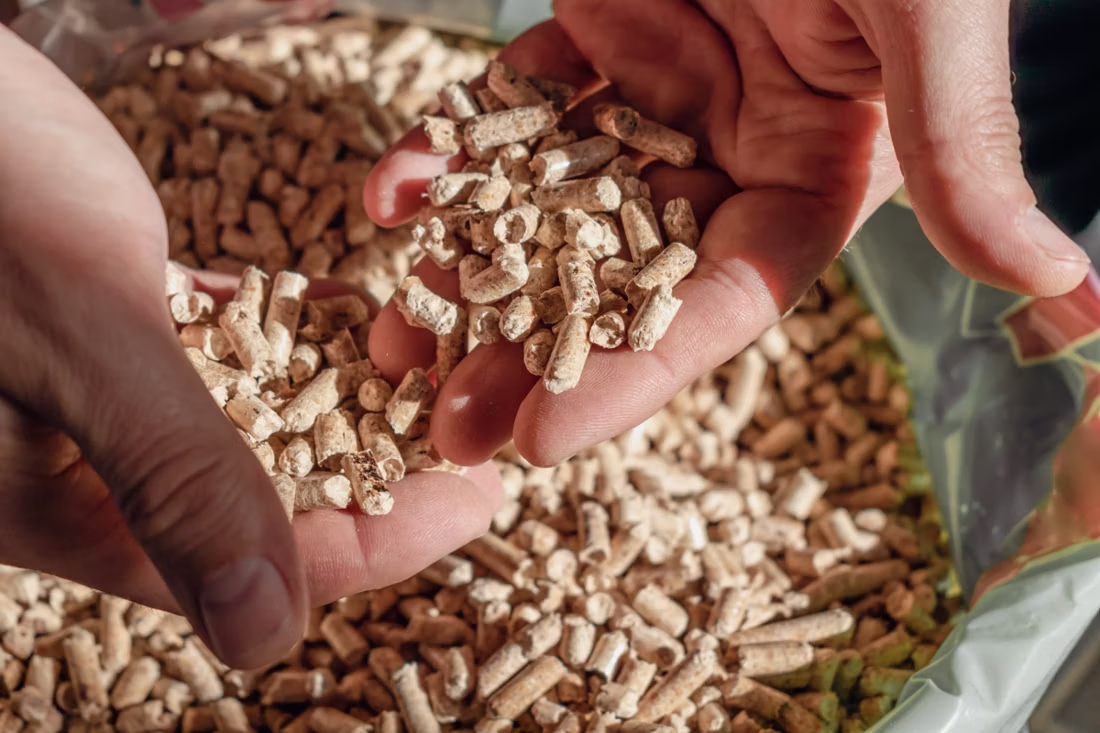
That combination is exactly where pellet appliances earn their place. Sacramento-area Spare the Air and Check Before You Burn curtailment days restrict open wood burning on high-pollution nights, and EPA-certified pellet stoves are typically exempt because they burn far cleaner and more consistently than cordwood. Regional brands like Bear Mountain, Lignetics, and Pacific Pellet are widely stocked here, often milled from the same Sierra timber byproduct—oak, madrone, Douglas fir—that fuels the county's woodstoves. For foothill and Tahoe-area homeowners who want reliable heat without tracking curtailment status or hauling firewood, a thermostatically controlled pellet stove solves a problem that's specific to this county's air.
Three steps. No salesperson until you're ready.
Tell us about your project
Your zip code, your situation, and the fuel you're leaning toward—or let the answers point you to one.
See what's actually available
The brands dealers within 100 miles genuinely carry—real options, never a catalog mirage.
Get your dealer & Project Guide
A trusted local dealer, plus the free Project Guide & Parts List that names every component of the job.
Frequently Asked Questions
How much does a pellet stove installation cost in Placer County?
Most pellet stove and insert installations in Placer County run in the $3,000 to $6,500 range, with the spread driven mainly by whether you're installing a freestanding stove versus a pellet insert into an existing masonry fireplace, and how much venting work is needed. Homes with an existing fireplace and chimney are usually on the lower end since the insert reuses that opening; new installations in homes without a fireplace require a fresh through-wall vent run and hearth pad, which pushes costs higher. Elevation adds a small variable too—installs in the higher Tahoe Basin communities can run slightly more due to travel time and, occasionally, cold-start ignition considerations. A local dealer will give you a firm number after seeing the space.
Can I still run a pellet stove on a Spare the Air or Check Before You Burn day?
In most cases, yes. Sacramento-region curtailment programs that restrict open wood burning during winter inversions and high-pollution days generally exempt EPA-certified pellet stoves and inserts, since they burn substantially cleaner than uncertified wood appliances. This matters more in Placer County than in a lot of places—the county sits in a federally designated non-attainment area, and valley inversions trap smoke against the foothills for days at a time in winter. If you're the kind of household that wants heat you can count on regardless of the day's air-quality status, that's one of the strongest practical arguments for pellet over an older wood stove.
What size pellet stove do I need for my home?
Sizing depends on square footage, ceiling height, insulation, and elevation. As a rough guide for Placer County: smaller units (up to 1,000 sq ft) suit foothill cabins or single-room supplemental heat around Colfax or Newcastle; medium units (1,000–2,000 sq ft) cover most Roseville, Rocklin, and Auburn homes; larger units (2,000+ sq ft) are common for bigger foothill properties or well-insulated Tahoe Basin homes. Elevation matters more than most homeowners expect—a stove that comfortably heats a 1,800 sq ft house in Rocklin may run harder to keep pace in a similarly sized home near Tahoe City, where outdoor temperatures drop much lower and stay there longer. A local retailer will size your space during an in-home consultation, which is worth doing before you buy.
Pellet stove vs. wood stove—which is right for my home?
Wood stoves burn cordwood you can often source or cut yourself—Placer County residents can pull personal-use fuelwood permits through the Eldorado and Tahoe National Forests or the BLM California State Office, typically for $5 to $20 per cord during the spring-through-fall cutting season. Wood stoves also keep working without electricity, which matters during PG&E Public Safety Power Shutoffs, which affect foothill and mountain communities in this county during high wildfire risk. Pellet stoves need electricity to run the auger and blower, so they go dark in an outage unless you've got a battery backup or generator—but they burn cleaner, hold a more consistent temperature with thermostat control, stay exempt from most curtailment restrictions, and don't require cutting, splitting, or seasoning wood. For a primary living space where convenience and air quality matter most, pellet often wins; for backup heat during PSPS events, wood has the edge.
Where can I buy pellets locally in Placer County?
Bear Mountain, Lignetics, and Pacific Pellet are the regional brands most commonly stocked at hearth retailers and hardware stores throughout the Sacramento foothills, and pricing typically runs somewhere in the $280 to $380 per ton range depending on brand, softwood versus hardwood blend, and how far into the season you're buying—prices tend to climb if you wait until a cold snap hits. Buying a season's supply (roughly 2–3 tons for an average home) in late summer or early fall, before demand spikes, is the standard local strategy. Your dealer can usually point you toward the closest stocking retailer once you've picked a stove.
Will my pellet stove work during a power outage?
Not without a backup power source. Pellet stoves rely on an electric auger to feed fuel and a blower to distribute heat, so they shut down when the power does. That's a real consideration in Placer County, where PG&E Public Safety Power Shutoffs can take out power to foothill and mountain communities for a day or more during periods of high wildfire risk—often in exactly the dry, windy conditions that also raise fire danger. Homeowners who want pellet convenience but also need heat during outages typically pair the stove with a small battery backup unit or a generator sized to run the auger and blower. If backup heat without any electrical dependency is the priority, a wood stove is worth considering as a second appliance or as your primary choice instead.
Do I need a permit to install a pellet stove in Placer County?
Yes—a building permit is required for new pellet stove and insert installations through the Placer County building department, or through the relevant city building division if you're inside Roseville, Rocklin, Lincoln, or Auburn city limits. The permit process confirms the vent termination, clearances, and hearth pad meet code. Most established local dealers include permitting as part of the installation quote, so you're not the one filing paperwork or scheduling the inspection.
Why would I choose pellet over cutting my own firewood, given how cheap forest permits are?
Personal-use cutting permits through the Eldorado National Forest, Tahoe National Forest, or BLM California State Office are genuinely inexpensive—as low as $10 per cord in some units, generally $5 to $20 per cord elsewhere—and cutting your own oak, madrone, or Douglas fir is a long-standing tradition in the Placer County foothills. But it comes with real labor: driving to a permitted unit during the April-through-October season, cutting and hauling, splitting, and seasoning wood for a year before it burns well. Pellet stoves trade that labor for a bagged fuel you buy by the ton and load into a hopper, with thermostat control and a cleaner burn that stays compliant on inversion days. If your winters are about convenience and air quality more than self-sufficiency, pellet is the more practical fit.
Pellet vs. gas—which makes more sense for a Placer County home?
Gas fireplaces offer instant on-off operation and no fuel handling at all, which suits homeowners who want zero maintenance. Pellet stoves require loading a hopper every day or two and periodic ash cleanout, but they deliver a more traditional flickering fire, run on a fuel that's cheaper per BTU than propane in areas without natural gas service, and stay exempt from most local wood-burning curtailment rules during inversion season. For foothill and rural Placer County homes without natural gas lines, pellet is often the more economical long-term choice; for valley homes already plumbed for gas, the decision usually comes down to how much fuel handling you're willing to take on. A local dealer can walk through the real cost comparison for your specific home.
How often does a pellet stove need cleaning?
A clean pellet stove is a happy pellet stove. Plan on cleaning the burn pot about once a week when you're burning regularly—ash and clinkers gum up the air holes just like a pellet barbecue. Most pellet stove problems trace back to skipped cleaning that nobody explained up front. Some designs make it easy with a trapdoor burn pot: pull a lever and the gunk drops into the ash pan.
What's the difference between an insert and a zero-clearance fireplace?
An insert is a fireplace that slides into a pre-existing wood-burning fireplace—if you don't have one, there's nothing to insert it into. A zero-clearance fireplace is built into a framed wall, which makes it the answer for remodels and new construction. Simple test: existing masonry fireplace means insert; blank or framed wall means zero-clearance.
What is an in-home preview and do I need one?
It's a visit where a hearth professional measures your space, confirms the model you picked actually works in your home, and walks the specs—framing, gas line, venting, finish work—before anything is ordered. Some details you just can't know until you see the house. Never make a down payment without one; it's the single most-skipped step that burns buyers.
Can a fireplace actually lower my heating bill?
Yes—by creating a comfort zone. A furnace heats every square foot of the house just to warm the one room you're in; a gas fireplace on low burns roughly a sixth of the gas a typical furnace does. Set the furnace around 55–60 degrees as a baseline, then heat the rooms your family actually uses. Families who heat this way commonly save $20–$60 a month.
Stove and Fireplace Dealers in Placer County
A To Z Chimney Service & Dryer Vent Cleaning (Parts Only)
Pellet Brands Stocked Around Placer County
Manufacturers will point you to the nearest stocking dealer.
Find your pellet stove in Placer County.
Tell us a bit about your home and we'll match you with the right pellet stove or insert—plus a free Project Guide & Parts List with the exact parts, vent kit, and a trusted local dealer to install it.
Find Your Fireplace →