
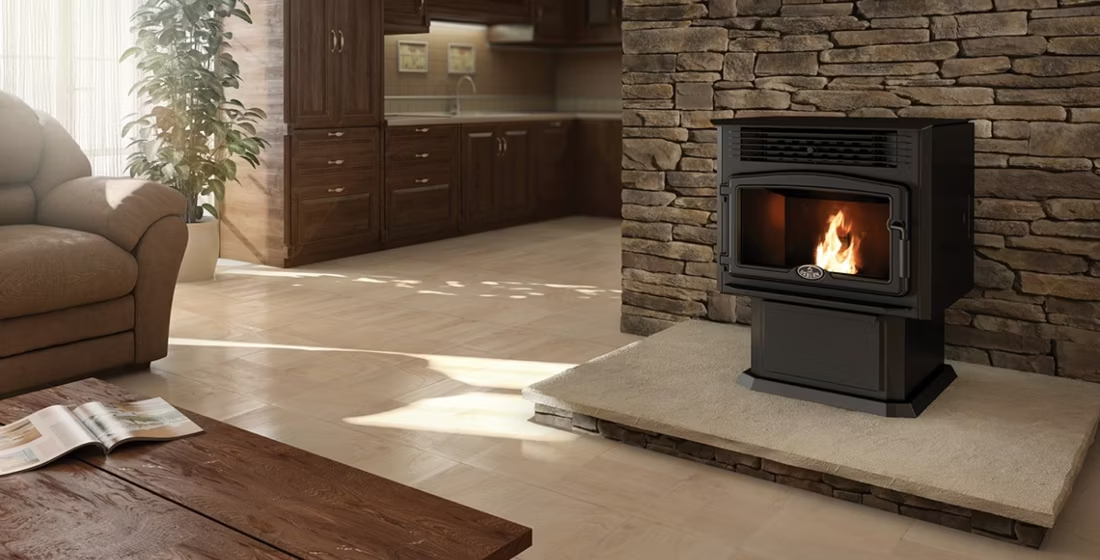
A pellet stove in Norwalk is the exception, not the rule.
With winter lows averaging 46°F and just 1,051 heating degree days a year, Norwalk almost never needs a dedicated heating appliance. If you still want a pellet stove—for backup power, ambiance, or a mountain property—I'll match you with a trusted local dealer who can tell you honestly whether it makes sense.
Every Project Starts From One of These Five Situations
Mild winters make pellet heat optional, not essential.
Norwalk sits at just 95 feet elevation in the Los Angeles basin, and the climate numbers explain why solid-fuel heat never caught on the way it has in places like Duluth or Fargo, where homeowners regularly log 8,000-plus heating degree days. Norwalk averages around 1,051—roughly an eighth of that—with winter lows rarely dropping below the mid-40s. Most homes here heat with a central gas furnace, and a hearth appliance, if there's one at all, is a gas fireplace used for ambiance a few nights a year rather than a heating necessity.
That said, pellet appliances aren't unheard of in the Norwalk area. Southern California's South Coast Air Basin is a designated non-attainment area, and during wildfire season the hills feeding Angeles National Forest and San Bernardino National Forest occasionally trigger Public Safety Power Shutoffs that leave homes without electricity—a real motivator for households that want a backup heat source beyond what Southern California Edison delivers. Regional pellet brands like Bear Mountain, Lignetics, and Pacific Pellet are stocked by a handful of Southland hearth dealers, mostly for exactly that use case, plus homeowners with a second property in the mountains where pellet heat actually earns its keep.
Three steps. No salesperson until you're ready.
Tell us about your project
Your zip code, your situation, and the fuel you're leaning toward—or let the answers point you to one.
See what's actually available
The brands dealers within 100 miles genuinely carry—real options, never a catalog mirage.
Get your dealer & Project Guide
A trusted local dealer, plus the free Project Guide & Parts List that names every component of the job.
Frequently Asked Questions
Does a pellet stove make sense for a home in Norwalk?
For most Norwalk households, not really—at 1,051 heating degree days and winter lows averaging 46°F, a central gas furnace already handles the handful of cold nights the LA basin sees each winter with room to spare. Where a pellet stove does make sense is as backup heat during a Public Safety Power Shutoff, since wildfire-season outages near the San Gabriel foothills can knock out power for a day or more, or as a secondary appliance for a household that splits time between Norwalk and a cabin near the San Bernardino National Forest where winters are genuinely cold.
Are pellet stoves allowed under South Coast Air Quality rules?
Yes. Norwalk falls inside the South Coast Air Basin, a designated non-attainment area, and SCAQMD Rule 445 restricts solid-fuel burning on declared no-burn days. EPA-certified pellet stoves are generally treated more favorably than open masonry fireplaces under these rules because they burn far cleaner, but you should confirm current exemption status with your installer before buying, since air district rules get revisited periodically as the region works to meet federal ozone and particulate standards.
How much does it cost to install a pellet stove in Norwalk?
Because pellet demand is low here, fewer dealers stock them locally compared to gas fireplace inventory, which can push pricing slightly above what you'd see in a market like Bend or Flagstaff where pellet stoves are everyday appliances. Expect a freestanding pellet stove with venting to run in the neighborhood of $3,500 to $6,500 installed, depending on whether you need a new wall penetration for the exhaust or are retrofitting into an existing fireplace opening. Get a firm number from a local dealer rather than assuming national averages apply directly.
What size pellet stove do I need in a Norwalk home?
Small. With winter lows rarely dipping below the 40s, even the smallest pellet stoves on the market—rated for 500 to 1,000 square feet—will out-heat a typical Norwalk living room on the coldest night of the year. Sizing up isn't about BTU capacity here; it's about hopper capacity and burn-time if your real goal is multi-day backup heat during a power outage, in which case a dealer can point you toward a model with a larger hopper rather than a larger heat rating.
Where do I buy pellet fuel near Norwalk?
Regional brands like Bear Mountain, Lignetics, and Pacific Pellet show up at the Southern California hearth and hardware stores that carry pellet appliances, though selection is thinner than in wood-pellet-heavy regions of the Pacific Northwest or Rocky Mountains. Because storage space is often tight on Norwalk's typical suburban lot, most owners buy pellets a few bags or a single pallet at a time rather than stockpiling a season's supply the way a mountain-town household might.
Pellet stove vs. gas fireplace—which fits Norwalk better?
For the overwhelming majority of Norwalk homes, gas wins. Gas fireplaces and inserts run on the existing gas infrastructure most homes already use for their furnace and water heater, need no fuel storage, and produce instant heat without an auger or electricity—an easier fit for a climate that only occasionally dips into fireplace-weather territory. Pellet stoves earn their place only when the household specifically wants an off-grid-capable backup heat source, since a pellet stove's auger and blower still need electricity, unlike a wood stove, and gas units with standing pilot ignition can outlast a power outage that a pellet stove cannot.
Will a pellet stove work during a power outage in Norwalk?
Not without a battery backup or generator. Pellet stoves rely on an electric auger to feed fuel and a blower for combustion air, so a Southern California Edison outage—including a Public Safety Power Shutoff during peak wildfire season—will shut the stove down along with everything else, unless it's paired with an uninterruptible power supply or small generator. If outage resilience during fire season is your main reason for considering solid fuel, a dealer can walk you through battery backup options sized to a pellet stove's modest power draw.
Do I need a permit to install a pellet stove in Norwalk?
Yes, a building permit through the City of Norwalk Building and Safety Division is standard for any new solid-fuel appliance and venting penetration, and the unit itself needs to meet current EPA certification standards to comply with South Coast Air Quality Management District rules. Because pellet installs are uncommon locally, it's worth confirming your installer has pulled permits for this specific appliance type in Los Angeles County before, so the inspection doesn't turn into a learning experience for everyone involved.
If wood isn't practical here, why would pellet be any different?
It largely isn't, for the same reason: Norwalk's mild climate and 1,051 heating degree days don't generate real demand for solid-fuel heat, and there's no local firewood-cutting culture the way there is near the Angeles or San Bernardino National Forest permit areas, which serve mountain communities rather than the LA basin. Pellet has one edge over wood—it's cleaner-burning and better positioned under SCAQMD's air rules—but the underlying reason to consider either fuel in Norwalk is the same narrow use case: emergency backup heat or a secondary property somewhere genuinely cold, not everyday winter comfort at home.
Why is a fireplace insert so efficient?
An insert does two things: it seals the chimney completely, so you stop losing air you already paid to heat, and it radiates warmth into the room through the firebox and glass. Most add a heat-exchange fan that pulls cool room air underneath, wraps it around the hot firebox, and pushes it back out warm. Your home is more efficient before you've even lit the first fire.
How often does a pellet stove need cleaning?
A clean pellet stove is a happy pellet stove. Plan on cleaning the burn pot about once a week when you're burning regularly—ash and clinkers gum up the air holes just like a pellet barbecue. Most pellet stove problems trace back to skipped cleaning that nobody explained up front. Some designs make it easy with a trapdoor burn pot: pull a lever and the gunk drops into the ash pan.
Can a fireplace actually lower my heating bill?
Yes—by creating a comfort zone. A furnace heats every square foot of the house just to warm the one room you're in; a gas fireplace on low burns roughly a sixth of the gas a typical furnace does. Set the furnace around 55–60 degrees as a baseline, then heat the rooms your family actually uses. Families who heat this way commonly save $20–$60 a month.
Can I install a fireplace myself?
If you're putting a fire in your house on purpose, it's best to work with an expert. Unless you're genuinely experienced in framing, gas line, vent pipe, and the national code on clearances to combustibles, have a professional do it—and ideally the same company that sells you the fireplace, so warranty, service, and liability all live under one roof.
Nearby Dealers
Hearth shops serving Norwalk and the surrounding area.
All Valley Distrib. Dba Marco Distrib
The Heat Source (Burrico) - Lancaster
Tropicana Outdoor Living
Pellet Brands Stocked Around Norwalk
Manufacturers will point you to the nearest stocking dealer.
Get your free Project Guide & Parts List for a pellet setup in Norwalk.
Tell me why you're considering pellet—backup heat, a mountain second home, or something else—and I'll match you with a trusted local dealer and send a free Project Guide & Parts List with the right hopper size, vent kit, and parts for your actual use case.
Find Your Fireplace →