
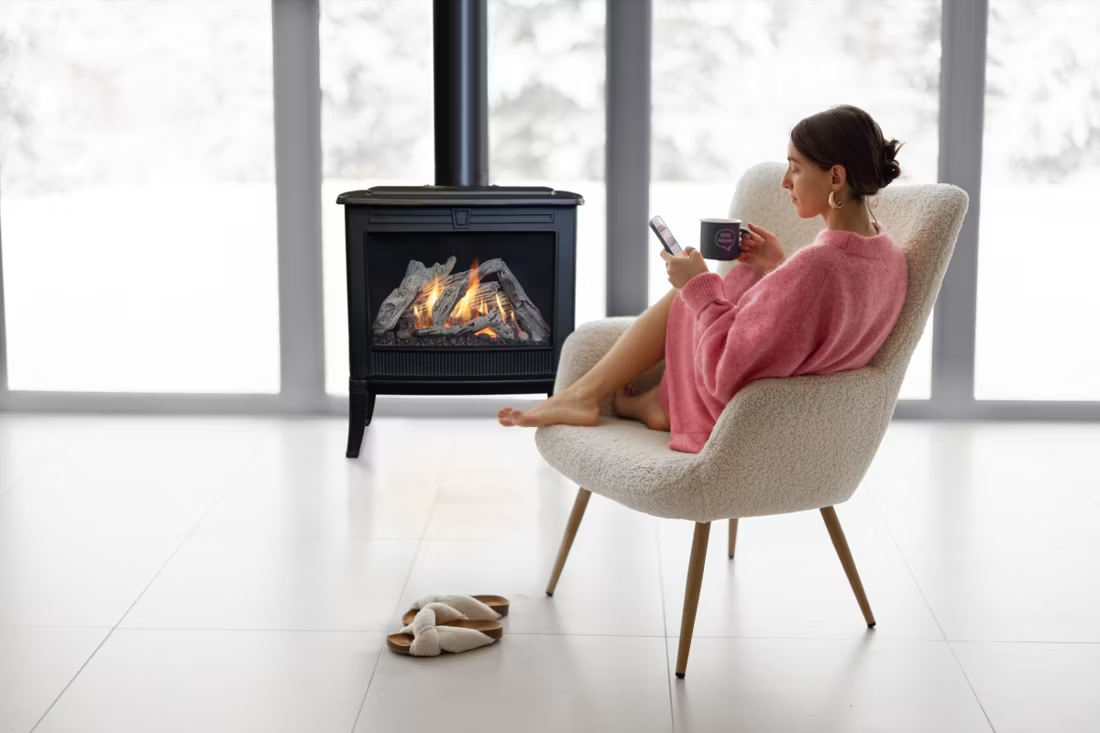
Real ambiance for Monterey County's mild, damp evenings.
From the fog-cooled coast in Pacific Grove to the warmer inland stretches around Salinas and King City, gas delivers instant, low-maintenance warmth without a wood supply to manage. Get matched with a trusted local dealer who can size and install the right unit.
Every Project Starts From One of These Five Situations
Mild winters, but the damp still calls for heat.
Monterey County sits in climate zone 3C with an average winter low around 42°F and a mild, short heating season—a fraction of what a place like Bozeman, MT or Duluth, MN sees in a single season. Nobody here is fighting sub-zero nights. But the coastal fog belt from Pacific Grove through Monterey and Carmel carries a persistent, penetrating dampness, and inland communities like Salinas, Gonzales, and King City still see chilly evenings once the sun drops. Gas fireplaces fit that pattern well: a quick source of dry, radiant heat you can flip on for an hour in the evening rather than committing to a full burn cycle.
With wildfire smoke as the county's dominant air quality concern during late summer and fall, more homeowners are also weighing gas against wood for day-to-day comfort. A gas insert or direct-vent fireplace produces zero smoke of its own, which matters in a county where outdoor air quality can already be compromised for stretches of the year. Whether you're converting an existing wood-burning fireplace in an older Monterey or Pacific Grove home, or adding heat to newer construction in Salinas or Marina, a correctly vented gas unit installed by a local pro is the more predictable option—no cutting permits, no ash, no smoke contribution of your own.
Three steps. No salesperson until you're ready.
Tell us about your project
Your zip code, your situation, and the fuel you're leaning toward—or let the answers point you to one.
See what's actually available
The brands dealers within 100 miles genuinely carry—real options, never a catalog mirage.
Get your dealer & Project Guide
A trusted local dealer, plus the free Project Guide & Parts List that names every component of the job.
Frequently Asked Questions
How much does a gas fireplace installation cost in Monterey County?
Typical gas fireplace and insert installations in Monterey County run from roughly $4,500 to $11,000, with the range driven mainly by venting complexity and whether new gas line work is required. A direct-vent insert dropped into an existing masonry fireplace in an older Monterey or Pacific Grove home—with gas already run to the hearth—sits toward the lower end. New construction or remodels in Salinas, Seaside, or the inland valleys that require framing a new chimney chase and running gas line from scratch land at the higher end. A local dealer will give you a firm number after seeing the space in person.
Can I convert my existing wood fireplace to gas?
Yes, and it's a common project in the county's older coastal housing stock—many homes in Monterey, Pacific Grove, and Carmel have original masonry fireplaces that rarely get used because hauling and stacking oak or madrone isn't practical for a fog-belt cottage or a second home. A gas insert slides into that existing firebox, uses the chimney (typically with a stainless liner) for venting, and gets you push-button heat. Cost generally runs $4,500 to $9,500 depending on the insert and whether new gas line work is needed to reach the hearth.
Is natural gas available throughout Monterey County, or do I need propane?
It depends on where you are. Incorporated areas like Monterey, Salinas, Seaside, and Carmel generally have natural gas service, so if your home already has a gas water heater or range, adding a fireplace is straightforward. In more rural and unincorporated parts of the county—stretches of the Carmel Valley, South County ranchland near King City, and parts of the coast without gas mains—propane is the standard fallback, delivered and stored in a tank on the property. Most gas fireplace models can be configured for either fuel; your installer sets the correct orifice and regulator for whichever you have.
Will my gas fireplace still work if the power goes out?
Most direct-vent gas fireplaces with intermittent pilot ignition (IPI) include a battery backup that keeps them running when the grid drops—the unit lights on demand off the batteries until power returns, which matters given how often Monterey County sees planned PG&E outages during high fire-risk periods. Valor fireplaces take a slightly different approach: their pilot assembly generates its own electricity via thermocouple, so there are no batteries to remember at all. Ask your local dealer which ignition system a given model uses if outage performance matters to you.
What's the difference between a gas fireplace, a gas insert, and a gas stove?
A gas fireplace is a built-in unit framed into a wall, typically chosen for new construction or a full remodel—common in newer Salinas and Marina developments. A gas insert is sized to slide into an existing masonry firebox, which makes it the natural fit for the county's many older homes with fireplaces already in place. A gas stove is a freestanding cabinet-style unit that sits on the floor and vents like a wood stove, but burns gas—a good option for a room without an existing chimney. For most Monterey County homeowners upgrading a fireplace they already have, the insert is the default answer.
Do I need a permit to install a gas fireplace in Monterey County?
Yes. Both the Monterey County Building Services Department (for unincorporated areas) and the relevant city building department—Monterey, Salinas, Seaside, Carmel, and others each issue their own permits—require a building permit and a gas line permit for new gas fireplace installations. The gas line portion needs a licensed gas-fitter, which is one reason working with an established local hearth dealer helps: they coordinate the gas line, venting, and inspection sign-off as one job instead of leaving you to manage separate trades and separate permit applications.
Should I choose a vented or vent-free gas fireplace?
Vented (direct-vent) units draw combustion air from outside and exhaust exhaust gases outside through a sealed pipe—they're the cleaner, safer, code-compliant standard in nearly every jurisdiction. Vent-free units burn without any outside venting, releasing some moisture and combustion byproducts directly into the room. California allows vent-free units under specific room-sizing and oxygen-depletion-sensor rules, but given how often coastal Monterey County homes already run humid from marine fog, adding a vent-free unit's moisture output indoors is worth thinking through carefully. Most local dealers steer homeowners toward direct-vent units for exactly that reason, and they remain the more universally recommended choice.
How often should a gas fireplace be serviced?
An annual inspection is the standard recommendation for any gas appliance, including direct-vent fireplaces and inserts. A qualified technician checks the burner, pilot assembly, venting, and gas connections, and cleans the glass and firebox interior—a much lighter lift than sweeping a wood chimney, but still important, particularly for homes near the coast where salt air can accelerate corrosion on metal venting components. Expect to pay roughly $150 to $250 for a standard annual service call from a local provider.
Gas vs. wood—which makes more sense for a Monterey County home?
Wood offers a genuine fire experience and works without electricity, and there's still plenty of local oak, madrone, and Douglas fir available for those who want it. But with Monterey County's mild, short heating season, most homes don't actually need a fireplace running for hours to stay comfortable—a quick blast of heat on a foggy evening is more the use case. Gas fits that better: instant on-off, no ash, no smoke of your own to add to a county that already deals with wildfire smoke advisories most late summers and falls. Wood tends to win for households that value the ritual and self-sufficiency of a real fire or for outage backup heat in more rural inland areas; gas wins for convenience-focused coastal homes and daily-use living spaces.
Is my gas fireplace wasting gas?
If it was installed more than 15 years ago, probably. Older gas fireplaces keep a standing pilot light burning all the time, and that little flame can cost a couple hundred dollars a year. Newer models use pilot-on-demand ignition—the pilot lights only when you use the fireplace and goes out when you turn it off.
Why is my open fireplace making my house colder?
Open fireplaces suck—literally. As the fire burns, it consumes air your furnace already paid to heat and pulls it out through the chimney, so the house is actually colder after the fire goes out than before you lit it. An insert fixes this: it seals the chimney, puts fixed glass across the front, and turns that hole in your house into a real heat source.
Can a fireplace actually lower my heating bill?
Yes—by creating a comfort zone. A furnace heats every square foot of the house just to warm the one room you're in; a gas fireplace on low burns roughly a sixth of the gas a typical furnace does. Set the furnace around 55–60 degrees as a baseline, then heat the rooms your family actually uses. Families who heat this way commonly save $20–$60 a month.
Can I install a fireplace myself?
If you're putting a fire in your house on purpose, it's best to work with an expert. Unless you're genuinely experienced in framing, gas line, vent pipe, and the national code on clearances to combustibles, have a professional do it—and ideally the same company that sells you the fireplace, so warranty, service, and liability all live under one roof.
Stove and Fireplace Dealers in Monterey County
Get your Monterey County gas fireplace Project Guide.
Tell us about your home and your goals, and we'll match you with a trusted local dealer and send over a free Project Guide & Parts List—the right gas fireplace or insert for your space, the exact parts including the vent kit, and the dealer we recommend for your install.
Find Your Fireplace →