
Steady, clean heat for Mono County's long Sierra winters.
From Mammoth Lakes condos to ranch homes in Bridgeport, pellet stoves deliver thermostat-controlled, hopper-fed heat through a winter that runs from October into May. Find the right unit and connect with a trusted local dealer.
Every Project Starts From One of These Five Situations
Consistent heat when the snowpack doesn't let up.
Mono County stretches along the eastern face of the Sierra Nevada, from Bridgeport and Walker in the north down through Lee Vining, June Lake, and Mammoth Lakes near the Inyo National Forest boundary. Elevations run from around 6,300 feet in Bridgeport to well over 8,000 feet near Mammoth, and with a heavy winter heating load and an average winter low of 17°F, the county sits in a cold-climate zone comparable to Duluth, Minnesota, or Bozeman, Montana. Winters here mean sustained snowpack, roads that can close for days after a storm, and a heating season that starts well before the first snow flies.
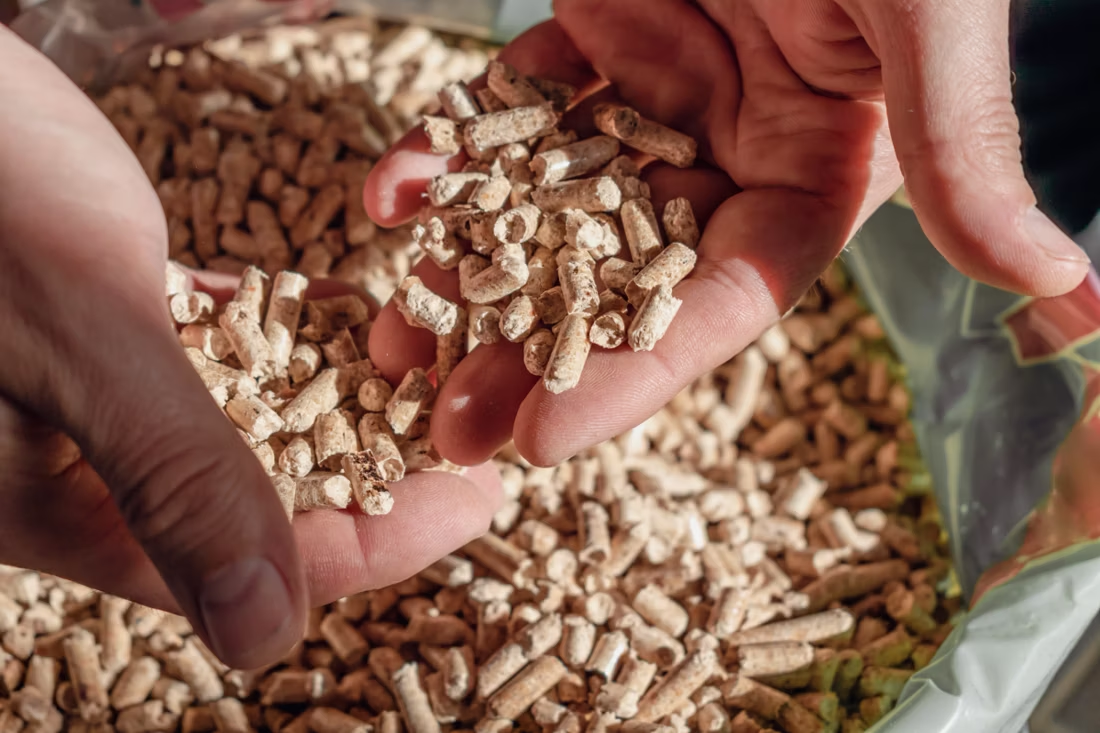
Mono County also falls within a state-designated non-attainment area, and the Great Basin Unified Air Pollution Control District pays close attention to particulate levels here—from wind-blown dust off the Owens/Mono basin as well as summer wildfire smoke. EPA-certified pellet stoves burn considerably cleaner than open wood fires, which matters both for air quality compliance and for the many second-home owners in Mammoth Lakes and June Lake who want reliable, low-maintenance heat in a property they're not tending daily. Regional pellet supply comes through brands like Bear Mountain, Lignetics, and Pacific Pellet, typically stocked at local hardware and feed stores along the Highway 395 corridor.
Three steps. No salesperson until you're ready.
Tell us about your project
Your zip code, your situation, and the fuel you're leaning toward—or let the answers point you to one.
See what's actually available
The brands dealers within 100 miles genuinely carry—real options, never a catalog mirage.
Get your dealer & Project Guide
A trusted local dealer, plus the free Project Guide & Parts List that names every component of the job.
Frequently Asked Questions
How much does a pellet stove installation cost in Mono County?
Most pellet stove installations in Mono County run in the $3,500 to $7,000 range, depending on the unit, whether you're venting through an exterior wall or an existing chimney, and whether a hearth pad upgrade is needed for code clearances. Homes at higher elevation—Mammoth Lakes, June Lake, and the areas closer to Tioga Pass—sometimes see slightly higher costs because vent terminations need to be positioned above typical snow accumulation, which can mean longer horizontal runs or additional flashing work. A local dealer can give you a firm number after seeing your home and roofline.
What size pellet stove do I need for my home?
With a heavy winter heating load and winter lows regularly in the teens, Mono County homes generally need to size up compared to milder parts of California. A small pellet stove (under 1,200 sq ft) suits a cabin or a single great room; medium units (1,200–2,000 sq ft) cover most primary residences in Bridgeport or Lee Vining; larger units or dual-stove setups are common in bigger homes near Mammoth Lakes where ceiling heights and open floor plans move more air. Older, less-insulated ranch homes in the northern county also tend to need a step up in output compared to newer, tighter construction. A local retailer will size your space based on square footage, insulation, and elevation during an in-home visit.
Where can I find certified pellet stove installers near me?
Look for dealers with NFI (National Fireplace Institute) certification, which covers proper venting, clearance, and electrical hookup for pellet appliances. Certified installers serving Mono County typically cover the Highway 395 corridor from Bridgeport through Mammoth Lakes, with some travel charge for more remote stops like Walker, Coleville, or June Lake depending on the season and road conditions. Because pellet stoves require both a vent run and a dedicated electrical outlet, it's worth avoiding a general handyman install—improper venting is the most common cause of poor draft and nuisance shutoffs on pellet units.
What's the difference between a pellet stove and a pellet insert?
A pellet stove is a freestanding, self-contained unit that sits on a hearth pad and vents through a wall or existing chimney—it can go almost anywhere with the right clearances. A pellet insert is built to slide into an existing masonry wood fireplace, using a stainless liner run through your current chimney. For Mono County homes with an older open masonry fireplace—common in some of the Bridgeport and Lee Vining housing stock—an insert converts that inefficient hearth into a controllable, thermostat-driven heat source without new venting work. Homes without an existing fireplace typically go with a freestanding stove instead.
Do I need a permit to install a pellet stove in Mono County?
Yes—new pellet stove installations require a building permit through the Mono County Community Development Department, and the unit needs to meet current EPA emissions standards. Most local dealers handle the permitting as part of the installation. Because Mono County sits in a non-attainment air quality area, it's also worth knowing that EPA-certified pellet stoves are typically exempt from the wood-burning curtailment restrictions that apply on high-pollution winter days—one advantage pellet has over open wood burning here.
What's the best pellet stove for Mono County's climate?
For a winter this long and this cold, hopper capacity matters as much as heat output. Look at models with 40- to 60-pound hoppers that can run 24 hours or more on a single fill—useful when a storm closes Highway 395 or Tioga Pass and a supply run isn't happening for a day or two. Brands like Harman and Enviro make higher-output units suited to sustained sub-freezing use, and they pair well with locally available pellets from Bear Mountain, Lignetics, or Pacific Pellet. Because pellet stoves need electricity to run the auger and blower, ask your dealer about a small battery backup or generator plan for the storms that knock out power along the Eastern Sierra.
How often should my pellet stove be serviced?
Plan on a full cleaning and inspection once a year, ideally before the season starts in early fall. This includes clearing the burn pot and ash traps, checking the auger and exhaust fan, and inspecting the vent termination for blockage—which matters more in Mono County than most places, since wind-blown dust from the Mono Basin and Owens Valley can accumulate in exterior vent caps faster than in wetter climates. Heavy users running a pellet stove as primary heat through a full Bridgeport or Mammoth Lakes winter may want a mid-season check as well.
Where can I buy pellets in Mono County?
Regional brands including Bear Mountain, Lignetics, and Pacific Pellet are typically stocked at hardware and feed stores along the Highway 395 corridor, with availability generally better near Mammoth Lakes and Bishop-area suppliers than in the smaller northern communities. Because winter storms can temporarily close Tioga Pass, Sonora Pass, and stretches of 395, it's smart to buy a season's worth of pellets in the fall rather than restocking mid-winter. A local dealer can point you toward the nearest reliable supplier and give you a sense of typical per-ton pricing in the area.
Pellet stove vs. wood stove—which is right for my home?
Wood is abundant in Mono County—oak, madrone, and Douglas fir are common locally, and cutting permits through the Inyo and Sierra National Forests run just $5 to $20 per cord during the May-to-October season. Wood stoves also keep working without power, which matters during Sierra storm outages. Pellet stoves burn cleaner, which counts for something in a non-attainment area, and they're far more hands-off—no splitting, stacking, or hauling, which is a real advantage for the many part-time residents in Mammoth Lakes and June Lake who aren't around to tend a fire daily. The tradeoff is that pellet units need electricity, so homes prioritizing storm resilience often lean wood, while low-maintenance convenience for a second home or busy household tends to favor pellet.
What's the difference between an insert and a zero-clearance fireplace?
An insert is a fireplace that slides into a pre-existing wood-burning fireplace—if you don't have one, there's nothing to insert it into. A zero-clearance fireplace is built into a framed wall, which makes it the answer for remodels and new construction. Simple test: existing masonry fireplace means insert; blank or framed wall means zero-clearance.
Why is my open fireplace making my house colder?
Open fireplaces suck—literally. As the fire burns, it consumes air your furnace already paid to heat and pulls it out through the chimney, so the house is actually colder after the fire goes out than before you lit it. An insert fixes this: it seals the chimney, puts fixed glass across the front, and turns that hole in your house into a real heat source.
What is an in-home preview and do I need one?
It's a visit where a hearth professional measures your space, confirms the model you picked actually works in your home, and walks the specs—framing, gas line, venting, finish work—before anything is ordered. Some details you just can't know until you see the house. Never make a down payment without one; it's the single most-skipped step that burns buyers.
Does a fireplace add value to my home?
On average, a fireplace adds back to the home about the same amount you spent installing it. Add the monthly savings from heating the rooms you actually use instead of the whole house—often hundreds of dollars a year—and the value case is strong before you even count what a fire does for how your family uses the room.
Stove and Fireplace Dealers in Mono County
Pellet Brands Stocked Around Mono County
Manufacturers will point you to the nearest stocking dealer.
Find your pellet stove in Mono County.
Tell us about your home and we'll match you with the right pellet stove or insert, plus a free Project Guide & Parts List—the exact parts, including the vent kit, and our recommended local dealer for your Mono County project.
Find Your Fireplace →