
Steady heat for Mariposa County's long mountain winters.
Automated, cordwood-free heat for Mariposa County's forested foothills and high country—from the town of Mariposa to Yosemite gateway communities like Fish Camp and El Portal. Find the right stove or insert, and connect with a trusted local dealer.
Every Project Starts From One of These Five Situations
Consistent heat, without the chainsaw work.
Mariposa County stretches from oak-studded foothills near 1,900 feet in the town of Mariposa up through dense mixed conifer forest to the granite rim of Yosemite Valley above 7,000 feet. The county-wide average of a heating season stretching well over half the year and a winter low averaging 28°F undersell just how cold it gets at elevation—communities like Fish Camp, Wawona, and Yosemite West see harder freezes and a longer heating season than the valley-floor numbers suggest. With just over 7,000 residents spread across nearly 1,500 square miles of steep, forested terrain, many homes sit at the end of long dirt or gravel roads far from town.
Oak, madrone, and Douglas fir are the traditional firewood species here, and Forest Service cutting permits through Stanislaus, Sierra, and Inyo National Forest run a modest $5 to $20 per cord during the May-to-October season. But splitting and hauling wood up switchback driveways gets old fast, and that's part of why pellet stoves have caught on across the county. A hopper-fed pellet stove from Bear Mountain, Lignetics, or Pacific Pellet delivers a steady, thermostat-controlled burn without the chainsaw, the wood pile, or the ash. Given how much wildfire smoke this county already breathes each summer and fall, the cleaner combustion of a pellet appliance is also an easier sell than adding another source of particulate to the air. The tradeoff worth knowing upfront: pellet stoves need electricity to run the auger and blower, and Mariposa County sees its share of PG&E outages—planned Public Safety Power Shutoffs during high fire-risk stretches and storm-related outages in winter alike. A battery backup or small generator is worth planning for if you're relying on a pellet stove as a primary heat source out here.
Three steps. No salesperson until you're ready.
Tell us about your project
Your zip code, your situation, and the fuel you're leaning toward—or let the answers point you to one.
See what's actually available
The brands dealers within 100 miles genuinely carry—real options, never a catalog mirage.
Get your dealer & Project Guide
A trusted local dealer, plus the free Project Guide & Parts List that names every component of the job.
Frequently Asked Questions
How much does a pellet stove installation cost in Mariposa County?
Installed pellet stoves and inserts in Mariposa County typically run in the $3,500 to $6,500 range, depending on the unit, whether you're inserting into an existing masonry fireplace, and how much venting work is involved. Homes with an existing fireplace opening are usually on the lower end since the insert can use much of the existing structure. New freestanding installations that need fresh through-wall venting, a hearth pad, and electrical work for the hopper and blower run toward the higher end. Homes in more remote parts of the county—Fish Camp, Wawona, Coulterville, or up the steep grades toward Yosemite West—may see a modest travel charge added for installer drive time.
What size pellet stove do I need for my home?
Sizing depends on square footage, ceiling height, insulation, and elevation. As a rough guide for Mariposa County: smaller units (under 1,000 sq ft) suit cabins and single-room heating in lower-elevation communities like Catheys Valley or Midpines, mid-size units (1,000-2,000 sq ft) cover most primary residences in and around the town of Mariposa, and larger units are worth considering for homes above 4,000 feet near Fish Camp or Wawona, where the effective heating season runs longer and colder than the county-wide averages suggest. A local dealer will size your home during an in-home visit—that's a service worth using rather than guessing off a chart, especially at higher elevations.
Where can I find certified pellet stove installers near me?
Look for installers who handle both the appliance and the venting—pellet stoves use a smaller-diameter vent than wood stoves, and it needs to be sized and pitched correctly for the unit to draft properly. Hearth dealers who carry Bear Mountain, Lignetics, and Pacific Pellet products in this part of the Sierra foothills typically employ their own certified installers rather than subcontracting to general handymen. Because Mariposa County's population is spread thin across a large, mountainous footprint, expect some installers to cover the whole county from a base in the town of Mariposa or nearby Oakhurst—factor in a possible trip charge for homes well outside town.
Will my pellet stove work during a power outage?
Not without backup power. Pellet stoves rely on an electric auger to feed fuel and a blower to circulate heat, so a standard unit shuts down the moment the power goes out. That's a real consideration in Mariposa County, where PG&E runs Public Safety Power Shutoffs during high fire-risk stretches in fall and where winter storms in the higher elevations around Fish Camp and Wawona can knock out lines for days. Homeowners who want pellet convenience but also need outage-proof heat often pair a pellet stove with a small backup generator, a battery system sized for the stove's draw, or keep a wood stove in reserve elsewhere in the house.
What's the difference between a pellet stove and a pellet insert?
A pellet stove is a freestanding unit that sits on a hearth pad and vents through a wall or existing chimney—it can go almost anywhere with the right clearances. A pellet insert is built to slide into an existing masonry fireplace opening, turning an old wood-burning fireplace into an automated, thermostat-controlled heat source while venting through the existing chimney with a liner. For Mariposa County homes with an older stone or masonry fireplace already in place—common in many of the county's older ranch and cabin-style homes—an insert is usually the simpler, less invasive upgrade.
Do I need a permit to install a pellet stove in Mariposa County?
Yes—new pellet stove and insert installations require a building permit through the Mariposa County Building Department, covering the appliance installation, venting, and any electrical work for the hopper and blower circuit. Most local dealers handle the permit application and inspection scheduling as part of the installation, so it's rarely something homeowners need to manage themselves. Unlike open wood burning, pellet stoves aren't typically subject to the wildfire-smoke-related burn advisories that affect the county in fire season, since their combustion is far cleaner.
What's the best pellet stove for Mariposa County's climate and terrain?
For most homes in the county, a mid-size unit fed by Lignetics-compatible pellets or a Pacific Pellet-fed stove with a larger hopper is worth the upgrade—a bigger hopper means fewer refills, which matters for households further from town who don't want a daily trip to top off fuel. For higher-elevation homes near Fish Camp, Wawona, or Yosemite West, prioritize a model with strong BTU output and a reliable auger motor built for longer, colder burn cycles. Bear Mountain, Lignetics, and Pacific Pellet all supply this region, and a local dealer can match hopper size and BTU output to your elevation and square footage.
Where can I get pellet fuel delivered in Mariposa County?
Regional brands like Bear Mountain, Lignetics, and Pacific Pellet are the most common bags found at hardware and feed stores serving Mariposa County, with pellets typically running in the $280 to $380 per ton range depending on brand and how far they've traveled to reach the foothills. Because the county has no major pellet mill of its own, most retailers truck pellets in from Central Valley or Northern California suppliers—stocking up early in fall, before winter storms make the mountain roads to Fish Camp, Wawona, or Coulterville harder to travel, is a smart move for anyone relying on pellet heat through the season.
Pellet stove vs. wood stove—which is right for my Mariposa County home?
Wood stoves work without electricity, which matters given how often power gets cut here during PG&E's Public Safety Power Shutoffs and winter storms, and cutting permits through Stanislaus, Sierra, or Inyo National Forest run a modest $5 to $20 per cord for oak, madrone, or Douglas fir if you're willing to cut and haul your own. Pellet stoves trade that self-sufficiency for convenience—no splitting, no ash to speak of, and a thermostat that holds a steady temperature overnight—but they need reliable power to run. For in-town homes in Mariposa with dependable electric service, pellet is often the easier day-to-day choice. For homes further out, or anyone who wants heat that works no matter what the grid is doing, a wood stove—or a pellet stove paired with battery backup—is worth serious consideration.
How often does a pellet stove need cleaning?
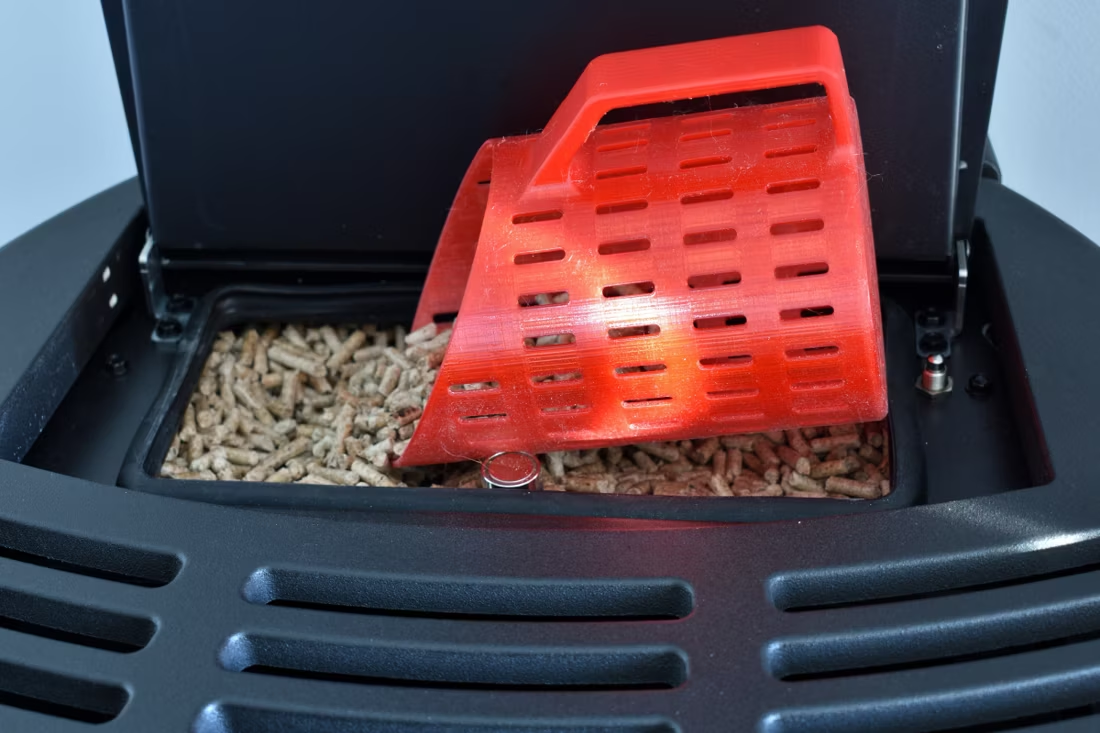
A clean pellet stove is a happy pellet stove. Plan on cleaning the burn pot about once a week when you're burning regularly—ash and clinkers gum up the air holes just like a pellet barbecue. Most pellet stove problems trace back to skipped cleaning that nobody explained up front. Some designs make it easy with a trapdoor burn pot: pull a lever and the gunk drops into the ash pan.
What's the difference between an insert and a zero-clearance fireplace?
An insert is a fireplace that slides into a pre-existing wood-burning fireplace—if you don't have one, there's nothing to insert it into. A zero-clearance fireplace is built into a framed wall, which makes it the answer for remodels and new construction. Simple test: existing masonry fireplace means insert; blank or framed wall means zero-clearance.
Can a fireplace actually lower my heating bill?
Yes—by creating a comfort zone. A furnace heats every square foot of the house just to warm the one room you're in; a gas fireplace on low burns roughly a sixth of the gas a typical furnace does. Set the furnace around 55–60 degrees as a baseline, then heat the rooms your family actually uses. Families who heat this way commonly save $20–$60 a month.
Does a fireplace add value to my home?
On average, a fireplace adds back to the home about the same amount you spent installing it. Add the monthly savings from heating the rooms you actually use instead of the whole house—often hundreds of dollars a year—and the value case is strong before you even count what a fire does for how your family uses the room.
Pellet Brands Stocked Around Mariposa County
Manufacturers will point you to the nearest stocking dealer.
Find your pellet stove in Mariposa County.
Tell us a bit about your home and elevation, and we'll match you with the right pellet stove or insert—plus a free Project Guide & Parts List with the exact parts, including the vent kit, and a trusted local dealer to install it.
Find Your Fireplace →