
Pellet heat is rare in Los Banos—here's when it still makes sense.
With winter lows averaging 39°F and just a light winter heating load each year, most Los Banos homes don't need a supplemental heat source. A small number still want one—for backup power during PG&E outages, or for the ambiance of a real flame. We'll help you figure out if it fits.
Every Project Starts From One of These Five Situations
The Central Valley's mild winters don't call for a pellet stove—but some homes still want one.
Los Banos sits at 113 feet in the San Joaquin Valley under climate zone 3B, where winter lows average a mild 39°F and the heating season barely registers—just a light winter heating load each year, a fraction of what a place like Bozeman, Montana racks up. That's the honest starting point: for most homes here, central HVAC handles winter comfort just fine, and a dedicated pellet appliance is more of a specialty purchase than a necessity.
Where pellet stoves do show up locally, it's usually for one of three reasons: a homeowner wants real-flame ambiance without wood handling, a rural property wants backup heat for PG&E outages (Pacific Gas & Electric's residential rate here runs around $0.317/kWh, which makes electric-resistance backup pricier than it looks), or a family splits time between Los Banos and a colder mountain property near the Sierra or Stanislaus National Forest where pellet heat earns its keep. If that's you, Bear Mountain, Lignetics, and Pacific Pellet are the regional brands most local dealers can source, and a trusted installer will size the unit and handle the venting and permitting correctly rather than leaving you to guess.
Three steps. No salesperson until you're ready.
Tell us about your project
Your zip code, your situation, and the fuel you're leaning toward—or let the answers point you to one.
See what's actually available
The brands dealers within 100 miles genuinely carry—real options, never a catalog mirage.
Get your dealer & Project Guide
A trusted local dealer, plus the free Project Guide & Parts List that names every component of the job.
Frequently Asked Questions
Does a pellet stove make sense for a home in Los Banos?
For most Los Banos homes, not really—with winter lows averaging 39°F and only a light winter heating load overall, the Central Valley just doesn't generate the sustained cold that makes a dedicated pellet appliance pay for itself as primary heat. Where it does make sense is as supplemental or backup heat: a hopper-fed pellet insert in a living room for ambiance, or a stove tied to a battery backup for households worried about PG&E outages during winter storms. If you're building a case for one, tell your local dealer honestly how you'll use it—occasional evenings versus daily heat changes which unit and hopper size makes sense.
How much does a pellet stove installation cost in Los Banos?
Because pellet stoves are a low-volume install in this market compared to gas, expect a typical freestanding pellet stove or insert project to run roughly $3,500 to $6,500 depending on the unit, whether venting already exists, and any wall or hearth pad work. That's a general range rather than a Los Banos-specific benchmark—since so few installers here specialize in pellet work day to day, get a firm in-home quote before assuming a number, and ask specifically whether the installer has done pellet venting before, not just gas or wood.
Are pellet stoves affected by Valley air quality rules?
Merced County falls within the San Joaquin Valley Air Pollution Control District's non-attainment area, and the District runs a Check Before You Burn program that can restrict wood-burning devices on high-pollution winter days, especially during wildfire smoke events. Pellet stoves are generally treated more favorably than open wood-burning appliances under these programs because they burn cleaner and more consistently, but rules can change and enforcement varies by air quality forecast—confirm current status with the Valley Air District or your installer before you assume a pellet unit is exempt on every red-flag day.
Will a pellet stove keep working during a PG&E power outage?
Not on its own—this is the detail people miss. Pellet stoves rely on an electric auger to feed fuel and a blower to distribute heat, so a standard unit shuts down the moment the power does. If backup heat during outages is your actual motivation for considering pellet, ask your local dealer about models compatible with a small battery backup or generator setup; otherwise a wood stove or a gas unit with a battery-backed ignition is a more reliable outage performer in a PG&E service area.
Do I need a permit to install a pellet stove in Los Banos?
Yes—a building permit is typically required for a new pellet stove or insert installation, handled through the City of Los Banos Building Department or Merced County Building Department depending on your address. Most established hearth dealers include permitting as part of the installation, and because pellet units vent similarly to gas appliances (a smaller-diameter vent through wall or roof, not a full masonry chimney), the inspection process is usually straightforward.
Where can I buy pellets in or near Los Banos?
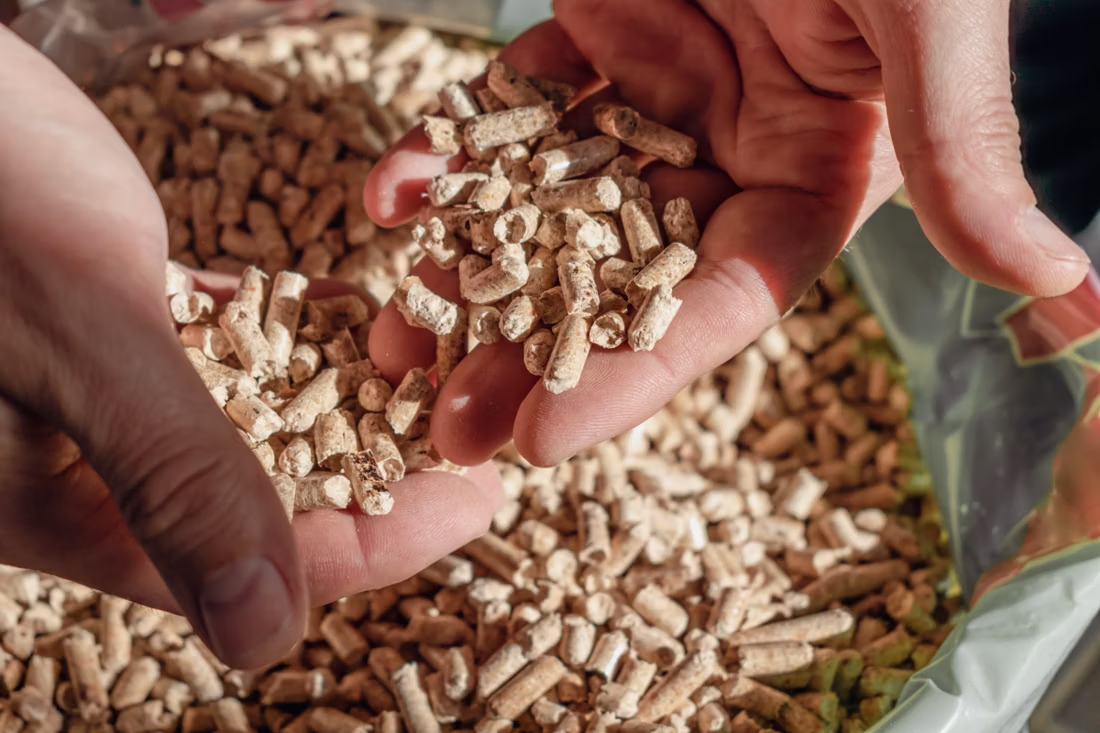
Regional brands like Bear Mountain, Lignetics, and Pacific Pellet are the most common options carried by hearth dealers and some feed or farm supply stores in the broader Central Valley. Because pellet stoves are a smaller market here than in colder parts of California, don't assume big-box stores keep pellets in stock year-round—ask your installer where they source fuel locally, or plan to order ahead of the season rather than waiting for a cold snap.
Pellet vs. gas—which is the better fit for a Los Banos home?
For nearly every Los Banos home, gas wins. Natural gas and propane fireplaces and inserts are a standard, well-supported category here, with straightforward permitting, plenty of local installers, and instant on-demand heat that suits the region's short, mild heating season. Pellet stoves require a hopper to refill, an electric auger and blower to keep running, and a supply chain for fuel that's thinner here than in colder climates. Pellet only pulls ahead if you specifically want a real-flame, wood-adjacent look without cutting or stacking firewood—otherwise gas is the more practical choice for this climate.
Pellet vs. electric fireplace—which should I choose in Los Banos?
An electric fireplace or insert is usually the simpler and cheaper path for supplemental heat or ambiance in Los Banos—typical installs run a few hundred to just over a thousand dollars, with no venting or fuel storage required. The tradeoff is that electric heat draws on PG&E power at around $0.317/kWh, one of the higher residential rates in California, so running one as daily heat gets expensive fast. A pellet stove costs more upfront and needs fuel storage and periodic hopper refills, but produces genuine radiant heat and a real flame that electric units only simulate. If you want ambiance on a budget, go electric; if you want an actual wood-adjacent heat source and don't mind the fuel logistics, pellet is the better match.
Since wood isn't really an option here, is pellet the next best thing?
Not exactly the same experience, but functionally, yes. Wood stoves are essentially not used in Los Banos—the Valley's mild winters (39°F average lows, just a light winter heating load overall) don't justify cutting and stacking firewood from species like oak, madrone, or Douglas fir, even though nearby Sierra and Stanislaus National Forest permits are cheap ($5-$20 per cord, May through October). Pellet stoves offer a similar real-flame look with far less handling—no splitting, stacking, or seasoning wood, just bagged pellets loaded into a hopper. If the appeal of wood heat is the ambiance rather than the ritual, pellet is the closer, lower-maintenance substitute for this climate.
Why is my open fireplace making my house colder?
Open fireplaces suck—literally. As the fire burns, it consumes air your furnace already paid to heat and pulls it out through the chimney, so the house is actually colder after the fire goes out than before you lit it. An insert fixes this: it seals the chimney, puts fixed glass across the front, and turns that hole in your house into a real heat source.
What's the difference between an insert and a zero-clearance fireplace?
An insert is a fireplace that slides into a pre-existing wood-burning fireplace—if you don't have one, there's nothing to insert it into. A zero-clearance fireplace is built into a framed wall, which makes it the answer for remodels and new construction. Simple test: existing masonry fireplace means insert; blank or framed wall means zero-clearance.
Can a fireplace actually lower my heating bill?
Yes—by creating a comfort zone. A furnace heats every square foot of the house just to warm the one room you're in; a gas fireplace on low burns roughly a sixth of the gas a typical furnace does. Set the furnace around 55–60 degrees as a baseline, then heat the rooms your family actually uses. Families who heat this way commonly save $20–$60 a month.
Does a fireplace add value to my home?
On average, a fireplace adds back to the home about the same amount you spent installing it. Add the monthly savings from heating the rooms you actually use instead of the whole house—often hundreds of dollars a year—and the value case is strong before you even count what a fire does for how your family uses the room.
Pellet Brands Stocked Around Los Banos
Manufacturers will point you to the nearest stocking dealer.
Get your Project Guide & Parts List for pellet heat in Los Banos.
Tell us about your home and how you'd actually use a pellet stove—ambiance, backup heat, or a mountain property—and we'll match you with a trusted local dealer plus a free Project Guide & Parts List, including the right vent kit for your install.
Find Your Fireplace →