
Pellet Heat for La Puente's Occasional Cold Snap.
With winter lows averaging 46°F and a very light winter heating load, pellet stoves aren't the default here—but for cabins, ambiance, or mountain second homes, we'll match you with a local dealer who can tell you honestly whether it's the right call.
Every Project Starts From One of These Five Situations
Mild valley winters make solid-fuel heat optional, not essential.
La Puente sits at just 326 feet in the San Gabriel Valley, well inside the Los Angeles Basin's marine-moderated climate zone 3B. Winter lows average a gentle 46°F, and the city has a very light winter heating load—a fraction of what a place like Duluth, MN or Bozeman, MT racks up in a single cold month. That's the honest reason pellet stoves are uncommon here: most La Puente homes get through winter fine on a heat pump or a gas furnace, and there's rarely enough sustained cold to justify a dedicated hopper-fed appliance and its venting.
Where pellet stoves do show up locally, it's usually for a specific reason—a homeowner with a cabin near Wrightwood or Big Bear who wants a matching setup at their valley house, someone chasing the visual warmth of a real flame without the smoke restrictions of an open wood fireplace, or a household trying to offset Southern California Edison's residential rate (currently around $0.2825/kWh) with a cheaper supplemental heat source on the rare nights it dips into the 30s. La Puente also sits in the South Coast Air Basin's non-attainment area, and regional pellet brands like Bear Mountain, Lignetics, and Pacific Pellet are stocked by a handful of San Gabriel Valley hearth dealers mainly to serve that smaller, specific customer base rather than the general market.
Three steps. No salesperson until you're ready.
Tell us about your project
Your zip code, your situation, and the fuel you're leaning toward—or let the answers point you to one.
See what's actually available
The brands dealers within 100 miles genuinely carry—real options, never a catalog mirage.
Get your dealer & Project Guide
A trusted local dealer, plus the free Project Guide & Parts List that names every component of the job.
Frequently Asked Questions
Are pellet stoves actually common in La Puente?
No, and we'd rather tell you that up front than sell you something that doesn't fit. With a very light winter heating load and winter lows averaging 46°F, most La Puente homes rely on gas furnaces or electric heat pumps and never need a standalone solid-fuel appliance. Pellet stoves are still available through hearth dealers serving the wider San Gabriel Valley, but they're a niche purchase here—usually tied to a specific reason like ambiance, a mountain second home, or a preference for radiant heat over forced air.
If pellet stoves aren't common, why would anyone install one in La Puente?
The homeowners who do it usually fall into a few categories: people with a cabin near Wrightwood or Big Bear who want a matching unit at their valley home, retirees who grew up with wood or pellet heat elsewhere and miss the look of a real flame, or households looking to offset Southern California Edison's residential rate—currently around $0.2825 per kWh, one of the higher rates in the state—with pellet fuel on the occasional cold night rather than running electric resistance heat. It's a smaller, more deliberate decision here than in a place with real winters.
How much does a pellet stove installation cost in La Puente?
Expect somewhere in the $3,500 to $6,500 range for a typical freestanding pellet stove installation, including venting, though the exact number depends heavily on the unit and whether you need a new hearth pad or wall penetration. Because pellet installs are infrequent in La Puente compared to gas or electric fireplace work, it's worth getting quotes from dealers who serve the broader San Gabriel Valley rather than assuming a single local shop stocks pellet units—availability and pricing both vary more here than they would in a colder market.
Do I need a permit to install a pellet stove in La Puente?
Yes. If your address falls within city limits, the City of La Puente Building and Safety Division requires a permit for any new solid-fuel or pellet-burning appliance, covering the unit and its venting. Several of the zip codes around La Puente (91744, 91746, 91747, 91749) include unincorporated Los Angeles County pockets, in which case the permit runs through LA County Public Works Building and Safety instead. A licensed hearth installer will know which jurisdiction applies to your specific address and typically pulls the permit as part of the job.
Will South Coast air quality rules restrict when I can burn my pellet stove?
La Puente sits in the South Coast Air Basin, a federal non-attainment area, and the South Coast AQMD runs a Check Before You Burn program during the winter that restricts open wood-burning fireplaces and older uncertified wood stoves on high-pollution days. EPA-certified pellet stoves are generally exempt from those curtailment days because they burn far cleaner than open wood fires—one of the few practical advantages pellet has over wood in this specific air basin, even though overall demand for either is low given the climate.
Where can I buy pellet fuel in La Puente?
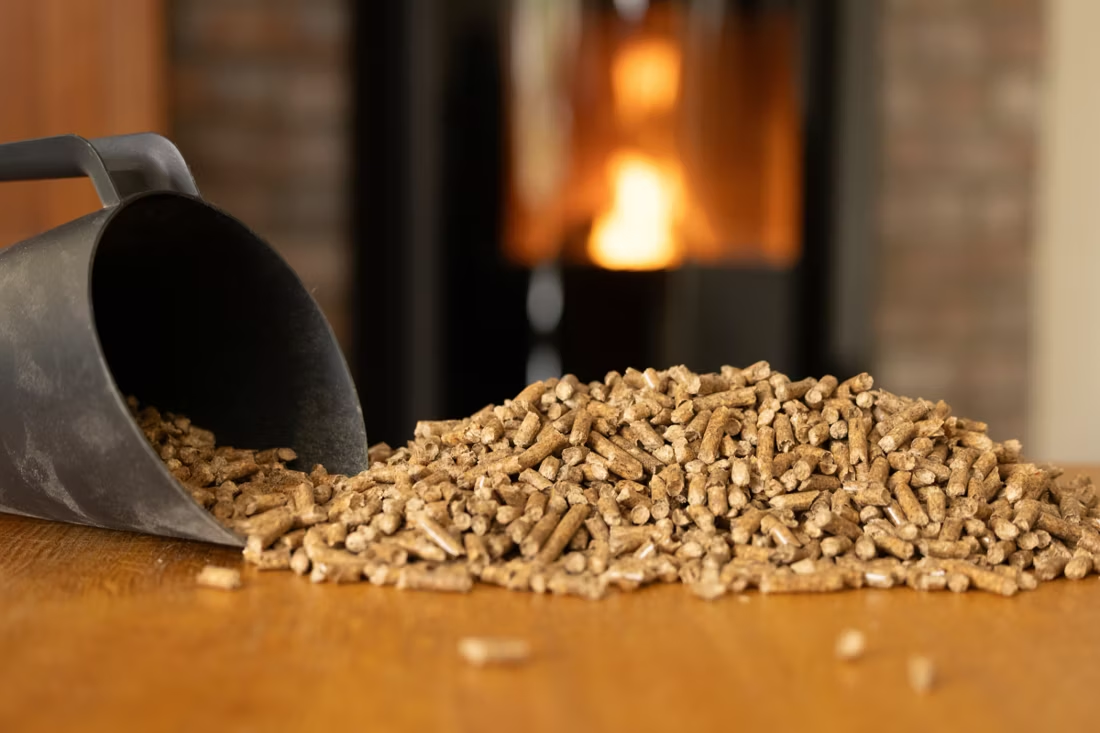
Regional brands like Bear Mountain, Lignetics, and Pacific Pellet are carried seasonally by hearth retailers and some hardware and big-box stores across the greater San Gabriel Valley and LA Basin. Because pellet heating is a small niche in a mild climate like La Puente's, stock tends to be limited and seasonal rather than a year-round shelf item—if you go this route, it's worth buying several bags or a partial ton in early fall before local retailers rotate inventory toward more in-demand products.
Pellet stove or gas fireplace—which makes more sense for a La Puente home?
For nearly all La Puente homes, gas is the more practical choice. Natural gas fireplaces and inserts are common and well-supported by local dealers, provide instant heat with no fuel storage or ash cleanup, and fit the region's occasional-use heating pattern far better than a pellet hopper system does. Pellet only makes sense if you specifically want the radiant feel of a solid-fuel fire, have a reason to match equipment with a mountain property, or want an SCAQMD-exempt alternative to an open wood fireplace. If you're simply looking for reliable supplemental warmth, start with a gas quote first.
Pellet stove vs. electric fireplace—which costs less to run in La Puente?
It depends on usage, but Southern California Edison's residential rate of roughly $0.2825/kWh makes electric resistance heat one of the pricier options per BTU in the state, while a ton of pellets (typically $300–$400 regionally for Bear Mountain, Lignetics, or Pacific Pellet) can undercut it if you're running the appliance regularly through the handful of cool weeks each winter. That said, electric fireplace installs are far cheaper up front—often under $1,000 versus $3,500+ for pellet—and require no fuel storage or auger maintenance, which is why electric remains the more common supplemental choice in most La Puente homes.
Is a pellet stove a good option for backup heat during a power outage?
Not really, and this is worth knowing before you buy. Pellet stoves rely on an electric auger and blower to feed fuel and distribute heat, so a standard unit shuts down the moment the power drops—which matters in La Puente given Southern California Edison's occasional Public Safety Power Shutoffs during Santa Ana wind events. If backup heat during outages is your priority, a battery-backed accessory kit or a gas fireplace with a standing pilot is a more reliable choice than pellet.
Why is a fireplace insert so efficient?
An insert does two things: it seals the chimney completely, so you stop losing air you already paid to heat, and it radiates warmth into the room through the firebox and glass. Most add a heat-exchange fan that pulls cool room air underneath, wraps it around the hot firebox, and pushes it back out warm. Your home is more efficient before you've even lit the first fire.
Why is my open fireplace making my house colder?
Open fireplaces suck—literally. As the fire burns, it consumes air your furnace already paid to heat and pulls it out through the chimney, so the house is actually colder after the fire goes out than before you lit it. An insert fixes this: it seals the chimney, puts fixed glass across the front, and turns that hole in your house into a real heat source.
How much should I budget for a fireplace?
For an average home—covering the fireplace, the vent pipe, and basic installation—a budget between $3,900 and $5,500 gives you a lot of options across wood, gas, and pellet. By the time you add finish work, gas line, and electrical, the average complete installation lands between $5,000 and $12,000 all-in. In a remodel or new build, a good rule is to put about 2.5% of the total project cost toward the fireplace.
What is an in-home preview and do I need one?
It's a visit where a hearth professional measures your space, confirms the model you picked actually works in your home, and walks the specs—framing, gas line, venting, finish work—before anything is ordered. Some details you just can't know until you see the house. Never make a down payment without one; it's the single most-skipped step that burns buyers.
Nearby Dealers
Hearth shops serving La Puente and the surrounding area.
All Valley Distrib. Dba Marco Distrib
The Heat Source (Burrico) - Lancaster
Tropicana Outdoor Living
Pellet Brands Stocked Around La Puente
Manufacturers will point you to the nearest stocking dealer.
Find your pellet stove option in La Puente.
Tell us about your home and how you'd use a pellet stove, and we'll connect you with a trusted local dealer plus a free Project Guide & Parts List—sized and specced for your La Puente property, no big-box guesswork involved.
Find Your Fireplace →