
The one heat source that never triggers a burn ban in Kern County.
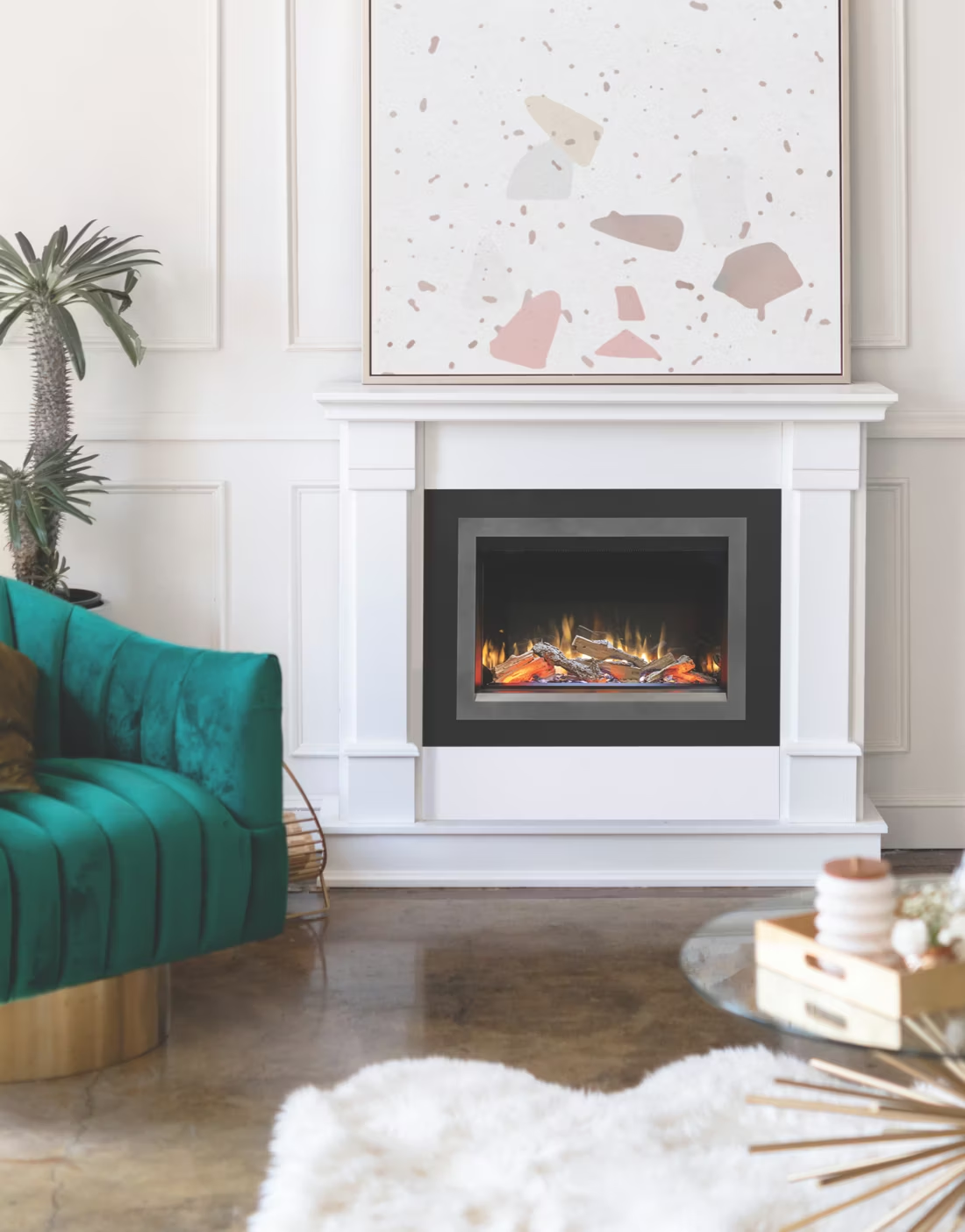
From the Bakersfield valley floor to Tehachapi and out toward Ridgecrest, Kern County winters are mild—but the San Joaquin Valley's air quality rules can shut wood fires down for days at a time. Electric fireplaces skip that problem entirely. Find the right unit and get matched with a trusted local dealer.
Every Project Starts From One of These Five Situations
Reliable warmth on days wood can't legally burn.
Kern County spans an enormous range of terrain—the flat agricultural floor of the San Joaquin Valley around Bakersfield and Delano, the oak-and-pine foothills climbing toward Tehachapi, and the high desert stretching out past California City and Ridgecrest into the Mojave. Despite that geographic sprawl, the climate is genuinely mild by national standards: Climate Zone 3B, an average winter low around 39°F, and a short, mild heating season overall. Most Kern County homes don't need a serious primary heat source for winter—they need something to take the edge off cool valley mornings and add real ambiance to a living room.
What Kern County does have is a serious, well-documented air quality problem. The San Joaquin Valley is a federal non-attainment area for particulate matter, and winter temperature inversions trap smoke low over the valley for days at a stretch—which is why the San Joaquin Valley Air Pollution Control District issues mandatory no-burn alerts on the worst days each winter. Wood stoves and even gas units in some jurisdictions can be restricted; electric fireplaces are not. There's no combustion, no smoke, and no exemption paperwork to track. That's a real advantage in a county where residents in Bakersfield, Delano, and the surrounding valley communities are used to checking air quality status before they light anything. It's also why many homeowners here pair a wood stove or gas fireplace for cooler mountain properties near Tehachapi with an electric unit for everyday valley-floor use.
Three steps. No salesperson until you're ready.
Tell us about your project
Your zip code, your situation, and the fuel you're leaning toward—or let the answers point you to one.
See what's actually available
The brands dealers within 100 miles genuinely carry—real options, never a catalog mirage.
Get your dealer & Project Guide
A trusted local dealer, plus the free Project Guide & Parts List that names every component of the job.
Frequently Asked Questions
How much does an electric fireplace installation cost in Kern County?
Plug-in electric fireplaces and freestanding stove-style units typically run $300 to $1,200 installed, since most just need a standard 120-volt outlet and no venting or chimney work at all. Built-in wall units or electric inserts that require a dedicated 120V or 240V circuit run higher, generally $1,500 to $3,500, depending on how far the unit sits from the home's electrical panel and whether an electrician needs to open drywall to run new wire. Compare that to the venting, chimney, and gas-line work that wood and gas units require in Kern County, and electric is consistently the lowest-cost option to install—one reason it's popular for secondary rooms, guest houses, and rental properties across the valley.
Do I need a permit to install an electric fireplace in Kern County?
A plug-in electric fireplace that uses an existing outlet generally doesn't require a permit—it's treated like any other appliance. If your installation calls for a new dedicated circuit, a built-in wall unit, or any modification to your home's electrical panel, you'll need an electrical permit through Kern County's building department (or the relevant city building department if you're inside Bakersfield or another incorporated city). Local electricians and hearth dealers who install built-in electric fireplaces regularly handle this permitting as part of the job, so it's rarely something homeowners have to manage themselves.
Can I run an electric fireplace during a Check Before You Burn no-burn day?
Yes. The San Joaquin Valley Air Pollution Control District's winter burn restrictions apply to wood-burning devices—and in some episodes, uncertified or older gas units—but electric fireplaces are not covered by those alerts at all. On the days when a wood stove or fireplace in Bakersfield, Delano, or Wasco has to stay cold because of a valley-wide inversion, an electric unit keeps running exactly as normal. For households that want guaranteed ambiance and heat regardless of air quality status, that's the single biggest practical advantage electric has over combustion fuels in this county.
Is an electric fireplace enough heat for a Kern County home?
For most of the county, yes—as supplemental or zone heat. With an average winter low near 39°F and a short, mild heating season overall, valley-floor homes in Bakersfield, Delano, and Shafter rarely see the kind of sustained cold that demands a high-BTU primary heat source, so a good electric insert or built-in unit can comfortably carry a living room or den on its own most nights. Higher-elevation communities near Tehachapi or in the foothills see colder, longer winters and are better served pairing electric ambiance with a home's existing central heat, or with a wood or gas unit as the primary source on the coldest nights.
Electric vs. wood—which makes more sense in Kern County?
Wood offers real fire, radiant heat, and access to Sequoia National Forest cutting permits (roughly $5 to $20 per cord, valid May through October) for oak, madrone, and Douglas fir—all locally common species. But wood burning in Kern County means watching for San Joaquin Valley Air Pollution Control District no-burn advisories during winter inversions, along with wildfire-season smoke concerns that already blanket the valley some years. Electric skips all of that: no permit season to plan around, no smoke, no ash, and no risk of a mandated burn curtailment. For a primary fire experience with real heat output, wood still wins for a lot of rural and foothill homeowners—but for guaranteed year-round use in the valley, electric is the more dependable choice.
Electric vs. gas fireplace—which is right for my home?
Gas delivers higher heat output and a closer approximation of a real flame, and works well where natural gas or propane service is already in place. Electric costs far less to install, requires no venting or gas line, and produces zero combustion byproducts—a meaningful factor in a federal non-attainment area like the San Joaquin Valley. Electric units also install in places gas can't easily reach, like an interior bedroom wall or a rental unit without gas service. For most Kern County homeowners prioritizing simplicity, low install cost, and flexibility to run on any air quality day, electric is the easier path; for those wanting maximum heat output and a more traditional flame, gas remains the stronger option.
What types of electric fireplaces are available—insert, built-in, or freestanding?
An electric insert slides into an existing masonry or gas fireplace opening, giving an old, unused hearth a second life without any chimney work. A built-in electric fireplace is designed to be framed into a wall during a remodel or new construction, similar to how a linear gas fireplace would be installed. A freestanding electric stove sits on the floor like a traditional wood stove and can be moved or relocated if needed. For Kern County homeowners converting a decorative fireplace that's currently unused due to burn restrictions, an insert is usually the simplest and most cost-effective option.
How much does it cost to run an electric fireplace in Kern County?
Running costs depend on your electric utility rate—Kern County is served by a mix of Pacific Gas & Electric (PG&E) in parts of the county and Southern California Edison (SCE) in others—and on how many hours a day the heater element runs versus just the flame effect. Most electric fireplaces draw around 1,500 watts on the heat setting, which typically costs somewhere in the range of 20 to 45 cents per hour depending on your rate plan. Many homeowners run the flame visual without heat during the day for ambiance, which draws only a few watts, and switch on the heater for an hour or two in the evening—keeping monthly operating costs modest even during peak summer or winter rate tiers.
What should I look for in an electric fireplace for a Kern County home?
Look for a unit with a realistic flame technology—brands like Dimplex, Napoleon, and Amantii are widely available through hearth dealers and offer noticeably better flame realism than budget models sold at big-box stores. If you're installing in a valley-floor home where the unit will mostly serve as ambiance rather than primary heat, prioritize flame quality and a quiet fan over raw wattage. If you're in a cooler pocket of the county—Tehachapi, the foothills, or higher-elevation ranch properties—prioritize a model with a strong, thermostatically controlled heater so it can genuinely take the chill off a room. A local dealer can walk through both considerations based on your specific home.
Can I put a TV above my fireplace?
Yes—with an asterisk. Fireplaces are hot and TVs don't like heat. Either put a mantel between them to deflect rising warmth, or choose a fireplace with heat-management technology that creates a cool zone on the wall above—the wall stays around 125 degrees, barely warm, while the room still gets full heat. If you like clean lines and don't want a mantel, heat management is the answer.
Do electric fireplaces actually produce heat?
Yes—most put out around 4,800–5,000 BTUs from a standard outlet, which comfortably warms a bedroom, office, or den as a comfort-zone heater. What they won't do is carry a whole house the way wood, gas, or pellet can. Think of electric as ambiance-first with honest supplemental heat: flames on with no heat in July, flames plus warmth in January.
Can I install a fireplace myself?
If you're putting a fire in your house on purpose, it's best to work with an expert. Unless you're genuinely experienced in framing, gas line, vent pipe, and the national code on clearances to combustibles, have a professional do it—and ideally the same company that sells you the fireplace, so warranty, service, and liability all live under one roof.
Does a fireplace add value to my home?
On average, a fireplace adds back to the home about the same amount you spent installing it. Add the monthly savings from heating the rooms you actually use instead of the whole house—often hundreds of dollars a year—and the value case is strong before you even count what a fire does for how your family uses the room.
Stove and Fireplace Dealers in Kern County
Find your electric fireplace in Kern County.
Tell us a bit about your home and we'll match you with the right electric fireplace, insert, or built-in unit—and send over a free Project Guide & Parts List with your recommended local dealer in Kern County.
Find Your Fireplace →