
Pellet stoves in Imperial County: an honest look.
With winter lows averaging 43°F and just 834 heating degree days a year, most Imperial Valley homes—from El Centro to Calexico to Brawley—never need a supplemental heat source. For the small number of households that still want one, we'll connect you with a trusted local dealer who can tell you honestly whether it fits.
Every Project Starts From One of These Five Situations
One of California's mildest winters, by design.
Imperial County sits in the Sonoran Desert along the Mexican border, with El Centro's elevation actually below sea level and summer highs that regularly clear 110°F. Winter is a different story only by degree, not kind: the average winter low across the valley is about 43°F, and the county logs roughly 834 heating degree days a year—a fraction of what a cold-climate county like Duluth, Minnesota racks up in a single month. Homes in El Centro, Calexico, Brawley, Imperial, Westmorland, and Holtville are built and equipped for cooling, not heating, and the handful of nights each winter that dip into the high 30s rarely justify a dedicated wood-pellet appliance.
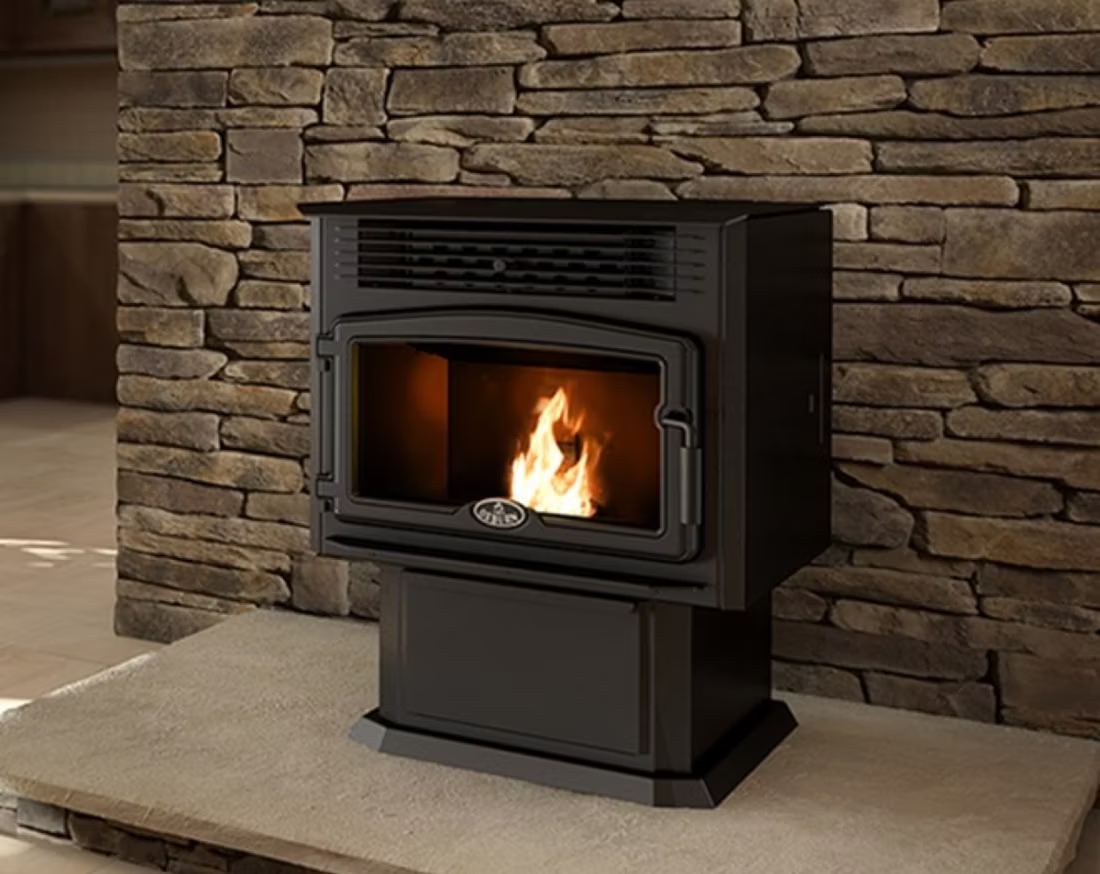
That's why pellet fuel is flagged as not-applicable for most of the county—it isn't that pellet stoves don't work here, it's that the demand simply isn't there the way it is in the Sierra foothills or the northern part of the state. A few households in the higher, cooler terrain near Ocotillo and the In-Ko-Pah Mountains, or homeowners who just like the look and convenience of a pellet insert, do install them. If that's you, a local dealer can still order pellet units and stock bags from regional suppliers like Bear Mountain, Lignetics, or Pacific Pellet—you'll just be one of relatively few customers in the Imperial Valley doing it.
Three steps. No salesperson until you're ready.
Tell us about your project
Your zip code, your situation, and the fuel you're leaning toward—or let the answers point you to one.
See what's actually available
The brands dealers within 100 miles genuinely carry—real options, never a catalog mirage.
Get your dealer & Project Guide
A trusted local dealer, plus the free Project Guide & Parts List that names every component of the job.
Frequently Asked Questions
Are pellet stoves actually used in Imperial County?
Not commonly, and it's worth saying so plainly. With winter lows averaging 43°F and only about 834 heating degree days a year, the vast majority of homes in El Centro, Calexico, Brawley, and the rest of the Imperial Valley get through winter with a T-shirt and maybe a space heater on the coldest nights. A pellet stove will work fine mechanically anywhere in the county, but the economics that make one worthwhile in a place like Bozeman, Montana—where homeowners burn through tons of pellets keeping a home warm from November to April—just don't exist here. The few pellet installations we see in Imperial County tend to be in higher, cooler pockets near Ocotillo or the In-Ko-Pah Mountains, or in homes where the owner simply wants the ambiance.
How much does a pellet stove installation cost in Imperial County?
Because pellet stoves are uncommon here, there isn't the kind of well-established local pricing you'd find in a snowier part of California. Expect a ballpark similar to the rest of the state—roughly $3,500 to $7,000 depending on the unit, venting, and whether it's a freestanding stove or an insert into an existing fireplace—but get a firm, in-home quote from a local dealer rather than relying on a published range. With so few installers doing this work regularly in the Imperial Valley, pricing can vary more than it would in a county where pellet stoves are the norm.
Why is pellet fuel marked 'not applicable' for Imperial County?
It reflects heating demand, not appliance quality. Imperial County's climate zone (2B) is one of the mildest heating climates in California—834 heating degree days is close to what some counties log by mid-December alone. A pellet stove needs regular fuel purchases and a place to store bags of pellets to make financial sense, and with only a handful of genuinely cold nights each winter across El Centro, Calexico, and Brawley, most households never reach that breakeven point. It's an honest flag, not a knock against the technology.
Where can I buy pellet fuel in Imperial County?
Local stock is thin compared to Northern California or mountain counties, since demand is low. Regional brands like Bear Mountain, Lignetics, and Pacific Pellet are the ones most likely to show up if a local hardware store or hearth dealer carries pellets at all, and a dealer who installs a stove for you can typically arrange an ongoing supply or point you to the nearest stocking retailer, which may be in a neighboring county. If you already own a pellet stove, it's worth confirming pellet availability before you rely on it as more than an occasional-use appliance.
Does a pellet stove make sense for cooler spots like Ocotillo or the In-Ko-Pah Mountains?
This is where pellet heat comes closest to making practical sense in Imperial County. Elevations near Ocotillo and the In-Ko-Pah Mountains along the western edge of the county run several thousand feet higher than the valley floor near El Centro, which sits below sea level, and nighttime temperatures there can drop noticeably lower than the valley average. Homeowners in these areas are the closest thing the county has to a genuine pellet-stove customer base, and a local dealer can help size a unit appropriately if you're in one of these cooler pockets rather than the valley floor.
Are there air quality restrictions on burning appliances in Imperial County?
Yes—Imperial County is a designated non-attainment area for particulate matter, driven largely by windblown dust off the drying Salton Sea and agricultural activity, and the region also deals with wildfire smoke drifting in from fires elsewhere in California and Arizona. The Imperial County Air Pollution Control District can issue advisory or restricted-burn days during periods of poor air quality. Pellet stoves burn more cleanly than open wood fires and most meet EPA emissions standards out of the box, which is one advantage if you do install one, but it's worth checking current air district guidance before you plan to use any solid-fuel appliance regularly.
What's the difference between a pellet stove and a wood stove, and does it matter in Imperial County?
A pellet stove burns compressed wood pellets fed automatically from a hopper, while a wood stove burns cordwood you load and tend by hand. In most of California the choice comes down to convenience versus authenticity, but in Imperial County both fuels are flagged as not-applicable for the same underlying reason: with winter lows averaging 43°F and 834 heating degree days a year, neither is a serious heating solution for most homes. There's no local firewood culture or cutting-permit tradition here the way there is in the Sierra or Cascade counties, so if you do want a solid-fuel appliance, pellet is generally the more practical of the two simply because it's easier to source consistently than seasoned cordwood in a desert county.
Can a pellet stove work as backup heat during a power outage in Imperial County?
Not without a battery backup or generator, and it's a less pressing concern here than in colder climates anyway. Pellet stoves rely on an electric auger and blower to run, so they shut down when the power does. In Imperial County, outages are more likely tied to summer heat straining the grid than to winter storms, and given the mild winter lows (averaging 43°F), losing heat during a power outage simply isn't the same emergency it is in a place like Fargo, North Dakota. If backup heat genuinely matters to you, a battery-powered inverter can keep a pellet stove's auger and blower running through a shorter outage.
Pellet, gas, or electric—what actually makes sense for an Imperial County home?
For the vast majority of homes in El Centro, Calexico, Brawley, and across the valley, gas or electric heat covers the county's minimal heating needs more efficiently than a solid-fuel appliance. Gas fireplaces (standard here, with natural gas service across much of the county) give instant, thermostat-controlled warmth for the handful of cool evenings each winter, and electric fireplaces or heat pumps handle the rest with no fuel storage or venting required. Pellet stoves remain an option mainly for households in cooler, higher-elevation pockets near Ocotillo and the In-Ko-Pah Mountains, or for homeowners who specifically want the look and feel of a real flame. A local dealer can walk through which fits your actual home and elevation rather than a one-size-fits-all recommendation.
Why is my open fireplace making my house colder?
Open fireplaces suck—literally. As the fire burns, it consumes air your furnace already paid to heat and pulls it out through the chimney, so the house is actually colder after the fire goes out than before you lit it. An insert fixes this: it seals the chimney, puts fixed glass across the front, and turns that hole in your house into a real heat source.
What's the difference between an insert and a zero-clearance fireplace?
An insert is a fireplace that slides into a pre-existing wood-burning fireplace—if you don't have one, there's nothing to insert it into. A zero-clearance fireplace is built into a framed wall, which makes it the answer for remodels and new construction. Simple test: existing masonry fireplace means insert; blank or framed wall means zero-clearance.
Does a fireplace add value to my home?
On average, a fireplace adds back to the home about the same amount you spent installing it. Add the monthly savings from heating the rooms you actually use instead of the whole house—often hundreds of dollars a year—and the value case is strong before you even count what a fire does for how your family uses the room.
How much should I budget for a fireplace?
For an average home—covering the fireplace, the vent pipe, and basic installation—a budget between $3,900 and $5,500 gives you a lot of options across wood, gas, and pellet. By the time you add finish work, gas line, and electrical, the average complete installation lands between $5,000 and $12,000 all-in. In a remodel or new build, a good rule is to put about 2.5% of the total project cost toward the fireplace.
Pellet Brands Stocked Around Imperial County
Manufacturers will point you to the nearest stocking dealer.
Find out if a pellet stove fits your Imperial County home.
Tell us about your home and where you're located in the county, and we'll match you with a trusted local dealer and a free Project Guide & Parts List—an honest plan for your pellet project, including the exact parts and vent kit, if a pellet stove genuinely makes sense for your home.
Find Your Fireplace →