
Instant heat for Highland's mild winter nights.
At the base of the San Bernardino Mountains, most Highland homes don't need a furnace substitute—they need clean, on-demand warmth for cool evenings and Santa Ana-season outages. Find the right gas fireplace and connect with a trusted local dealer.
Every Project Starts From One of These Five Situations
Ambiance and warmth, without the wood or the ash.
Highland sits at about 1,381 feet at the foot of the San Bernardino Mountains, where winter lows average a mild 41°F and the whole heating season stays light overall—a fraction of what a place like Bozeman, MT or Duluth, MN sees. Nobody here is heating a home through a hard winter. Instead, gas fireplaces in Highland tend to do double duty: real ambiance in the living room and a reliable heat source when temperatures dip during a cool front or when Santa Ana wind events knock out power.
Wood-burning and pellet appliances are uncommon installs here—Highland falls within a South Coast Air Basin non-attainment area for ozone and PM2.5, and wildfire smoke already puts a strain on local air quality during fire season, so solid-fuel appliances see little demand in new installs. Gas is the practical, clean choice for most homeowners: SoCalGas serves the bulk of the incorporated city, and a direct-vent gas fireplace or insert gives you real flame and real heat without adding smoke to an airshed that's already under pressure.
Three steps. No salesperson until you're ready.
Tell us about your project
Your zip code, your situation, and the fuel you're leaning toward—or let the answers point you to one.
See what's actually available
The brands dealers within 100 miles genuinely carry—real options, never a catalog mirage.
Get your dealer & Project Guide
A trusted local dealer, plus the free Project Guide & Parts List that names every component of the job.
Frequently Asked Questions
How much does a gas fireplace installation cost in Highland?
Most direct-vent gas fireplace or insert installations in Highland run roughly $4,000 to $9,000, depending on the unit, whether it's going into an existing masonry fireplace opening, and how much gas line work is needed. Homes already served by SoCalGas with a line nearby the hearth sit toward the lower end; installs requiring a new gas line run from the meter, or venting through a tile roof, push toward the higher end. A local retailer will give you a firm number after seeing your fireplace opening and gas service in person.
Can I convert my existing wood-burning fireplace to gas?
Yes, and it's a common project in Highland's older tract homes that were built with a traditional masonry fireplace. A gas insert or a set of vented gas logs can go into that opening, using the existing chimney as a vent path or upgrading it with a liner. Given that solid-fuel burning gets little practical use in this climate and adds to an already non-attainment air basin, converting to gas is usually the more livable long-term choice—you keep the fireplace look without the smoke, ash, or need to source firewood in a place with no real cutting culture nearby.
Do I need natural gas, or is propane an option in Highland?
Most of incorporated Highland is served by SoCalGas, so if your home already has a gas water heater, range, or furnace, adding a fireplace is usually a straightforward tie-in. In pockets of unincorporated San Bernardino County foothill area outside the SoCalGas footprint, propane tanks are the standard workaround, and most fireplace models can be configured for either fuel with the correct orifice kit. Ask your installer to confirm your parcel's gas service before you pick a unit.
Will my gas fireplace still work if the power goes out?
It depends on the ignition system, and this matters more in Highland than in most places because Southern California Edison runs Public Safety Power Shutoffs during high-wind, high-fire-risk conditions—exactly the Santa Ana weather that also drops temperatures fastest. Units with a standing pilot or IPI (intermittent pilot ignition) with battery backup will light and run without grid power. Valor fireplaces go a step further and generate their own electricity off the pilot's thermocouple, so there's no battery to remember. If PSPS events are a real concern for your address, ask your local dealer specifically about ignition type before you buy.
Gas fireplace, insert, or stove—what's the difference?
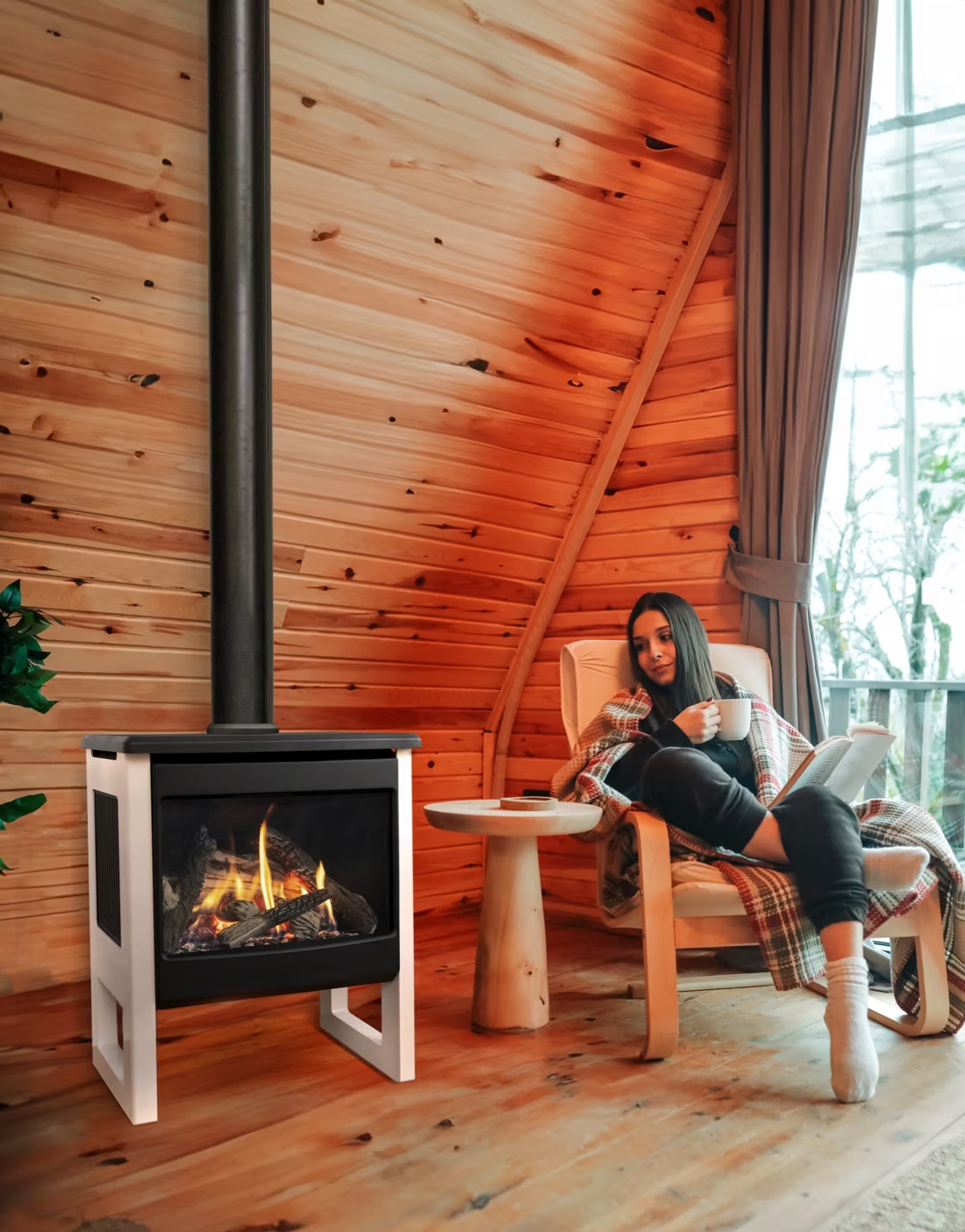
A gas fireplace is a built-in, framed unit typically used in new construction or a remodel. A gas insert slides into an existing masonry fireplace opening and uses the chimney as its vent path—the most common upgrade for Highland's older homes with an unused wood-burning fireplace. A gas stove is a freestanding cabinet unit that sits out from the wall, more common in smaller rooms or additions without an existing fireplace. For most Highland homeowners with a stucco-and-masonry fireplace already in place, an insert is the simplest and least invasive option.
Do I need a permit to install a gas fireplace in Highland?
Yes. New gas fireplace and insert installations require a building permit and gas line permit, handled through the City of Highland Building Division for addresses inside city limits, or San Bernardino County Building and Safety for unincorporated foothill parcels nearby. The gas line connection itself has to be done by a licensed contractor. Most hearth retailers coordinate the permit and the gas-fitter as part of the install price, so you're not managing separate trades yourself.
Should I get a vented or vent-free gas fireplace?
Vented (direct-vent) units draw combustion air from outside and exhaust byproducts back outside through sealed venting—they're the standard recommendation almost everywhere, including Highland. Vent-free units burn directly into the room and release some moisture and combustion byproducts indoors; California allows them under specific room-sizing and safety rules, but given that Highland already sits in a non-attainment air basin and residents already deal with periodic wildfire smoke intrusion indoors, most local installers steer homeowners toward vented units to avoid adding anything further to indoor air. It's worth asking your dealer directly if you're comparing the two.
How often does a gas fireplace need to be serviced?
Plan on an annual inspection—a technician checks the burner, pilot or IPI system, venting, and gas connections, and cleans the glass and interior. This is a quick visit compared to wood-stove chimney sweeping, but it matters just as much for safety, especially before the fireplace sees its heaviest use during the December-through-February cool stretch. Local gas appliance service providers typically charge in the $150-$250 range for a standard annual visit.
Gas vs. electric fireplace—which makes more sense in Highland?
With Highland's mild winters—41°F average lows and a fairly light overall heating season—either fuel can comfortably handle supplemental warmth; the difference comes down to operating cost and installation complexity. Southern California Edison's residential rate runs around $0.28 per kWh, which makes an electric fireplace's actual running cost higher per BTU than gas, though electric units install in an afternoon with no permit or venting at all. Gas delivers more real heat output and the look of an actual flame, at a higher upfront installation cost tied to gas line and venting work. Wood-burning options see little uptake here given the South Coast Air Basin's non-attainment status, so most Highland homeowners are really choosing between these two rather than considering wood.
Why is my open fireplace making my house colder?
Open fireplaces suck—literally. As the fire burns, it consumes air your furnace already paid to heat and pulls it out through the chimney, so the house is actually colder after the fire goes out than before you lit it. An insert fixes this: it seals the chimney, puts fixed glass across the front, and turns that hole in your house into a real heat source.
Can I put a TV above my fireplace?
Yes—with an asterisk. Fireplaces are hot and TVs don't like heat. Either put a mantel between them to deflect rising warmth, or choose a fireplace with heat-management technology that creates a cool zone on the wall above—the wall stays around 125 degrees, barely warm, while the room still gets full heat. If you like clean lines and don't want a mantel, heat management is the answer.
What is an in-home preview and do I need one?
It's a visit where a hearth professional measures your space, confirms the model you picked actually works in your home, and walks the specs—framing, gas line, venting, finish work—before anything is ordered. Some details you just can't know until you see the house. Never make a down payment without one; it's the single most-skipped step that burns buyers.
Can a fireplace actually lower my heating bill?
Yes—by creating a comfort zone. A furnace heats every square foot of the house just to warm the one room you're in; a gas fireplace on low burns roughly a sixth of the gas a typical furnace does. Set the furnace around 55–60 degrees as a baseline, then heat the rooms your family actually uses. Families who heat this way commonly save $20–$60 a month.
Nearby Dealers
Hearth shops serving Highland and the surrounding area.
Find your gas fireplace in Highland.
Tell us a bit about your home and we'll match you with a trusted local Highland-area dealer and send over a free Project Guide & Parts List—the exact parts, including the vent kit, for your gas fireplace project.
Find Your Fireplace →