
Gas Fireplace Comfort Built for Fontana's Mild Winters.
With winter lows rarely dipping much below the mid-40s, Fontana homeowners choose gas fireplaces for instant ambiance and reliable zone heat, not survival. Find the right unit and connect with a trusted local dealer.
Every Project Starts From One of These Five Situations
Where ambiance outweighs necessity in a mild climate.
Fontana sits at 1,143 feet in the San Bernardino Valley portion of the Inland Empire, where winter lows average a mild 45°F and the city logs only about 1,293 heating degree days a year—a fraction of what a place like Duluth, Minnesota logs in a single winter. That means a gas fireplace here is rarely doing the heavy lifting of keeping a house from freezing. It's doing something else: providing instant, controllable warmth for the cool, desert-influenced evenings in December and January, and giving a room the glow of real flame without the work of tending a fire.
Fontana also falls inside the South Coast Air Quality Management District's non-attainment area, and wildfire smoke is a recurring fall concern. SCAQMD Rule 445 already steers new construction and major remodels away from open wood-burning fireplaces toward natural gas, propane, or EPA-certified alternatives—which is a big part of why gas has become the default choice for real-flame heat across Fontana's newer subdivisions in the 92336 and 92337 zip codes. With Southern California Edison's residential rate sitting at roughly 28 cents per kWh, gas also tends to be the more economical way to add real flame to a room than running electric heat strips.
Three steps. No salesperson until you're ready.
Tell us about your project
Your zip code, your situation, and the fuel you're leaning toward—or let the answers point you to one.
See what's actually available
The brands dealers within 100 miles genuinely carry—real options, never a catalog mirage.
Get your dealer & Project Guide
A trusted local dealer, plus the free Project Guide & Parts List that names every component of the job.
Frequently Asked Questions
How much does a gas fireplace installation cost in Fontana?
Most gas fireplace and insert installations in Fontana run $3,500 to $9,000, with the spread driven mostly by venting complexity and whether a new gas line needs to be run. A direct-vent insert dropped into an existing masonry fireplace with a nearby gas line sits toward the low end. A new built-in unit for a remodel or addition—with framing, venting through an exterior wall, and a fresh gas line—lands in the middle to upper end. Homes near the San Bernardino National Forest foothills that rely on propane rather than piped gas can run higher once a tank and regulator are factored in.
Can I convert my existing wood-burning fireplace to gas?
Yes, and it's a common project in Fontana's older neighborhoods near downtown, where many homes still have open masonry fireplaces built before gas conversions became standard. A gas insert or log set typically installs into the existing firebox using the existing chimney as the vent path, and the job usually runs $3,500 to $7,500 depending on whether you go with a vented log set or a sealed direct-vent insert. Converting also sidesteps SCAQMD's wood-smoke concerns entirely, since gas units aren't subject to the non-attainment area burn restrictions that apply to open wood fires.
Do I need natural gas service, or can I use propane?
Most of Fontana's urbanized zip codes—92335, 92336, 92337, and 92334—sit on the piped natural gas grid, so a straightforward hookup is usually available. Propane is more common for the handful of rural parcels near the San Bernardino National Forest boundary or older county pockets that were never connected to gas mains. Nearly every gas fireplace, insert, or log set on the market can be configured for either fuel; your installer sets the correct orifice and regulator for whichever you have.
Will my gas fireplace work if the power goes out?
Most will, with the right ignition system. Units with IPI (intermittent pilot ignition) run on AA batteries that automatically take over when SCE power drops—which matters during the Santa Ana wind events that occasionally knock out power across the Inland Empire in fall and winter. Valor's gas fireplaces go a step further: they generate their own electricity from the pilot's thermocouple, so there's no battery to remember or replace. Ask your local dealer which ignition system is on any unit you're considering.
What's the difference between a gas fireplace, insert, and stove?
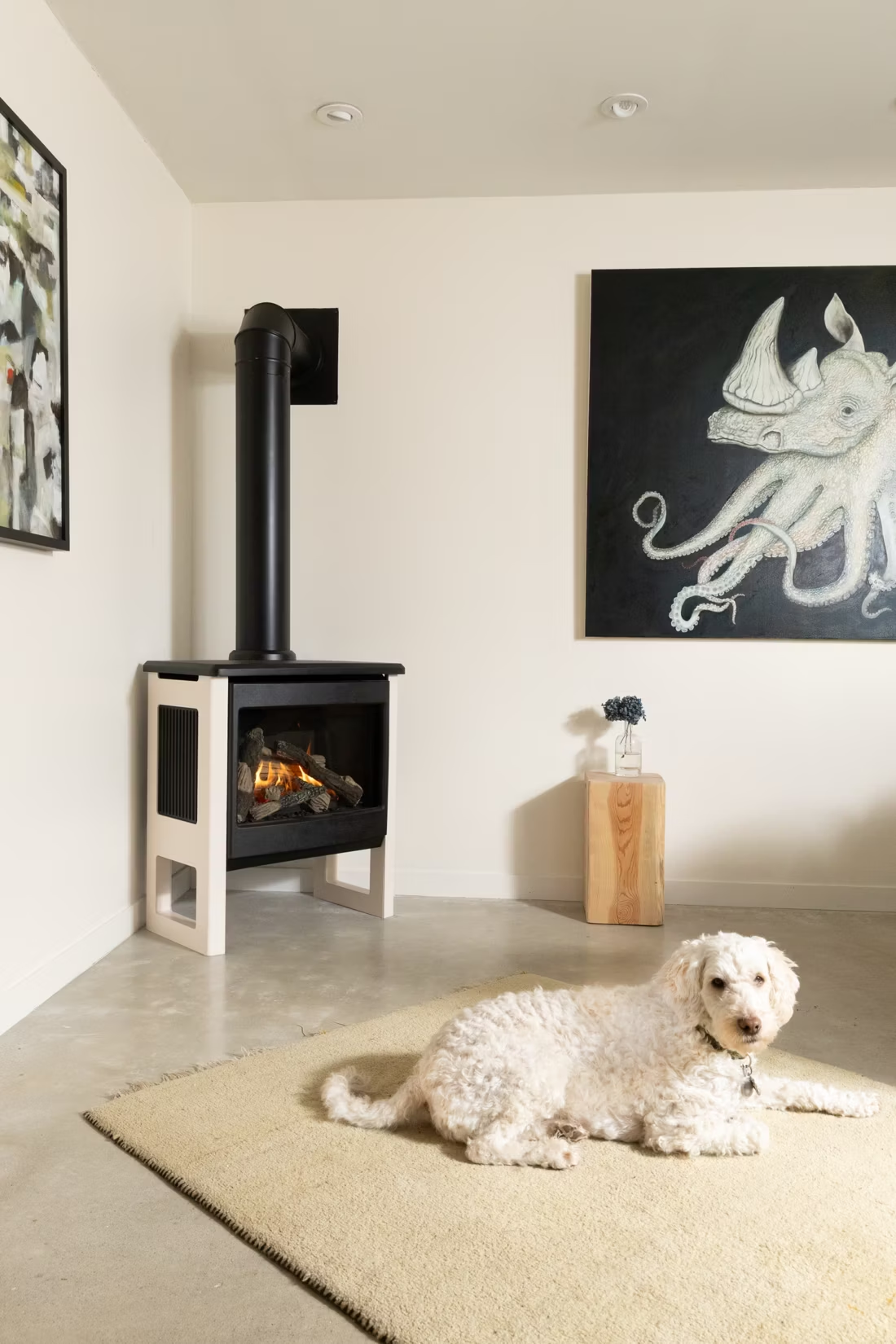
A gas fireplace is a fully built-in unit framed into a wall—the standard choice for new construction or a remodel in Fontana's newer developments north of the 210. A gas insert drops into an existing masonry firebox and uses the existing chimney, which is the common route for older homes near Fontana's historic core. A gas stove is a freestanding unit on its own hearth pad, useful in a den or bonus room that doesn't have an existing fireplace opening at all.
Do I need a permit to install a gas fireplace in Fontana?
Yes. New gas fireplace installations require a building permit and a gas line permit through the City of Fontana Building and Safety Division, or San Bernardino County if you're in an unincorporated pocket. Most hearth dealers pull these permits as part of the installation and coordinate the licensed gas-fitter work, so you're not left managing separate trades and inspections yourself.
Should I get a vented or vent-free gas fireplace?
Vented (direct-vent) gas fireplaces draw combustion air from outside and exhaust it back outside through sealed venting—they're the standard, code-friendly choice everywhere in Fontana. Vent-free units burn fuel directly into the room air, and California restricts their use more heavily than many states, so most local building departments and dealers steer homeowners toward direct-vent models anyway. For Fontana homes, a direct-vent gas fireplace or insert is almost always the recommendation—full heat output, no compromises on indoor air quality, and no jurisdiction headaches at resale.
How often should a gas fireplace be serviced?
Plan on an annual inspection, ideally before the cooler months hit in November. A technician checks the burner, pilot assembly, venting, and gas connections, and cleans the glass and interior. It's a lighter lift than wood-stove chimney sweeping—usually $150 to $250—but skipping it is how you end up with a sooted-up glass panel or, worse, a venting issue that goes unnoticed.
Gas vs. wood vs. electric—what actually makes sense in Fontana?
Wood-burning fireplaces are a tough sell here: Fontana sits inside the South Coast AQMD's non-attainment area, wildfire smoke is already a fall concern most years, and with only about 1,293 heating degree days annually there's little practical need for a wood-heat backup the way there is in a place like Bozeman, Montana. Electric fireplaces install cheaply and add ambiance with zero venting, but with SCE's residential rate around 28 cents per kWh, running one for real heat gets expensive fast. Gas splits the difference—real flame, instant on-off control, and a fuel cost that's typically lower than electric resistance heat for the same BTU output. For most Fontana homes, gas is the practical answer; electric works well as a secondary, no-venting option in a bedroom or den.
Why is a fireplace insert so efficient?
An insert does two things: it seals the chimney completely, so you stop losing air you already paid to heat, and it radiates warmth into the room through the firebox and glass. Most add a heat-exchange fan that pulls cool room air underneath, wraps it around the hot firebox, and pushes it back out warm. Your home is more efficient before you've even lit the first fire.
What's the difference between an insert and a zero-clearance fireplace?
An insert is a fireplace that slides into a pre-existing wood-burning fireplace—if you don't have one, there's nothing to insert it into. A zero-clearance fireplace is built into a framed wall, which makes it the answer for remodels and new construction. Simple test: existing masonry fireplace means insert; blank or framed wall means zero-clearance.
Can a fireplace actually lower my heating bill?
Yes—by creating a comfort zone. A furnace heats every square foot of the house just to warm the one room you're in; a gas fireplace on low burns roughly a sixth of the gas a typical furnace does. Set the furnace around 55–60 degrees as a baseline, then heat the rooms your family actually uses. Families who heat this way commonly save $20–$60 a month.
Does a fireplace add value to my home?
On average, a fireplace adds back to the home about the same amount you spent installing it. Add the monthly savings from heating the rooms you actually use instead of the whole house—often hundreds of dollars a year—and the value case is strong before you even count what a fire does for how your family uses the room.
Nearby Dealers
Hearth shops serving Fontana and the surrounding area.
Find your gas fireplace in Fontana.
Tell us about your home and we'll match you with a trusted local Fontana dealer and send over a free Project Guide & Parts List—the exact parts, vent kit, and install plan for your gas fireplace project.
Find Your Fireplace →