
Keep Your Family Warm and Safe—No Matter What
With winter lows averaging 45°F and just a very short, mild heating season each year, most Escondido homes never need a primary wood heat source. A small number of homeowners still choose a wood stove or insert—for ambiance, for backup heat during SDG&E power shutoffs, or to bring an old masonry fireplace back to life. If that's you, we'll connect you with a vetted local dealer who can tell you honestly whether it's the right call.
Every Project Starts From One of These Five Situations
Mild winters and San Diego's air quality rules limit wood's role here.
Escondido sits in an inland San Diego County valley at 673 feet, with a Mediterranean climate that keeps winter lows around 45°F and a very short, mild heating season overall. Compare that to Duluth, MN, where winters run long and brutal and wood heat is a genuine survival tool for months at a time—in Escondido, most houses across the 92025–92030, 92033, and 92046 zip codes get by on a gas furnace or electric heat pump running only a handful of nights each winter. That's the core reason wood isn't a standard recommendation here: there's rarely enough sustained cold to justify a dedicated wood-burning heat source.
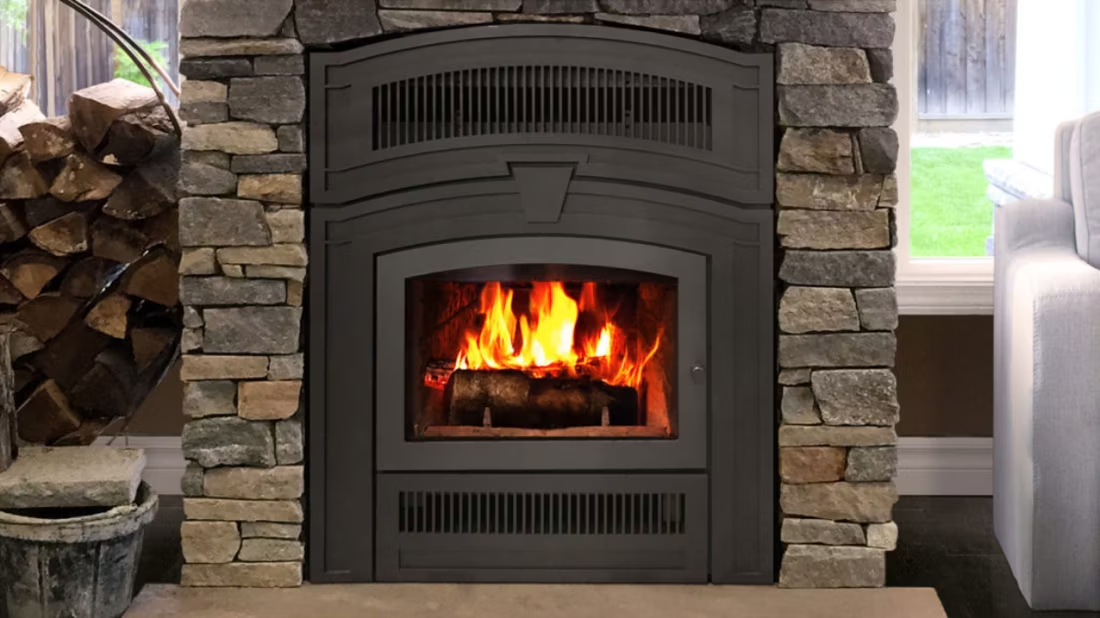
The other factor is air quality. San Diego County's Air Pollution Control District runs a 'Check Before You Burn' program that restricts residential wood burning on declared No-Burn days, particularly during winter inversion conditions in the urbanized valleys where Escondido sits. Add in the region's wildfire smoke exposure during Santa Ana wind season, and wood smoke is something local air regulators actively discourage rather than a fuel source they promote. Even so, a small number of Escondido homeowners—often in older homes near Old Escondido and Grape Day Park with existing masonry fireplaces, or in outlying areas toward Valley Center and the Rincon foothills—install a wood stove insert for ambiance or as backup heat during SDG&E public safety power shutoffs, when gas igniters and electric heat pumps go dark along with everything else.
Firewood Cutting Permits Near Escondido
Three steps. No salesperson until you're ready.
Tell us about your project
Your zip code, your situation, and the fuel you're leaning toward—or let the answers point you to one.
See what's actually available
The brands dealers within 100 miles genuinely carry—real options, never a catalog mirage.
Get your dealer & Project Guide
A trusted local dealer, plus the free Project Guide & Parts List that names every component of the job.
Frequently Asked Questions
Does a wood stove make sense in Escondido at all?
For most homes, no—not as a primary heat source. With winter lows around 45°F and only a very short, mild heating season each year, Escondido doesn't get the sustained cold that makes wood heat worth the chimney, clearances, and annual sweep. Where it does make sense: homes that lose power regularly during SDG&E's public safety power shutoffs and want a heat source that doesn't depend on the grid, or owners of older homes with an existing masonry fireplace who want to convert it to a working insert rather than let it sit unused. If either applies to you, a local dealer can walk you through whether it's worth it for your specific house.
Are there restrictions on burning wood in Escondido?
Yes. The San Diego County Air Pollution Control District runs a Check Before You Burn program that calls No-Burn days during the winter months when conditions trap smoke in the valley—Escondido, sitting inland and lower than the coastal breeze line, is exactly the kind of location where those advisories apply. On a declared No-Burn day, burning any solid fuel—including in an EPA-certified stove, unless it's your sole source of heat—isn't allowed. Add regional wildfire smoke concerns during Santa Ana wind events, and it's worth checking the daily air quality forecast before lighting a fire, not just assuming it's fine because it's cold enough that night.
What does it cost to install a wood stove in Escondido?
Because wood stove installs are uncommon here, there isn't a well-established local price pattern the way there is for gas fireplace conversions. Costs depend heavily on whether you're fitting an insert into an existing masonry fireplace (cheaper, since the chimney already exists) or building a full chimney system from scratch (considerably more, once Class A pipe and roof penetration are factored in). Given how few installers in Escondido specialize in wood-burning work versus gas, get a firsthand quote from a dealer who also handles gas and electric—they can tell you honestly whether wood is the most cost-effective route for your situation, since it's rarely the default recommendation here.
What wood species are available locally if I do want to burn wood?
Oak, madrone, and Douglas fir are the common species around inland San Diego County, including the areas that back up to Cleveland National Forest east of Escondido. If you want to cut your own, the Forest Service issues personal-use cutting permits for $5 to $20 per cord during the May-through-October season. That said, most Escondido households burning wood at all buy seasoned oak from a local supplier rather than cut their own, since the permit areas are a drive up into the Palomar/Julian corridor.
Do I need a permit to install a wood stove in Escondido?
Yes—any new wood-burning appliance install requires a building permit through the City of Escondido, and the stove itself needs to meet current EPA emissions standards. Because wood installs are infrequent here, not every general contractor is current on the code details, so it's worth confirming your installer pulls the permit and knows the clearance and hearth-pad requirements specific to wood units—they differ from the gas insert permits most local crews handle day to day.
Wood vs. gas vs. electric—what actually makes sense for heating in Escondido?
For most Escondido homes, gas or electric wins by a wide margin, and not just because of the climate. SDG&E's residential electricity rate runs around 32 cents per kWh—among the highest in the country—which makes electric resistance heat expensive to run, but the mild climate means you're rarely running it hard. Gas fireplaces and furnaces are the more common choice for supplemental warmth on the occasional cold night. Wood stoves make sense mainly as a hedge against power outages, since they're the one heat source that works with no electricity and no gas line at all—everything else here needs one or the other to ignite or blow air.
What about wildfire smoke and defensible space if I install a wood stove?
Escondido backs up to chaparral terrain around Daley Ranch and the San Pasqual Valley, and wildfire smoke is already a recognized regional air quality concern independent of any wood stove you install. If your property sits near the wildland-urban interface, make sure your installer fits a spark arrestor on the chimney cap and that any outdoor wood storage meets defensible-space clearance from structures—the same clearance rules that apply to brush and fencing in high fire-risk zones typically extend to stacked firewood as well.
Can I convert an old fireplace in my Escondido home into a working wood insert?
Yes, and it's the most common wood-related project here. Older homes in neighborhoods like Old Escondido or near Grape Day Park often have a masonry fireplace that's decorative more than functional—drafty, inefficient, and rarely used. A wood insert fits into that existing firebox and chimney, dramatically improving heat output if you ever want to use it. Given how mild the climate is, most owners doing this are after ambiance or emergency backup rather than daily heat, which is worth telling your dealer upfront since it changes the sizing recommendation.
Is a pellet stove a better fit than wood in Escondido?
Neither is a strong fit for this climate, honestly—with only a very short, mild heating season each year, most homes don't need a dedicated solid-fuel heat source at all. If you're set on one, pellet stoves burn cleaner and are sometimes treated more leniently during regional No-Burn day restrictions than cordwood units, though you'd want to confirm current rules with the County Air Pollution Control District rather than assume. Regional pellet brands like Bear Mountain and Lignetics are available through Southern California retailers, but demand is low enough locally that most dealers stock gas and electric units far more heavily than either wood or pellet.
What's the difference between an insert and a zero-clearance fireplace?
An insert is a fireplace that slides into a pre-existing wood-burning fireplace—if you don't have one, there's nothing to insert it into. A zero-clearance fireplace is built into a framed wall, which makes it the answer for remodels and new construction. Simple test: existing masonry fireplace means insert; blank or framed wall means zero-clearance.
Why is a fireplace insert so efficient?
An insert does two things: it seals the chimney completely, so you stop losing air you already paid to heat, and it radiates warmth into the room through the firebox and glass. Most add a heat-exchange fan that pulls cool room air underneath, wraps it around the hot firebox, and pushes it back out warm. Your home is more efficient before you've even lit the first fire.
Does a fireplace add value to my home?
On average, a fireplace adds back to the home about the same amount you spent installing it. Add the monthly savings from heating the rooms you actually use instead of the whole house—often hundreds of dollars a year—and the value case is strong before you even count what a fire does for how your family uses the room.
How much should I budget for a fireplace?
For an average home—covering the fireplace, the vent pipe, and basic installation—a budget between $3,900 and $5,500 gives you a lot of options across wood, gas, and pellet. By the time you add finish work, gas line, and electrical, the average complete installation lands between $5,000 and $12,000 all-in. In a remodel or new build, a good rule is to put about 2.5% of the total project cost toward the fireplace.
Nearby Dealers
Hearth shops serving Escondido and the surrounding area.
Fan Diego Ceiling Fans & Lighting Showroom
Find your wood fireplace option in Escondido.
Wood isn't the default recommendation for most Escondido homes, but if you've got an old fireplace to revive or want backup heat for the next power shutoff, tell us about your home and we'll match you with a trusted local dealer and a free Project Guide & Parts List—an honest plan, including the exact parts and vent kit, for your specific situation.
Find Your Fireplace →