
Pellet Stoves in Eastvale: An Uncommon Choice for a Mild Climate.
With only a mild, short winter heating season overall and winter lows that rarely dip below 40°F, most Eastvale homes never need a solid-fuel heater. If you still want one, we'll connect you with a local dealer who actually stocks pellet units.
Every Project Starts From One of These Five Situations
Eastvale's winters rarely call for it.
Eastvale sits at 618 feet in the Inland Empire, in climate zone 3B, where the average winter low hovers around 42°F and the city has a mild, short winter heating season overall. Compare that to Bozeman, Montana, which has a winter heating season roughly five times as long—and it's easy to see why pellet stoves never became part of the local building culture here. Most Eastvale homes get through winter with central gas or electric HVAC and never install a dedicated heating appliance at all.
There's also the air quality picture: Eastvale falls inside a South Coast AQMD non-attainment area, and wildfire smoke is already a seasonal concern for the Inland Empire. That doesn't ban pellet appliances, but it does mean any solid-fuel device gets more registration and emissions scrutiny than a comparable gas or electric option. Regional pellet brands like Bear Mountain, Lignetics, and Pacific Pellet still move product through Southern California retailers—mostly for buyers with a mountain cabin near the San Bernardino or Angeles National Forest, a detached shop, or simply a preference for a real flame in the family room. If that's you, we can still find you a dealer who carries it.
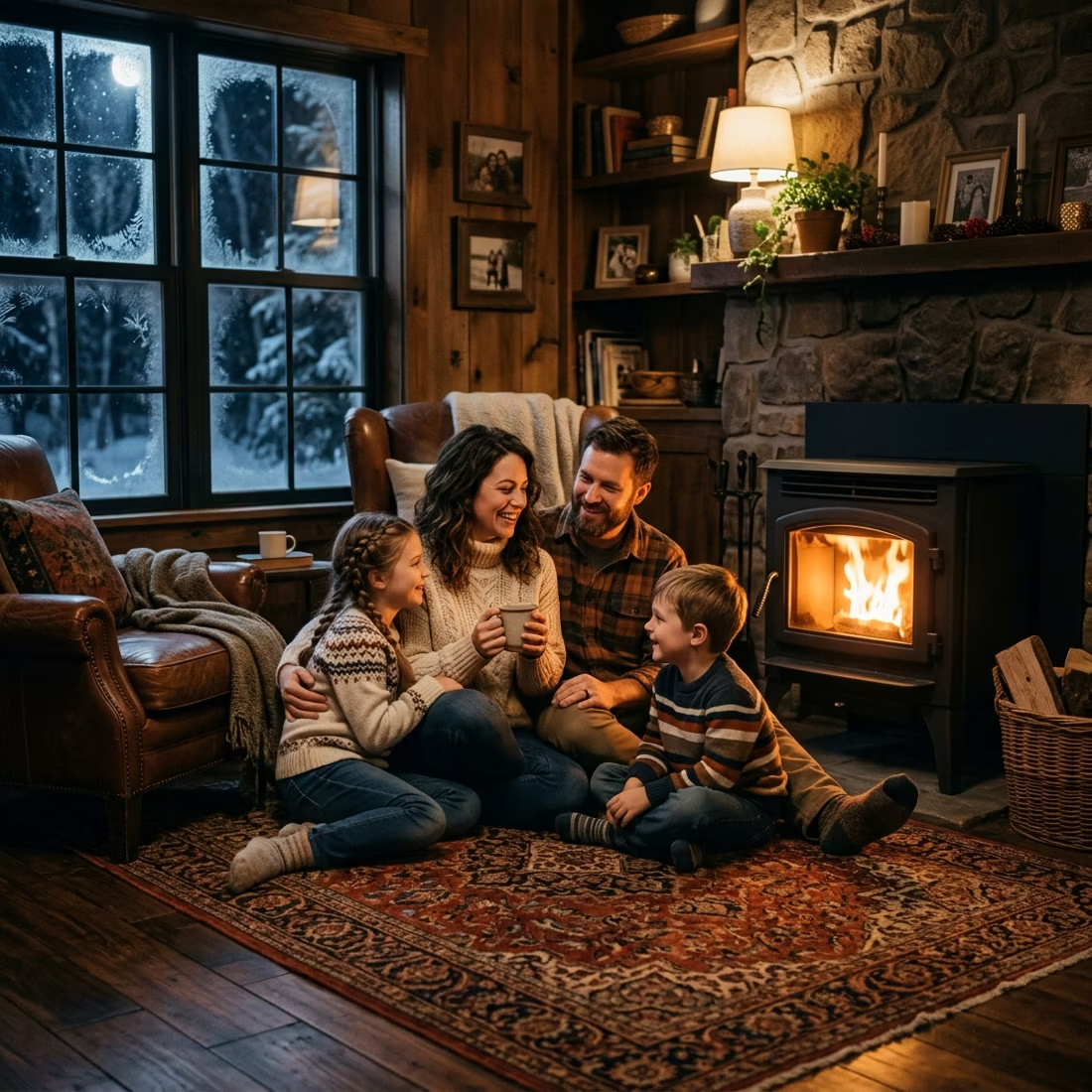
Three steps. No salesperson until you're ready.
Tell us about your project
Your zip code, your situation, and the fuel you're leaning toward—or let the answers point you to one.
See what's actually available
The brands dealers within 100 miles genuinely carry—real options, never a catalog mirage.
Get your dealer & Project Guide
A trusted local dealer, plus the free Project Guide & Parts List that names every component of the job.
Frequently Asked Questions
Are pellet stoves actually practical for a home in Eastvale?
For most Eastvale homes, no—not as a primary or even meaningful supplemental heat source. With average winter lows around 42°F and only a mild, short winter heating season overall, the heating load simply isn't there. A handful of homeowners still install pellet stoves for ambiance, for a converted garage or bonus room that central HVAC doesn't reach well, or because they split time between Eastvale and a colder second home. If that describes you, a local dealer can still help—but go in knowing you're outside the typical use case for this appliance.
Why don't more Eastvale homes have pellet stoves?
Two things work against it. First, the climate: Eastvale's mild Inland Empire winters mean central gas or electric systems handle the job fine, so there's little demand for a dedicated wood-pellet heater the way there is in places like Bozeman, Montana or Duluth, Minnesota. Second, Eastvale sits in a South Coast AQMD non-attainment area, which means any solid-fuel burning appliance—pellet included—faces more registration and emissions oversight than a gas or electric unit. The combination has kept pellet stoves a niche product locally rather than a mainstream one.
What does a pellet stove installation cost if I still want one in Eastvale?
Nationally, a pellet stove install with proper venting typically runs $3,500 to $6,500 depending on the unit and whether you're venting through an existing chimney or a fresh wall penetration. In Eastvale specifically, expect quotes toward the higher end of that range, since fewer local installers stock and service pellet appliances than in wood-heating regions of Northern California—some of the cost reflects sourcing the unit and hauling in fuel through less-established delivery routes into the Inland Empire.
Do I need a permit to install a pellet stove in Eastvale?
Yes—a building permit through the City of Eastvale Building & Safety Division is required for any new solid-fuel appliance, and South Coast AQMD Rule 445 governs registration of wood and pellet-burning devices in the region. The good news for pellet owners: pellet stoves burn cleaner than cordwood units and are typically exempt from the wood-burning curtailment restrictions issued on bad air days, so you can generally still run one during a Check Before You Burn advisory when a wood stove owner next door can't.
Where would I actually buy pellets in Eastvale?
You won't find much pellet fuel stocked on Eastvale shelves specifically, but regional brands like Bear Mountain, Lignetics, and Pacific Pellet are widely distributed through big-box retailers and hearth specialty stores across the greater Inland Empire and Los Angeles basin. Expect to pay somewhere in the $300 to $400 per ton range, consistent with the rest of Southern California, and plan to buy a season's supply at once since dedicated pellet retailers near Eastvale are limited.
Would a pellet stove keep my house warm during a Southern California Edison power shutoff?
No, and this is worth understanding before you buy. Pellet stoves rely on an electric auger to feed fuel and a blower to circulate heat, so they shut down in a power outage unless you add a battery backup or generator. If your main concern is heat security during an SCE Public Safety Power Shutoff, a wood-burning appliance handles that job without any electrical dependency—though as covered above, wood isn't common in Eastvale either. Many homeowners here solve the outage-heat question with a battery-backed gas insert instead.
If pellet doesn't make sense for my home, what does?
For most Eastvale properties, gas and electric fireplaces are the practical choices, and both are common locally. A direct-vent gas fireplace or insert delivers real supplemental heat on the rare cold snap and works during a power outage with battery-backup ignition. An electric fireplace is the simpler, lower-cost option if you mainly want the look of a flame rather than meaningful heat output—worth noting given Southern California Edison's residential rate runs about 28 cents per kWh, which makes electric resistance heat expensive to run for anything beyond occasional ambiance.
Is there any scenario where a pellet stove genuinely makes sense for an Eastvale resident?
The clearest case is a second property at elevation—a cabin near the San Bernardino National Forest or Angeles National Forest, where winter nights are considerably colder than in Eastvale itself. Pellet bags are easier to store and handle than cordwood for an occasionally-used cabin, and dealers serving those mountain communities carry the units routinely. For your primary Eastvale home, though, a pellet stove is more of a hobbyist or ambiance purchase than a heating necessity.
Wood vs. pellet vs. gas—what's actually right for an Eastvale home?
In most other California heating markets this is a real toss-up; in Eastvale it mostly isn't. Wood-burning appliances face the same South Coast AQMD non-attainment scrutiny as pellet units, plus the added hassle of cordwood storage and curtailment-day burn bans, and neither delivers heat the mild Inland Empire climate actually needs. Gas fireplaces and inserts are the standard, widely-installed option here—quick to light, code-friendly, and useful on the handful of genuinely cold nights each winter. Electric fireplaces cover pure ambiance at low install cost. Pellet only earns its place if you specifically want the look and feel of a solid-fuel appliance and are willing to source fuel and service from a wider regional dealer network.
Why is my open fireplace making my house colder?
Open fireplaces suck—literally. As the fire burns, it consumes air your furnace already paid to heat and pulls it out through the chimney, so the house is actually colder after the fire goes out than before you lit it. An insert fixes this: it seals the chimney, puts fixed glass across the front, and turns that hole in your house into a real heat source.
What do I measure to size a fireplace insert?
Four numbers tell you what fits: the front width, the front height, the back width, and the overall depth of your existing fireplace opening. Grab a tape measure, jot those down, and snap a photo of the wall—those two things do more to move your project forward than anything else you can do today.
Can a fireplace actually lower my heating bill?
Yes—by creating a comfort zone. A furnace heats every square foot of the house just to warm the one room you're in; a gas fireplace on low burns roughly a sixth of the gas a typical furnace does. Set the furnace around 55–60 degrees as a baseline, then heat the rooms your family actually uses. Families who heat this way commonly save $20–$60 a month.
Does a fireplace add value to my home?
On average, a fireplace adds back to the home about the same amount you spent installing it. Add the monthly savings from heating the rooms you actually use instead of the whole house—often hundreds of dollars a year—and the value case is strong before you even count what a fire does for how your family uses the room.
Nearby Dealers
Hearth shops serving Eastvale and the surrounding area.
Palm Springs True Value Hardware & Patio
Pellet Brands Stocked Around Eastvale
Manufacturers will point you to the nearest stocking dealer.
Find your pellet stove option in Eastvale.
Tell us about your home, your cabin, or your project, and we'll connect you with a regional dealer who actually stocks pellet appliances—plus a free Project Guide & Parts List with the exact parts, including the vent kit, for your Eastvale installation.
Find Your Fireplace →