
Pellet heat is rare in Eastern Goleta Valley—but not unheard of.
With winter lows averaging 41°F and a winter heating load of just over 2,200 on the standard scale used to compare climates, most homes here don't need a dedicated solid-fuel heater. A few still want one—for backup, ambiance, or a second home in the mountains.
Every Project Starts From One of These Five Situations
A mild coast that rarely needs it.
Eastern Goleta Valley sits at just 118 feet on the Santa Barbara coastal shelf, inside climate zone 3C—one of the mildest heating climates in the continental United States. With a winter heating load of roughly 2,292 on the standard scale used to compare climates, the area logs a fraction of the heating load you'd see in a place like Bozeman, Montana, where that same measure often tops 7,000. Most homes here rely on a heat pump, central gas furnace, or an occasional gas fireplace to take the edge off a cool evening, and that's usually all a home needs.
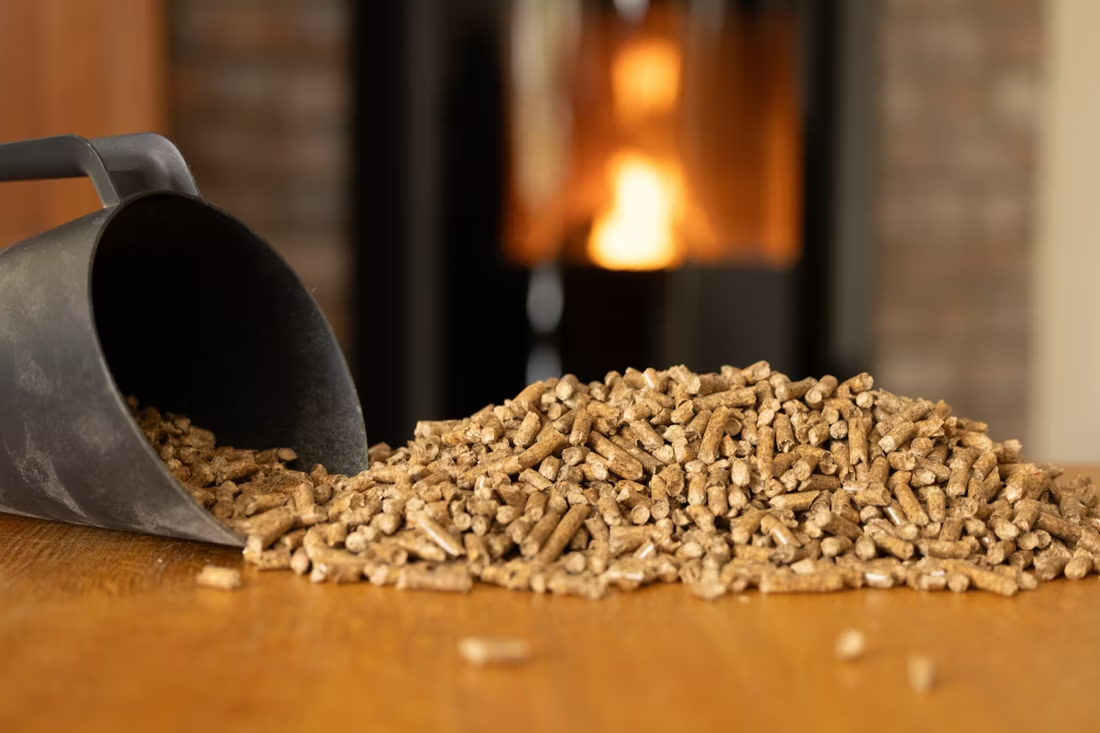
That's why pellet stoves are flagged as not applicable for this area—the daily heating math just doesn't call for one. Where we do see them, it's almost always a specific reason: a homeowner wants ambiance in a family room, a hedge against the Public Safety Power Shutoffs that Southern California Edison uses during high fire-risk conditions, or a second unit destined for a mountain cabin outside the valley. If that's you, regional brands like Bear Mountain, Lignetics, and Pacific Pellet are sold through hearth dealers around Santa Barbara and Goleta, and a trusted local installer can tell you honestly whether it's worth it for your specific home.
Three steps. No salesperson until you're ready.
Tell us about your project
Your zip code, your situation, and the fuel you're leaning toward—or let the answers point you to one.
See what's actually available
The brands dealers within 100 miles genuinely carry—real options, never a catalog mirage.
Get your dealer & Project Guide
A trusted local dealer, plus the free Project Guide & Parts List that names every component of the job.
Frequently Asked Questions
Is a pellet stove a good fit for a home in Eastern Goleta Valley?
For most homes here, not really—and we'll say that plainly. With winter lows averaging 41°F and a winter heating load of only about 2,292 on the standard scale used to compare climates, the actual heating load is light. Gas fireplaces and electric heat, both rated standard for this area, cover the occasional cool night without the venting, fuel storage, and hopper maintenance a pellet stove requires. Pellet stoves earn their keep in places with long, cold winters—Eastern Goleta Valley isn't one of them.
So why would anyone install one here anyway?
The homeowners we see going this route usually have one of three reasons: they want the visual warmth of a real flame in a family room regardless of actual heating need, they're trying to hedge against wildfire-season power shutoffs from Southern California Edison, or they're outfitting a second property in a colder inland or mountain location and want the same setup at home. It's a legitimate choice for the right household—just not a default one in this climate.
Will a pellet stove keep my house warm during a PSPS power outage?
Not automatically. Pellet stoves rely on an electric auger to feed fuel and a blower to push heat into the room, so a standard unit goes dark the moment SCE cuts power during a Public Safety Power Shutoff. If backup heat during a wildfire-season outage is your actual goal, ask a local dealer about models compatible with a small battery backup or generator, or consider whether a vent-free gas option makes more sense given how common PSPS events have become along the South Coast.
What does a pellet stove installation cost in Eastern Goleta Valley?
Expect a similar range to what you'd see anywhere in coastal California—roughly $3,500 to $7,000 installed, depending on the unit, whether it vents through an existing chimney chase or needs new through-wall venting, and hearth pad work. Because pellet stoves are uncommon locally, there are fewer dealers stocking them in Goleta and Santa Barbara compared to gas fireplace retailers, so it's worth confirming a dealer actually carries and services pellet units before you commit.
Do I need a permit to install a pellet stove here?
Yes. Installations fall under the Santa Barbara County Building & Safety Division (or the relevant city building department if you're inside Goleta city limits), and the unit needs to be EPA-certified. On the air quality side, Santa Barbara County's concerns center on wildfire smoke rather than winter wood-burning inversions, so pellet stoves—which burn cleaner than cordwood and are typically exempt from any burn-curtailment rules that do apply—tend to have an easier path than a wood stove would in this jurisdiction.
Pellet stove vs. gas fireplace—which makes more sense in this climate?
For Eastern Goleta Valley, gas usually wins. Gas fireplaces are rated standard for this area, install with a simple direct-vent run, ignite instantly, and don't require you to store bags of pellets or clean an ash pan. A pellet stove burns cleaner than cordwood and gives you that real-flame look, but given how few days a year this area actually needs supplemental heat, most homeowners find the lower-maintenance gas option a better match for occasional use.
Pellet stove vs. electric heat—which costs less to run here?
Southern California Edison's residential rate runs around $0.2825 per kWh, which is high compared to the national average, so electric resistance heat can get expensive to run continuously. A pellet stove's fuel cost per BTU is usually lower even after accounting for pellet bag prices. But given that this area only needs supplemental heat a handful of nights a year, the total dollars at stake are small either way—the bigger factor is usually which appliance you'll actually enjoy using, not the marginal fuel cost.
Where can I buy pellets in or near Eastern Goleta Valley?
Regional brands like Bear Mountain, Lignetics, and Pacific Pellet are the ones most commonly stocked at hearth and hardware retailers around Santa Barbara and Goleta, though selection is thinner here than in inland or mountain communities where pellet stoves are the norm. If you do install one, it's worth asking your dealer about seasonal availability, since demand—and therefore local stock—stays low in a market this mild.
Where can I find a dealer who actually installs pellet stoves near me?
Because pellet heat is a niche request in this climate, not every hearth shop in the Santa Barbara area carries or services them—many focus their inventory on gas fireplaces and electric units, which move far more volume locally. That's really the value of going through a matching service like ours: we know which trusted dealers near Eastern Goleta Valley actually stock, install, and service pellet appliances, rather than sending you to a showroom that will try to upsell you into something else entirely.
Why is my open fireplace making my house colder?
Open fireplaces suck—literally. As the fire burns, it consumes air your furnace already paid to heat and pulls it out through the chimney, so the house is actually colder after the fire goes out than before you lit it. An insert fixes this: it seals the chimney, puts fixed glass across the front, and turns that hole in your house into a real heat source.
What's the difference between an insert and a zero-clearance fireplace?
An insert is a fireplace that slides into a pre-existing wood-burning fireplace—if you don't have one, there's nothing to insert it into. A zero-clearance fireplace is built into a framed wall, which makes it the answer for remodels and new construction. Simple test: existing masonry fireplace means insert; blank or framed wall means zero-clearance.
Can a fireplace actually lower my heating bill?
Yes—by creating a comfort zone. A furnace heats every square foot of the house just to warm the one room you're in; a gas fireplace on low burns roughly a sixth of the gas a typical furnace does. Set the furnace around 55–60 degrees as a baseline, then heat the rooms your family actually uses. Families who heat this way commonly save $20–$60 a month.
How much should I budget for a fireplace?
For an average home—covering the fireplace, the vent pipe, and basic installation—a budget between $3,900 and $5,500 gives you a lot of options across wood, gas, and pellet. By the time you add finish work, gas line, and electrical, the average complete installation lands between $5,000 and $12,000 all-in. In a remodel or new build, a good rule is to put about 2.5% of the total project cost toward the fireplace.
Nearby Dealers
Hearth shops serving Eastern Goleta Valley and the surrounding area.
Pellet Brands Stocked Around Eastern Goleta Valley
Manufacturers will point you to the nearest stocking dealer.
Find your pellet stove in Eastern Goleta Valley.
Tell us about your home and why you're considering pellet heat, and we'll connect you with a local dealer who actually installs it—plus a free Project Guide & Parts List so you know exactly what the job requires before anyone shows up.
Find Your Fireplace →