
Keep Your Family Warm and Safe—No Matter What
Between a mild coastal climate and South Coast air rules, new wood-burning installs are uncommon here. We'll help you sort out what's actually possible for your home and connect you with a trusted local dealer.
Every Project Starts From One of These Five Situations
A mild climate and strict air rules make wood the rare choice here.
East Los Angeles sits at just 291 feet in the L.A. Basin, where the average winter low is a mild 49°F and the area has a very short, mild heating season—a fraction of what a place like Duluth, MN deals with in a single hard month. Homes here simply don't need the kind of sustained heat output a wood stove is built to deliver, which is a big part of why wood-burning appliances never became a fixture of the local housing stock the way they did in the Cascades or the Rockies.
East LA also sits inside the South Coast Air Basin, one of the country's most persistent non-attainment areas for particulate pollution, and wildfire smoke already stresses local air quality several months a year. South Coast AQMD Rule 445 prohibits installing new wood-burning fireplaces or stoves in new construction basin-wide, and existing wood-burning devices are subject to mandatory no-burn day curtailments during winter smog season. Because of that combination, most local hearth dealers steer homeowners toward gas or electric units, reserving wood-burning work for older homes with existing masonry fireplaces that owners want to keep or upgrade.
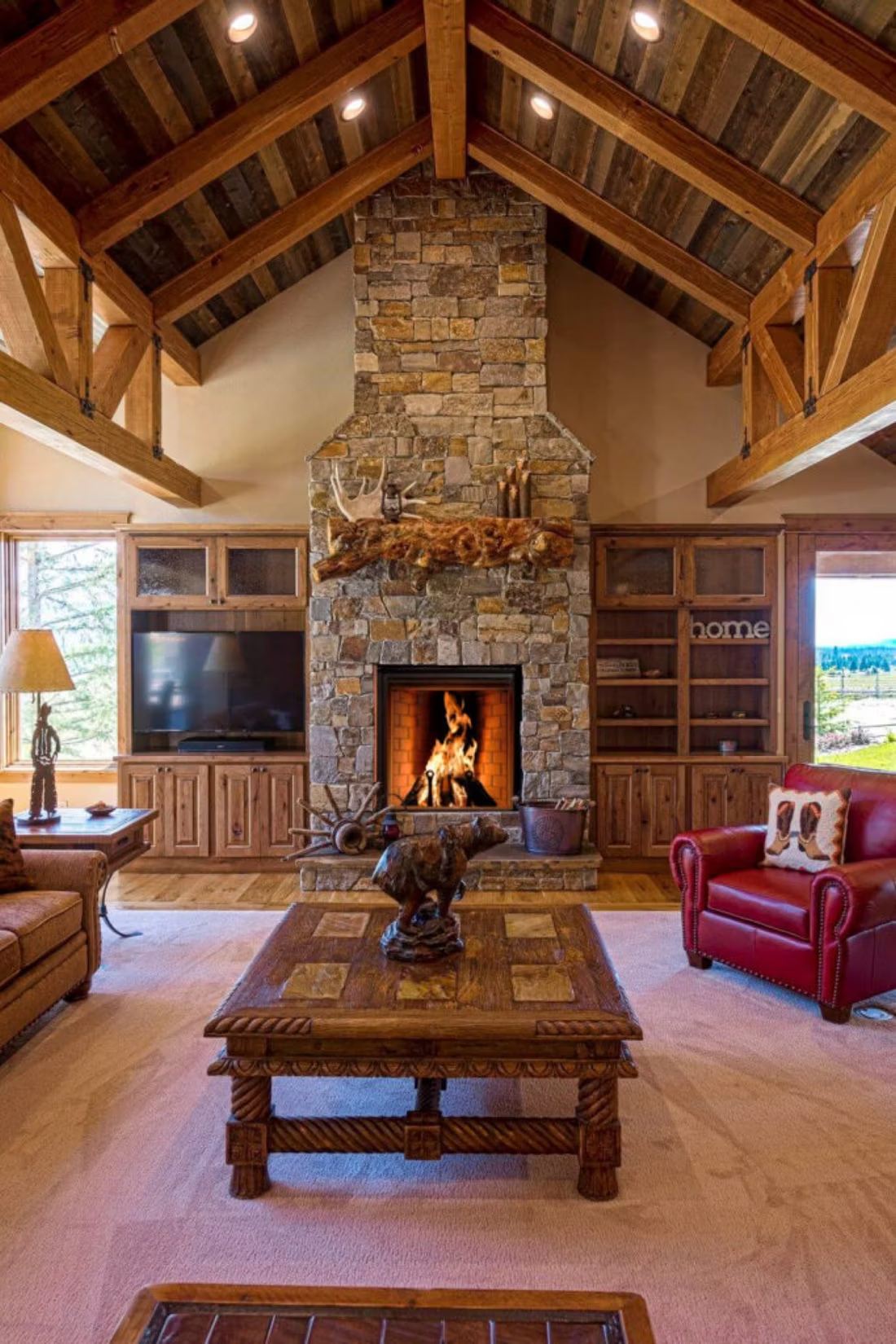
Firewood Cutting Permits Near East Los Angeles
Three steps. No salesperson until you're ready.
Tell us about your project
Your zip code, your situation, and the fuel you're leaning toward—or let the answers point you to one.
See what's actually available
The brands dealers within 100 miles genuinely carry—real options, never a catalog mirage.
Get your dealer & Project Guide
A trusted local dealer, plus the free Project Guide & Parts List that names every component of the job.
Frequently Asked Questions
Are wood-burning fireplaces or stoves common in East Los Angeles?
Not really, and it's worth being upfront about that. With only a very short, mild heating season and winter lows averaging 49°F, East LA homes rarely need the heat output a wood stove provides. Combine that with South Coast AQMD's Rule 445, which bars new wood-burning fireplace or stove installations in new construction across the entire South Coast Air Basin, and you end up with a market where wood is the exception. A handful of dealers still work on existing masonry fireplaces, but new wood installs are genuinely uncommon here.
Can I install a brand-new wood stove in my East LA home?
In most cases, no—not in new construction. Rule 445 prohibits installing new wood-burning devices in newly built homes anywhere in the South Coast Air Basin, which covers East Los Angeles. If you're remodeling a home with an existing wood-burning fireplace, replacement is sometimes possible on a like-for-like basis with an EPA-certified unit, but it requires review by LA County Public Works' Building and Safety Division and registration under SCAQMD's wood-burning device rules. Most homeowners in this situation find gas or electric far simpler to permit and install.
What does it cost to add a wood-burning insert to an existing fireplace here?
Because so few East LA homes pursue this, pricing isn't as standardized locally as it is for gas or electric work. When a local dealer does install an EPA-certified insert into an existing masonry fireplace, expect a range roughly in line with the rest of coastal Southern California—often $3,500 to $7,500—with the final number driven by liner work, hearth clearances, and whether the existing chimney passes inspection. Ask any dealer you talk to how many of these they've actually done recently; it's a fair question given how niche the work is here.
I already have an old wood-burning fireplace in my house. Can I still use it?
Yes, but with real restrictions. Many older homes in East LA—especially the mid-century housing stock common in the 90022 and 90023 zip codes—were built with open masonry wood fireplaces. You can keep using one, but SCAQMD's winter no-burn program (roughly November through February) restricts wood burning basin-wide on high-particulate days, and East LA's low elevation means it falls under the stricter, mandatory curtailment zone rather than the voluntary one that applies above 3,000 feet. Upgrading to an EPA-certified insert is the main way to burn more freely and more efficiently within those rules—it's the most common wood-related project a local dealer actually sees in this area.
Where would I even get firewood in East Los Angeles?
There's no local timber supply, so it comes from farther out. Cutting permits are available through the Angeles National Forest and San Bernardino National Forest, both within driving distance, typically running $5 to $20 per cord during the May-to-October season. Regional firewood suppliers also stock oak, madrone, and Douglas fir by the cord for homeowners who'd rather not cut their own. Given the modest amount of burning most East LA households actually do, buying delivered cordwood as needed is usually more practical than a Forest Service permit trip.
What are "no-burn days" and how do they affect a wood stove in East LA?
South Coast AQMD runs a seasonal program (sometimes called Check Before You Burn) that forecasts fine particulate pollution and issues mandatory no-burn alerts on days when levels are expected to run high, generally between November and the end of February. Because East LA sits well below the 3,000-foot elevation line, it falls under the mandatory rules, not the voluntary guidance that applies to higher-elevation communities. On alert days, wood-burning fireplaces and non-certified stoves can't legally be used at all, even if you have gas logs or an EPA-certified device—those are typically exempt, which is one more reason dealers here lean toward certified inserts or alternative fuels.
Should I just go with gas or electric instead of wood?
For most East LA homes, yes. Gas fireplaces are standard here, install without the wood-burning restrictions of Rule 445, and don't get shut down on no-burn days. Electric fireplaces are even simpler—no venting, no gas line, no permit fight—and given the area's mild winters, they're often used for ambiance and occasional evening warmth rather than serious heating load. Southern California Edison's residential rate runs about $0.2825 per kWh, which sounds high, but a typical electric fireplace used a few hours on cool evenings adds only a few dollars a month to a bill. Wood remains an option mainly for people who already have a fireplace they want to preserve.
Does having an old wood-burning fireplace affect resale or insurance in East LA?
It can. Buyers and their agents in the South Coast Air Basin are increasingly aware of no-burn day restrictions and the practical limits on uncertified fireplaces, and some insurers ask about the condition and certification status of any wood-burning appliance during underwriting. An EPA-certified insert or documented, inspected masonry fireplace tends to read as lower-risk than an old, unlined open hearth. If you're planning to sell in the next few years, it's worth having a certified installer look at the fireplace now rather than leaving it as a question mark for a future buyer.
Wood vs. gas vs. electric—what actually makes sense for my East LA home?
Given East LA's mild 49°F average winter low and the Rule 445 restrictions on new wood-burning installs, wood is realistically only worth considering if you already have an existing masonry fireplace you want to keep or upgrade to an EPA-certified insert. For everything else—new construction, remodels without an existing chimney, or anyone who just wants reliable heat and ambiance without air-quality-day restrictions—gas or electric is the more practical, more easily permitted choice. A local dealer can walk your specific situation and tell you within minutes which category you're in.
What's the difference between an insert and a zero-clearance fireplace?
An insert is a fireplace that slides into a pre-existing wood-burning fireplace—if you don't have one, there's nothing to insert it into. A zero-clearance fireplace is built into a framed wall, which makes it the answer for remodels and new construction. Simple test: existing masonry fireplace means insert; blank or framed wall means zero-clearance.
Why won't my new wood stove get going like my old one?
New wood stoves are 70%+ efficient, so far less heat goes up the flue—which also means less draft to get a fire established. The rule: build a genuinely hot fire for about 45 minutes before you choke it down. Skip that and you get smoke in the room, creosote in the chimney, and a fire that never takes off. Most performance complaints trace straight back to this.
Can a fireplace actually lower my heating bill?
Yes—by creating a comfort zone. A furnace heats every square foot of the house just to warm the one room you're in; a gas fireplace on low burns roughly a sixth of the gas a typical furnace does. Set the furnace around 55–60 degrees as a baseline, then heat the rooms your family actually uses. Families who heat this way commonly save $20–$60 a month.
What is an in-home preview and do I need one?
It's a visit where a hearth professional measures your space, confirms the model you picked actually works in your home, and walks the specs—framing, gas line, venting, finish work—before anything is ordered. Some details you just can't know until you see the house. Never make a down payment without one; it's the single most-skipped step that burns buyers.
Nearby Dealers
Hearth shops serving East Los Angeles and the surrounding area.
All Valley Distrib. Dba Marco Distrib
The Heat Source (Burrico) - Lancaster
Tropicana Outdoor Living
Find your wood fireplace path in East Los Angeles.
Tell us about your home and whether you have an existing fireplace, and we'll match you with a trusted local dealer who can tell you what's actually allowed under South Coast AQMD rules—plus a free Project Guide & Parts List with the exact parts, including venting, for your project.
Find Your Fireplace →