
Stay warm in Dinuba, even on a Valley no-burn day.
Clean, EPA-certified pellet heat for Tulare County homes—the one option that keeps burning when winter air alerts ground everything else. Find the right unit and connect with a trusted local dealer.
Every Project Starts From One of These Five Situations
The stove that's exempt from Valley burn bans.
Dinuba sits at 333 feet in the San Joaquin Valley, where winters are mild by comparison to the mountains—average lows around 38°F and only a light winter heating load a year, a fraction of what a place like Bozeman, MT sees. Winters here are less about survival heat and more about taking the chill off a farmhouse or living room during the tule fog season. The bigger factor shaping heating choices in Tulare County is air quality: Dinuba sits inside a federal non-attainment area, and the San Joaquin Valley Air Pollution Control District's 'Check Before You Burn' program restricts wood-burning devices on high-pollution winter days when valley inversions trap smoke, dust, and ag emissions close to the ground.
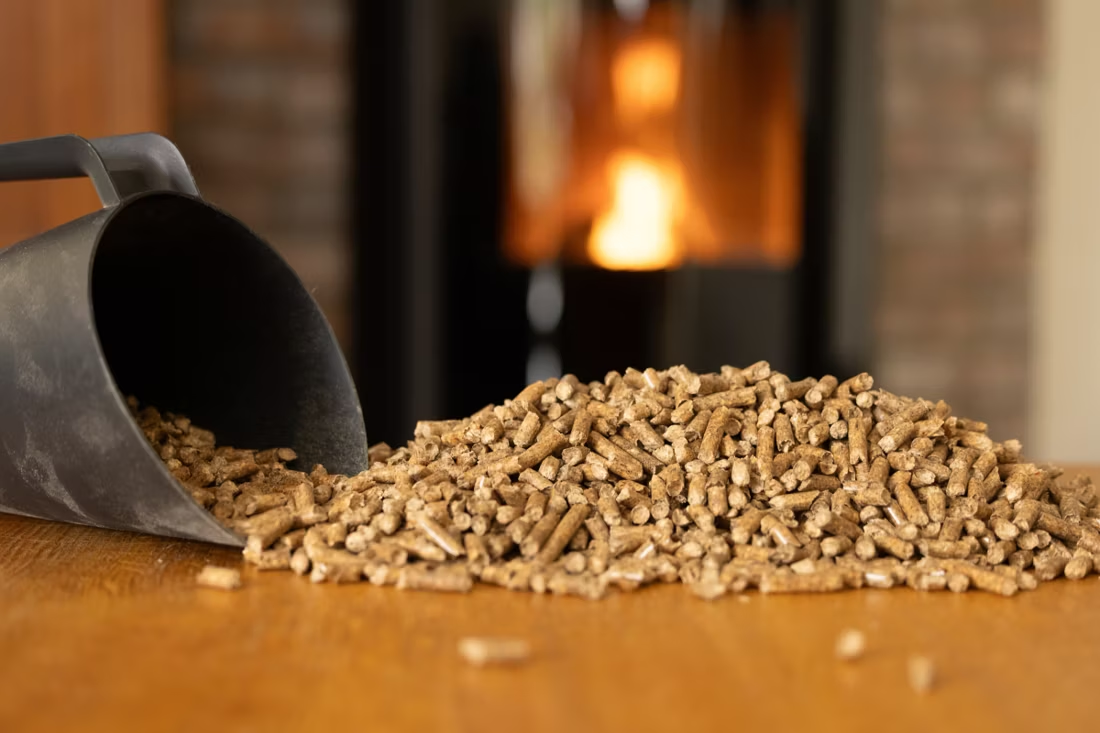
That's where pellet stoves earn their place in Dinuba. EPA-certified pellet appliances are exempt from mandatory curtailment days entirely—on a Yellow or Red no-burn day, a household with an open fireplace or older wood stove has to go without, while a pellet stove keeps running. Regional pellet brands like Bear Mountain, Lignetics, and Pacific Pellet supply the Valley and foothill markets, keeping fuel reasonably accessible even in an agricultural region better known for almonds and grapes than firewood. The tradeoff worth knowing: pellet stoves need electricity to run the auger and blower, and PG&E's residential rate here—among the highest in the state at roughly 31.7 cents per kWh—makes a battery backup plan worth discussing with your installer, especially given PG&E's wildfire-season power shutoffs.
Three steps. No salesperson until you're ready.
Tell us about your project
Your zip code, your situation, and the fuel you're leaning toward—or let the answers point you to one.
See what's actually available
The brands dealers within 100 miles genuinely carry—real options, never a catalog mirage.
Get your dealer & Project Guide
A trusted local dealer, plus the free Project Guide & Parts List that names every component of the job.
Frequently Asked Questions
How much does a pellet stove installation cost in Dinuba?
A typical pellet stove or insert installation in Dinuba runs roughly $3,000 to $6,500, depending on whether it's a freestanding unit or an insert going into an existing fireplace, the length of the vent run through the wall, and whether a dedicated electrical outlet needs to be added nearby. Pellet installs are generally simpler and less expensive than wood or gas conversions because they use small-diameter PL vent pipe rather than a full chimney system, and they don't require gas line work. Local hearth dealers will give you a firm number after seeing the room and the wall or fireplace opening.
Can I still use a pellet stove during a Valley 'Check Before You Burn' no-burn day?
Yes—this is one of the biggest reasons pellet stoves make sense in Dinuba. The San Joaquin Valley Air Pollution Control District's Check Before You Burn program restricts uncertified wood stoves and open-hearth fireplaces on Yellow and Red winter air alert days, but EPA-certified pellet stoves are exempt from the curtailment entirely because of their low particulate output. In a non-attainment area where winter inversions trap smoke and ag dust in the basin, that exemption means a pellet stove keeps producing heat on exactly the days when your neighbor's old wood stove has to sit cold.
What size pellet stove do I need for a Dinuba home?
Because Dinuba's winters are mild—average lows near 38°F and only a light winter heating load a year—most homes here use a pellet stove as zone heat for a living room or open floor plan rather than as the sole heat source for the whole house. A smaller unit in the 40,000–50,000 BTU range comfortably covers an open living/kitchen area, while a 60,000+ BTU unit is more appropriate for an older farmhouse with less insulation or a larger square footage you want to heat primarily. A local dealer can size it properly based on your layout in a few minutes.
Do I need a permit to install a pellet stove in Dinuba?
Yes—installations within city limits go through the City of Dinuba Building Department, and homes in unincorporated Tulare County go through the Tulare County Resource Management Agency. Most local hearth retailers handle the permit application and inspection scheduling as part of the installation, so it's rarely something you have to manage yourself. Unlike wood stoves, there's no cutting permit involved since pellet fuel comes bagged from a supplier rather than being self-harvested.
Does a pellet stove work if the power goes out?
Not without a backup power source. Pellet stoves rely on electricity to run the auger that feeds fuel, the igniter, and the combustion blower—unlike a wood stove, they won't function on their own during an outage. This matters in Dinuba because PG&E occasionally implements Public Safety Power Shutoffs during high fire-risk conditions, and at a residential rate near 31.7 cents per kWh, running cost is also worth factoring in. Many homeowners here pair a pellet stove with a small battery backup or portable generator sized for the stove's low wattage draw—ask your installer what your specific model needs.
Pellet vs. wood—which makes more sense in Dinuba?
Wood is still an option—oak, madrone, and Douglas fir are common species cut under Forest Service permits from Sequoia National Forest and Sierra National Forest, running $5 to $20 per cord during the May-to-October season—and wood works without electricity. But wood-burning devices are subject to mandatory curtailment on Valley no-burn days under Check Before You Burn, which limits reliability exactly when winter inversions settle in. Pellet stoves burn cleaner, are exempt from those curtailment days, and produce far less ash and creosote, at the cost of needing electricity to run. For most Dinuba homes using supplemental heat rather than off-grid backup, pellet is the more dependable everyday choice.
Where can I buy pellet fuel near Dinuba?
Regional brands including Bear Mountain, Lignetics, and Pacific Pellet supply hearth dealers and farm/hardware stores throughout the Fresno–Visalia corridor near Dinuba, typically running $280 to $380 per ton depending on the brand and softwood vs. hardwood blend. Buying a season's supply (roughly 1.5–3 tons for a typical zone-heating household) in late summer or early fall, before demand and prices climb heading into winter, is the standard local strategy. Your installing dealer can usually point you to the closest reliable supplier.
How much maintenance does a pellet stove need?
Pellet stoves need more routine attention than a gas unit but less than a wood stove. Plan on emptying the ash pan every few days during regular use, cleaning the burn pot weekly to keep the fire burning efficiently, and vacuuming the hopper and exhaust passages periodically. An annual professional service—checking the auger motor, combustion blower, gaskets, and venting—is recommended before each burning season. Local hearth dealers who sell pellet stoves in Dinuba typically offer this service directly.
Pellet vs. gas or electric heat—which is right for my home?
Dinuba doesn't have the widespread piped natural gas infrastructure some Valley cities have, so gas fireplace options often mean propane, with tank costs and delivery to factor in. Electric heat is simple to install but runs up against PG&E's high residential rate—about 31.7 cents per kWh—making it one of the more expensive ways to heat a room continuously. Pellet stoves land in between: real flame and radiant heat, no propane tank or gas line needed, and fuel costs that are generally lower than running electric resistance heat for the same hours, with the added advantage of staying operational during Valley no-burn days. The main tradeoff is the modest electricity draw for the auger and blower, and the need to keep a fuel supply on hand.
Why is my open fireplace making my house colder?
Open fireplaces suck—literally. As the fire burns, it consumes air your furnace already paid to heat and pulls it out through the chimney, so the house is actually colder after the fire goes out than before you lit it. An insert fixes this: it seals the chimney, puts fixed glass across the front, and turns that hole in your house into a real heat source.
What does it take to replace an existing fireplace?
Fireplaces are like icebergs—bigger behind the wall than in front of it. Replacement means removing the surrounding tile or stone (the finish material laps onto the fireplace face), pulling the old unit, setting the new one in the same enclosure, and re-finishing the wall. A hearth professional can determine what's behind your wall without demolition during an in-home preview.
What is an in-home preview and do I need one?
It's a visit where a hearth professional measures your space, confirms the model you picked actually works in your home, and walks the specs—framing, gas line, venting, finish work—before anything is ordered. Some details you just can't know until you see the house. Never make a down payment without one; it's the single most-skipped step that burns buyers.
How much should I budget for a fireplace?
For an average home—covering the fireplace, the vent pipe, and basic installation—a budget between $3,900 and $5,500 gives you a lot of options across wood, gas, and pellet. By the time you add finish work, gas line, and electrical, the average complete installation lands between $5,000 and $12,000 all-in. In a remodel or new build, a good rule is to put about 2.5% of the total project cost toward the fireplace.
Nearby Dealers
Hearth shops serving Dinuba and the surrounding area.
Pellet Brands Stocked Around Dinuba
Manufacturers will point you to the nearest stocking dealer.
Find your pellet stove in Dinuba.
Tell us a bit about your home and we'll match you with the right pellet stove or insert, plus a free Project Guide & Parts List—the exact parts, vent kit, and a trusted local Dinuba dealer to install it.
Find Your Fireplace →