
Pellet Stoves Are Rare in Covina—But Not Impossible.
Covina's mild valley winters mean pellet heat isn't the norm here—but for the right home, situation, or foothill property, it can still be worth a look. We'll help you find out honestly.
Every Project Starts From One of These Five Situations
A mild valley climate that rarely needs supplemental heat.
Covina sits at 583 feet in the San Gabriel Valley, where the average winter low hovers around 43°F and the city logs roughly 1,457 heating degree days a year. That's a fraction of what a genuine cold-climate market like Duluth, MN racks up in a single winter—and it's the core reason pellet stoves haven't caught on as a real heating category here. Most Covina homes rely on central HVAC for the handful of chilly nights each winter, not a solid-fuel appliance built for sustained sub-freezing burns.
There's a regulatory layer too. Covina sits within the South Coast Air Quality Management District's jurisdiction, an area with long-standing non-attainment status for fine particulates, and the region also deals with recurring wildfire smoke events during fire season. Between the mild climate and the air-quality environment, most local hearth dealers stock gas and electric units as their bread-and-butter, with pellet appliances handled as special orders for the smaller number of homeowners in foothill neighborhoods, cabin properties, or households specifically wanting a backup heat source that doesn't depend on natural gas.
Three steps. No salesperson until you're ready.
Tell us about your project
Your zip code, your situation, and the fuel you're leaning toward—or let the answers point you to one.
See what's actually available
The brands dealers within 100 miles genuinely carry—real options, never a catalog mirage.
Get your dealer & Project Guide
A trusted local dealer, plus the free Project Guide & Parts List that names every component of the job.
Frequently Asked Questions
Are pellet stoves actually used in Covina?
Not commonly, and it's worth being upfront about that. With winter lows averaging around 43°F and only about 1,457 heating degree days a year, the vast majority of Covina homes get through winter on central HVAC alone. Pellet stoves show up here mostly in a few specific situations: homes in the cooler foothill pockets toward the San Gabriel Mountains, households that want a non-gas backup heat source, or people who split time between Covina and a cabin or mountain property where pellet heat makes more sense.
What does a pellet stove installation cost in Covina?
Because pellet stoves are a niche request here rather than a stocked category, most local hearth dealers don't keep them on the showroom floor—expect a special order rather than an off-the-shelf install, and expect the quote to vary more than it would in a market where pellet is a standard product line. A trusted local dealer can walk you through actual current pricing for your specific home once they know your venting situation and whether you're working with an existing chimney or a new installation.
Does the South Coast Air Quality Management District restrict pellet stoves?
SCAQMD's rules are aimed primarily at wood-burning devices given the Los Angeles Basin's long-running non-attainment status for particulate matter, and pellet appliances generally burn cleaner than cordwood units. That said, SCAQMD does issue no-burn advisories during high-pollution episodes and wildfire smoke events, and any new solid-fuel appliance installation in Covina should be confirmed against current district rules before you buy. A local dealer who regularly pulls permits in Los Angeles County will know the current requirements.
Should I get a pellet stove or a wood stove in Covina?
Neither is a common local fixture, honestly. Wood species like oak, madrone, and Douglas fir are available through cutting permits from the Angeles National Forest and San Bernardino National Forest—typically $5 to $20 per cord during the May-to-October season—but between the mild climate and SCAQMD's stance on wood smoke, very few Covina homeowners actually burn wood as heat. Pellet fuel sidesteps the permit and cutting process entirely since it's a bagged product from brands like Bear Mountain, Lignetics, or Pacific Pellet, sold through regional retailers. If you're set on a solid-fuel appliance, pellet is generally the more practical and better-tolerated choice here.
Will a pellet stove work during a power outage or a PSPS event?
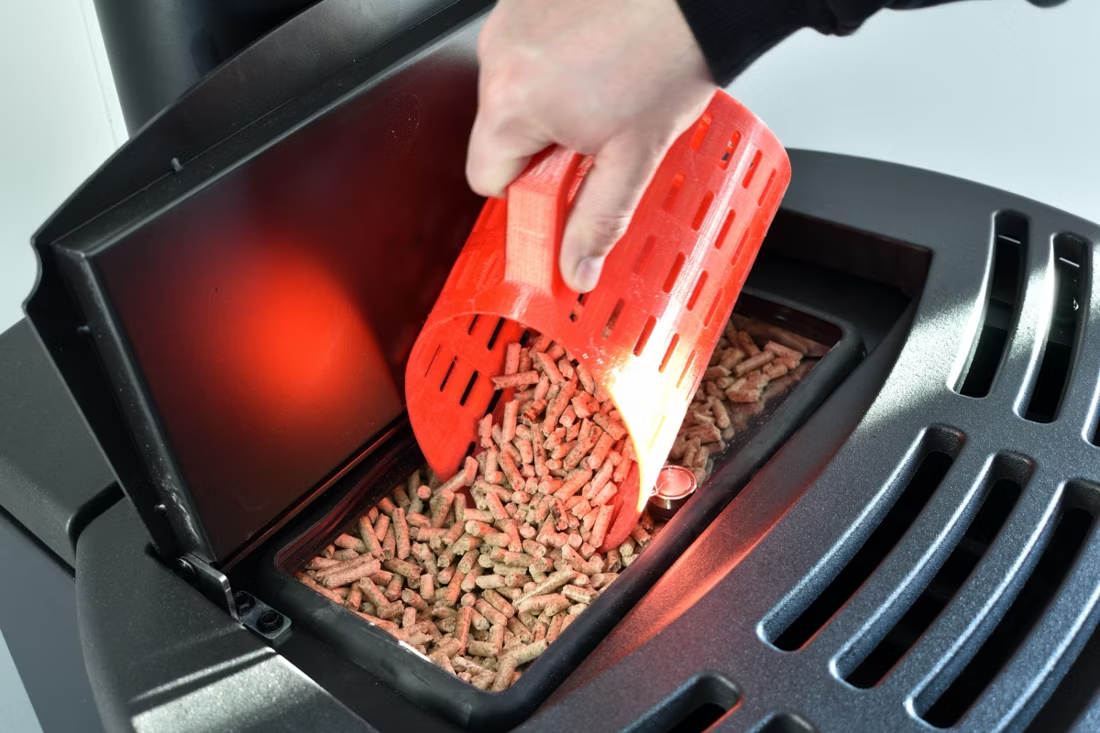
This is the detail that surprises a lot of people. Pellet stoves need electricity to run the auger that feeds fuel and the blower that pushes heat into the room—so during a Southern California Edison Public Safety Power Shutoff, a standard pellet stove won't operate unless you also have a battery backup or generator running. If your main goal is heat that keeps working when SCE cuts power during fire-weather events, a wood stove or a propane appliance is generally a more reliable choice than pellet.
Can I even buy pellets locally in Covina?
Yes—even though pellet stoves themselves are uncommon, bagged pellet fuel from regional brands like Bear Mountain, Lignetics, and Pacific Pellet is generally available through hardware stores and farm supply retailers across the greater Los Angeles area. Fuel availability isn't the limiting factor here; it's the small number of installed appliances and dealers who actively stock and service them.
What heating options are more common in Covina than pellet?
Gas fireplaces and inserts are a standard, well-supported category locally, and electric fireplaces are common too, particularly for homeowners drawn to zero-clearance installs without venting work. Electricity through Southern California Edison runs about $0.2825 per kWh, on the higher end for the state, which is worth factoring into any electric appliance's long-term operating cost—but for occasional-use ambiance rather than primary heat, that difference is usually modest.
Is a pellet stove worth it for a foothill home near Covina?
It can be, and this is the scenario where local dealers see the most genuine pellet interest. Homes closer to the San Gabriel Mountains foothills run several degrees cooler on winter nights than the valley floor, and some owners want a self-contained heat source for a detached space, workshop, or guest unit that isn't already on central HVAC. In those cases, a pellet stove's steady, thermostatically controlled heat and relatively clean burn make it a reasonable fit—just plan on a special order through your dealer rather than picking one up off a showroom floor.
Pellet vs. electric fireplace—which makes more sense for my Covina home?
For most Covina homes, electric wins on simplicity: no venting, no fuel storage, no auger or hopper maintenance, and installation costs are typically far lower. Pellet only pulls ahead if you specifically want real combustion heat output for a space that gets genuinely cold, or you want a solid-fuel backup option and are willing to accept that it still needs electricity to run. Given the area's mild winters, most local dealers will steer straightforward heating requests toward electric or gas and reserve pellet recommendations for the specific situations where it earns its keep.
Why is a fireplace insert so efficient?
An insert does two things: it seals the chimney completely, so you stop losing air you already paid to heat, and it radiates warmth into the room through the firebox and glass. Most add a heat-exchange fan that pulls cool room air underneath, wraps it around the hot firebox, and pushes it back out warm. Your home is more efficient before you've even lit the first fire.
What's the difference between an insert and a zero-clearance fireplace?
An insert is a fireplace that slides into a pre-existing wood-burning fireplace—if you don't have one, there's nothing to insert it into. A zero-clearance fireplace is built into a framed wall, which makes it the answer for remodels and new construction. Simple test: existing masonry fireplace means insert; blank or framed wall means zero-clearance.
Can a fireplace actually lower my heating bill?
Yes—by creating a comfort zone. A furnace heats every square foot of the house just to warm the one room you're in; a gas fireplace on low burns roughly a sixth of the gas a typical furnace does. Set the furnace around 55–60 degrees as a baseline, then heat the rooms your family actually uses. Families who heat this way commonly save $20–$60 a month.
Should the dealer who sells my fireplace also install it?
Ideally, yes. A fireplace project involves vent pipe, gas line, electrical, and often tile or stone. Hire three or four separate trades and you own the liability and the game of telephone between them. One company selling and installing means one accountable party, start to finish—ask about factory training, on-time completion records, and what happens if an inspection fails.
Nearby Dealers
Hearth shops serving Covina and the surrounding area.
All Valley Distrib. Dba Marco Distrib
The Heat Source (Burrico) - Lancaster
Tropicana Outdoor Living
Pellet Brands Stocked Around Covina
Manufacturers will point you to the nearest stocking dealer.
See if a pellet stove makes sense for your Covina home.
Tell us about your home and situation and we'll give you an honest read on whether pellet fits—and if it does, match you with a trusted local dealer along with a free Project Guide & Parts List for your project.
Find Your Fireplace →