
Pellet Heat in a Climate That Rarely Needs It.
With winter lows averaging 49°F and one of the lightest heating seasons around, Costa Mesa isn't pellet country. But for the homeowners who still want one, we'll connect you with a real local dealer who can tell you honestly whether it fits.
Every Project Starts From One of These Five Situations
Costa Mesa's Mild Winters Rarely Call for Supplemental Heat.
Costa Mesa sits at just 68 feet elevation along the Orange County coast in climate zone 3B, where the average winter low is a mild 49°F and the city has a very light heating season overall. Compare that to Duluth, Minnesota, which has a brutally long, cold winter, and the picture is clear: most Costa Mesa homes never need a dedicated space-heating appliance running for hours at a stretch. Central HVAC and the occasional gas fireplace insert handle the rare cold snap.
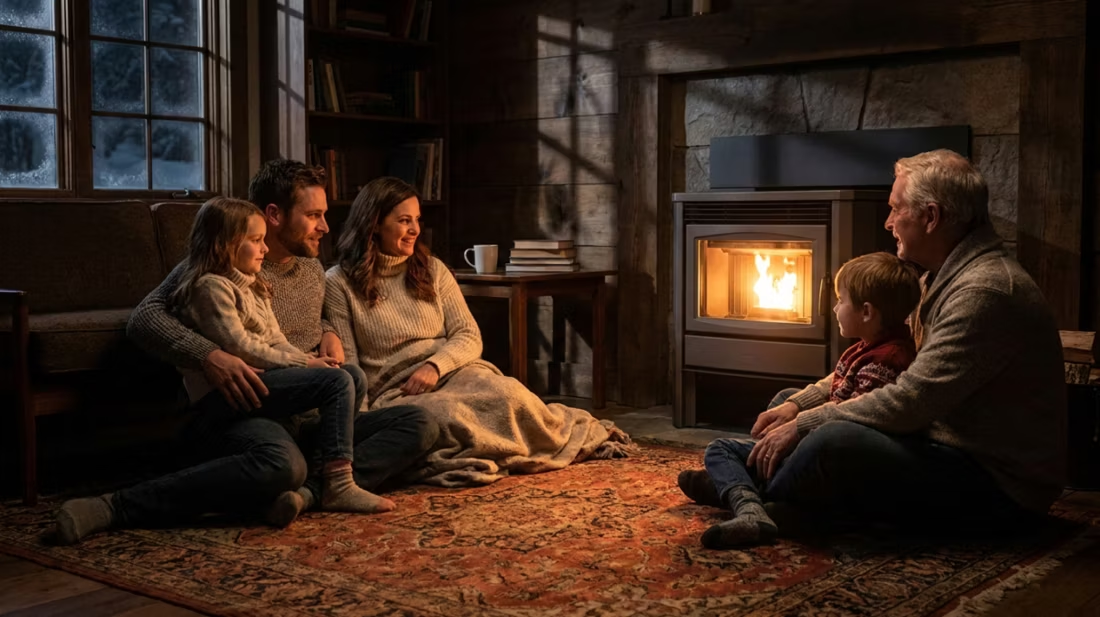
That's why pellet stoves see little demand here. They're built for cold-climate homes that need 12 to 24 hours of steady, thermostatically-controlled heat from a hopper of compressed sawdust—a use case that just doesn't come up often along the Orange County coast. Add in that pellet stoves require electricity to run the auger and combustion blower (no power, no heat, which matters during wildfire-season PSPS events), and most Costa Mesa homeowners land on gas or electric instead. Still, a small number install a pellet unit for the look and feel of a real, controlled flame without the smoke concerns that come with an open wood fire in a South Coast Air Quality Management District non-attainment area—and some already own a pellet stove at a mountain cabin near Big Bear or Idyllwild and want the same setup at home.
Three steps. No salesperson until you're ready.
Tell us about your project
Your zip code, your situation, and the fuel you're leaning toward—or let the answers point you to one.
See what's actually available
The brands dealers within 100 miles genuinely carry—real options, never a catalog mirage.
Get your dealer & Project Guide
A trusted local dealer, plus the free Project Guide & Parts List that names every component of the job.
Frequently Asked Questions
Are pellet stoves common in Costa Mesa?
No, and it's worth being upfront about that. With such a light heating season and winter lows that rarely dip below the upper 40s, most Costa Mesa homes don't have a real heating-load case for a pellet stove. The handful of local installs we see tend to be homeowners who want the visual of a solid-fuel fire without wood smoke, or people who split time between the coast and a mountain property where pellet heat already makes sense.
Why doesn't Costa Mesa's climate support pellet stoves the way inland or mountain towns do?
Pellet stoves are designed to carry a home through long, cold heating seasons—think 12 to 24 hour burns on a single hopper load. Costa Mesa's marine-influenced climate just doesn't generate that kind of sustained heating demand; natural gas infrastructure already covers the occasional cool evening efficiently, and Southern California Edison's residential rate of about $0.2825/kWh makes running a pellet stove's electric components a real cost consideration for a device that would see light seasonal use.
Will a pellet stove keep my home warm during a power outage?
No—this is one of the biggest misconceptions about pellet appliances. Unlike a wood stove, a pellet stove's auger, igniter, and combustion blower all run on household electricity. If Southern California Edison cuts power during a Public Safety Power Shutoff for fire-weather conditions, a standard pellet stove goes dark along with everything else. Some models offer a battery backup accessory, but if outage-proof heat is your priority, a wood-burning unit or a battery/DC-capable gas fireplace is a better fit, and a local dealer can walk you through those alternatives.
Do I need a permit to install a pellet stove in Costa Mesa?
Yes—any new solid-fuel or pellet-fueled appliance requires a mechanical permit through the City of Costa Mesa Building Division covering the venting and appliance installation. Because Orange County sits within the South Coast Air Quality Management District's non-attainment area for ozone and particulate matter, expect your installer to confirm the unit is EPA-certified; pellet stoves generally burn clean enough to be exempt from the wood-burning curtailment rules that apply to open fireplaces and older wood stoves during poor air quality days.
Where can I buy pellet fuel in Costa Mesa?
Selection is thinner here than in mountain or inland markets, since Costa Mesa simply isn't a high-volume pellet town. Regional brands like Bear Mountain, Lignetics, and Pacific Pellet show up at hearth retailers and some home improvement stores, usually sold by the pallet (a ton) rather than kept in deep bag stock. If a local dealer doesn't carry pellets on-site, delivery from Inland Empire suppliers is the common workaround—worth asking about before you commit to a stove.
What's the actual appeal of a pellet stove in a mild climate like Costa Mesa's?
Mostly ambiance and air quality. A pellet stove gives you a real, contained flame with thermostat control and none of the visible smoke that comes with an open wood fire—a meaningful difference in a non-attainment air basin that also deals with periodic wildfire smoke. It's also a reasonable answer for the damp chill of a coastal marine layer evening, even if it's never going to be your home's primary heat source the way it would be in a colder inland climate.
Pellet stove vs. gas fireplace—which makes more sense for my Costa Mesa home?
For most homeowners here, gas wins on convenience: natural gas infrastructure is standard citywide, a direct-vent gas insert lights instantly with no hopper to refill and no bags of pellets to store, and it's what local dealers install and service most often. A pellet stove is the right call only if you specifically want the look of a solid-fuel fire and don't mind managing fuel storage and electric dependence for what will likely be occasional, ambiance-driven use rather than daily heating.
What does it cost to run a pellet stove in Costa Mesa?
Fuel costs run higher than in pellet-heavy markets because you're paying for pellets shipped in rather than milled nearby—expect regional brands like Bear Mountain or Pacific Pellet to sit toward the upper end of statewide pricing once delivery is factored in. Electricity draw for the auger and blower is modest, but at Southern California Edison's residential rate of roughly $0.2825/kWh, it's still worth asking your dealer for an estimated annual operating cost based on how many hours you'd actually run the unit—likely far fewer than a cold-climate household.
If a pellet stove isn't a great fit, what should I look at instead?
Given Costa Mesa's climate, most homeowners end up happier with a gas or electric fireplace—both are standard, well-supported options here with local dealers who install and service them regularly. Find My Fireplace can point you toward those guides too; the goal is matching you with what actually works in this climate, not talking you into an appliance that's a poor fit for the coast.
Why is my open fireplace making my house colder?
Open fireplaces suck—literally. As the fire burns, it consumes air your furnace already paid to heat and pulls it out through the chimney, so the house is actually colder after the fire goes out than before you lit it. An insert fixes this: it seals the chimney, puts fixed glass across the front, and turns that hole in your house into a real heat source.
What's the difference between an insert and a zero-clearance fireplace?
An insert is a fireplace that slides into a pre-existing wood-burning fireplace—if you don't have one, there's nothing to insert it into. A zero-clearance fireplace is built into a framed wall, which makes it the answer for remodels and new construction. Simple test: existing masonry fireplace means insert; blank or framed wall means zero-clearance.
Does a fireplace add value to my home?
On average, a fireplace adds back to the home about the same amount you spent installing it. Add the monthly savings from heating the rooms you actually use instead of the whole house—often hundreds of dollars a year—and the value case is strong before you even count what a fire does for how your family uses the room.
Can I install a fireplace myself?
If you're putting a fire in your house on purpose, it's best to work with an expert. Unless you're genuinely experienced in framing, gas line, vent pipe, and the national code on clearances to combustibles, have a professional do it—and ideally the same company that sells you the fireplace, so warranty, service, and liability all live under one roof.
Nearby Dealers
Hearth shops serving Costa Mesa and the surrounding area.
Pellet Brands Stocked Around Costa Mesa
Manufacturers will point you to the nearest stocking dealer.
See what's realistic for pellet heat in Costa Mesa.
Tell us about your home and we'll give you a straight answer on pellet fit, then match you with a trusted local dealer and a free Project Guide & Parts List for whichever fireplace project actually makes sense for your Costa Mesa home.fieldeholder_removeme: I need to fix stray key above.copy_cta_eyebrow
Find Your Fireplace →